
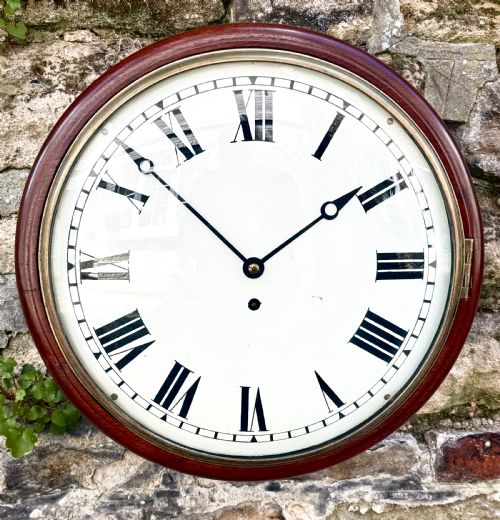




Early Georgian Clock
An early georgian clock brings the measured tick of the eighteenth century into a room, combining brass, oak and walnut in enduring forms.
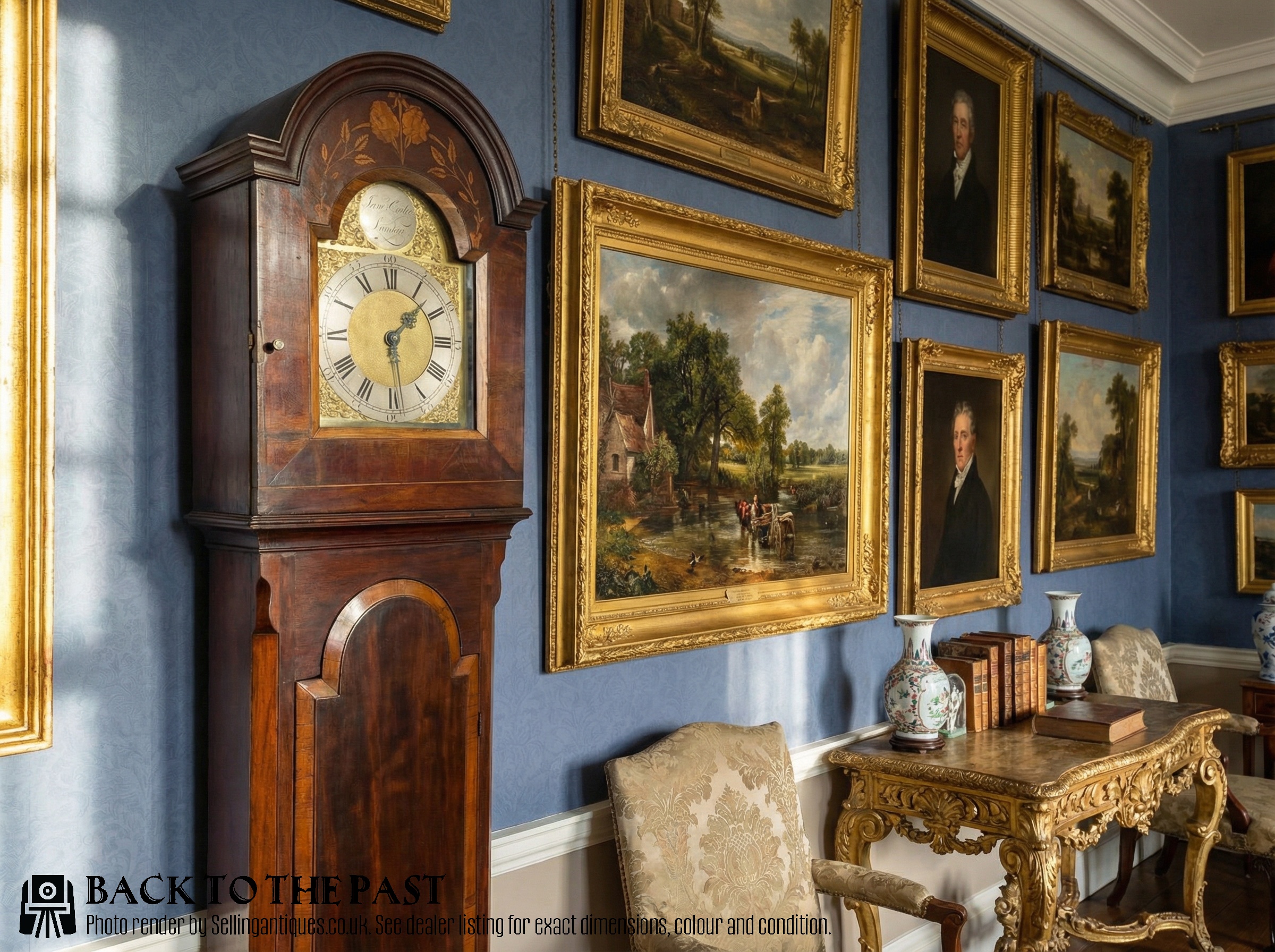
Early Georgian Clock
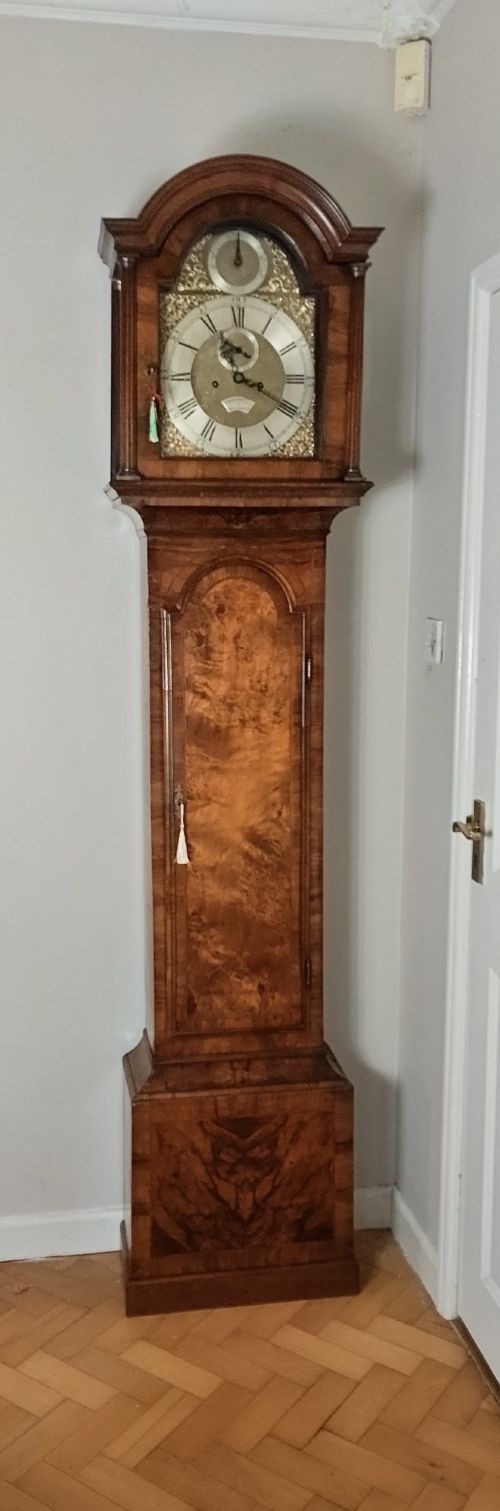
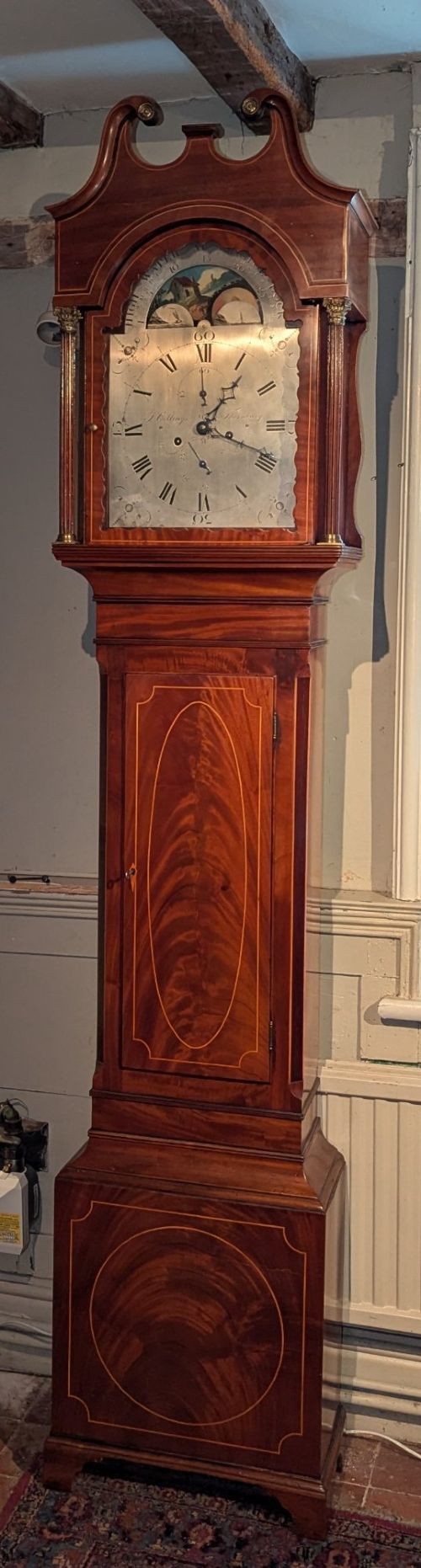
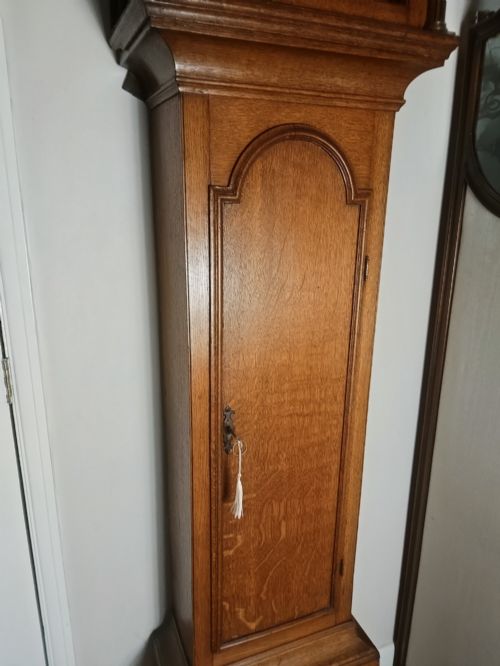
An early georgian clock encompasses tall case pieces, wall markers and bracket designs originating primarily from the eighteenth century. Longcase clocks dominate the selection, appearing in regional oaks as well as figured walnut and mahogany veneers.
Makers housed these movements in tall wooden trunks designed to protect the weights and pendulum, or mounted them on walls for domestic utility. Buyers encounter cottage examples alongside London pieces featuring painted or brass dials.
Regional variations span Lancashire, Yorkshire, and the West Country, each displaying distinct hood mouldings and dial layouts. Single-handed movements sit alongside eight-day striking mechanisms and specialised moon dials.
How They Were Made
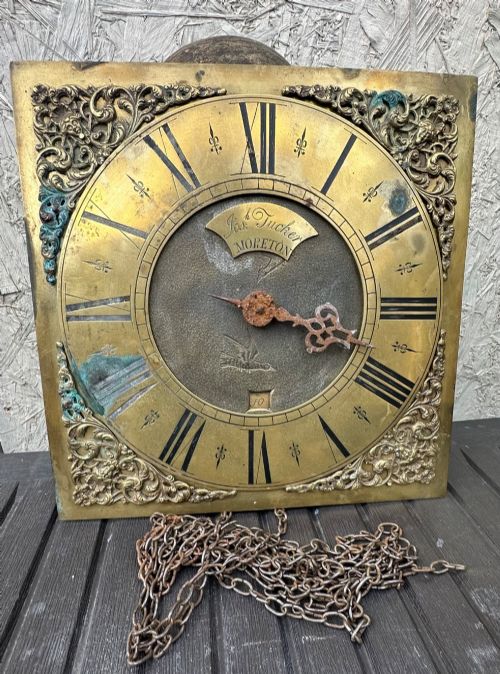
Craftsmen built longcase bodies using solid oak, walnut, or mahogany, often applying decorative veneers and banding over secondary pines. Dial plates combined cast brass chapter rings with engraved spandrels or utilised silvered brass and hand-painted surfaces.
Internal movements relied on forged iron, brass plates, and steel pivots, driven by lead weights suspended on cords or gut lines. Fusee movements utilised brass chains or cords connected to conical pulleys to equalize the pull of the mainspring.
Cases featured pegged mortise and tenon joints, hand-cut mouldings, and glass panels within locking hood doors. Ebonised finishes and dark green chinoiserie lacquer added decorative depth to specialised London pieces.
Listings feature oak, mahogany, walnut, and ebonised wood across longcase, wall, and bracket clock forms.
What Varies in Quality
The sophistication of the movement dictates the standing of a piece, moving from simple thirty-hour single-pointer designs to complex eight-day mechanisms with striking trains. London signatures and provincial makers of note elevate the standing of individual longcase and bracket clocks.
Cabinetwork quality shows in the choice of timber figures, from plain regional oak to dense flame mahogany and burr walnut veneers. Originality of components, including intact dial signatures and matching movement parts, defines the integrity of the survival.
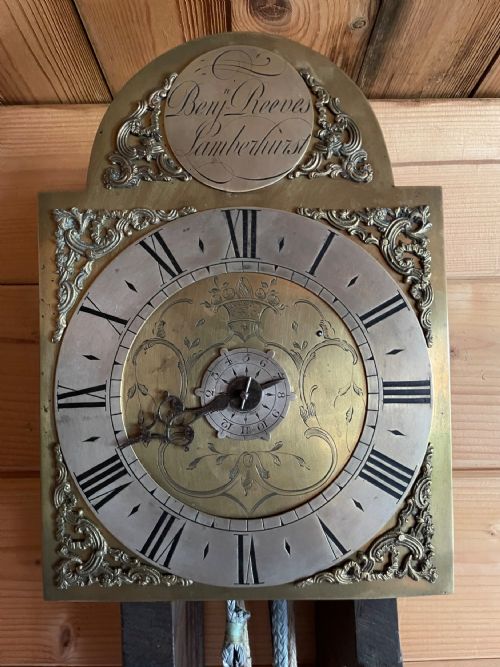
Thomas Webbe of New Quay·Benj Reeves Lamberhurst·John Waller of Preston·David Morice of Auchtermuchty·Richard Rooker·John Harrington·William Smith Keighley·Osborn of Kingsbridge·George Adams·Ganthony Of London·J Beckett of London·Hampston Prince Cattles·John Bishop Sherborne·E Sanders of Poole·Henry Smith Petersfield·Blakeway of Albrighton·George Tyler London·John Hancock Yeovir·Kirk of Kibworth·Ebenezer Handscomb·Peter Bower Redlench·John Stancliffe Halifax·Thomas Hampson Wrexham·John Welsh Luton
The Early Georgian Clock Glossary
- Longcase clock
- A tall pendulum timekeeper housed in a wooden trunk designed to stand on the floor. These pieces are frequently called grandfather clocks.
- Fusee
- A conical pulley connected to the mainspring by a cord or chain that equalises the driving force as the spring unwinds. This mechanism improves timekeeping accuracy across the power reserve.
- Dial
- The face of the clock where the time is displayed through hands and markings. Early examples frequently utilise engraved brass plates with applied spandrels.
- Chapter ring
- The circular metal ring on the dial that bears the hour and minute numerals. It is often secured to the dial plate with small feet or pins.
- Spandrel
- The decorative corner ornament placed outside the chapter ring on brass dial clocks. These cast brass elements evolved in style across the eighteenth century.
Early Georgian Clock: Frequently Asked Questions
How do I wind an eight day clock?
Insert the winding key into the holes on the dial face and turn gently until the weights rise toward the top of the case. Take care not to overwind the movement.
Support the pendulum if moving the case after winding to ensure the beat remains even.
What is a hook and spike clock?
A hook and spike clock is an early wall-mounted timepiece designed to hang directly from a wall bracket using a sturdy iron spike. The weight hangs exposed beneath the movement.
These compact mechanisms represent some of the earliest domestic wall clocks before specialised cases became common.
How do I tell an 18th century dial apart?
Eighteenth-century dials typically feature cast brass spandrels in the corners and separate chapter rings pinned to a square brass plate. Painted iron dials became more common toward the end of the century.
Single-handed movements also point toward earlier eighteenth-century production before minute hands became standard.
Where should I place a longcase clock?
Position the longcase against an interior wall away from direct sunlight, central heating vents, and damp areas. Wood and gut lines react to rapid temperature shifts.
Ensure the case stands level on the floor so the pendulum swings with an even beat.