



Early English Oak Chair
An early english oak chair brings centuries of English craftsmanship directly into your home, offering solid timber construction and historic character.
Early English Oak Chair
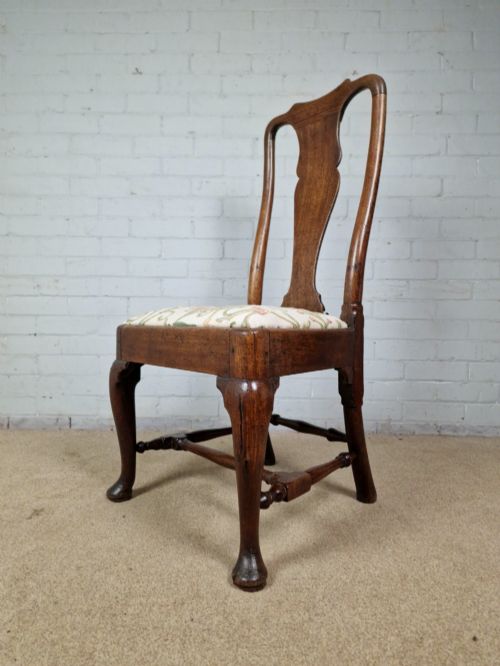
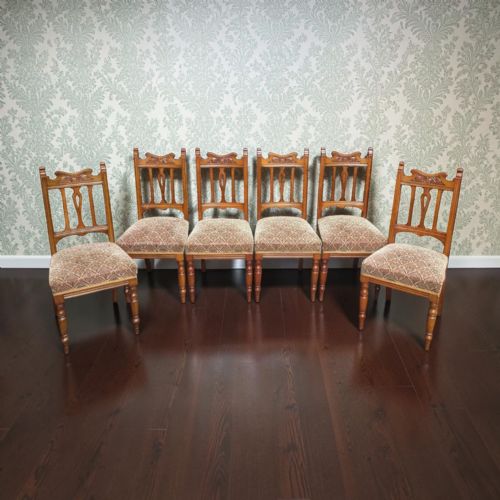
When you search for an early english oak chair, you encounter a robust range of historic seating spanning several centuries. The pieces represented here extend from the late sixteenth century through the Victorian era, capturing shifts in domestic comfort.
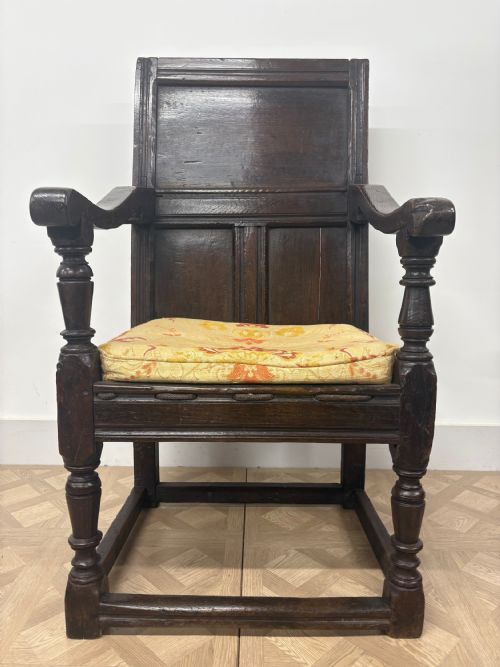
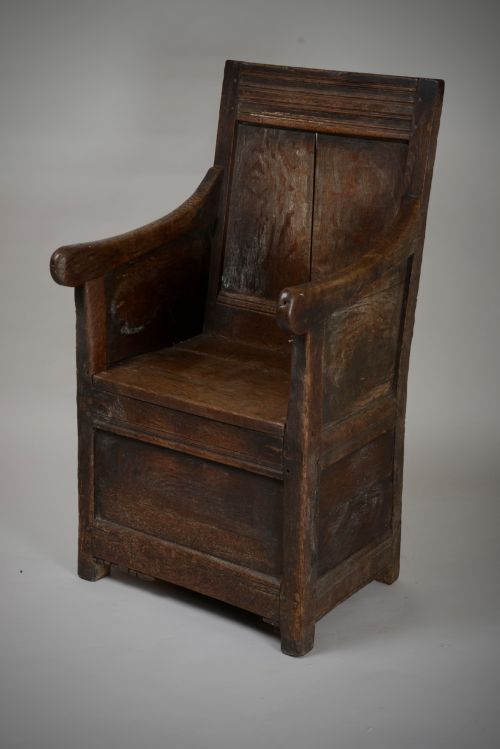
Armchairs, side chairs, rocking chairs, dining chairs, and hall chairs form the primary object types available. Wainscot armchairs and vernacular country seating appear frequently across the sixteenth, seventeenth, and eighteenth centuries.
Regional variations emerge clearly, with Lancashire, Cheshire, and Yorkshire examples recorded alongside broader English country styles. Makers utilised native timbers to construct sturdy forms intended for daily utility.
Materials and construction
Solid oak serves as the primary material for the majority of these pieces, providing a dense and durable foundation. Craftsmen also incorporated elm, walnut, ash, and yew into specific regional frameworks and secondary components.
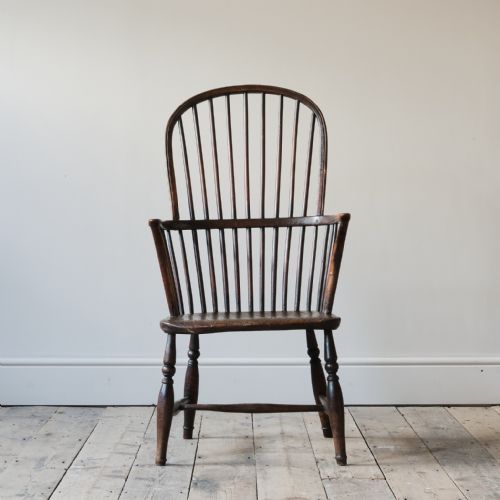
Joinery methods relied heavily on traditional pegged mortise and tenon joints to secure the heavy timber frames. Early pieces utilise robust joined construction, whilst later nineteenth-century examples introduce turned spindles and hoop backs.
Listings combine seventeenth-century wainscot chairs with eighteenth-century vernacular seating and nineteenth-century hall chairs.
Evaluating standard and preservation
The degree of original surface patination and timber retention distinguishes superior examples from heavily altered pieces. Natural wear accumulated over centuries contributes to the visual depth of the wood.
Proportion and structural integrity dictate the overall calibre of each piece, reflecting the skill of the original workshop. Refined carving on wainscot panels or well-balanced turnings indicate higher ambition in manufacture.
The Early English Oak Chair Glossary
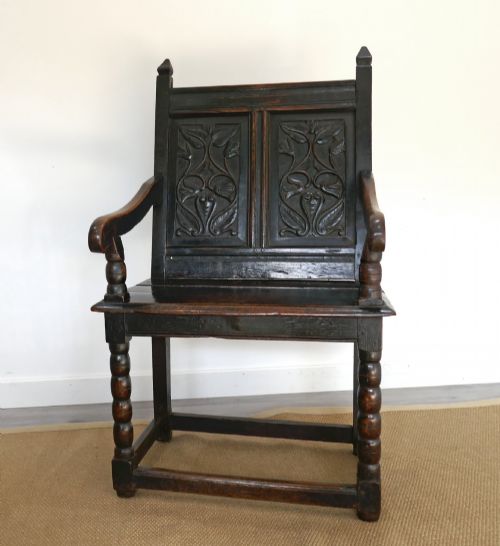
- Wainscot chair
- A heavy wooden armchair featuring a panelled back, solid wooden seat, and turned or columnar legs. These substantial seats represent status in sixteenth and seventeenth-century households.
- Vernacular
- Furniture designed and built by local country craftsmen using traditional regional methods rather than high-style metropolitan patterns. These pieces prioritise practical utility and local material availability.
- Mortise and tenon
- A traditional joint where a projecting tongue fits snugly into a corresponding cavity to lock timbers together securely. This joint underpins the structural longevity of early wooden furniture.
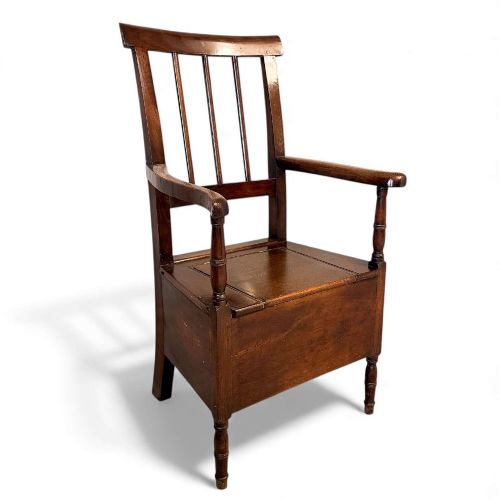
- Commode chair
- An enclosed seat designed to conceal a chamber pot beneath a lidded aperture. Early variants integrate seamlessly into domestic seating arrangements.
- Rush seat
- A seating surface woven from dried marsh rushes tightly wound around chair rails. This technique provides a resilient and slightly flexible base for country dining and hall chairs.
Early English Oak Chair: Frequently Asked Questions
How do I identify a seventeenth-century wainscot chair?
Seventeenth-century wainscot chairs feature solid panelled backs, heavy timber construction, and pegged joints. They often display carved decorative motifs typical of the period.
Inspect the underside and joints for hand-cut marks and the natural darkening of the oak over time. These structural indicators separate genuine early pieces from later revival items.
What woods were used in these chairs?
Oak is the predominant timber found in these listings, valued for its strength and abundance in early England. Craftsmen also utilised elm, walnut, ash, and yew.
Different woods served specific structural or decorative purposes within the same piece. Regional makers selected native timbers based on local availability and functional requirements.
Where were regional chairs made?
Regional pieces often originate from distinct areas such as Lancashire, Cheshire, and Yorkshire. Local workshops developed characteristic carving patterns and structural proportions.
Studying these local traits helps specialists attribute pieces to specific English counties. Country vernacular pieces reflect the traditions of these distinct regional workshops.
How do I care for early oak furniture?
Maintain early oak by keeping it away from direct heat sources and dramatic humidity fluctuations. Apply traditional wax sparingly to protect the historic surface patination.
Avoid modern liquid polishes that can penetrate the grain and alter the timber. Gentle dusting with a soft cloth preserves the natural finish of the wood.