



Period Oak Wainscot Chair
A period oak wainscot chair is a heavy wooden seat built to last generations, offering a tangible link to domestic life centuries ago.
Period Oak Wainscot Chair
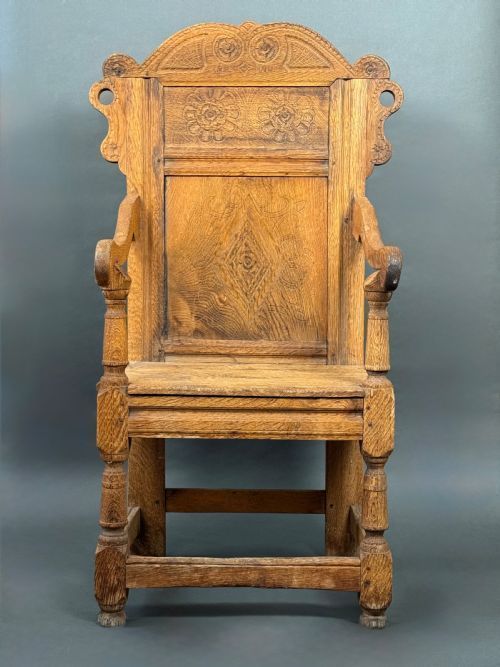
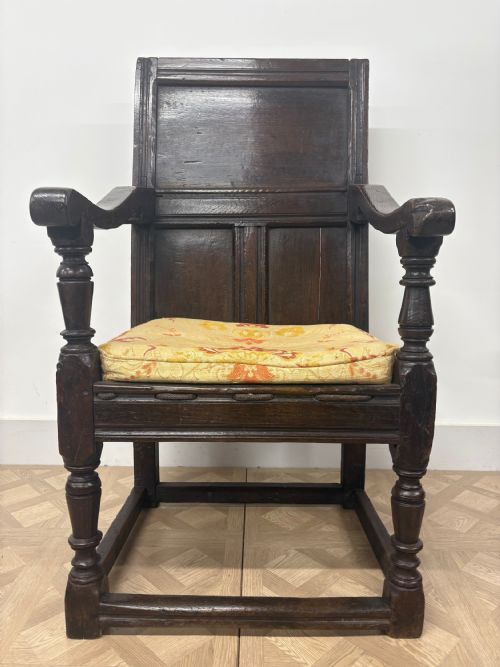
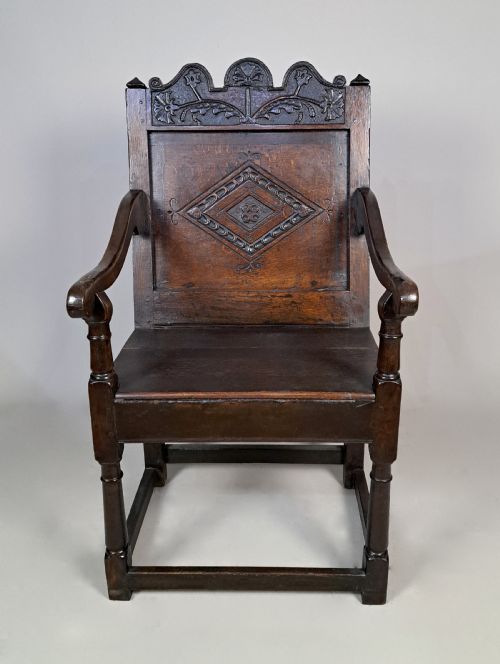
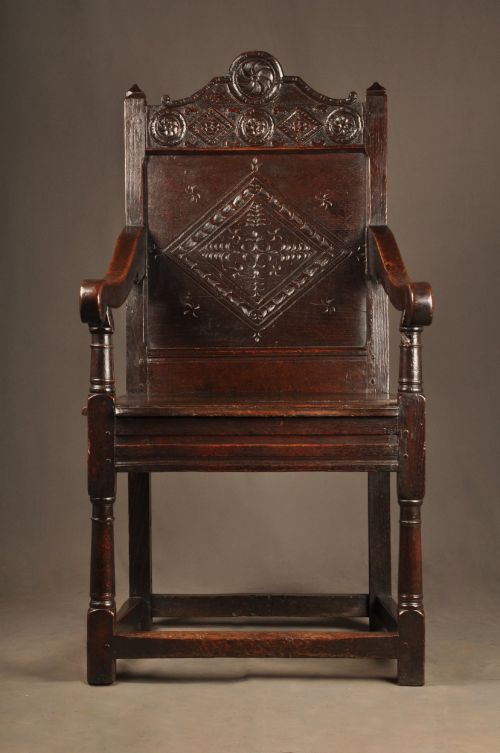
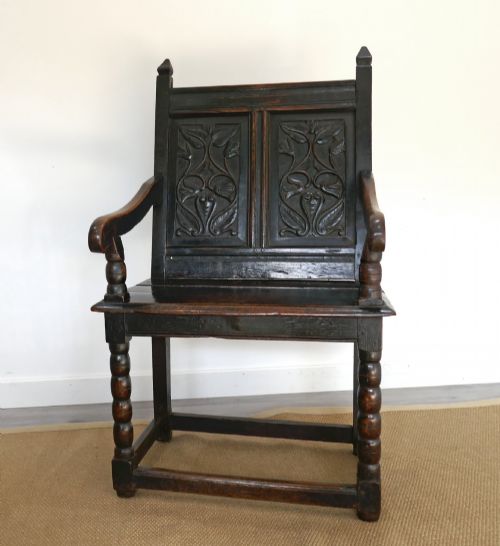
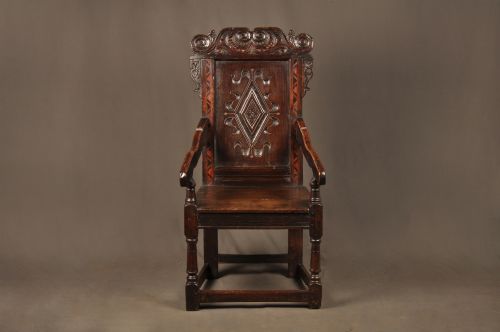
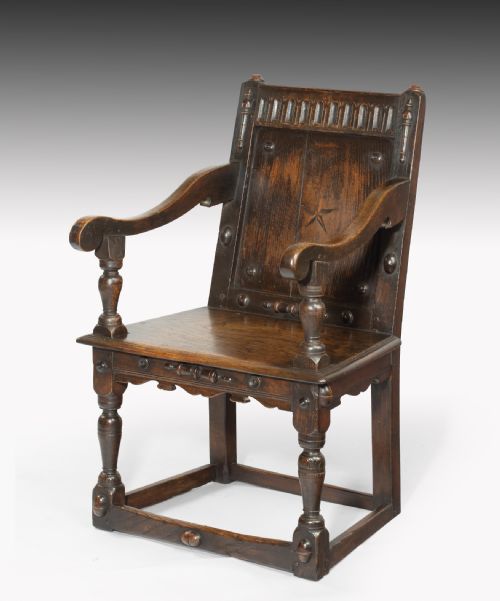
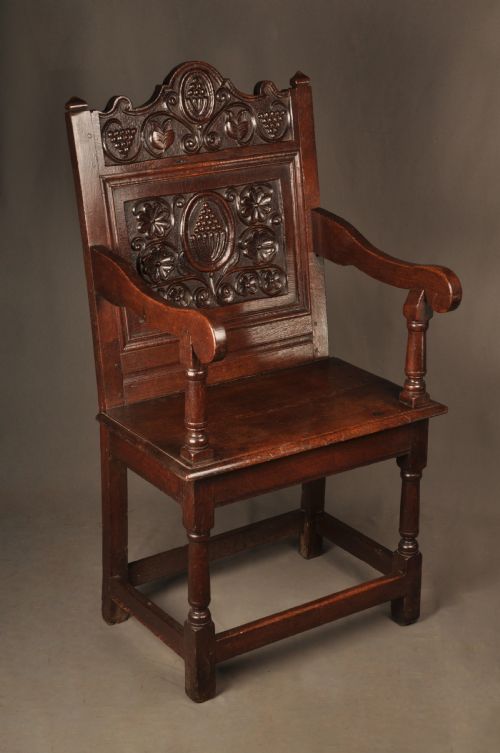
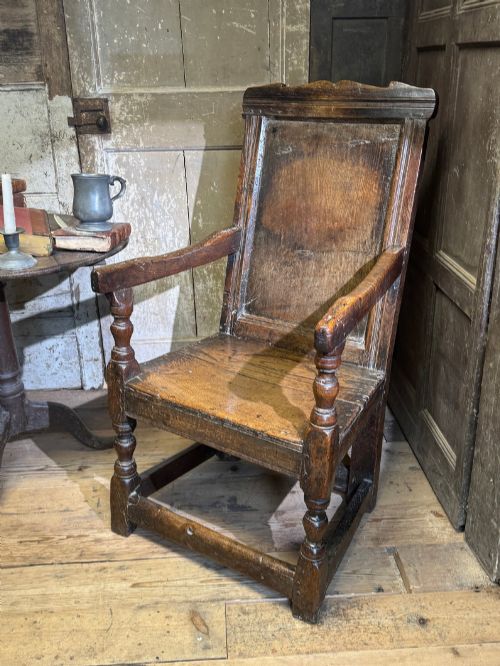
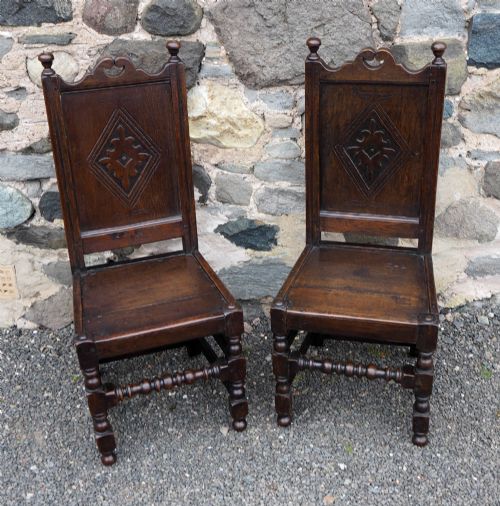
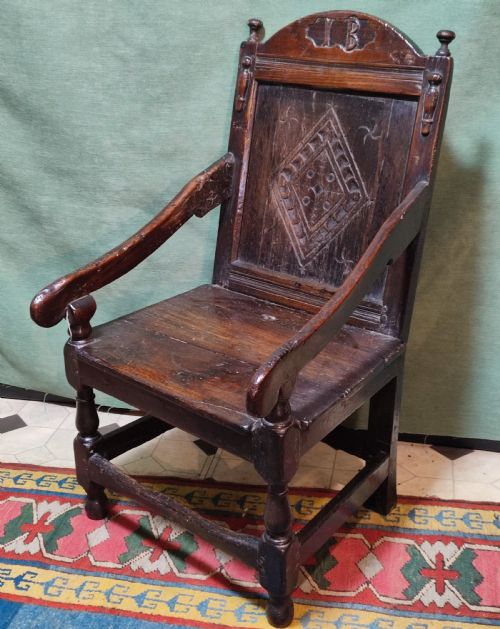
A period oak wainscot chair is a substantial wooden seat constructed primarily during the seventeenth and eighteenth centuries. These early forms include armchairs, side chairs, hall chairs, and smaller examples made for children.
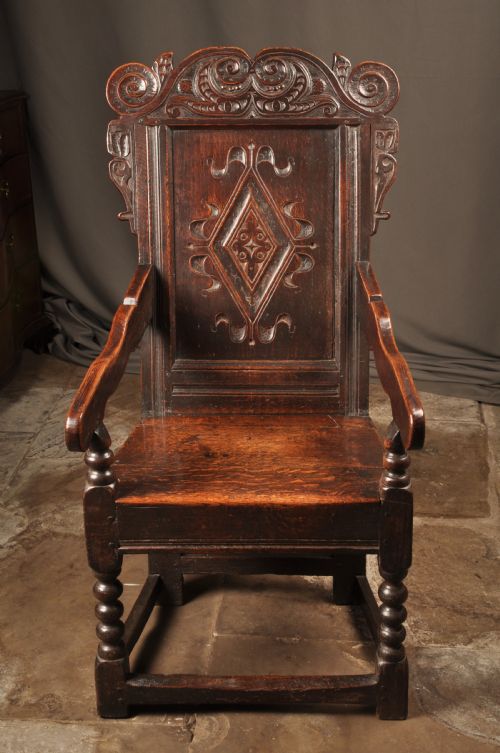
The versions most commonly met on this page originate from regional English workshops, including Lancashire, Cheshire, and Yorkshire, alongside Welsh country examples. Regional variations reveal themselves in the carving patterns on the solid panel backs and the shaping of the arms.
Most pieces date to the seventeenth century, spanning the Jacobean, James I, and James II periods, though eighteenth-century survivals and later Victorian interpretations also appear. They serve as primary seating for the head of a household or as formal hall furniture.
What varies in quality
Quality rests upon the proportion of original timber surviving in the frame and the crispness of the hand-carved decoration on the back panel. Pieces retaining their initial surface patination and unreplaced structural pegs command greater regard among collectors.
The integrity of the joinery determines the physical stability of the chair, as heavy daily use over centuries often leads to replaced feet or re-secured arm joints. Regional differences in the ambition of the carver's design also set individual examples apart.
Listings feature seventeenth and eighteenth-century solid oak forms, including regional Yorkshire and Lancashire armchairs alongside Welsh country pieces.
The Period Oak Wainscot Chair Glossary
- Wainscot chair
- A heavy wooden armchair constructed with a panelled back, derived from the term for oak panelling used on walls. These chairs were costly items of furniture before upholstered seating became common.
- Backstool
- An early form of chair without arms, essentially an upholstered or panelled stool fitted with a vertical backrest. They appear frequently in seventeenth-century regional inventories.
- Mortise and tenon
- A traditional woodworking joint where a projecting tongue fits snugly into a corresponding hole to lock timbers together at a right angle. This method provides the rigid skeleton for early oak furniture.
- Patina
- The deep surface sheen developed on old wood through decades of handling, polishing, and exposure to light. Collectors value an undisturbed surface showing age over stripped timber.
- Bobbin turning
- A type of lathe-turned furniture leg or stretcher shaped to resemble a string of spools or bobbins. This decorative turning style is typical of seventeenth-century joinery.
Period Oak Wainscot Chair: Frequently Asked Questions
What is a wainscot chair?
A wainscot chair is a heavy wooden seat built with a solid panelled back, constructed predominantly from oak during the seventeenth century and later. These chairs were important household possessions used by the head of the family.
Unlike later upholstered seating, their design relies entirely on carpentry, joinery, and carved ornamentation. They reflect the domestic architecture and craftsmanship of early modern Britain.
How old are these chairs?
Most pieces date from the seventeenth century, spanning reigns from James I through to the late Stuart period, while others originate in the eighteenth century. Regional country workshops continued producing these traditional forms long after fashionable urban tastes had shifted.
Dating relies on construction methods, timber characteristics, and style of carved decoration rather than precise documentation. Later Victorian interpretations also exist on the market.
How were they used historically?
These chairs served as principal seats of authority within a household, traditionally reserved for the master of the house or honoured guests. Their heavy construction kept them positioned near the warmth of a hall fireplace.
Over time, as lighter seating options emerged, their role shifted towards hallway furniture or decorative display pieces. Smaller versions were specifically constructed for children.
How do I care for period oak?
Period oak requires a stable indoor environment away from direct heat sources and drastic humidity changes to prevent the timber from splitting. Regular dusting with a dry cloth helps maintain the surface.
Applying a traditional beeswax polish occasionally will nourish the wood and preserve its historic sheen without building up unwanted residues.