

Oak Panel Armchair
When you search for an oak panel armchair, you are looking at heavy timber seating built to last centuries, spanning regional English, Welsh, Scottish, and Continental traditions.
Oak Panel Armchair
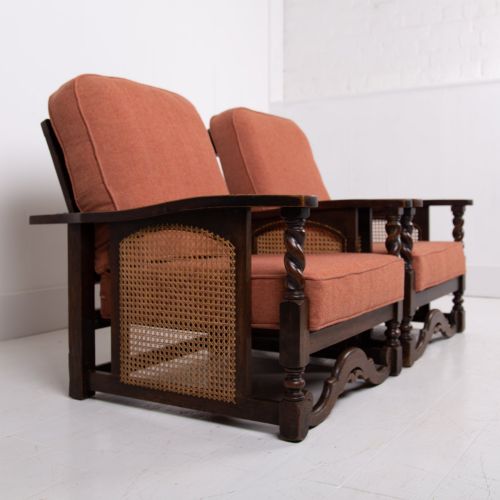
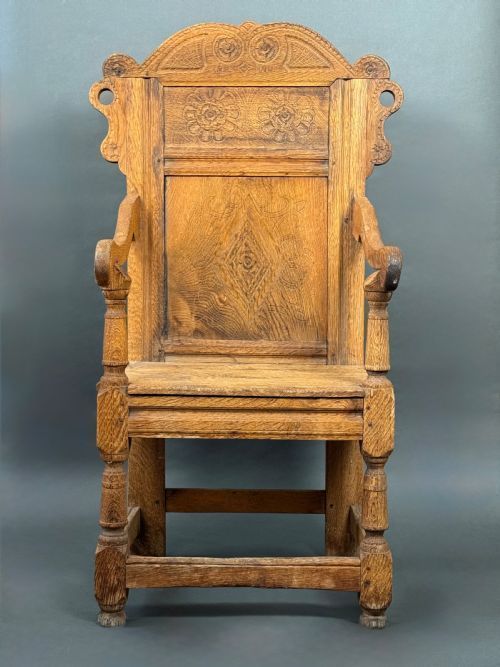
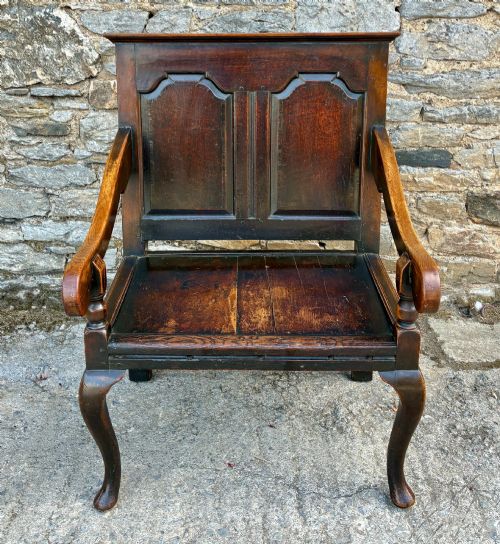
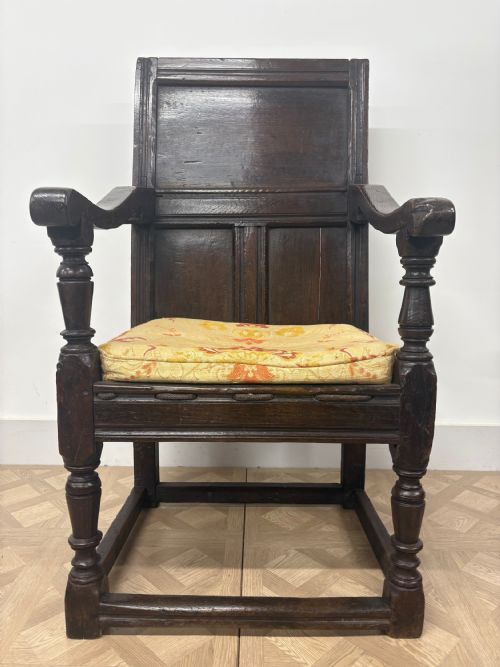
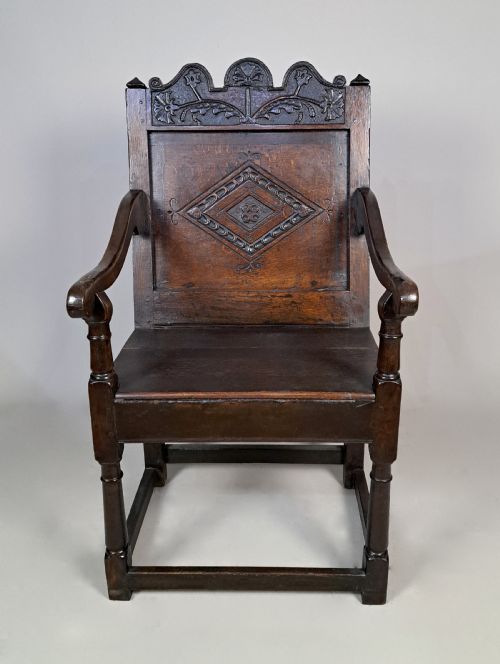
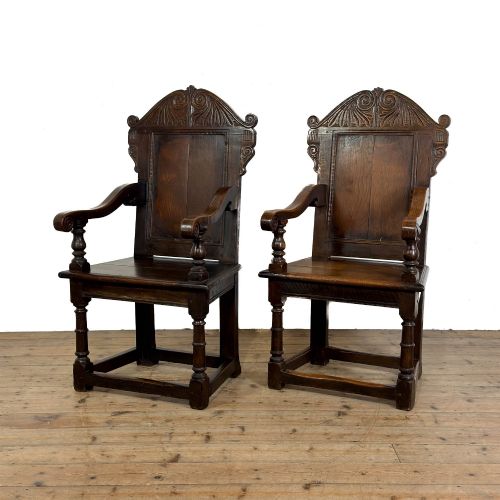
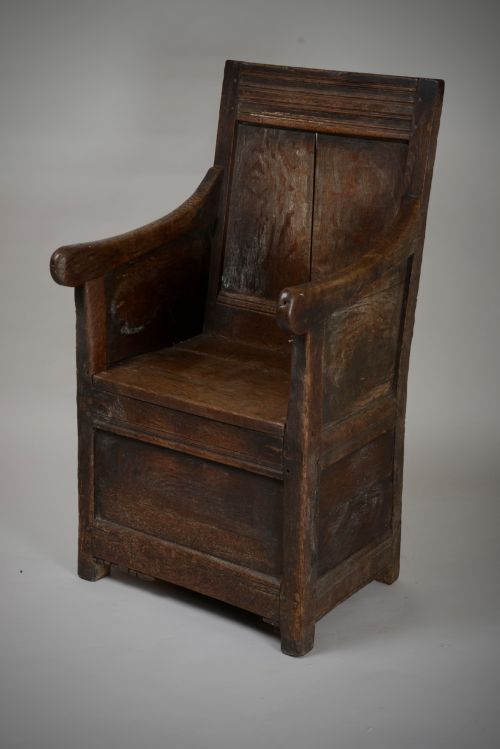
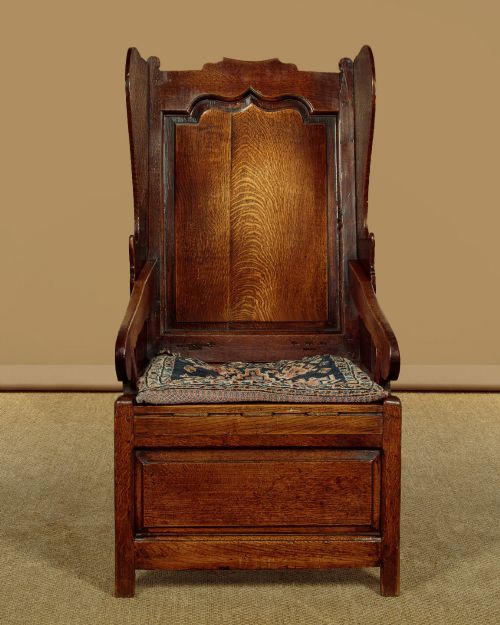
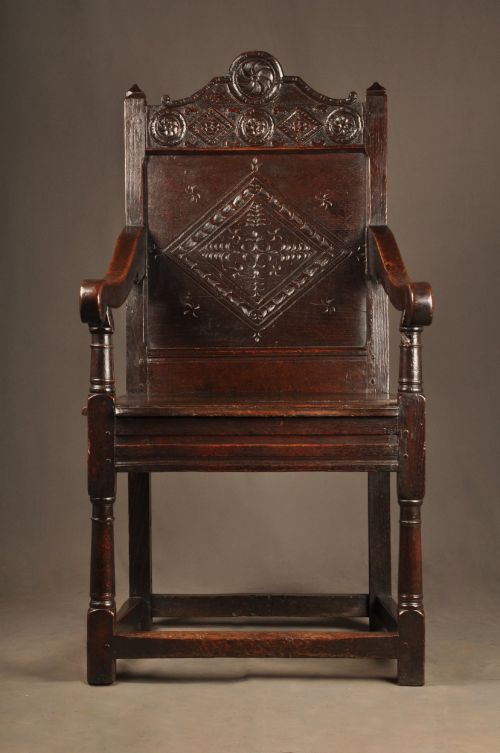
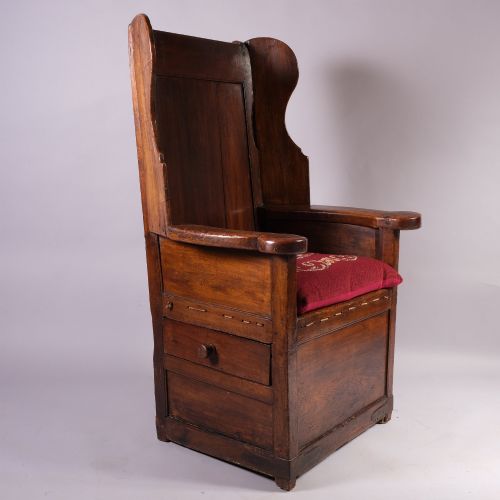
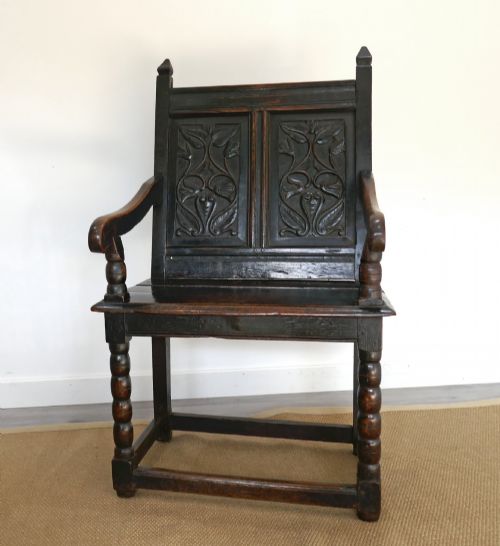
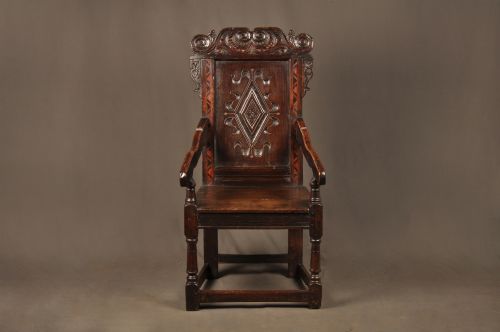
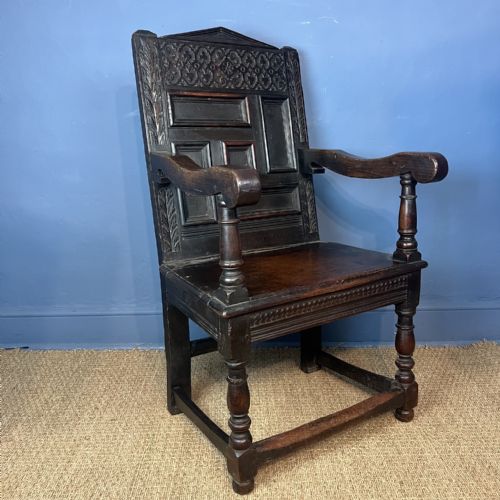
An oak panel armchair takes several distinct forms across the centuries, most commonly appearing as the rigid wainscot chair with solid board backs. Alongside these stiff timber seats, the evidence records lambing chairs with protective wing backs, settles, and box chairs from the sixteenth century onwards. These heavy seats served as primary chairs of authority in domestic interiors, placed by the hearth or at the head of the table.
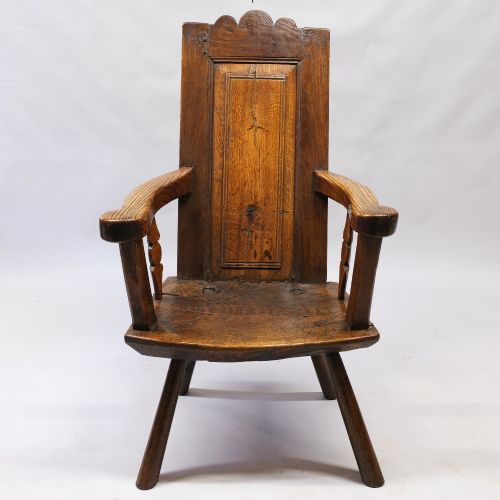
The regional variety runs from Lancashire and Yorkshire examples to Welsh and Scottish master chairs, each showing local carving styles. While seventeenth-century pieces form the core of the selection, nineteenth-century revivals and early twentieth-century interpretations also appear regularly. Buyers encounter everything from grand carved armchairs to modest country vernacular seating intended for everyday use.
How they were made
Joiners built these chairs using solid oak timbers, joined with pegged mortise and tenon joints rather than metal nails. Elm and pine occasionally appear in regional pieces, while cane and textile add later seating surfaces. Wood inlay sometimes decorates the flat wooden panels, alongside chip-carved geometric patterns and scrolling foliage.
The back panels were set into grooved frames to allow for seasonal wood movement without splitting. Turned legs and arm supports, often shaped on a pole lathe, provide the structural foundation for the heavy upper panelwork.
Listings include solid oak, elm, and pine, spanning the sixteenth to the twentieth century.
What varies in quality
The integrity of the original timber construction dictates the standing of an oak panel armchair, separating untouched survivors from heavily restored examples. Original surface patination and colour develop through centuries of handling, whereas excessive sanding or modern stripping flattens the historic texture.
The depth and crispness of the hand carving on the crest rails and back panels reveal the skill of the original workshop. Well-proportioned arm supports and unaltered seat heights separate master pieces from provincial or later revival items.
The Oak Panel Armchair Glossary
- Wainscot
- A wooden panelled chair of sturdy construction, typically originating from the sixteenth or seventeenth century. These chairs rely on frame and panel joinery rather than upholstery.
- Lambing chair
- An enclosed fireside armchair featuring high wooden wings designed to block draughts from the hearth. They frequently incorporate solid panel backs and sometimes include enclosed box seats.
- Settle
- A wooden bench with a high panelled back and arms, designed to seat multiple people or one person comfortably by the fire. The base often contains a box storage compartment.
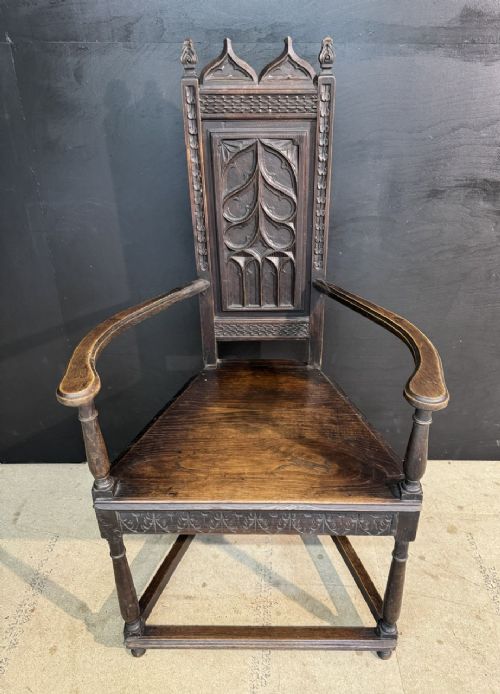
- Caquetoire
- A light-appearing conversational armchair with a high narrow back and trapezoidal seat, developed in sixteenth-century France. The term derives from the French verb for chatting.
- Box chair
- An early seating form where the base consists of a wooden box with a lift-up lid beneath the seat. This type provides both a heavy frame and hidden storage.
Oak Panel Armchair: Frequently Asked Questions
How do I spot a reproduction?
Examine the tool marks on the timber and the consistency of the wear around the foot rests and arm rails. Genuine early pieces show hand-adzed surfaces and timber shrinkage appropriate to three centuries of age.
Check the peg construction where the arms join the uprights. Machine-cut joints and modern adhesives point to nineteenth-century revival work or later copies.
Were these chairs comfortable?
Early wainscot and panel chairs were designed for upright posture rather than lounging, offering firm wooden support for the back and arms. They were seats of status rather than comfort, often softened with loose cushions.
Later regional variants like the lambing chair introduced high protective wings specifically to trap body heat and block cold draughts from stone floors.
How should I clean the wood?
Dust the surfaces regularly with a dry lint-free cloth to prevent grit from settling into the grain of the oak. Avoid modern silicone polishes that build up sticky residues over the historic wax.
Feed dry timber occasionally with a traditional beeswax polish applied sparingly. Buff gently with a soft brush to maintain the natural shine without stripping the patina.
Where were these chairs placed?
In early households, the primary wainscot chair sat by the hearth or at the head of the dining table for the head of the house. Smaller regional versions found their place in farmhouses and cottages alongside settle benches.
Later pieces served as hall chairs or fireside seating in period country homes. Their heavy timber construction allowed them to withstand daily domestic use in busy communal rooms.