

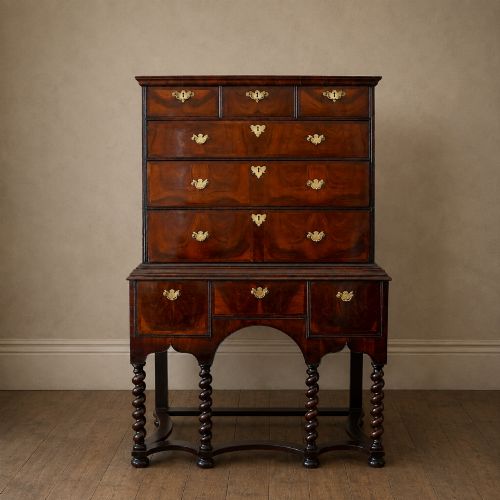
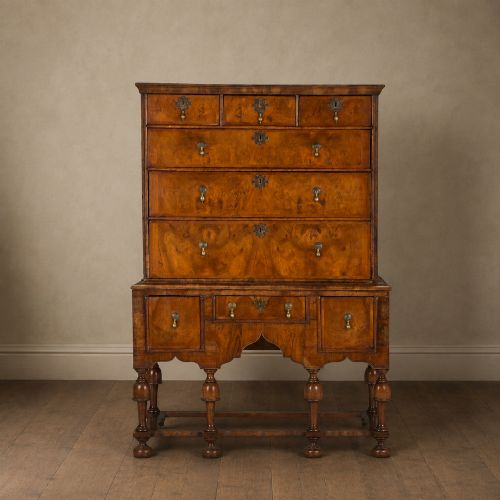
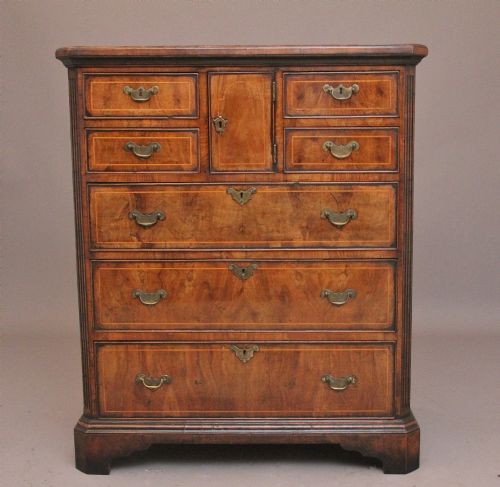
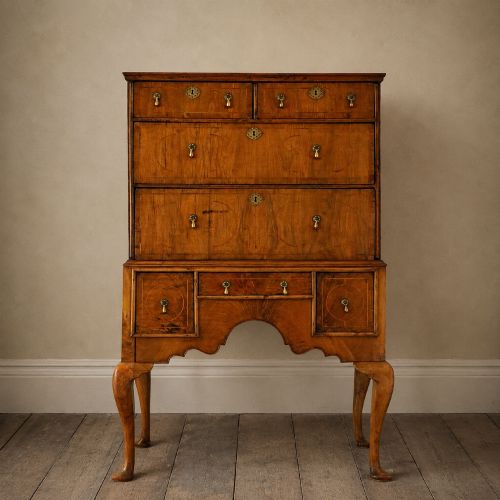
Early 18th Century Tallboy
An early 18th century tallboy is a stacked storage piece offering deep drawer capacity within a compact footprint that suits period interiors.
Early 18th Century Tallboy
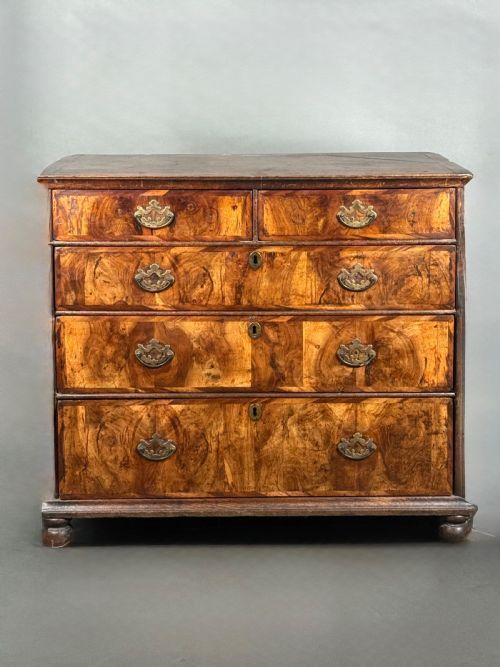
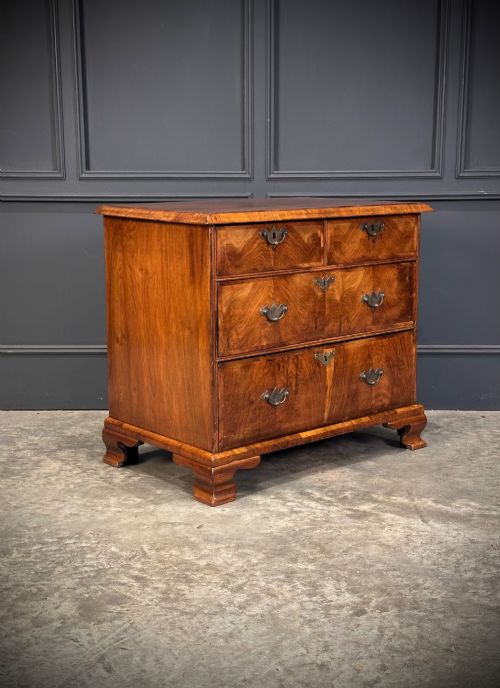
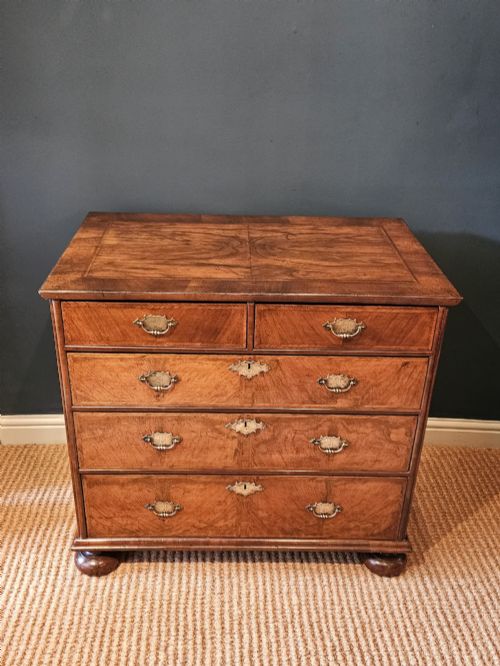
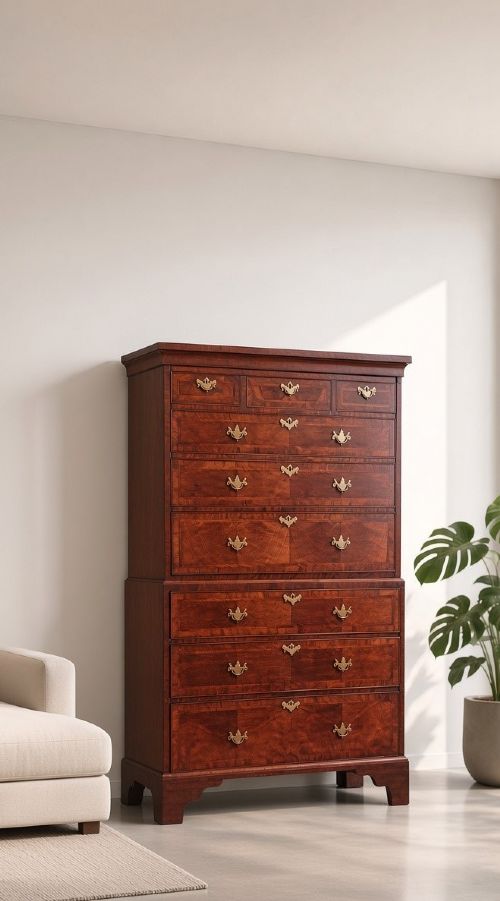
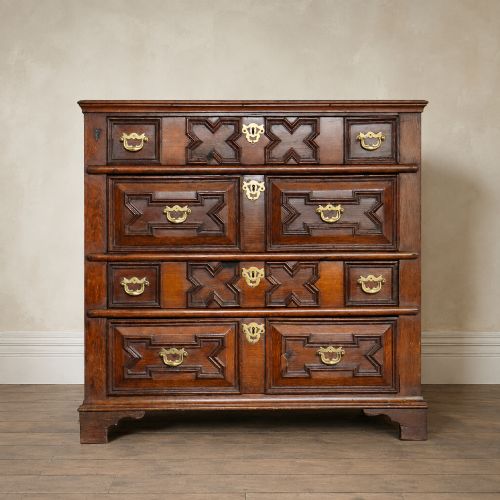
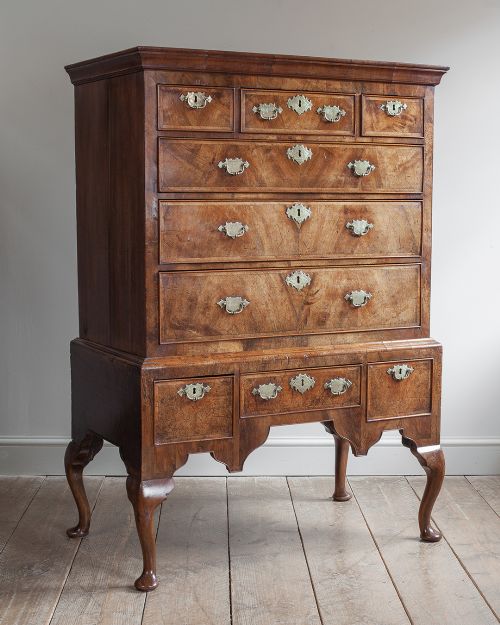
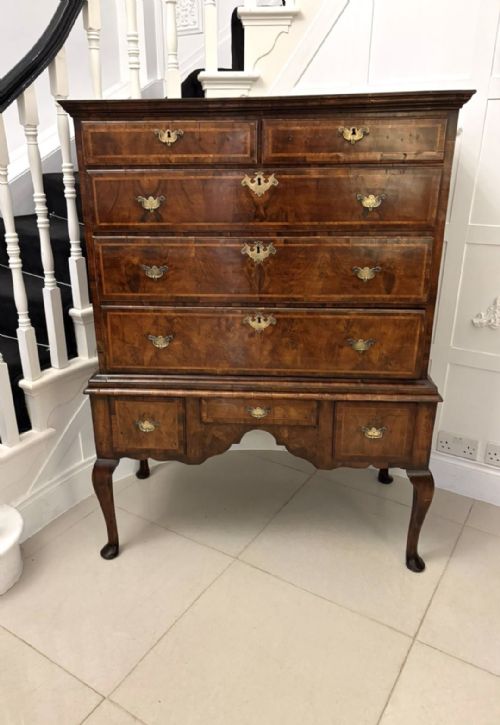
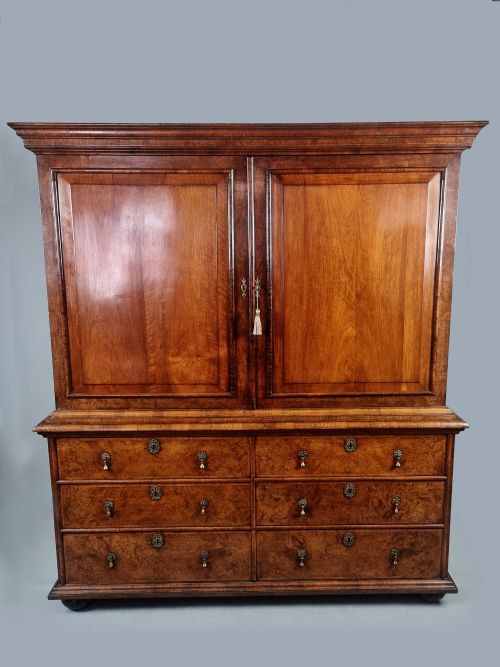
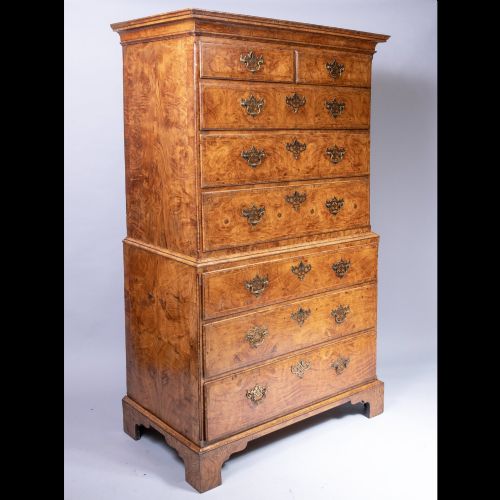
An early 18th century tallboy combines two distinct furniture forms, placing a chest of drawers directly upon a second, larger chest or upon a raised stand to maximise vertical storage. These pieces emerge across the 17th, 18th, and 19th centuries, with the Queen Anne, George I, and George II periods dominating the selection alongside William and Mary examples. Buyers frequently encounter variants such as the chest on chest, chest on stand, and cabinet on chest alongside traditional tallboys.
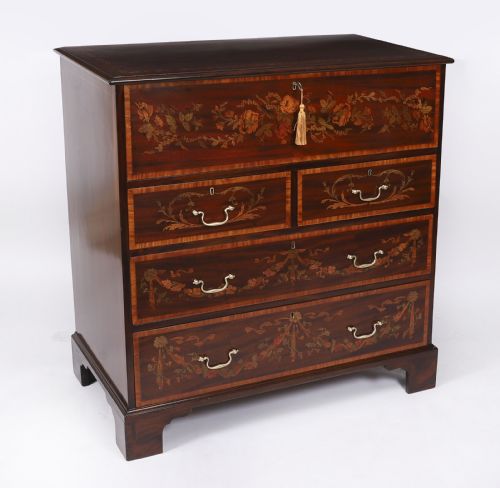
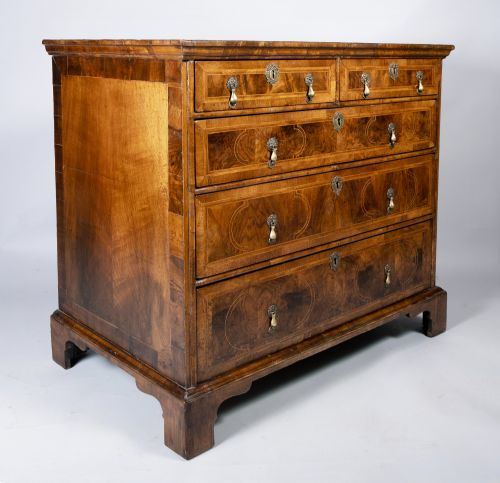
The primary forms found in these listings span oak and walnut chests of drawers, press cupboards, and secretaire variants that demonstrate the evolution of domestic storage. Oak and walnut serve as the predominant woods, often enhanced by burr walnut veneer, fruitwood inlay, and herringbone banding. These tallboys and associated chests reflect the transition from solid, utilitarian framing to highly decorative veneered surfaces designed for fashionable chambers.
Materials and construction
Joiners and cabinet makers built these carcases using solid oak and pine for internal framing, drawer linings, and structural support. Primary display surfaces utilised native and imported timbers, notably walnut, burr walnut, and mahogany, chosen for their rich grain patterns. Artisans applied decorative veneers to deal or oak carcases, securing them with animal glues that require careful climate control today.
Surface enrichment relied on meticulous detailing such as herringbone banding, feather-banded borders, and fruitwood inlay. Brass drop handles, batwing plates, and escutcheons were cast and chased to secure the drawer fronts. Carved elements and geometric mouldings defined the transition between styles from William and Mary through to the early Georgian era.
Materials recorded across the inventory include solid oak, walnut, burr walnut veneer, mahogany, pine, and fruitwood inlay.
Determinants of quality
Quality rests upon the selection and matching of burr walnut or figured grain across the drawer fronts, where symmetrical patterns indicate high workshop standards. The integrity of the secondary timbers, the retention of original brass hardware, and the crispness of crossbanding separate superior examples from standard production. Construction details such as hand-cut dovetails and undisturbed drawer linings reveal the original maker's hand.
Proportion and scale dictate the desirability of these pieces, with smaller proportions commanding particular attention from collectors. The relationship between the upper and lower sections of a chest on chest or chest on stand must remain balanced and historically coherent. Associated stands or married upper and lower sections alter the unity of the piece compared to those surviving with their original timber integration.
The Early 18th Century Tallboy Glossary
- Tallboy
- A tall chest of drawers made in two sections, placing one cabinet or chest squarely on top of another. This form developed to provide extensive vertical storage without occupying excessive floor space in domestic chambers.
- Chest on Stand
- A chest of drawers elevated on a separate frame with legs, often featuring lower drawers or shaped aprons. This style bridges the transition from late 17th-century stand designs to the fully enclosed tallboy.
- Herringbone Banding
- Inlaid strips of veneer arranged in a V-shaped pattern resembling the skeleton of a herring. Cabinet makers used this technique to frame drawer fronts and top panels on high-status walnut furniture.
- Feather-Banded Border
- A decorative inlay formed by cutting thin strips of veneer across the grain and laying them in opposing diagonal directions to create a plume effect. It frames the perimeter of drawer faces on George I pieces.
- Secretaire
- A writing drawer containing a fitted interior with small compartments and pigeon holes behind a fall-front or sliding flap. These compartments allowed private correspondence within the main chest structure.
Early 18th Century Tallboy: Frequently Asked Questions
How do you distinguish a tallboy from a chest on chest?
A tallboy typically refers to a chest on stand or a distinct vertical chest format, whereas a chest on chest specifically denotes two full-sized drawer sections stacked directly together.
Both forms belong to the same overarching tradition of modular vertical storage popularised in the late 17th and 18th centuries.
Where were tallboys placed in historic homes?
Tallboys were primarily designed for bedchambers and dressing rooms where floor space was at a premium but deep storage was essential for linens and clothing.
Their substantial height and compartmentalised drawers made them ideal for private family quarters rather than public reception rooms.
How should I care for a walnut tallboy?
Walnut tallboys require stable indoor humidity and protection from direct sunlight to prevent the fragile burr veneers from lifting or drying out.
Applying traditional beeswax polish occasionally maintains the lustre of the wood without sealing the surface against natural atmospheric changes.
What woods were used in early 18th century tallboys?
Makers constructed these pieces using native oak and pine for structural carcases and drawer linings, overlaid with decorative veneers of walnut and burr walnut.
Mahogany and fruitwood appear in later Georgian pieces or as inlay materials to create contrasting geometric borders.