

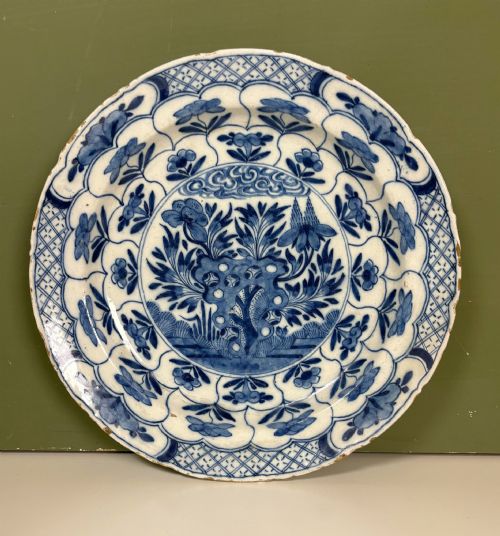
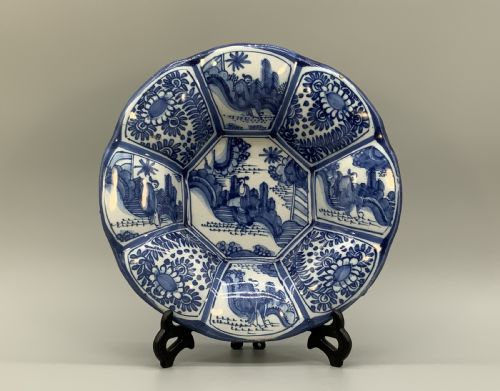
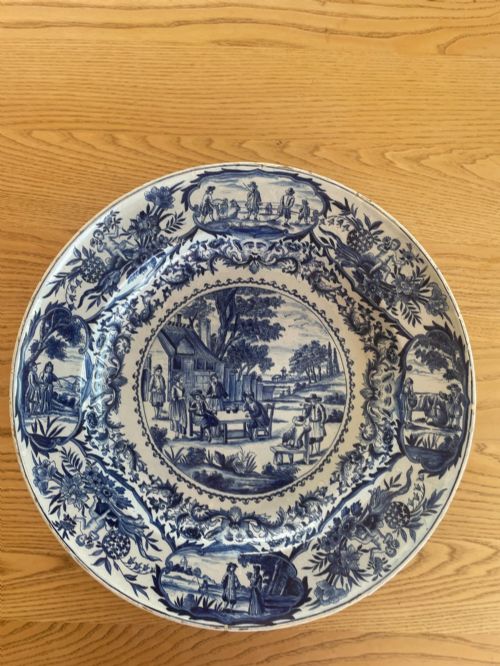
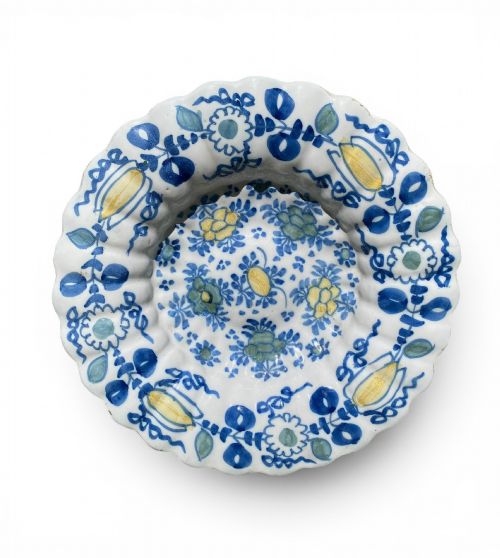


Dutch Tin Glaze Charger
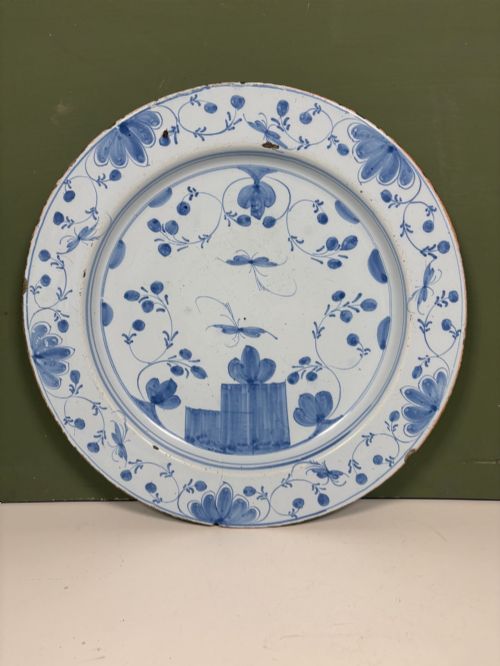
A dutch tin glaze charger brings the vibrant palette and bold brushwork of the Low Countries straight onto your wall or table.
Dutch Tin Glaze Charger
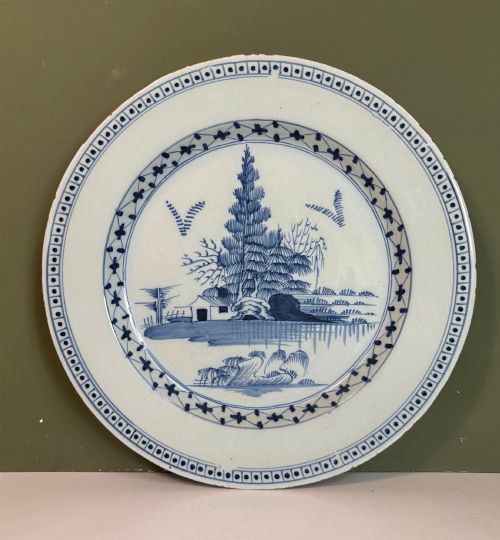
When you search for a dutch tin glaze charger, you are looking at large earthenware plates and dishes produced primarily during the seventeenth and eighteenth centuries. These pieces were made to be displayed on walls or sideboards rather than for daily dining.
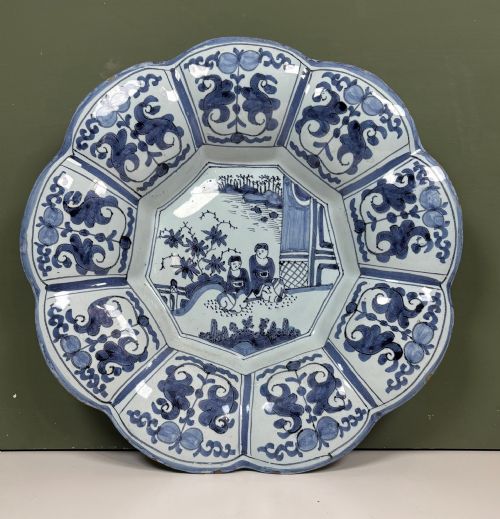
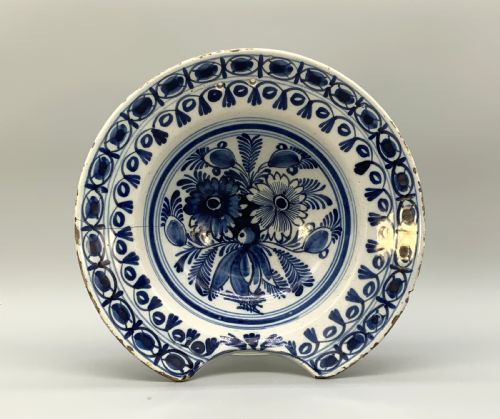
The selections on this page span the 17th century and 18th century, alongside later nineteenth-century interpretations. You will encounter forms ranging from deep chargers and shallow bowls to lobed dishes and barber's bowls.
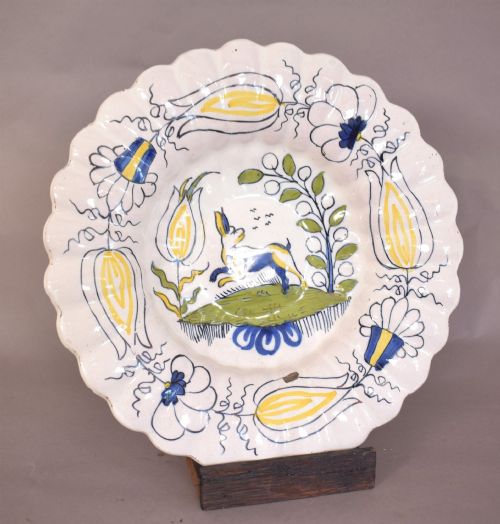
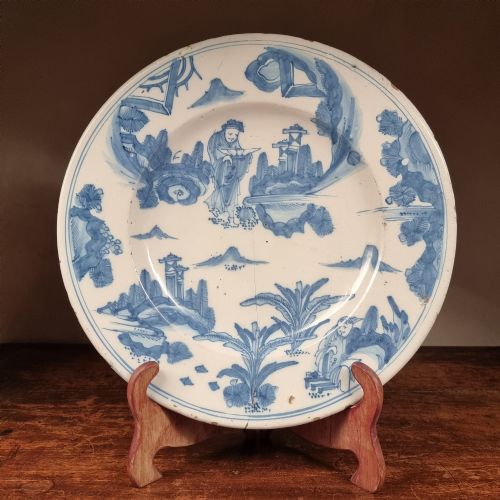
Most examples originate from the workshops of the Dutch Golden Age and subsequent Georgian periods. They frequently display classic blue and white painting or richer polychrome and manganese colours.
Materials and construction
Potters formed these items from earthenware, covering the fired clay body with an opaque tin-glazed slip that provided a smooth, white canvas for decoration. Artisans applied cobalt pigment and other metallic oxides directly onto this porous surface before the final firing.
Grand feu techniques allowed manganese and polychrome pigments to fuse directly into the glaze at high temperatures, creating the characteristic soft edges where the colour bled slightly into the white ground.
Some seventeenth-century barbers used these very dishes to catch more than just attention.
Judging quality and execution
The distinction between standard domestic ware and finer display items lies in the crispness of the hand-painted design and the depth of the glaze. Pieces influenced by Kraak styles or complex Chinese-inspired motifs demand greater technical skill from the painter.
Surface preservation and the brilliance of the cobalt pigment dictate desirability. Strong, confident brushstrokes executed during the seventeenth century or eighteenth century separate masterworks from simpler provincial outputs.
The Dutch Tin Glaze Charger Glossary
- Tin-Glazed Earthenware
- Earthenware pottery coated with a white glaze containing tin oxide to create an opaque surface. This technique formed the basis for all traditional Delftware production.
- Charger
- A large decorative plate intended for display rather than service. These items measure significantly larger than standard dining plates.
- Polychrome
- Decoration employing multiple colours rather than a single pigment. On these objects, it typically involves a palette of greens, yellows, blues, and oranges.
- Cobalt Pigment
- A metallic blue oxide used to paint intricate designs onto the unfired tin glaze. It turns a deep blue during the high-temperature kiln firing.
- Kraak Style
- A decorative layout featuring panelled borders and central motifs inspired by late Ming dynasty Chinese porcelain. Dutch potters imitated this aesthetic extensively.
Dutch Tin Glaze Charger: Frequently Asked Questions
What is a dutch tin glaze charger?
It is a large earthenware plate covered in an opaque white tin glaze and decorated with hand-painted pigments. Potters made them primarily in the seventeenth and eighteenth centuries for visual display.
These items served as prominent ornaments in prosperous homes, reflecting trade connections with Asia and local artistic traditions.
How were these chargers used originally?
People hung them on walls or stood them upright on dressers and sideboards to catch the light and impress visitors. Their large surface area made them ideal vehicles for narrative or floral artwork.
They were distinct from everyday tableware, remaining safely out of the way of rough daily use.
How do I hang an antique charger safely?
Use a professionally fitted, coated wire hanger that distributes the weight evenly across the rim without putting pressure on the earthenware body. Ensure the wall fixing is secure.
Avoid placing them in direct sunlight or areas of high humidity to protect the tin glaze over time.
How can I tell 17th century from 18th century pieces?
Seventeenth-century examples often lean heavily into Kraak styles and starker blue and white contrasts, alongside specific lobed or panelled rim shapes. Eighteenth-century pieces frequently introduce broader floral patterns, geometric borders, and richer polychrome or manganese palettes.
Glaze thickness and body weight also shift subtly across the decades, though stylistic overlap remains common.