





Dutch Marquetry Walnut Bureau
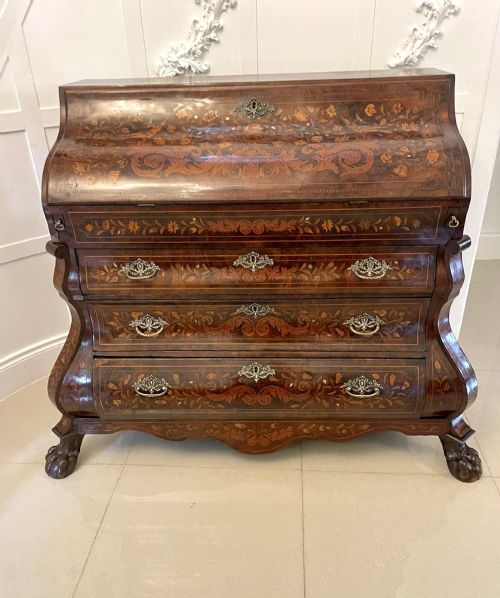
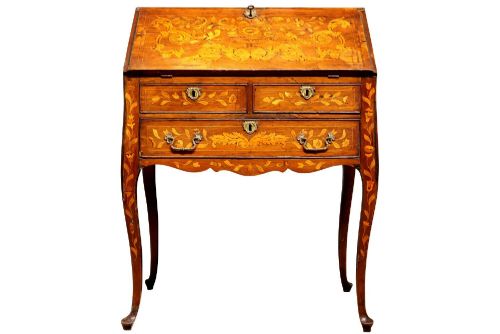
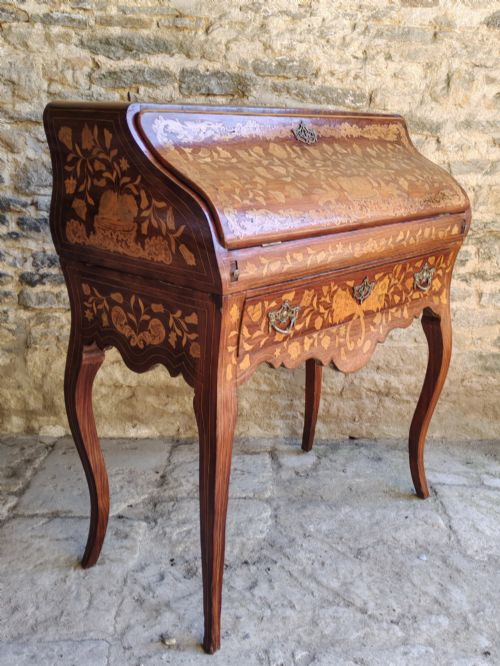
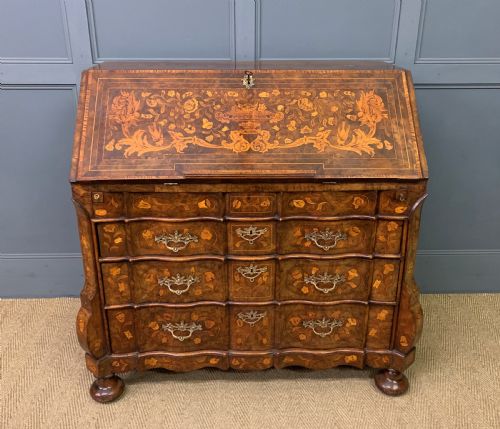
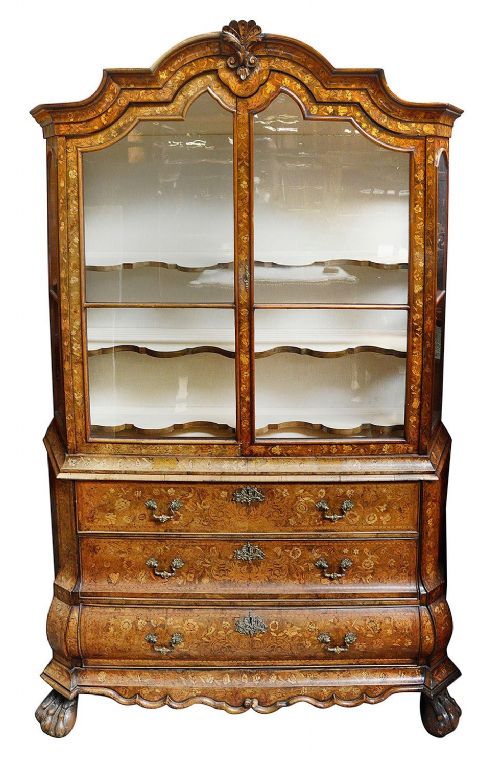
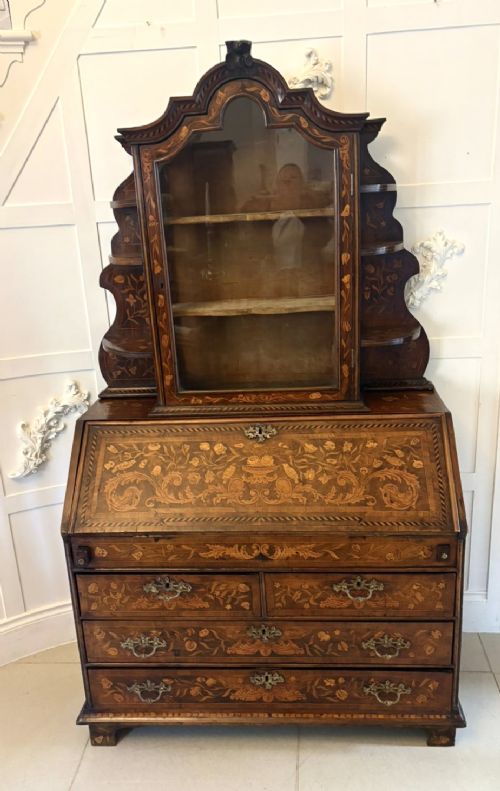
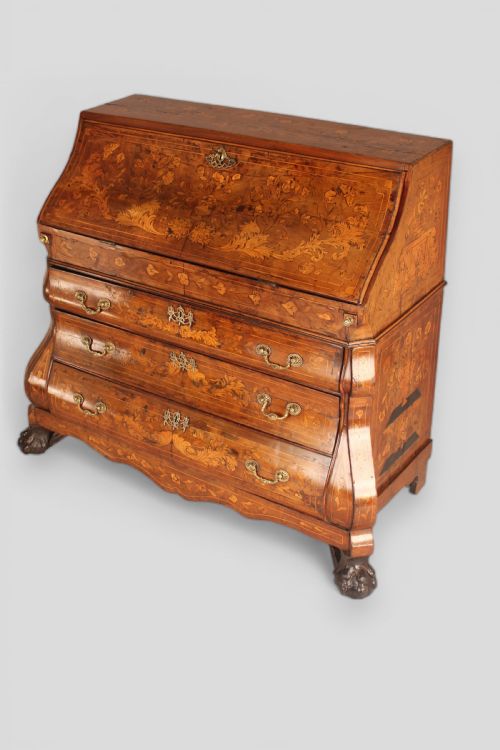
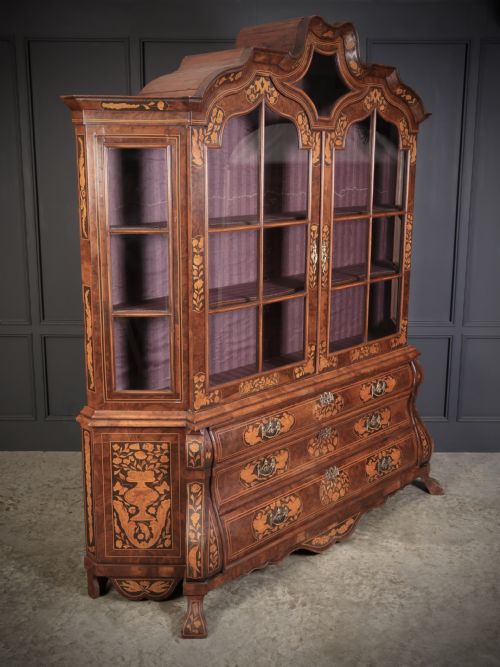
A dutch marquetry walnut bureau brings together rich burr timbers and elaborate floral inlay in a substantial writing cabinet.
Dutch Marquetry Walnut Bureau
A dutch marquetry walnut bureau comprises a fitted writing compartment enclosed by a sloping fall front, often raised above drawer units or built into towering bureau bookcases and vitrines. These pieces frequently span the eighteenth and nineteenth centuries, appearing in Georgian and Rococo revival styles alongside distinct Dutch baroque expressions.
Originating largely from continental workshops and later nineteenth century revivals, these items display distinct regional traits such as undulating bombé profiles and dramatic swelling drawer fronts. The structural carcass provides a robust architectural frame for the intricate veneer work that defines the grouping.
Craftsmanship and design
Quality rests primarily in the precision of the marquetry cutting and the choice of walnut veneer, where highly figured burr sections and crisp floral inlays command greater visual depth. The integration of the decorative scheme across curving bombé fronts requires supreme dexterity from the cabinetmaker to maintain continuous patterns without distortion.
Structural integrity within the fall front mechanism and the internal pigeonholes differentiates superior examples from simpler iterations, as does the preservation of original brass mounts and the uncompromised richness of the underlying walnut timber.
The listings span the eighteenth century, the nineteenth century, and the nineteen twenties, uniting walnut, burr walnut, fruitwood, and brass across bureau and display cabinet forms.
Morison of Edinburgh
The Dutch Marquetry Walnut Bureau Glossary
- Marquetry
- Decorative veneer work arranged in pictorial or floral patterns across a furniture surface. This technique uses various contrasting timbers to create complex visual designs.
- Bombe
- A swelling or outward curving profile typical of continental furniture design. This shaped contour adds significant sculptural presence to the base of a cabinet or bureau.
- Burr walnut
- Timber taken from walnut tree growths that produces highly figured, swirling grain patterns. It forms the prized primary surface veneer on many high status eighteenth century pieces.
- Bureau bookcase
- A dual purpose furniture form combining a sloping writing desk below with a shelved upper cabinet enclosed by doors. Upper sections frequently feature glazed panels for display purposes.
- Fall front
- A hinged writing flap that drops down to provide a horizontal desk surface. When closed, it conceals an internal arrangement of small drawers and pigeonholes.
Dutch Marquetry Walnut Bureau: Frequently Asked Questions
How do I care for walnut veneer?
Keep these items away from direct sunlight and steady heat sources to prevent the walnut veneer from drying or cracking over time. Apply a microcrystalline wax periodically to nourish the timber and protect the delicate fruitwood marquetry.
Avoid using modern liquid polishes or silicone sprays, as these substances can penetrate hairline fractures in the old finish and degrade the adhesive holding the veneer to the oak carcass.
What is inside a bureau bookcase?
Opening the fall front reveals a fitted interior comprising small pigeonholes, concealed compartments, and tiny drawers designed for correspondence and stationery. Above this desk section, the upper bookcase or display cabinet contains adjustable wooden shelves.
Many of these upper sections feature glazed doors to exhibit books or porcelain, whilst the lower bureau offers deep drawers for substantial storage.
How do I distinguish eighteenth century pieces?
Examine the construction methods visible inside the drawer boxes and the underside of the carcass, where hand cut dovetails and native oak secondary timbers indicate earlier periods. Eighteenth century marquetry tends to employ natural fruitwoods with subtle fading, rather than the heavily stained veneers found on later revivals.
The overall proportions and the organic quality of the floral motifs also offer strong clues regarding the exact decade of manufacture.
Where should I place a bombe bureau?
Position the piece against a principal wall where its dramatic swelling profile and intricate floral marquetry can be fully appreciated without obstruction. Because these items have generous depth due to their curved fronts, ensure adequate floor clearance in hallways or principal rooms.
Allow enough space in front of the bureau to drop the writing flap comfortably without crowding surrounding seating.