



Burr Walnut Marquetry Desk
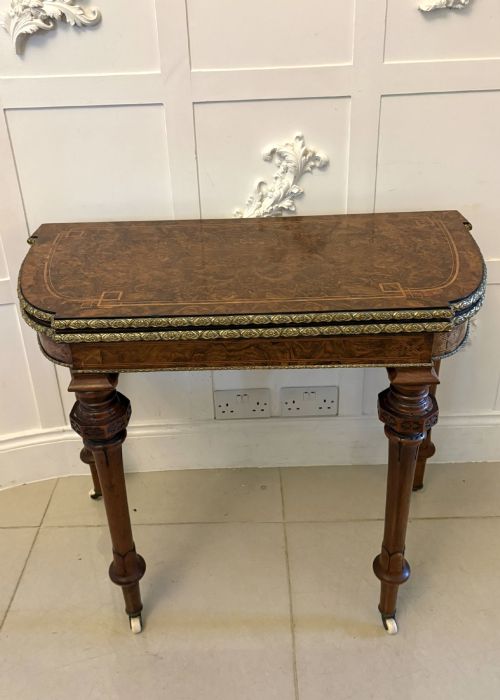
A burr walnut marquetry desk brings together intricate timber grain and floral inlay in writing tables, bureaux, and davenports designed for domestic study.
Burr Walnut Marquetry Desk
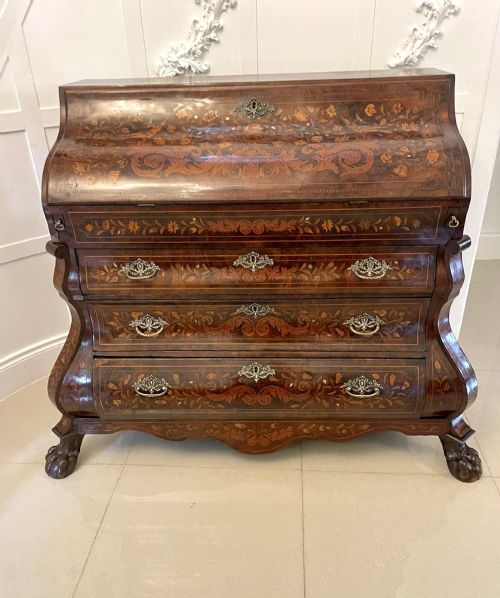
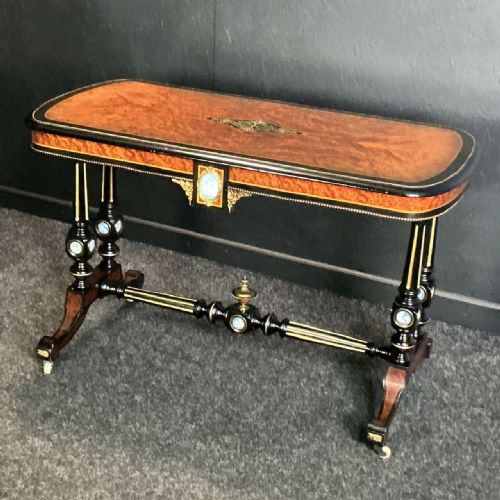
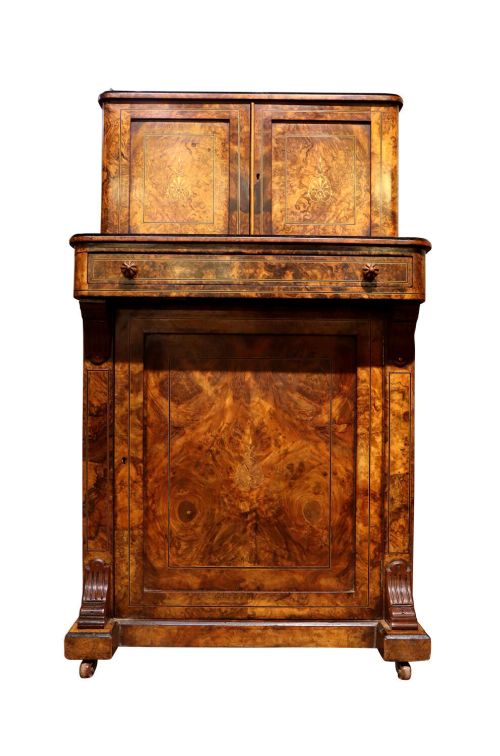
A burr walnut marquetry desk spans several centuries of cabinet making, appearing most frequently in Victorian forms such as Davenport desks, writing tables, and bonheur du jour variants alongside earlier eighteenth century bureaux and bureau bookcases.
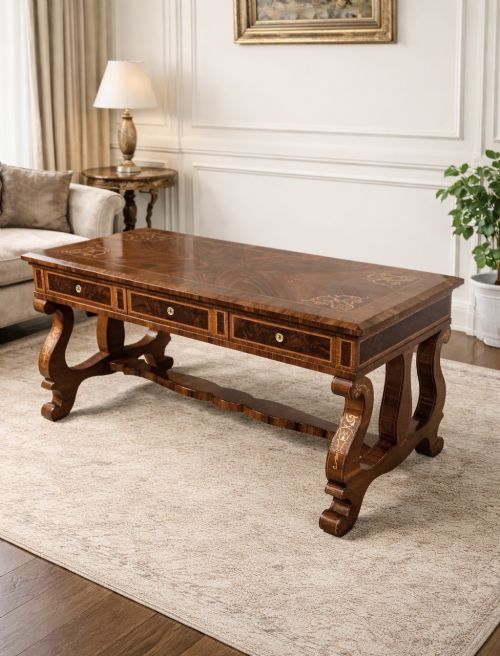
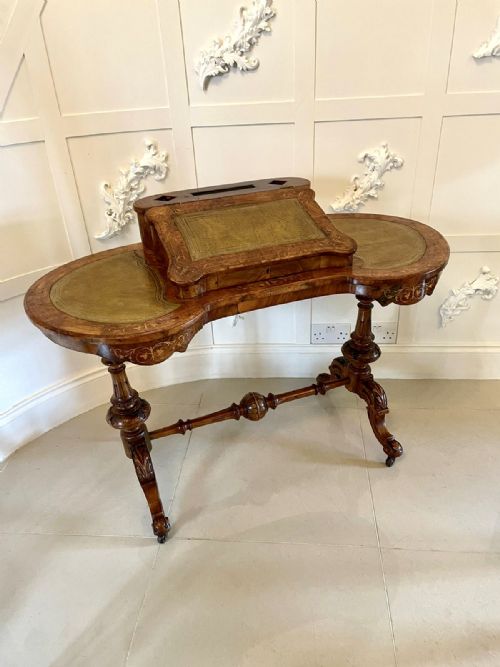
Buyers encounter freestanding library tables, kidney shaped writing desks, and bombe shaped bureaux that utilise the rich patterning of burr walnut combined with floral or scrolling inlay.
These pieces originated as writing surfaces and storage cabinets for correspondence, relying on compact writing compartments, stationery drawers, and occasionally pop up mechanisms.
Materials and construction
Makers utilised burr walnut veneers applied to carcase timbers to exploit the swirling, knotty grain patterns characteristic of the growth growths on walnut trees.
Marquetry decoration incorporates contrasting timbers such as boxwood inlay, alongside brass mounts, ormolu, and leather writing surfaces inset into the timber tops.
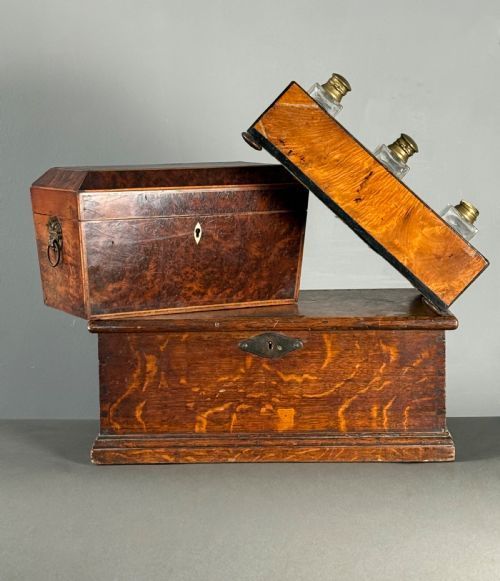
Surviving forms include centre tables, writing desks, bureau bookcases, console tables, and travelling inkwells constructed from walnut with brass and glass elements.
Judging quality
The distinction between standard production and exceptional craftsmanship rests in the density and symmetry of the burr walnut veneer and the crispness of the marquetry cutting.
Superior examples display harmonious grain matching across multiple drawer fronts and surfaces, combined with refined internal fittings and robust secondary timbers.
The Burr Walnut Marquetry Desk Glossary
- Burr walnut
- Timber taken from the wart or burl of a walnut tree, yielding highly figured circular grain patterns prized for decorative veneering. It forms the primary visual surface on these desks.
- Marquetry
- The art of applying decorative pieces of veneer to a structure to form intricate pictorial or floral patterns. Craftsmen cut contrasting woods together to ensure tight joints.
- Davenport
- A small compact writing desk featuring a sloping hinged top lined with leather and a bank of drawers to one side. Victorian versions often include stationery compartments above.
- Bonheur du jour
- A light lady's writing desk featuring a small set of drawers and pigeonholes on top of the main writing surface. These pieces emerged during the French revival periods.
- Ormolu
- Gilded bronze mounts cast in decorative scrolls and foliage applied to corners and legs. This technique adds metallic contrast to the dark timber.
Burr Walnut Marquetry Desk: Frequently Asked Questions
What is a davenport desk?
A davenport is a compact writing desk featuring a sloped, leather lined writing surface above a set of side drawers. Many examples incorporate stationery cabinets or pop up mechanisms.
Cabinet makers designed them for domestic writing and correspondence in studies and sitting rooms during the nineteenth century.
How do I identify marquetry?
Marquetry involves piecing together fine veneers of different coloured woods to create pictorial or floral designs. Close inspection reveals the distinct joints between the individual wood pieces.
This technique differs from simple surface painting by using the natural grains and colours of timbers like boxwood.
What distinguishes burr walnut?
Burr walnut comes from an excrescence on the walnut tree where the grain grew in a deformed, swirling pattern. This produces mottled, eye catching surfaces used for high end furniture veneers.
Cabinet makers selected these striking grain formations for the principal display surfaces of desks and cabinets.
Where were these desks used?
These desks served as private writing furniture in principal rooms, libraries, and bedrooms of large houses. Their finished backs allowed them to stand away from walls in the centre of a room.
They provided functional workspace alongside decorative presence to match period interiors.