




Vintage Floral Inlaid Bureau
A vintage floral inlaid bureau brings together intricate marquetry and practical writing surfaces, offering storage and classic craftsmanship for the home.
Vintage Floral Inlaid Bureau
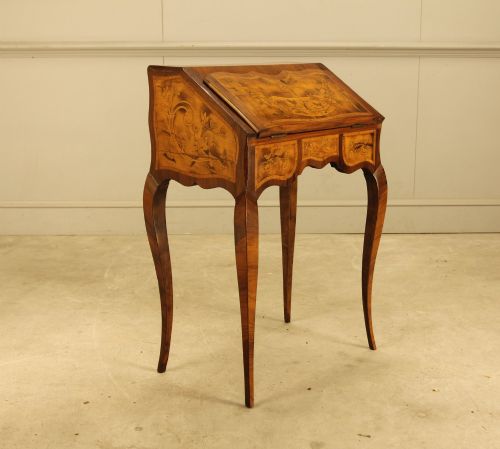
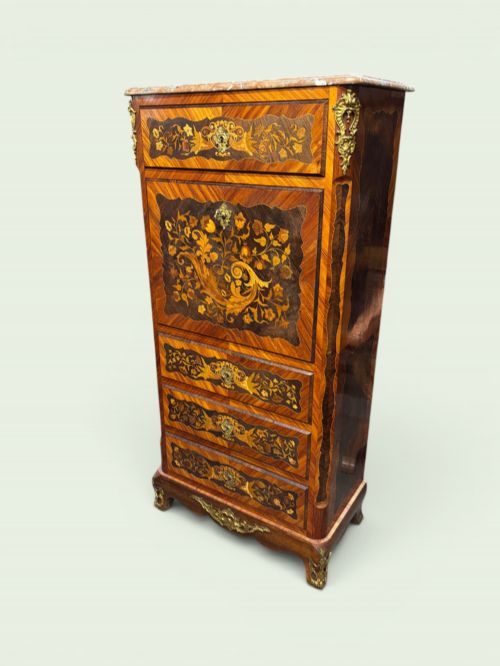
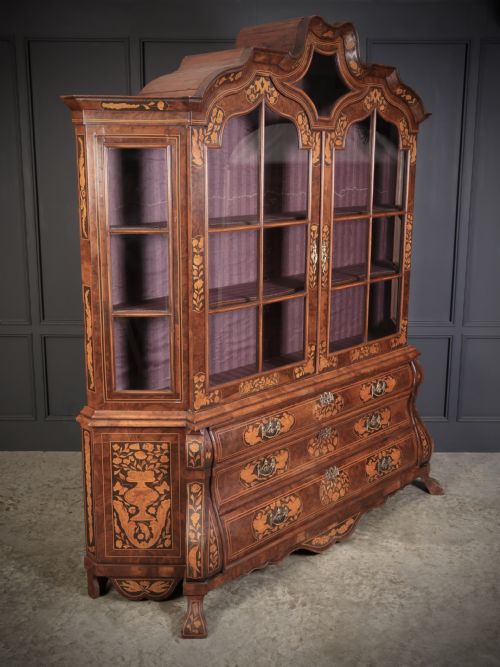
A vintage floral inlaid bureau combines a sloping writing flap or drop-front cabinet with detailed marquetry depicting flowers and foliage. Buyers searching for a vintage floral inlaid bureau will encounter distinct stylistic traditions, most notably Dutch marquetry and French Louis XV revival pieces.
The selections available range from 18th-century walnut examples to 19th-century rosewood and fruitwood cabinets, alongside bombé-shaped forms and ladies' writing desks. These pieces function both as practical desks and decorative focal points within a room, featuring fitted interiors behind the main writing flap.
Dutch Baroque and French Rococo revival influences dominate the designs, often incorporating brass hardware and ormolu mounts. The core forms vary between traditional slope-front bureaux, secretaire cabinets, and freestanding writing desks.
Materials and construction methods
Cabinet makers utilised dense hardwoods such as walnut, rosewood, kingwood, and burr walnut as the primary carcase and veneer foundations. These woods provided stable surfaces for complex floral marquetry compositions executed in contrasting fruitwoods.
Decorative detailing relied on cast brass handles, escutcheons, and gilded ormolu mounts to accent the curved contours of bombé shapes and serpentine fronts. Surface decoration focused heavily on pictorial floral inlay arranged across the fall-fronts, drawer fronts, and top panels.
Secret compartments hidden behind miniature drawers reward anyone patient enough to search for concealed spring latches.
Factors that separate examples
The precision and density of the floral marquetry dictate the upper tier of quality, distinguishing meticulously shaded inlaid petals and leaves from simpler repetitive patterns. The choice of underlying timber, such as burr walnut or figured rosewood, further establishes the prestige of an individual piece.
Structural complexity, particularly the execution of bombé shaping and the integration of cast ormolu mounts, separates standard cabinet work from exceptional examples. The internal arrangement of small drawers, pigeonholes, and secret compartments also reflects the original maker's investment of time and skill.
The Vintage Floral Inlaid Bureau Glossary
- Marquetry
- Decorative veneer work arranged in pictorial patterns such as floral sprays. Skilled craftspeople cut contrasting pieces of wood and fitted them together to create detailed surface designs.
- Bombé
- A swelling, outward-curving shape found on the sides and fronts of certain cabinets and bureaux. This contour requires advanced woodworking techniques to shape the wood and apply veneer smoothly.
- Ormolu
- Gilded bronze mounts applied to furniture for decoration and edge protection. This decorative metalwork is typical of French revival pieces from the nineteenth century.
- Secretaire
- A cabinet or desk incorporating a writing drawer or drop-front writing surface. These pieces often conceal multiple small interior compartments and hidden drawers.
- Burr walnut
- Wood taken from the abnormal growth of a walnut tree, yielding highly figured patterns. Cabinet makers prized this timber for its complex grain and decorative impact on prominent surfaces.
Vintage Floral Inlaid Bureau: Frequently Asked Questions
How do I use a bureau?
The sloping flap folds down to provide a flat writing surface while concealing a series of small drawers and pigeonholes inside. This setup allows paperwork and writing materials to be stored neatly out of sight when not in use.
Beneath the writing area, traditional drawers offer general storage space. Many examples function effectively as standalone writing desks in living rooms or studies.
How do I distinguish French and Dutch styles?
French pieces often display Louis XV revival or Rococo influences, characterised by serpentine contours, ormolu mounts, and lighter fruitwood or rosewood veneers. The decorative focus leans towards elegance and curved lines.
Dutch examples tend to feature darker walnut carcases with dense, all-over floral marquetry and more robust proportions, sometimes incorporating bombé curves.
How do I care for these woods?
Keep wooden furniture away from direct sunlight and heat sources to prevent the veneers from drying out and lifting. Consistent indoor humidity helps protect both the structural timber and the delicate marquetry inlay.
Apply traditional wax polish sparingly and buff with a soft cloth to maintain the finish without building up heavy residues.