


Inlaid Walnut Drop Front Desk
An inlaid walnut drop front desk brings rich timber grain and intricate marquetry together into a working writing cabinet.
Inlaid Walnut Drop Front Desk
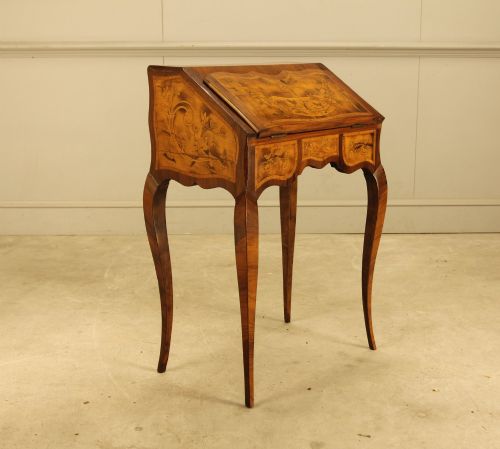
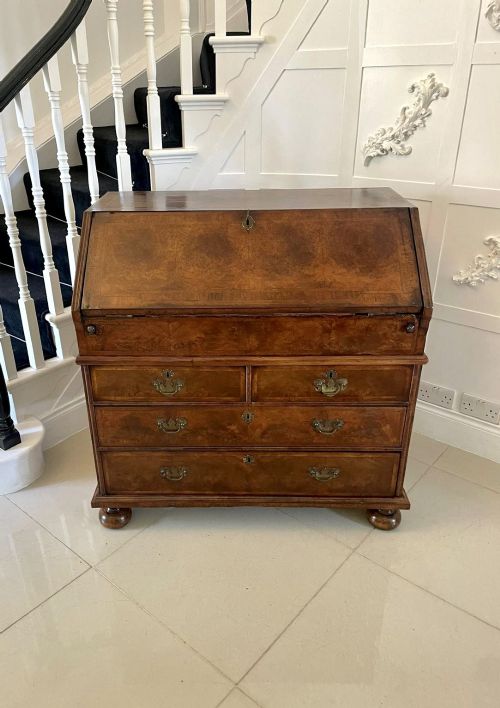
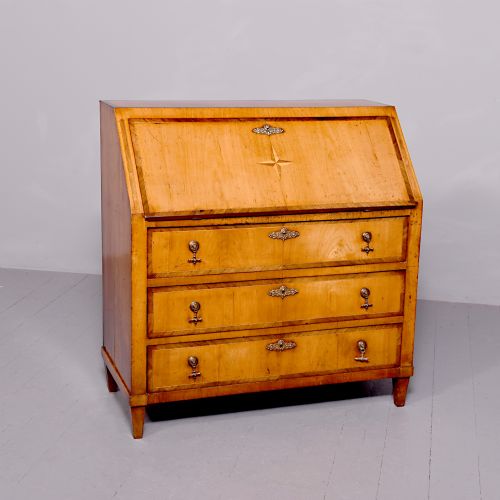
An inlaid walnut drop front desk is a cabinet designed for correspondence and paperwork, featuring a hinged writing surface that folds down to reveal inner compartments. These pieces appear in forms ranging from seventeenth century William and Mary bureaux to eighteenth century Dutch marquetry examples and nineteenth century Continental secretaires.
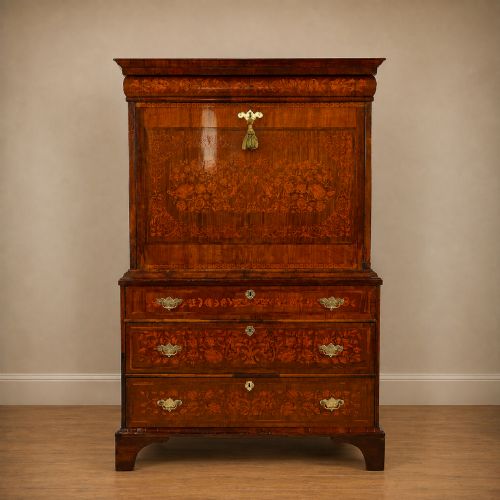
The version most commonly met on this page is the Dutch floral marquetry bureau or secretaire, often showcasing elaborate bird and flower patterns in contrasting woods. Makers across the eighteenth and nineteenth centuries drew on Dutch Baroque, Queen Anne, and French revival styles to shape these writing cabinets.
The materials used across these desks extend beyond basic walnut to include burr walnut, rosewood, fruitwood, bone, and marble accents. Brass hardware and hinges complete the construction, supporting the fall front mechanism and drawers.
How they were made
Cabinet makers utilised solid walnut and burr walnut veneers applied to secondary timbers, creating rich patterning across the fall front and drawer fronts. Herringbone banding and floral marquetry were meticulously cut from fruitwoods, bone, and contrasting veneers to adorn the exterior surfaces.
Internal compartments, pigeonholes, and small drawers were constructed within the cabinet behind the drop front, requiring precise joinery. Brass escutcheons, handles, and hinges were fitted by hand to secure the writing flap and drawers.
Listings feature walnut, burr walnut, fruitwood, bone, and marble materials across seventeenth, eighteenth, and nineteenth century periods.
What varies in quality
The refinement of the floral marquetry inlay sets individual pieces apart, distinguishing lively and detailed botanical compositions from stiffer decorative work. The choice of timber also dictates quality, particularly the depth of figure in burr walnut veneers and the crispness of herringbone banding.
Internal joinery and the complexity of the fitted writing compartment reveal the maker's hand, separating simple drop front boxes from sophisticated secretaires with secret drawers and well-organised pigeonholes.
The Inlaid Walnut Drop Front Desk Glossary
- Bureau
- A writing desk with a sloping hinged lid or fall front that opens to form a writing surface above a set of drawers.
- Marquetry
- Decorative veneer work created by fitting together thin pieces of wood, bone, or other materials to form pictorial patterns.
- Secretaire
- A cabinet or desk designed for writing, typically incorporating a drop front panel or a drawer with a fitted writing slide.
- Fall front
- A hinged writing flap that drops from a vertical position to a horizontal surface for writing.
- Escritoire
- A writing cabinet equipped with drawers and pigeonholes, often featuring a fall front writing desk.
Inlaid Walnut Drop Front Desk: Frequently Asked Questions
How do I use a drop front desk today?
The hinged writing flap lowers to provide a compact surface for laptop work or letter writing. Internal compartments store stationery and small items when the desk is closed.
Keeping the fall front closed protects your papers and hides workspace clutter when the room is not in use.
What is the difference between a bureau and a secretaire?
A bureau typically refers to a desk with a slanted or vertical drop front concealing inner drawers and pigeonholes. A secretaire often indicates a taller cabinet design with a fold down writing panel.
Both forms serve the same primary function of providing a concealed writing surface and storage compartments.
How can I tell a Dutch marquetry desk apart?
Dutch marquetry desks display elaborate floral and bird inlay work covering the entire exterior surface, including the sides and drawer fronts. They frequently date from the eighteenth or nineteenth century and reflect Continental design traditions.
English pieces tend to rely more on timber grain like burr walnut or simple banding rather than dense pictorial marquetry.
Where should I place an inlaid walnut desk?
Position the desk away from direct sunlight and heat sources to protect the walnut veneer and marquetry inlay from drying out. Adequate ambient light helps illuminate the detailed woodwork.
Allow enough clearance in front of the desk for the drop front to open fully without obstruction.