



Dutch Inlaid Desk
A dutch inlaid desk brings floral marquetry and serpentine forms into a room, offering functional writing surfaces alongside dense decorative timber work.
Dutch Inlaid Desk
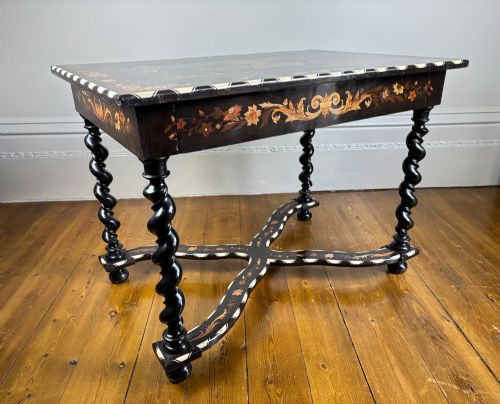
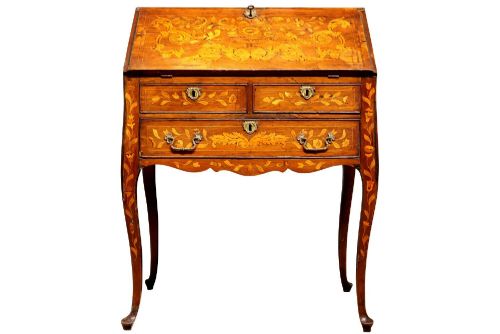
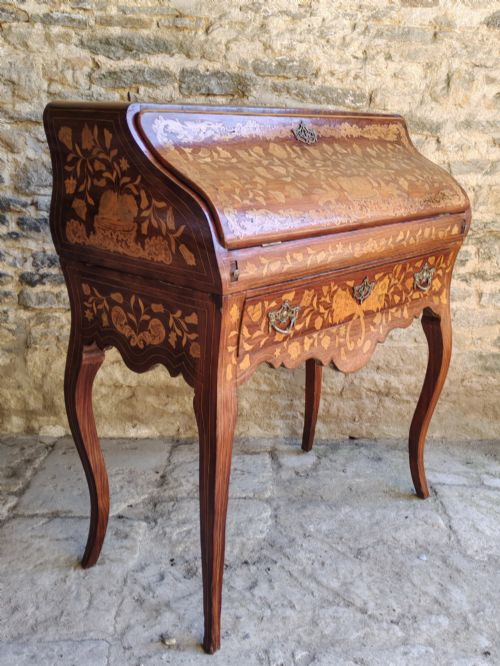
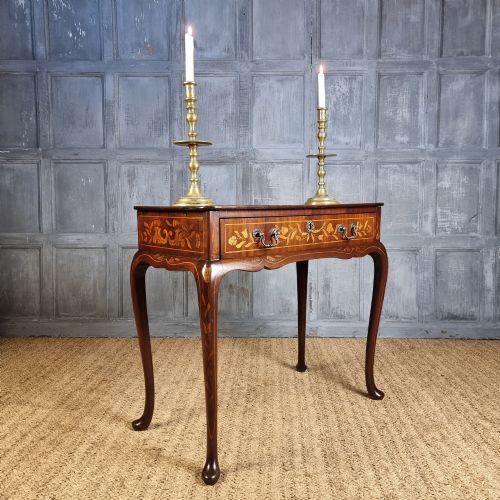
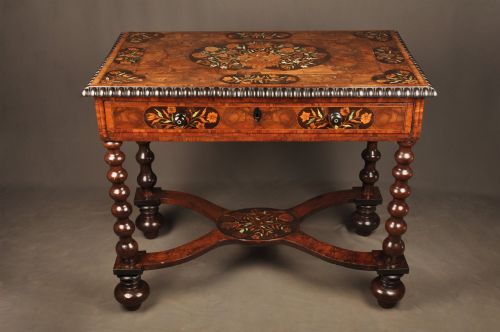
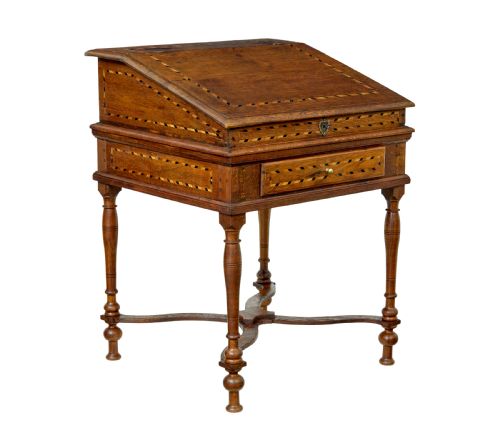
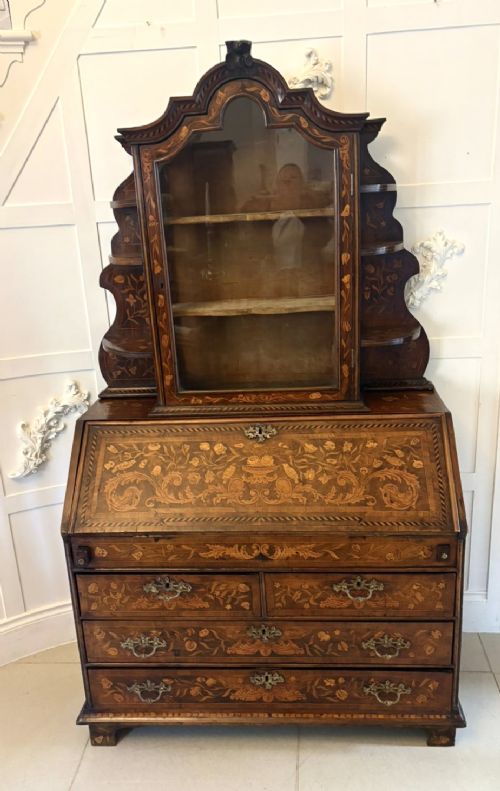
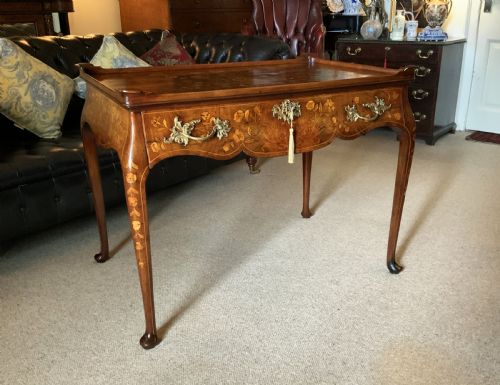
A dutch inlaid desk covers writing furniture decorated with intricate timber work, most commonly seen here in the form of sloping bureaux, bureau bookcases, and writing tables. These pieces span centuries from the seventeenth century through to the Edwardian period, drawing on styles such as Dutch Baroque, Rococo, and Empire.
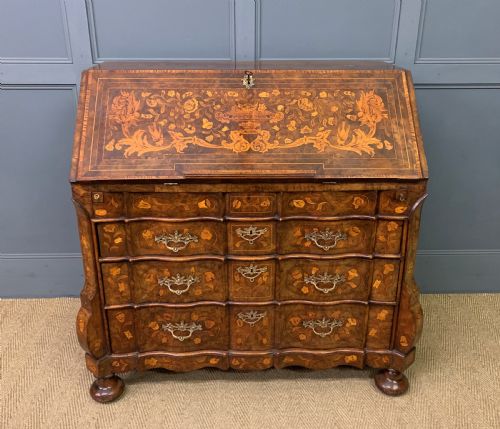
The selections on this page lean heavily towards eighteenth-century walnut and mahogany examples, frequently featuring bombé profiles and fitted interiors. Alongside standard writing desks, related forms appear including bureau cabinets, secretaires, and centre tables bearing similar floral and bird motifs.
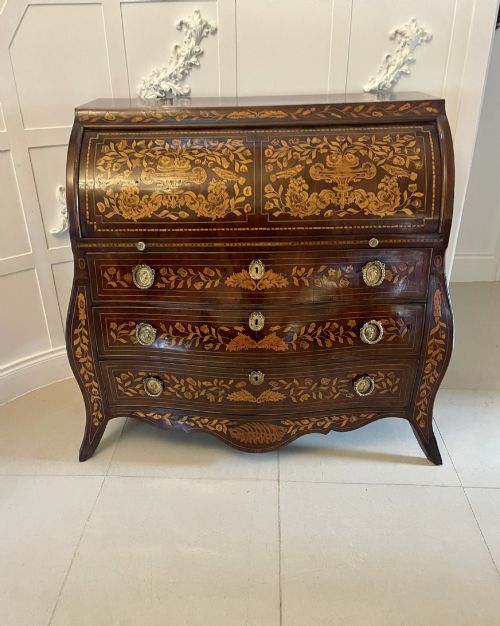
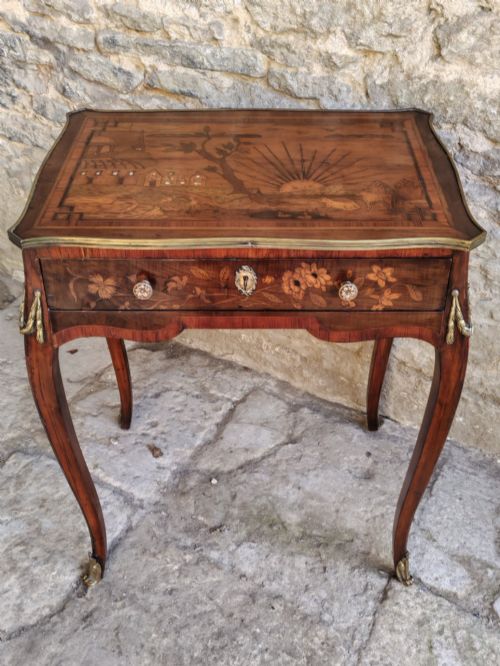
The overarching characteristic uniting these objects is the extensive application of marquetry depicting flora and fauna across writing flaps, drawer fronts, and fall fronts. Buyers encounter everything from compact writing slopes to massive double-sided partners desks and tall bureau bookcases.
Materials and construction methods
Cabinet makers constructed carcass frames primarily from oak, walnut, or mahogany, applying decorative veneers over these stable foundation timbers. Walnut and burr walnut dominate the earlier items, whilst later nineteenth-century pieces incorporate mahogany and oak alongside specialised fruitwood elements.
Marquetry and inlay techniques define the surface decoration, employing contrasting fruitwoods cut into elaborate floral and bird patterns. Master artisans fitted these pieces with brass hardware and occasionally bone inlay to accent the substantial timber construction.
Materials recorded across the inventory include oak, walnut, burr walnut, mahogany, fruitwood, brass, and bone.
Assessing quality in marquetry furniture
Quality rests primarily on the precision of the marquetry cutting and the choice of base veneers. Burr walnut and finely figured mahogany denote higher grade commissions, whilst the intricacy and density of the floral and avian motifs indicate the skill level of the original workshop.
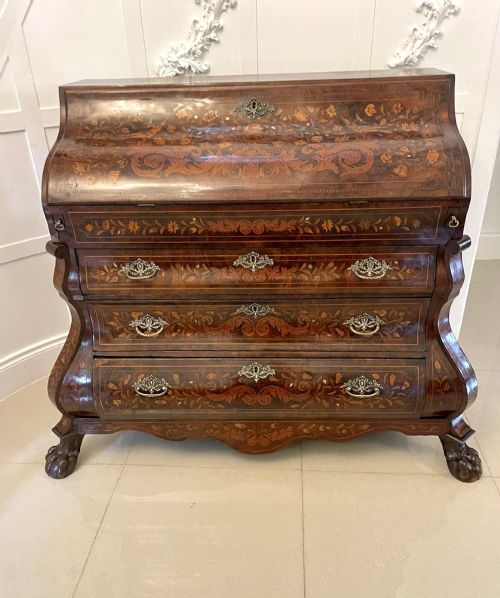
Structural complexity also dictates standing, with bombé-shaped fronts and fully fitted interior compartments demanding superior cabinet-making expertise compared to flat-fronted writing tables. The preservation of the original timber patina and brass fittings further separates exceptional examples from standard production.
Morison of Edinburgh
The Dutch Inlaid Desk Glossary
- Bombe
- A bulging or outward-curving swollen profile typical of continental furniture design. This shaped silhouette requires advanced wood-bending and shaping techniques.
- Marquetry
- A decorative technique arranging pieces of veneer into pictorial designs such as flowers and birds. Artisans fit these contrasting wood slices precisely into a background veneer.
- Bureau bookcase
- A writing cabinet featuring a sloping fall-front desk base combined with upper shelving enclosed by doors. These tall double-body pieces provide both workspace and display capacity.
- Secretaire
- A dedicated writing cabinet containing a pull-out or drop-down writing surface concealing small drawers and pigeonholes. It functions as a specialised writing station.
- Fruitwood inlay
- The practice of setting lighter or darker fruitwood timbers into a primary wood ground for contrast. Pear, apple, and cherry woods provide varied tonal properties for floral patterns.
Dutch Inlaid Desk: Frequently Asked Questions
What periods do these desks cover?
The pieces span from the seventeenth century through the eighteenth and nineteenth centuries, reaching into the Edwardian era. Eighteenth-century examples represent the highest concentration of surviving items.
Stylistic shifts move from early Baroque and Rococo influences toward nineteenth-century revival work and Edwardian interpretations.
How do I identify a bombe front?
A bombé front curves outward in a swelling contour across the lower drawers and sides of the bureau. This sculptural form contrasts with straight-fronted cabinetry.
The profile demands complex joinery to maintain structural integrity while displaying elaborate floral marquetry across the curved surfaces.
What woods were used for inlay?
Craftsmen utilised various fruitwoods alongside walnut and mahogany to create tonal contrast in the floral and bird motifs. Burr walnut frequently serves as the primary background veneer.
Bone inlay also appears on select pieces to provide sharp white accents against dark ebonised or polished timber grounds.
Where should I place a bureau bookcase?
A bureau bookcase requires substantial wall space and clearance for the drop-down writing flap or fall front. These tall items serve as focal points in studies or drawing rooms.
Stable environmental conditions away from direct sunlight protect the delicate fruitwood veneers and prevent timber movement.