


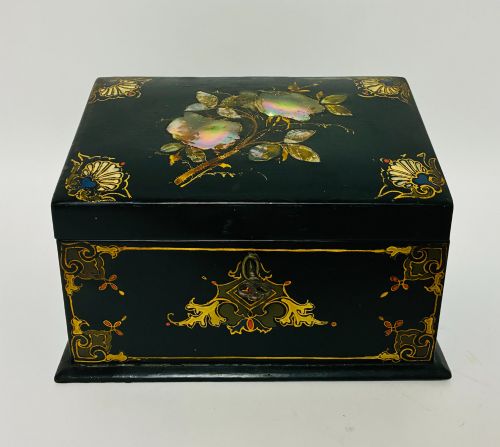
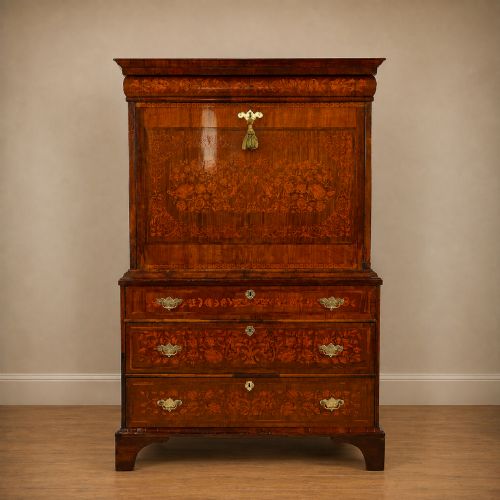
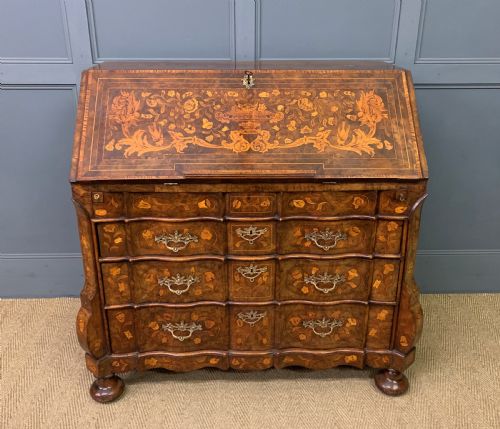
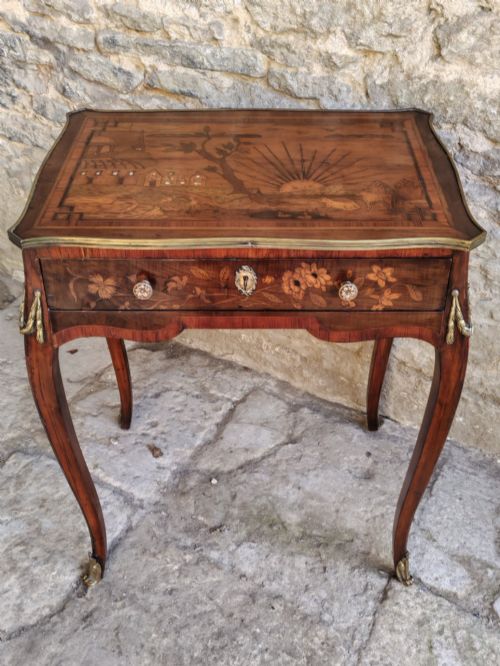
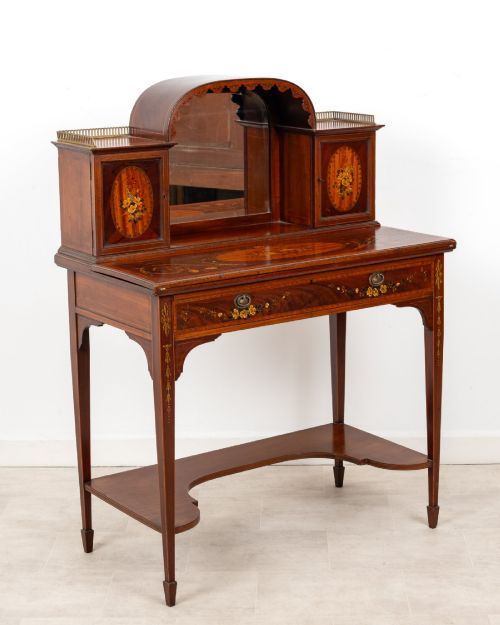
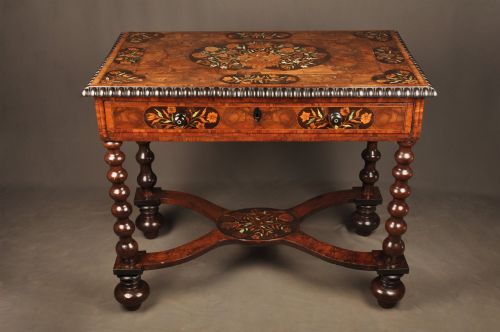
Floral Inlay Writing Desk
A floral inlay writing desk brings botanical artistry to daily correspondence, uniting walnut, mahogany and rosewood with meticulous marquetry.
Floral Inlay Writing Desk
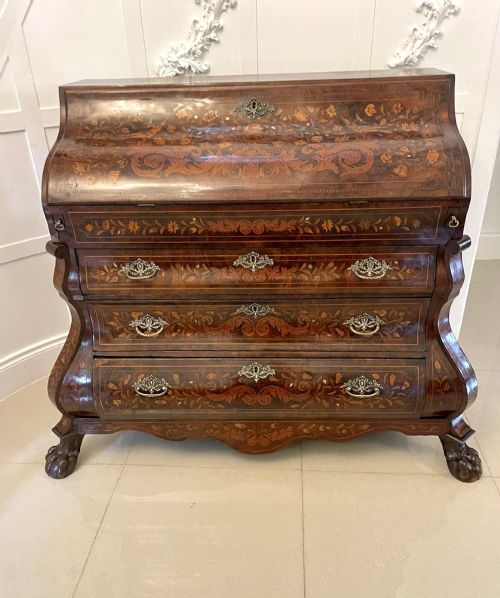
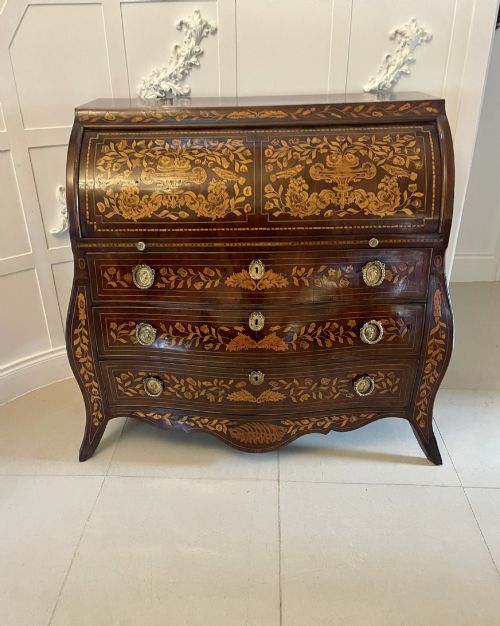
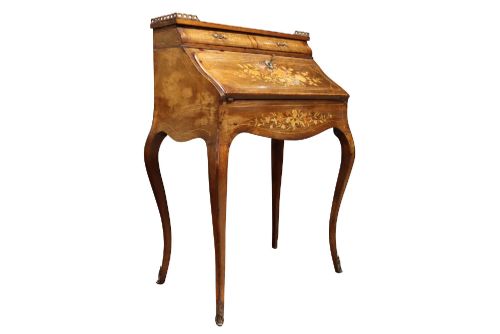
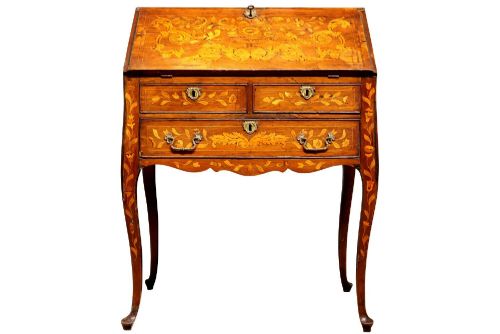
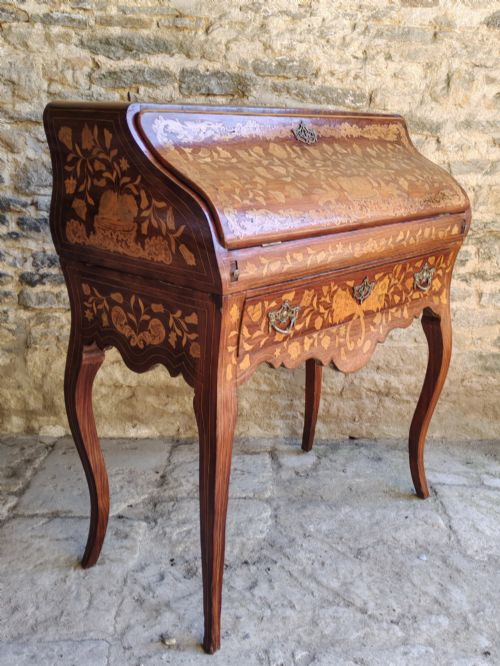
A floral inlay writing desk encompasses versatile forms designed for correspondence and storage, ranging from compact ladies' writing furniture to substantial bureau bookcases. Buyers frequently encounter eighteenth-century Dutch examples alongside nineteenth-century French designs echoing Louis XV styles.
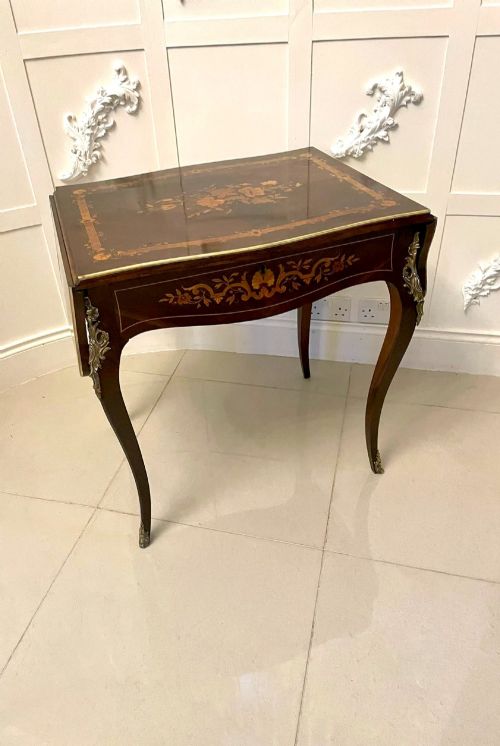
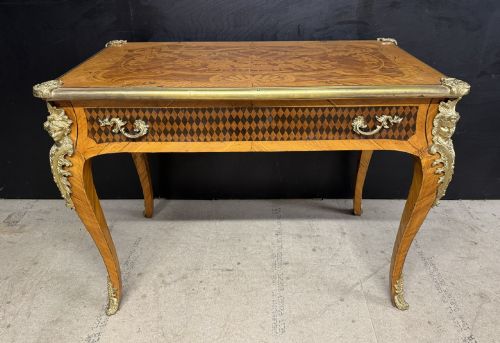
The selection ranges from cylinder bureaux and bombe-shaped writing pieces to kidney-shaped tables and bureau plat designs. Cabinetmakers of the eighteenth and nineteenth centuries utilised these sophisticated silhouettes to showcase elaborate botanical compositions across working surfaces.
Materials and Technique
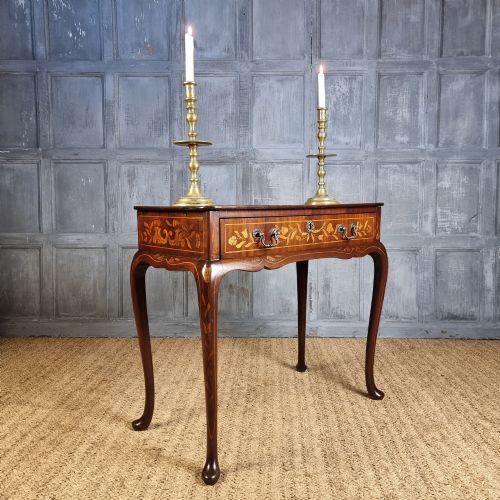
Craftsmen built these pieces upon robust carcases of walnut, mahogany, fruitwood or satinwood, applying intricate marquetry inlay across the exterior. Artisans cut delicate floral motifs from contrasting timbers, bedding them meticulously into the primary wood.
Gilding and metal mounts frequently complement the timber surfaces, with cast ormolu and brass fittings bordering drawers and cabriole legs. Surface finishes preserve the natural grain while highlighting the subtle tonal variations of the floral designs.
Some nineteenth-century writing surfaces cleverly conceal spring-loaded secret compartments designed to guard private correspondence from curious eyes.
Judging Quality
The distinction between tiers rests upon the precision of the marquetry cutting and the choice of foundational veneers. Superior examples display seamless alignment in floral patterns across moving drawers and complex curved surfaces like bombe fronts.
Depth of timber selection and the integration of quality cast ormolu mounts elevate specific pieces above standard workshop production. The fluidity of the floral arrangement and the crispness of the surrounding inlay reveal the hand of a master cabinetmaker.
The Floral Inlay Writing Desk Glossary
- Marquetry Inlay
- The art of applying fitted pieces of wood veneer to a structure to form decorative floral or pictorial patterns. This technique defines the visual character of the writing surfaces.
- Bombe
- A swelling or bulging contour found on the front and sides of eighteenth-century furniture forms. This undulating shape provides a dynamic canvas for floral marquetry.
- Ormolu
- Gilded bronze mounts applied to the edges, feet and corners of French writing desks and tables. These metal additions accentuate the classical lines of the furniture.
- Bureau Plat
- A freestanding writing table fitted with drawers across the frieze, lacking a superstructure. These pieces traditionally occupy the centre of a room.
- Cylinder Bureau
- A writing desk featuring a rotating half-cylinder shutter that conceals writing slides and pigeonholes. The curved closure often displays continuous floral inlay.
Floral Inlay Writing Desk: Frequently Asked Questions
How do I date a floral inlay writing desk?
Dating relies upon examining the underlying construction timber, the secondary woods used inside drawers, and the stylistic vocabulary of the marquetry. Eighteenth-century models frequently favour walnut and elaborate floral urn motifs, whereas nineteenth-century revivals utilise kingwood and satinwood alongside French-inspired mounts.
Hardware fixings, dovetailing methods and the evolution of the bureau shape provide additional clues. Comparing the carcass construction against documented period pieces helps establish the likely decade of manufacture.
Where should I place a floral inlay writing desk?
Freestanding bureau plat designs and centre tables suit open spaces where the inlaid decoration remains visible from all angles. Desks featuring finished backs work effectively in the middle of a study rather than pushed exclusively against a wall.
Protecting these surfaces from direct sunlight prevents the delicate fruitwood and rosewood veneers from fading. Maintaining stable indoor humidity levels also safeguards the marquetry against timber movement and lifting.
How do I care for antique marquetry?
Preservation requires regular dusting with a soft, dry cloth and avoiding silicone-based polishes or harsh chemical cleaners. Applying occasional high-grade beeswax feeds the dry timber veneers and maintains a gentle protective sheen.
Keeping the furniture away from direct heat sources, such as radiators and fireplaces, prevents the wood from drying out and cracking. Gentle handling ensures the minute inlaid floral pieces remain secure within their surrounding grounds.
What is the difference between a bureau and a writing desk?
A traditional bureau incorporates a sloping writing flap that folds down to reveal an interior fitted with small drawers and pigeonholes. This enclosed form conceals correspondence materials when not in active use.
Writing desks and tables generally provide an open flat surface for working, sometimes supplemented by stationary boxes or small superstructure drawers. Both forms share the defining characteristic of intricate floral marquetry across their primary surfaces.