


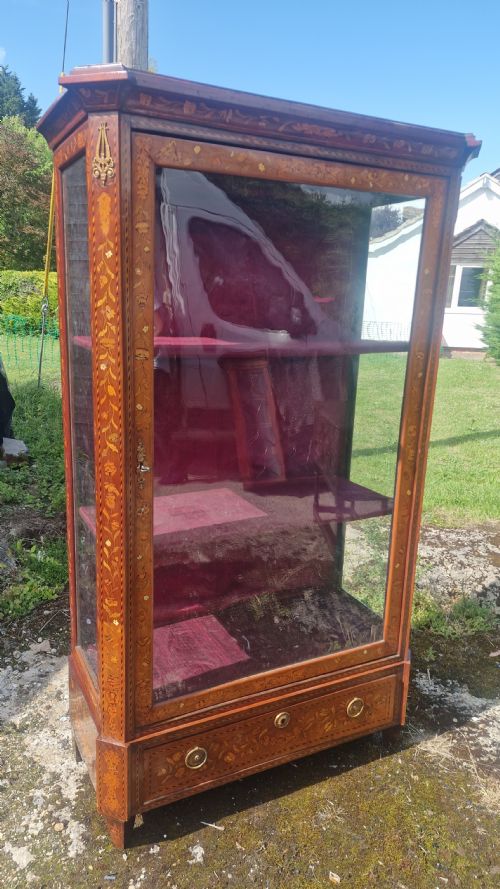
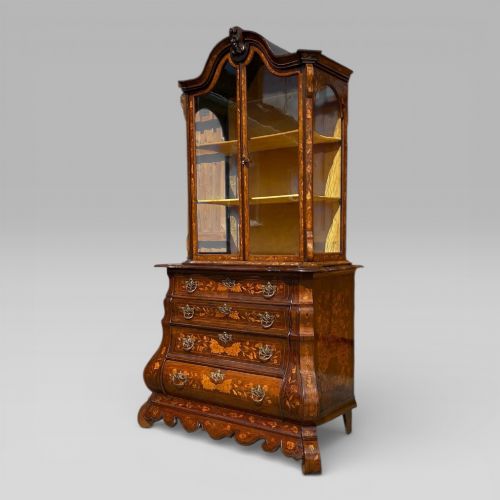

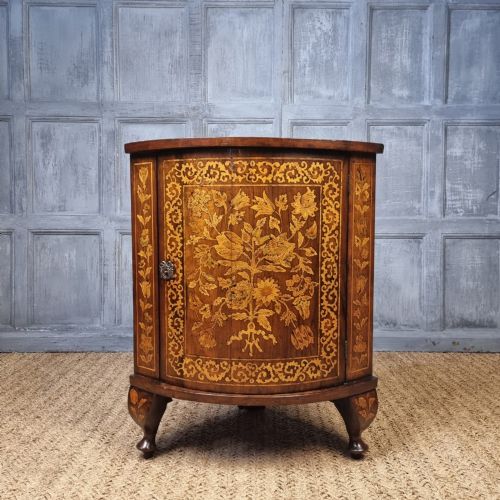

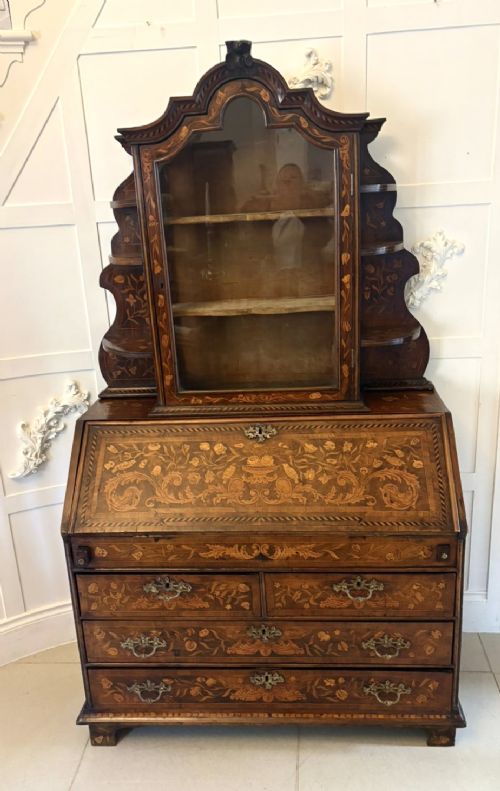
Dutch Floral Inlay Cabinet
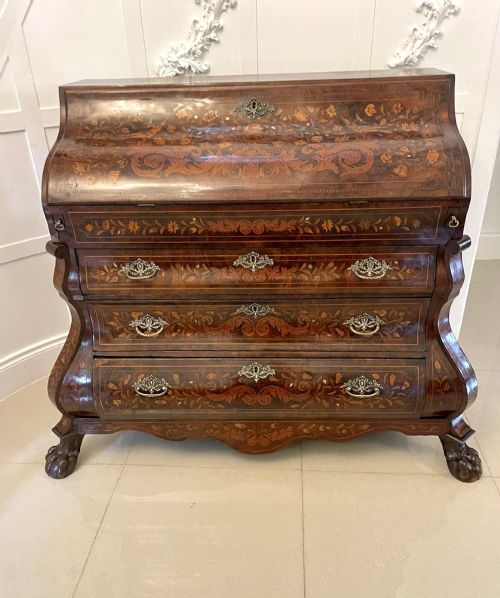
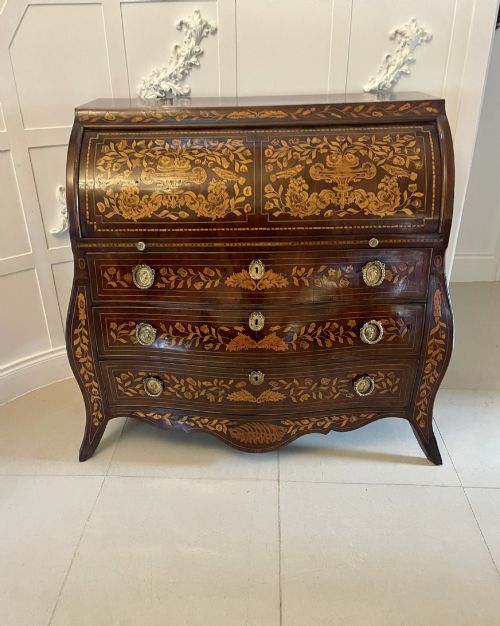
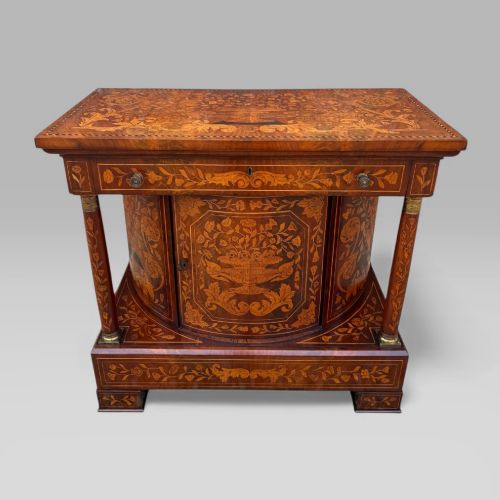
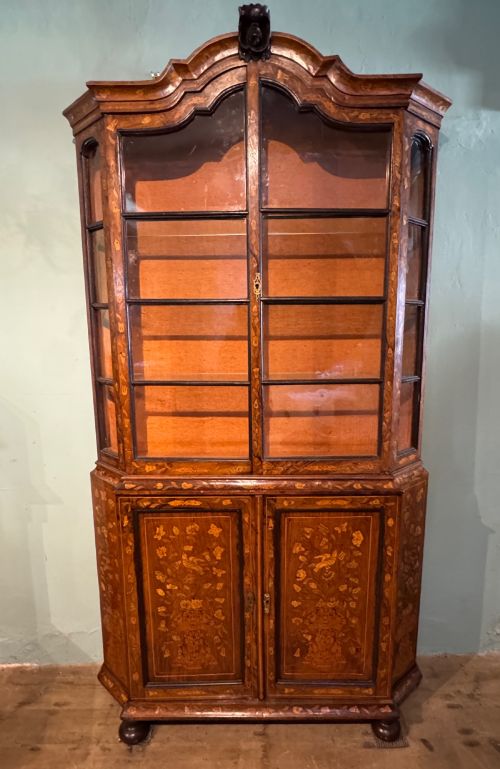
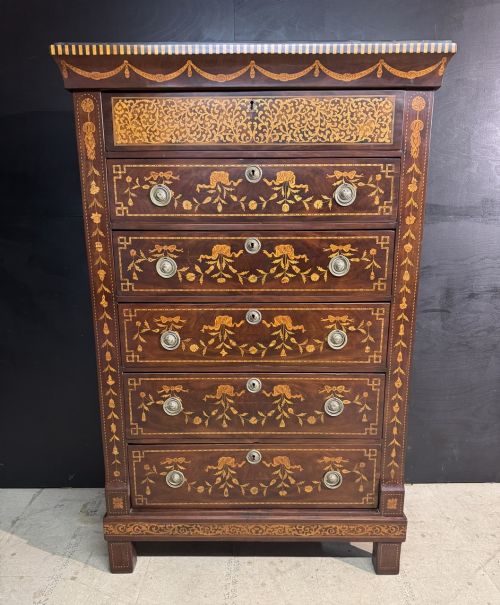
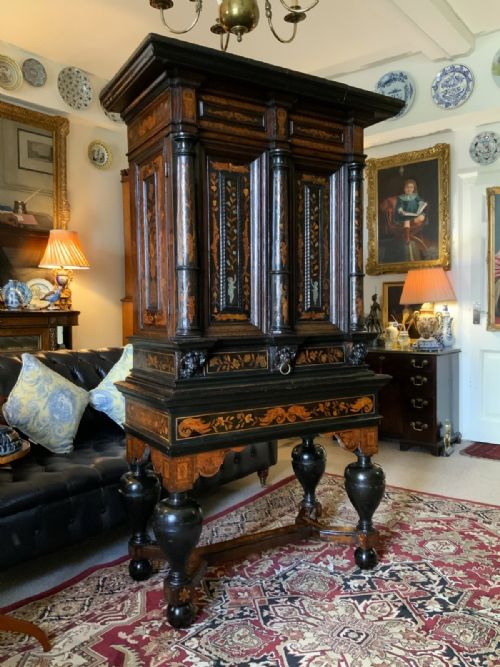
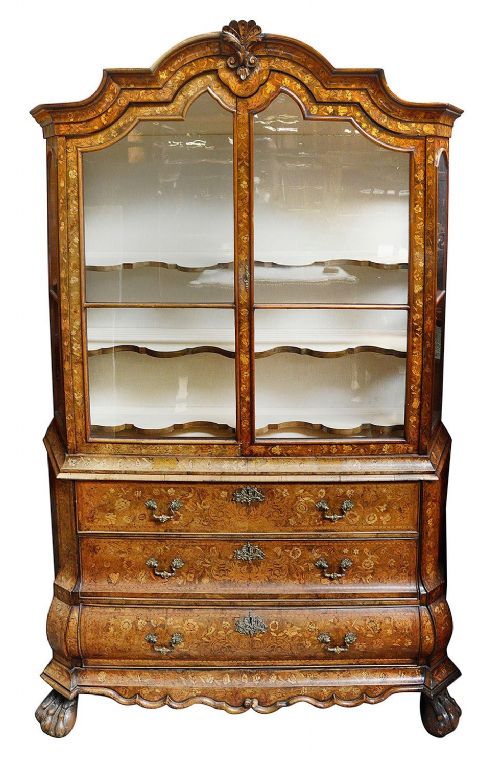
A dutch floral inlay cabinet brings elaborate botanical marquetry and curving structural forms into a room.
Dutch Floral Inlay Cabinet
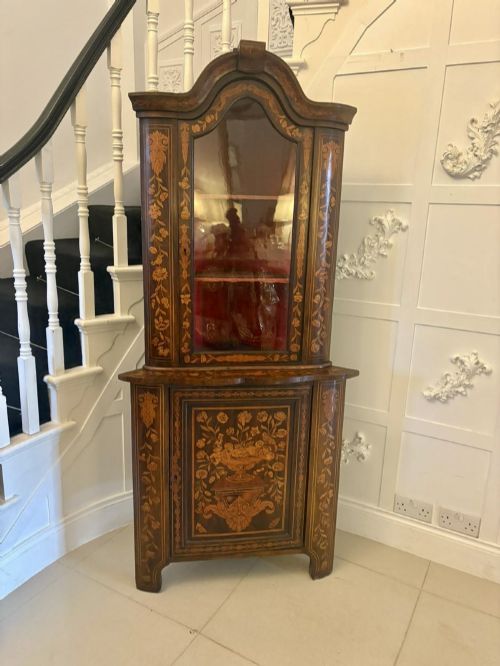
A dutch floral inlay cabinet encompasses a range of storage forms, from display cabinets and vitrines to bureau bookcases and corner cupboards. These pieces bridge several periods, notably appearing in 17th century baroque iterations, numerous 18th century examples, and later 19th century revivals.
The buyer meets various formats on this page, including tall linen presses, bombe shaped chests of drawers, secretaires, and floor-standing corner cupboards. Walnut and mahogany serve as the primary carcase timbers for these forms, enriched by extensive floral decoration.
Makers and workshops constructed these cabinets to function as both practical storage and decorative focal points. The survival of miniature apprentice pieces alongside massive display cabinets demonstrates the wide scale of domestic furniture production.
Materials and construction
Cabinet makers built the primary carcases using solid and veneered timbers such as walnut, burr walnut, mahogany, oak, and fruitwood. Selected sections received elaborate marquetry veneers cut from contrasting woods to form intricate botanical motifs.
Inlayers embedded fine details of flowers, foliage, and occasional pewter lines directly into the wood surfaces of doors, drawer fronts, and fall fronts. Structural forms like the bombe shape required skilled timber bending and shaping to achieve curved facades.
Assessing quality in marquetry furniture
The precision and complexity of the floral marquetry dictate the visual standard of the piece, separating dense, master-cut foliage from simpler arrangements. The choice of underlying timber, such as heavily figured burr walnut against standard walnut or mahogany, shifts the visual weight.
Structural integrity reveals itself in the execution of complex forms like bombe curves and block fronts, alongside the smooth operation of drawers, cylinder fronts, and secretaire desks. The integration of glazed doors, brass hardware, and secondary woods completes the structural hierarchy.
Edwards & Roberts
The Dutch Floral Inlay Cabinet Glossary
- Marquetry
- Decorative veneer work forming pictures or patterns by assembling small pieces of coloured wood, shell, or other materials. It covers the entire visible surface of the cabinet carcase.
- Bombe
- A bulging, convex swelling of the front and sides of a piece of furniture popular in baroque designs. This curving profile demands advanced woodworking skill to fit the floral veneer.
- Vitrine
- A glass-fronted cabinet designed for displaying porcelain, curiosities, or books. These pieces allow the interior contents to remain visible while protected.
- Secretaire
- A desk or cabinet containing a writing drawer or fold-down writing flap. It conceals internal pigeonholes and small drawers behind an ornamental facade.
- Linen Press
- A tall wardrobe or cupboard originally designed for storing folded linen on sliding trays. The exterior typically displays prominent floral inlay across the doors.
Dutch Floral Inlay Cabinet: Frequently Asked Questions
What periods do these cabinets come from?
The listings span multiple centuries, starting from the 17th century baroque period through the 18th century and into 19th century revivals up to 1920.
Craftsmen across these eras reused distinct styles such as Dutch Baroque, Rococo, and Neoclassical while maintaining the signature floral marquetry tradition.
How were bureau bookcases used historically?
Bureau bookcases combined a sloped writing desk with upper shelving or display space for books and valuables. The dual function served domestic administration and the display of prized household possessions.
Lower drawers and internal compartments provided secure storage for documents and personal effects.
Where should I place a corner cabinet?
Corner cabinets fit directly into room angles to utilise awkward empty spaces efficiently. Single and double corner formats mount easily in dining rooms or living areas.
Their curved or canted fronts project decorative floral panels outward into the room.
How do I tell walnut from mahogany pieces?
Walnut surfaces often feature rich, swirling grain patterns and take on a warm brown tone, especially when burr walnut veneers are utilised. Mahogany presents a tighter, straighter grain with deeper reddish brown coloration.
Both timbers served as standard carcase materials for floral inlay throughout the 18th and 19th centuries.