

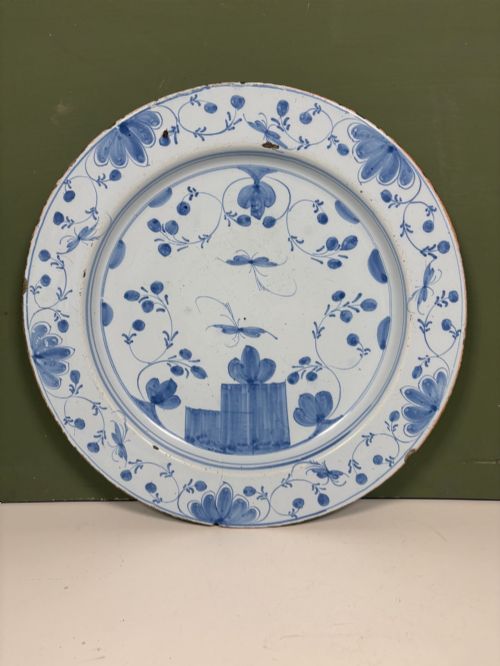


Dutch Delft Charger Plate
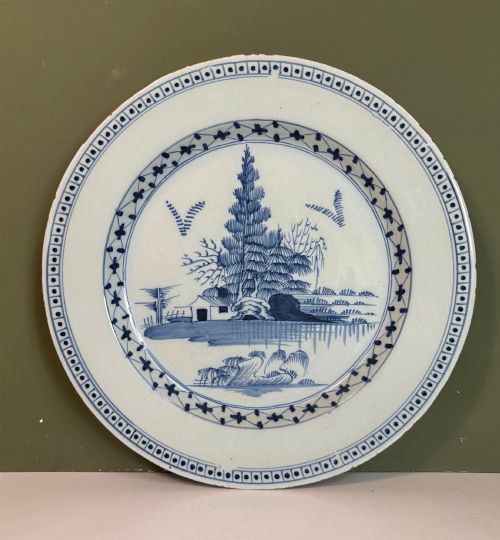
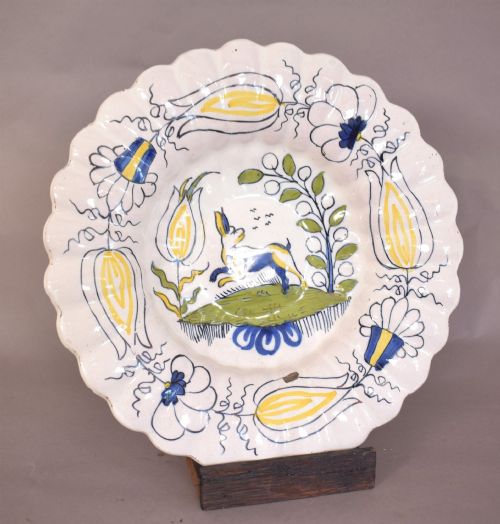
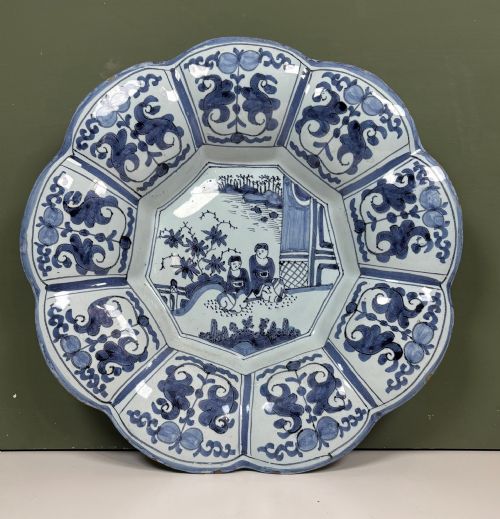
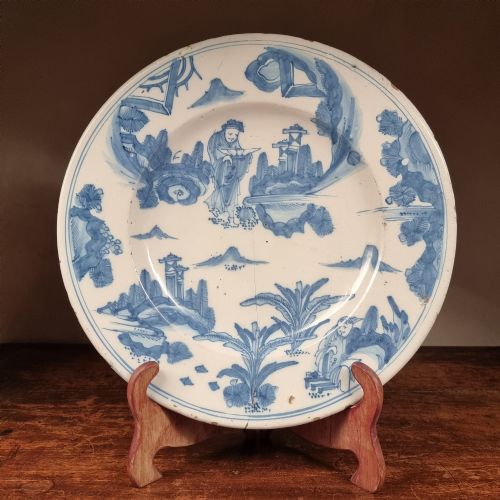
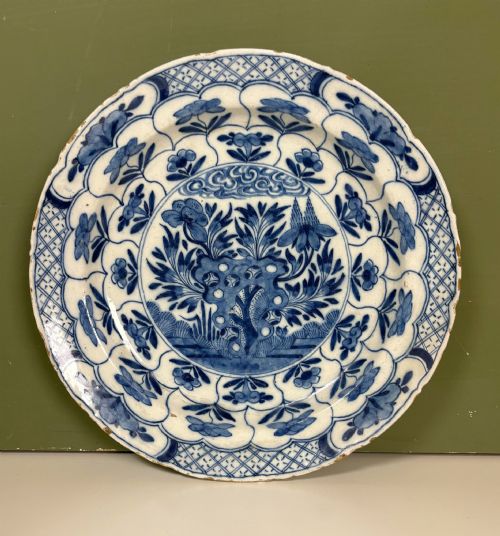
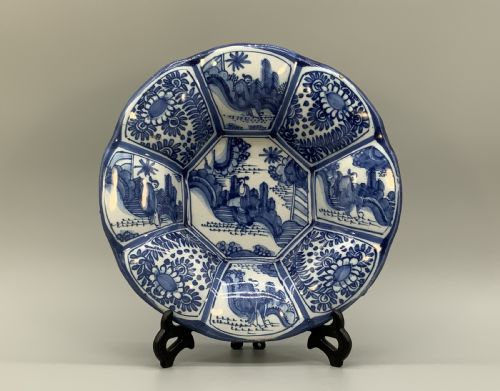
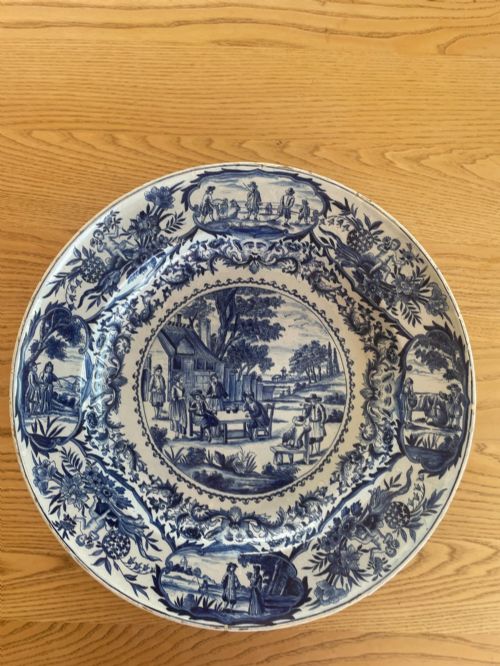
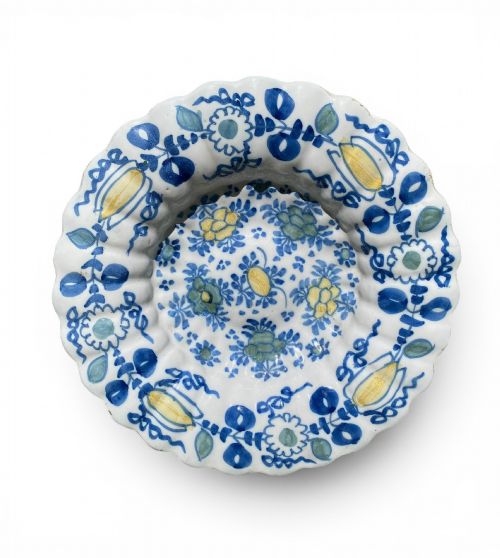
A dutch delft charger plate brings seventeenth and eighteenth-century domestic display into a room through generous tin-glazed earthenware circles.

Dutch Delft Charger Plate
A dutch delft charger plate is a wide earthenware dish designed primarily for wall hanging or ceremonial display rather than daily dining. These substantial objects span the seventeenth, eighteenth, and nineteenth centuries, emerging from workshops across the Netherlands during periods such as the Dutch Golden Age.
Most examples found on this page take the form of large circular plates, lobed dishes, or shallow bowls intended to catch the eye. Buyers encounter straightforward blue and white painted surfaces alongside vibrant polychrome decorations and manganese pigments.
The decorative vocabulary draws heavily from Chinese porcelain exports, featuring Kraak styles, geometric florals, and Chinoiserie motifs alongside European historical subjects. Marriage plates and commemorative pieces record specific alliances and royal figures such as Prince William of Orange.
How they were made
Makers shaped local earthenware clay on a potter's wheel before firing the body to create a porous biscuit base. Potters then coated this fired clay in a liquid tin glaze, which dried to an opaque white surface ready to receive pigment.
Painters applied cobalt oxide, manganese, and polychrome pigments directly onto the absorbent raw glaze before a final high-temperature kiln firing. This grand feu technique fused the metallic oxides permanently into the white tin coating, producing deep blues and rich purples.
Several ducks make unexpected appearances among the floral arrangements.
What varies in quality
The distinction between ordinary and exceptional pieces rests upon the confidence of the brushwork and the clarity of the painted narrative. Master painters executed intricate Kraak borders and botanical motifs with swift, assured strokes that convey movement and depth.
Scale and ambition also define the upper tier, where unusually large chargers and complex polychrome or manganese palettes demonstrate greater technical mastery in the kiln. The purity of the white tin glaze and the control over cobalt pigment separation further separate standard tableware from significant cabinet pieces.
The Dutch Delft Charger Plate Glossary
- Charger
- A large decorative plate traditionally displayed on walls or sideboards rather than used at the dining table. These wide earthenware dishes offer expansive surfaces for elaborate painted scenes.
- Tin-Glazed Earthenware
- Pottery covered with a white opaque glaze containing tin oxide, providing a smooth canvas for painted decoration. This technique forms the structural foundation of all delftware production.
- Polychrome
- Decoration employing multiple colours beyond standard blue and white, typically incorporating yellows, greens, and oranges. These richer palettes appear frequently on eighteenth-century domestic and commemorative dishes.
- Manganese
- A dark purple-brown metallic pigment used by potters to paint scenes and borders. Grand feu manganese pieces exhibit a distinct warm tone that sets them apart from cobalt blue items.
- Kraak Style
- A decorative layout divided into panels surrounding a central motif, inspired by late Ming dynasty Chinese porcelain. Dutch makers adopted this compartmentalised aesthetic enthusiastically during the seventeenth century.
Dutch Delft Charger Plate: Frequently Asked Questions
How do I hang a charger safely?
Traditional wire spring hangers distribute pressure evenly around the rim without damaging the earthenware body. Ensure the wall fixing secures firmly into masonry or studwork to support the weight of these substantial dishes.
Avoid adhesive disk hangers attached directly to the unglazed footring, as the historic tin glaze can flake under sustained tension. Padded display brackets offer a secure alternative for particularly heavy or valuable chargers.
What is the difference between delft and porcelain?
Delft is a refined earthenware body covered in an opaque white tin glaze, whereas true porcelain is a dense, vitrified ceramic fired at much higher temperatures. Earthenware remains heavier, more porous, and softer than imported Oriental porcelain.
Potters in the Netherlands developed tin-glazed earthenware as an affordable European alternative to costly imported Chinese porcelain. The resulting blue and white designs mimic porcelain aesthetics while retaining a distinct ceramic character.
How do I date a dutch delft charger plate?
Stylistic shifts from seventeenth-century Baroque exuberance to eighteenth-century floral and Chinoiserie patterns provide initial chronological markers. Thicker bodies and simpler cobalt palettes often point toward earlier production periods.
Examining the footring, glaze characteristics, and recorded workshop practices helps narrow the decade of manufacture. Comparing pieces with dated archival examples clarifies whether an item originates from the seventeenth or eighteenth century.