



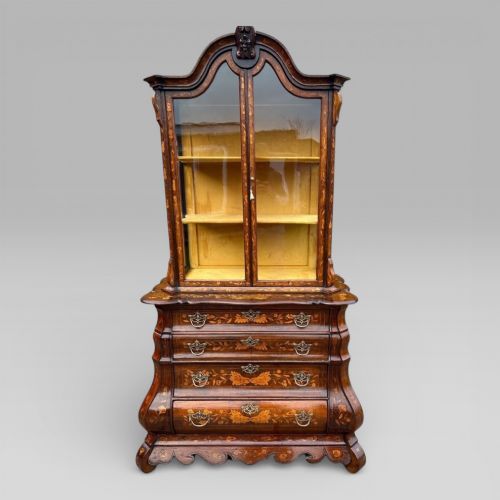
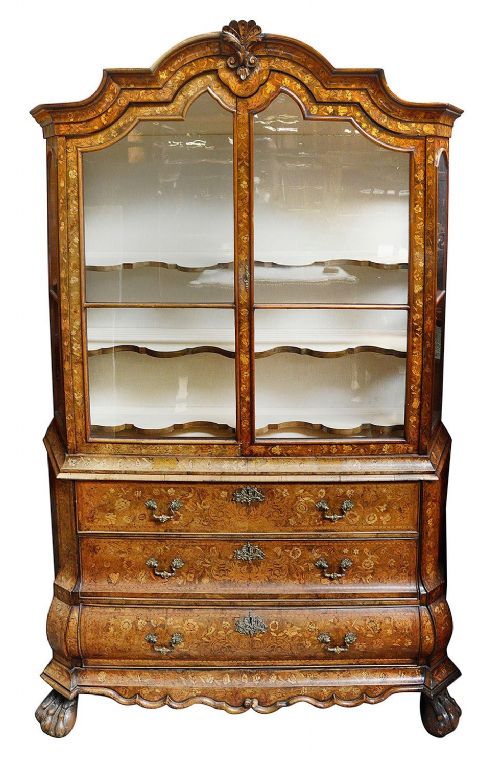


Dutch Bombe Chest Cabinet
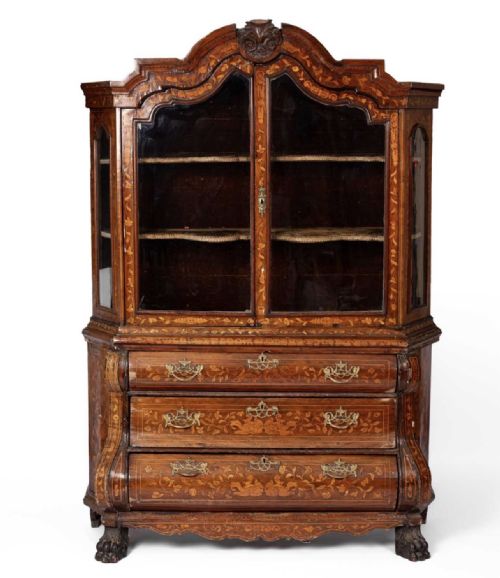
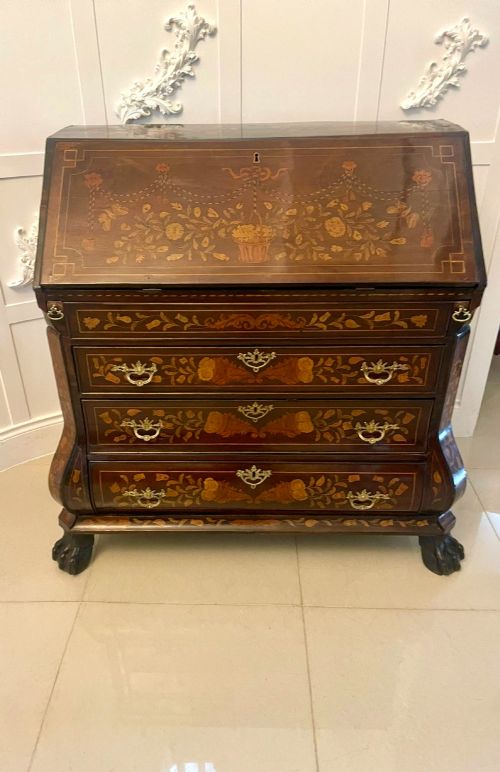
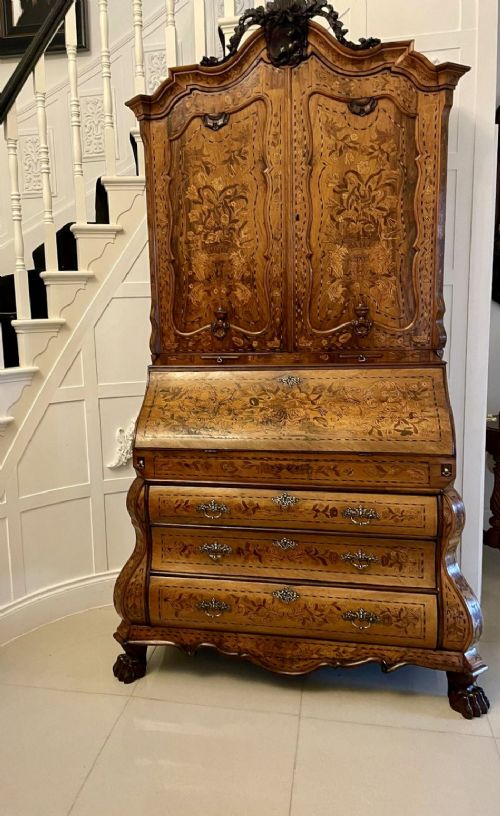
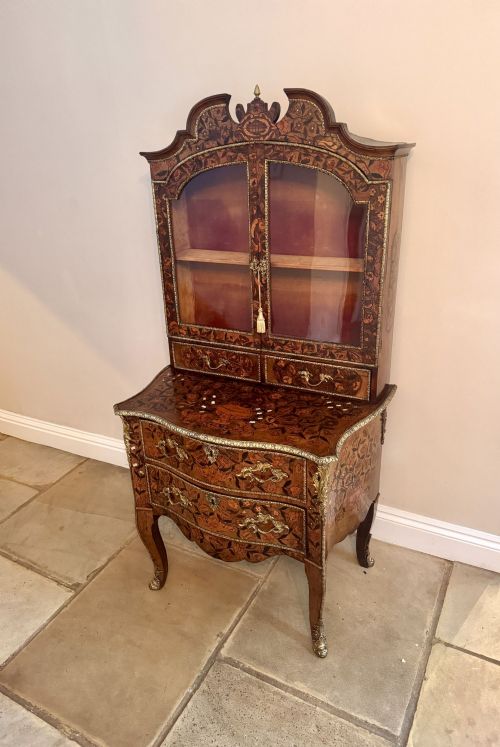
These pieces of dutch bombe chest cabinet combine swelling curves with rich marquetry, offering both grand storage and a strong decorative presence in a room.
Dutch Bombe Chest Cabinet
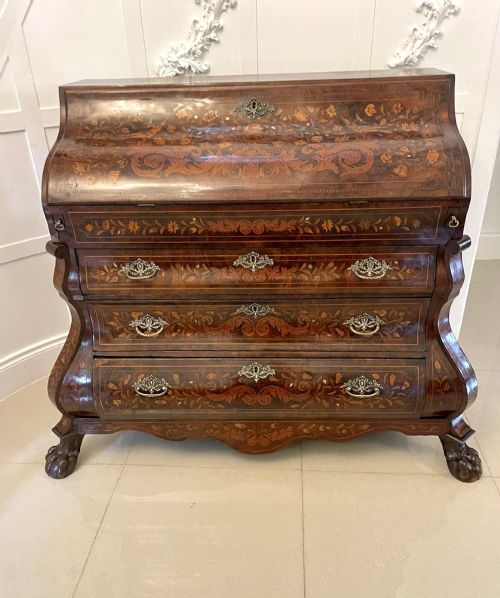
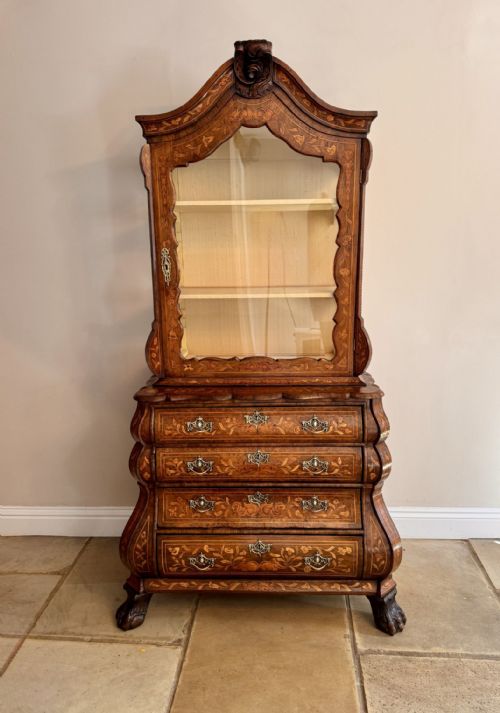
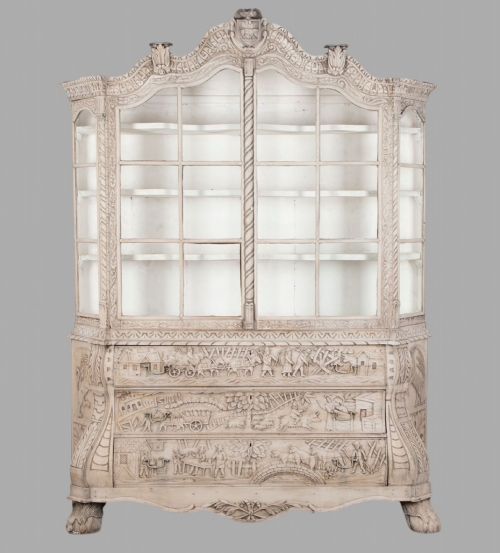
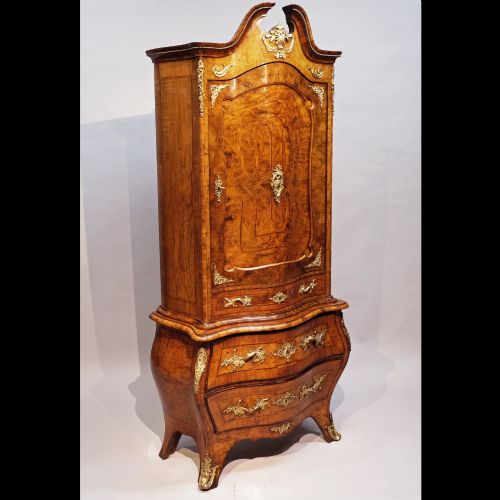
A dutch bombe chest cabinet brings together the swelling, rounded fronts characteristic of the bombe form with upper display sections, bookcases, or fitted writing desks. These substantial pieces serve multiple domestic purposes, housing collections behind glass or concealing private papers within fitted bureau compartments.
The version most commonly encountered on this page combines a bulging chest of drawers base with an upper display cabinet or bureau bookcase, often richly decorated with floral inlay. They span periods from the eighteenth century through later revival eras, showing considerable variation in height and proportion.
Materials and Construction
Cabinet makers built these pieces using solid foundations of oak or fruitwood, overlaid with figured veneers such as walnut and burr walnut. The distinctive swelling shape required complex joinery and curved framing to achieve the signature profile without compromising structural integrity.
Surfaces frequently feature elaborate marquetry inlay in contrasting woods, depicting floral and foliate motifs across the curved drawer fronts and panel doors. Brass hardware, including drop handles and escutcheons, provides functional and visual contrast to the dark timber.
Dutch Bombe Chest Cabinet Retail Price Guide 2026
Typical asking prices for dutch bombe chest cabinet among the pieces listed under this phrase on Sellingantiques today, from the lower quarter to the upper quarter. They describe what is for sale here now, not the wider market.
Listings feature walnut and burr walnut as the primary woods, supplemented by oak, fruitwood, and elaborate marquetry inlay.
Distinguishing Quality
The standard of a dutch bombe chest cabinet rests on the fluidity of its curved lines and the precision of its veneer work. Superior examples display seamless grain matching across undulating surfaces and intricate, well-preserved marquetry that follows the difficult contours of the bombe shape without buckling.
Internal construction, such as secondary woods used in drawer linings and the quality of the original brass mounts, further separates workshop tiers. Finer pieces maintain crisp carving on oak elements and balanced proportions between the bulging lower chest and the superstructure above.
Edwards & Roberts
The Dutch Bombe Chest Cabinet Glossary
- Bombe
- A swelling, outward-curving profile characteristic of eighteenth-century furniture design. This shaped contour requires skilled shaping of both wood and drawer fronts.
- Marquetry
- Decorative veneer work forming pictorial patterns using various tinted woods. Craftsmen cut these intricate designs to adorn cabinet doors and fall fronts.
- Vitrine
- A glass-fronted display cabinet designed for showing porcelain and curiosities. These upper sections sit atop the bombe chest base in taller bookcase forms.
- Bureau bookcase
- A combination of a sloping writing desk and an upper shelving unit. The fall-front desk opens to reveal small pigeonholes and hidden drawers.
- Burr walnut
- Wood taken from the gnarled growth of a walnut tree, producing swirling, highly figured grain patterns. It serves as a prized surface veneer on elite case furniture.
Dutch Bombe Chest Cabinet: Frequently Asked Questions
How do I clean a walnut marquetry cabinet?
Dust surfaces gently with a soft, dry cloth to prevent accumulation in the intricate marquetry recesses. Avoid modern chemical sprays that can lift old veneer or degrade the polish.
Apply a traditional beeswax sparingly once or twice a year to nourish the timber. Buff gently after application to maintain a soft, natural sheen without creating heavy buildup.
Where should I place a bombe cabinet?
Position these substantial pieces against a sturdy wall away from direct sunlight and heat sources. Walnut and fruitwood veneers are sensitive to extreme temperature fluctuations and can dry out or crack.
Allow sufficient clearance around the swelling front curves so the doors and drawers open fully without obstruction. Their heavy footprint requires stable, level flooring.
How do I tell an 18th-century piece from a revival copy?
Examine the secondary woods inside the drawers and the construction methods used on the back panels and drawer linings. Eighteenth-century examples show hand-cut dovetails and timber characteristics consistent with period workshops.
Look closely at the uniformity of the marquetry and the ageing of the polish. Later revival pieces from the nineteenth and twentieth centuries often exhibit machine-cut elements and different internal structural woods.
What were these cabinets originally used for?
The lower bombe chests provided secure storage for household linens, clothing, or valuables. Upper display sections and vitrines held prized porcelain, glassware, and small collectibles for visitors to admire.
Bureau variants combined this storage with a dedicated writing surface for correspondence and household accounts. The lockable fall-front desk kept private papers concealed when not in use.