



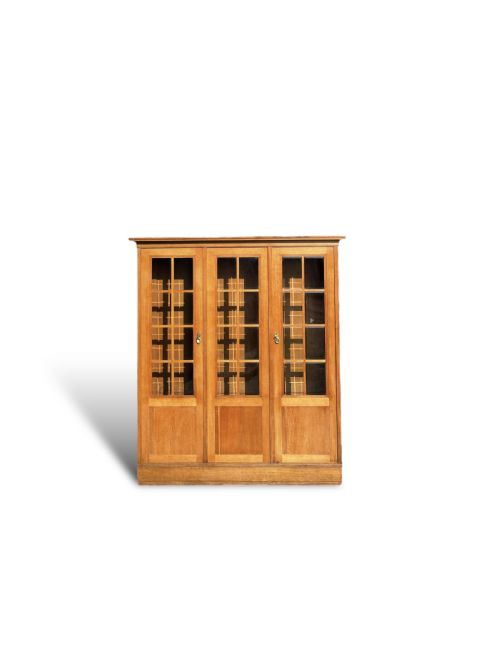


Light Oak Display Cupboard
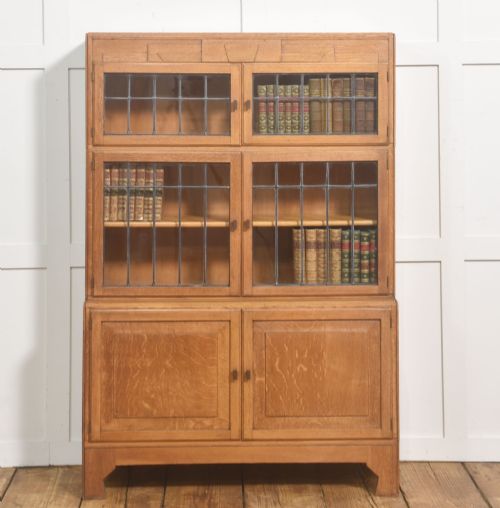
These light oak display cupboard pieces are glazed storage cabinets made to hold books or collections while keeping them visible.
Light Oak Display Cupboard
When you search for a light oak display cupboard, you are looking at timber storage furniture fitted with glass doors, designed to show and protect contents in equal measure. The pieces on this page span several decades, from the middle of the nineteenth century through to the mid-twentieth century.
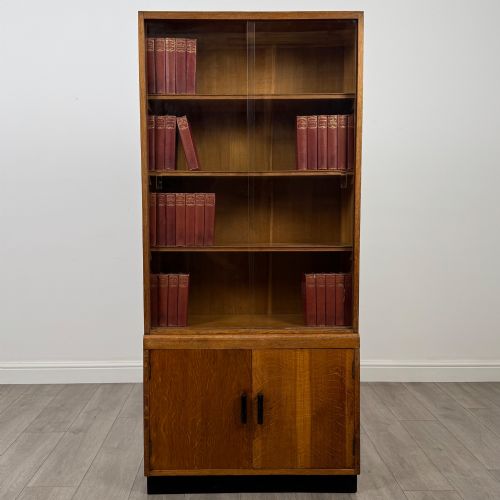
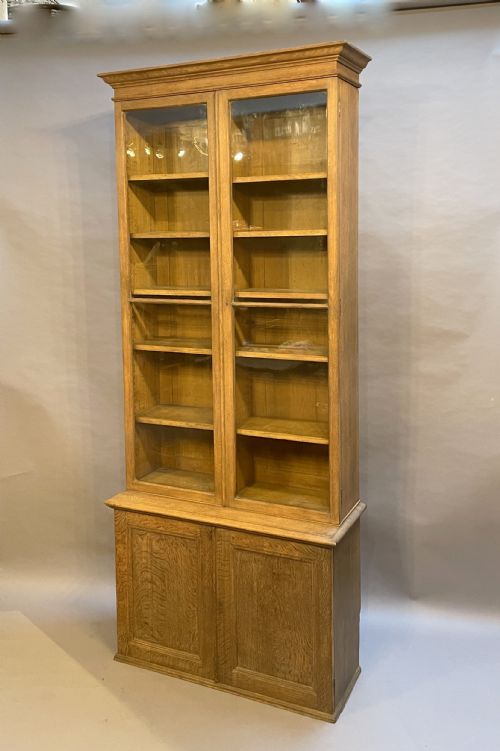
The materials and construction lean heavily towards oak, often glazed to allow a clear view of the interior shelves. You will find variations ranging from tall library bookcases to compact cabinets and cupboards.
Origin and period vary widely across these items, taking in Victorian, Edwardian, and Art Deco eras alongside mid-century modern and arts and crafts influences. The lighter tones of the oak dominate the aesthetic, offering a distinct visual presence compared to darker mahogany or walnut alternatives.
How they were made
Construction relies primarily on solid oak and oak veneer, selected for grain pattern and durability. Cabinet makers utilised traditional joinery methods to build the carcasses and fit the shelving.
Glazing is a central feature, frequently incorporating leaded glass panels or plain glass panes held securely within wooden or brass framing. Brass hardware such as hinges and handles completes the assembly, alongside decorative carved elements on specific revival styles.
Light Oak Display Cupboard Retail Price Guide 2026
Typical asking prices for light oak display cupboard among the pieces listed under this phrase on Sellingantiques today, from the lower quarter to the upper quarter. They describe what is for sale here now, not the wider market.
Listings include items spanning the 1860s to the 1930s, constructed primarily from oak, glass, and brass.
What varies in quality
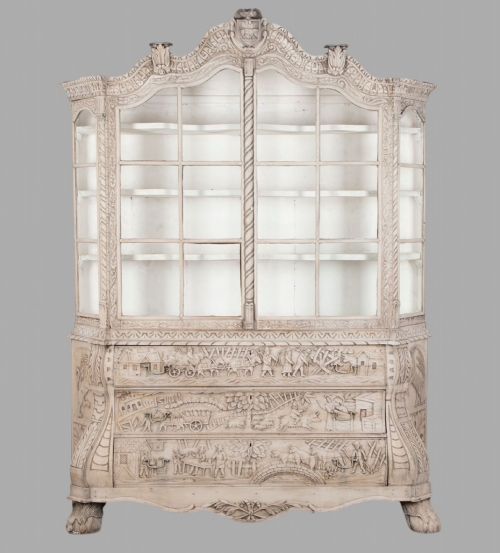
Quality in these cabinets is largely determined by the selection of timber and the precision of the joinery. Pieces featuring figured pollard oak or intricate carved details show a higher degree of craftsmanship than simpler utilitarian cupboards.
The condition and clarity of the glass, the integrity of the internal shelving, and the originality of the brass fittings further distinguish standard production items from exceptional workshop pieces.
Howard & Sons·A Blain & Son Liverpool
The Light Oak Display Cupboard Glossary
- Glazed bookcase
- A fitted storage unit with glass-fronted doors designed specifically to hold and display books.
- Pollard oak
- Timber taken from trees that have been pollarded, producing a distinctive, highly figured grain pattern prized by cabinet makers.
- Leaded glass
- Small panes of glass held together within a network of lead cames to form decorative window or door panels.
- Bombé
- A swelling, convex furniture shape characteristic of certain continental revival styles.
Light Oak Display Cupboard: Frequently Asked Questions
What periods do these cupboards come from?
The pieces span from the mid-nineteenth century through the Edwardian era up to the 1930s. Styles reflect these changing decades, including Victorian gothic revival and Art Deco.
Most items sit firmly in the late nineteenth and early twentieth centuries. This range offers a broad selection of oak tones and construction methods.
How were these cabinets used originally?
They served as domestic storage for prized book collections, ceramics, and ornaments in libraries and living rooms. The glass kept dust away while allowing owners to display their possessions.
Larger versions functioned as library bookcases, while smaller variants suited tighter domestic spaces as general display cabinets.
Are the shelves adjustable?
Many period bookcases feature fixed timber shelving supported by traditional wooden fixed battens or early adjustable rack systems. The specific internal setup depends entirely on the age and original maker of the individual piece.
Buyers should examine the internal configuration carefully to ensure it suits the intended items to be displayed.
How do I care for light oak furniture?
Keep oak furniture away from direct sunlight and dramatic changes in temperature to prevent the timber from drying out or splitting. Dust regularly with a soft, dry cloth and avoid silicone-based polishes.
Applying a traditional beeswax occasionally helps nourish the grain and maintain the natural lustre of the light oak surface.