
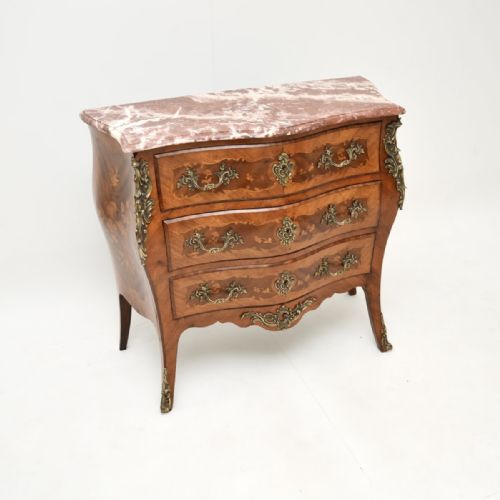


Bombe Front Chest of Drawers
A bombe front chest of drawers brings sweeping, convex curves and a commanding presence to a room, uniting storage with high decorative art.
Bombe Front Chest of Drawers
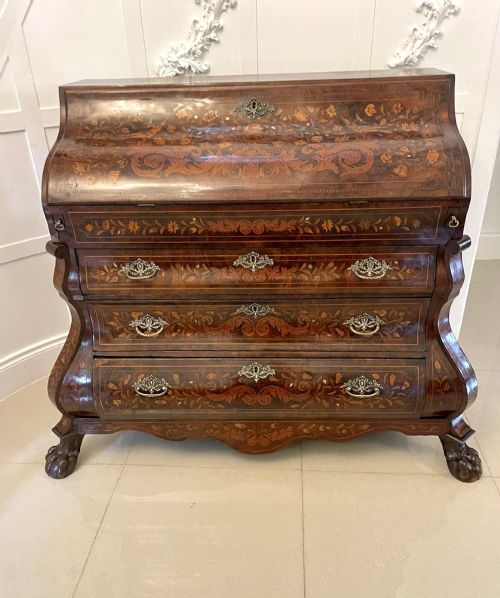
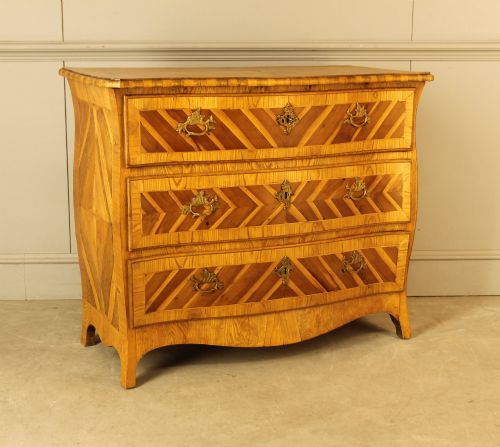
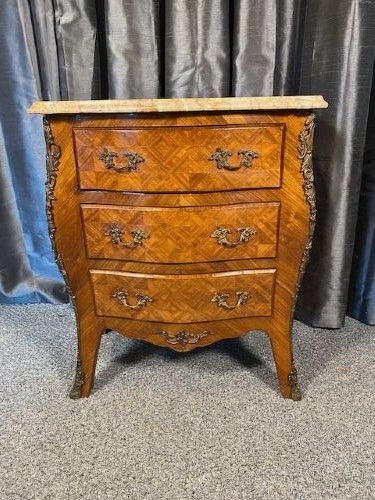
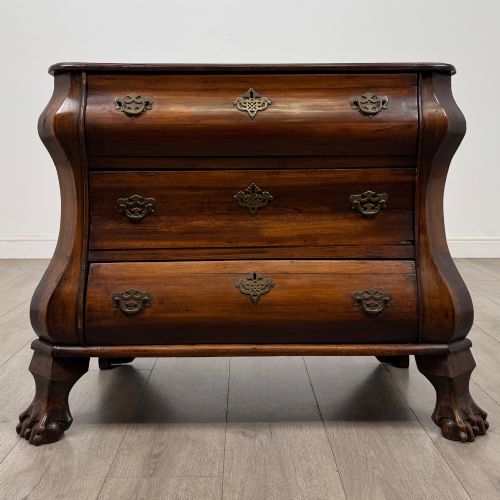
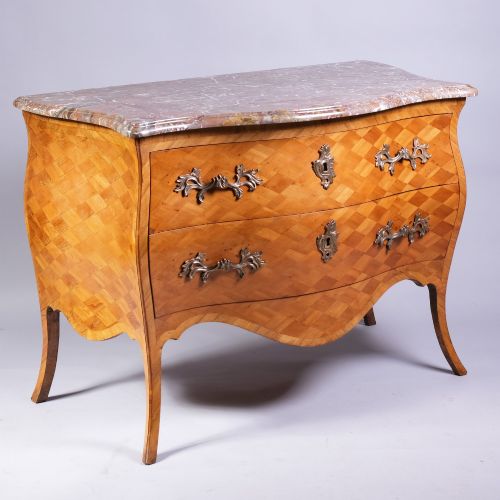
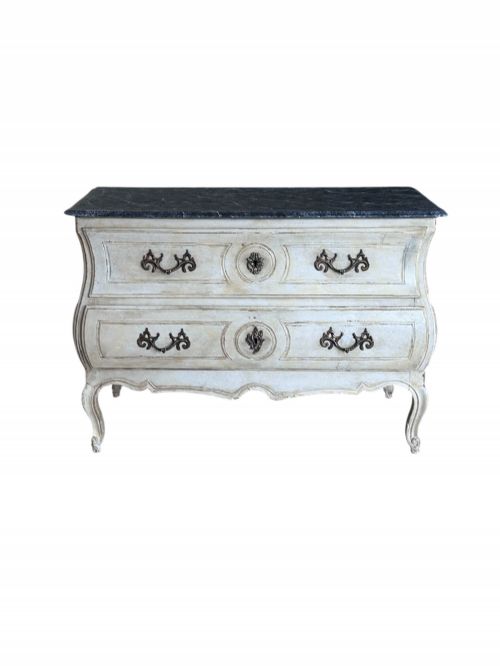
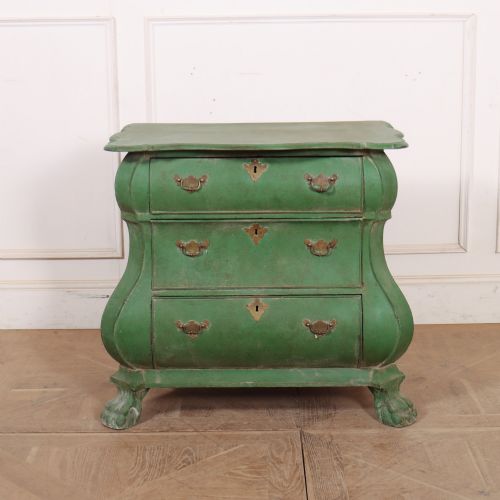
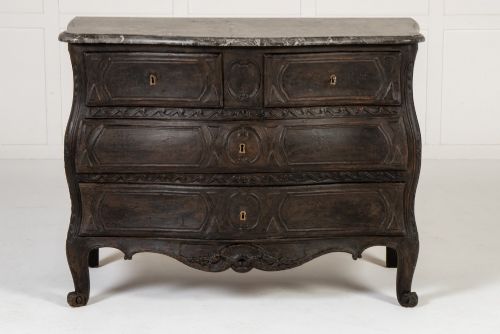
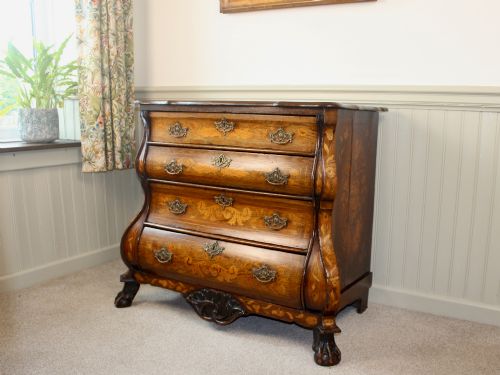
A bombe front chest of drawers is defined by its pronounced outward-swelling sides and front, creating a dramatic, sculptural silhouette that sets it apart from straight-sided cabinetry. When exploring this phrase, buyers encounter forms that range from robust Dutch oak and marquetry examples to refined French commodes topped with marble.
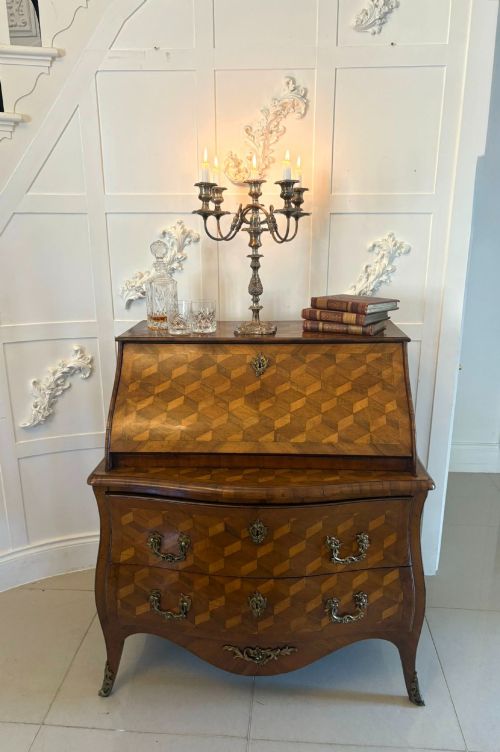
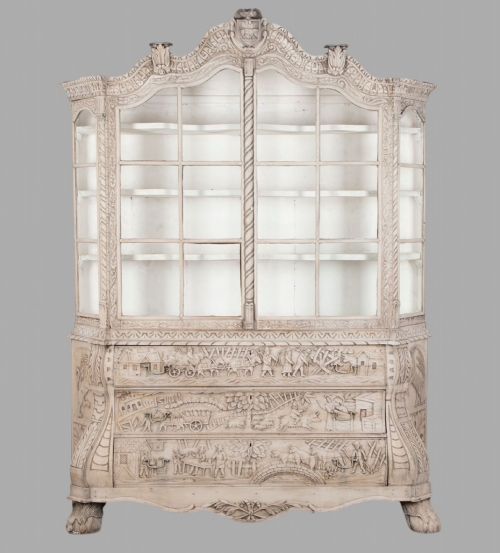
The pieces appearing here span several centuries, drawing heavily on eighteenth-century traditions such as Dutch Rococo and Louis XV styles, alongside later nineteenth-century revivals. Alongside traditional chests and commodes, the selection includes bureau desks and display cabinets that share the same swelling profile.
Originating largely from continental workshops in France, the Netherlands, Italy, and Sweden, these items serve as primary statement pieces in a domestic interior. The most frequently met versions combine generous proportions with rich surface ornamentation, functioning both as practical storage and as focal points of period design.
Materials and construction methods
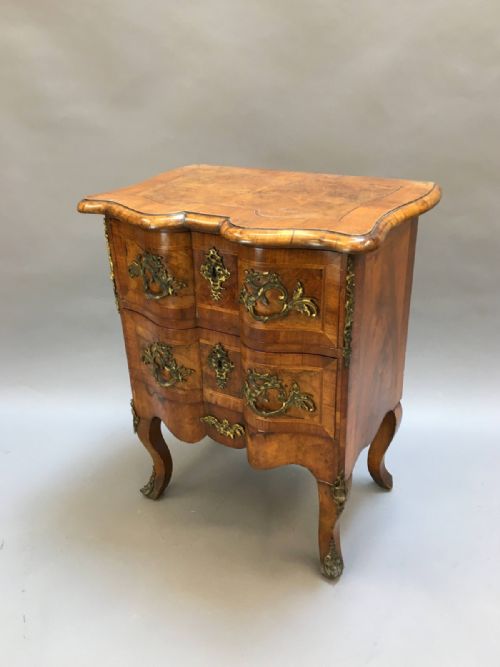
Cabinetmakers built the carcass of a bombe front chest of drawers using sturdy secondary timbers such as oak or fruitwood, onto which they applied fine primary veneers. Burr walnut, kingwood, and mahogany provide the patterned surfaces that follow the difficult, multi-directional curves of the frame.
Marquetry and parquetry feature prominently, with floral and geometric designs painstakingly inlaid using contrasting woods, occasionally enhanced by painted finishes or ebonisation. Cast ormolu mounts and gilt bronze details often accent the corners, handles, and apron, while heavy slabs of polished marble complete the tops of many continental pieces.
Several pieces are designed with curves so enthusiastic they appear to be expanding outward from the room itself.
Distinguishing quality across the range
Quality in a bombe front chest of drawers rests upon the ambition of the shaping and the precision with which the veneers negotiate the complex double curvatures. Superior pieces display harmonious proportions where the swell of the sides flows naturally into the cabriole legs or moulded base without appearing awkward or forced.
The execution of the surface decoration marks the division between standard and exceptional examples, visible in the fineness of the floral marquetry and the crispness of any cast ormolu mounts. Furthermore, the integrity of the secondary timbers and the traditional construction of the drawer linings indicate the care taken by the original maker.
The Bombe Front Chest of Drawers Glossary
- Bombe
- A French term describing furniture with an outward-swelling or convex front and sides. This bulging profile requires advanced woodworking skill to construct.
- Commode
- A low chest of drawers or cabinet, typically French in origin and fashionable from the eighteenth century onwards. These pieces frequently feature marble tops and elaborate mounts.
- Marquetry
- The art of applying decorative pieces of veneer to a structural structure to form intricate patterns or pictures. Floral motifs are especially common in eighteenth-century examples.
- Ormolu
- Gilded bronze applied as decorative mounts to the feet, corners, and handles of fine furniture. The technique was particularly favoured by French cabinetmakers.
- Parquetry
- A geometric mosaic of wood pieces used for decorative floors and furniture surfaces. It differs from marquetry through its reliance on angular, repeating patterns.
- Sabicu
- A dense tropical wood sometimes used for fine cabinetmaking during the nineteenth century. It provides a rich, dark ground for polished finishes.
Bombe Front Chest of Drawers: Frequently Asked Questions
How do I care for a marble top?
Marble surfaces require gentle cleaning with a soft cloth and warm water, avoiding acidic substances that can etch the polish. Using coasters and mats helps prevent marking from daily use.
Over time, applying a specialist wax can help protect the stone from staining while maintaining its natural sheen. Regular dusting keeps the porous surface free from grit.
Where should I place a commode?
These pieces suit principal reception rooms, hallways, or spacious bedrooms where their sculptural silhouette can be appreciated from multiple angles. Their decorative presence makes them ideal focal points against a plain wall.
Because of their substantial depth and swelling profile, ensure adequate floor clearance is left around them. Pairing them with a simple mirror or painting above enhances their visual weight.
How do I date an 18th-century piece?
Dating relies on examining the construction methods of the drawer linings, the type of secondary timbers used, and the style of the mounts or marquetry. Eighteenth-century pieces typically exhibit hand-cut dovetails and timber characteristics appropriate to their regional workshop.
Stylistic cues such as the transition from Baroque symmetry to Rococo asymmetry also help narrow the period. Consulting the specific wood grains and wear patterns provides further confirmation of age.
What is the difference between a bureau and a commode?
A commode is strictly a chest of drawers designed for storage, often finished with a marble top on continental examples. A bureau incorporates a sloping writing flap that opens to reveal internal compartments and pigeonholes.
Both forms share the characteristic swelling bombe profile in many examples found within these listings. The choice depends entirely on whether a writing surface or pure drawer storage is preferred.