


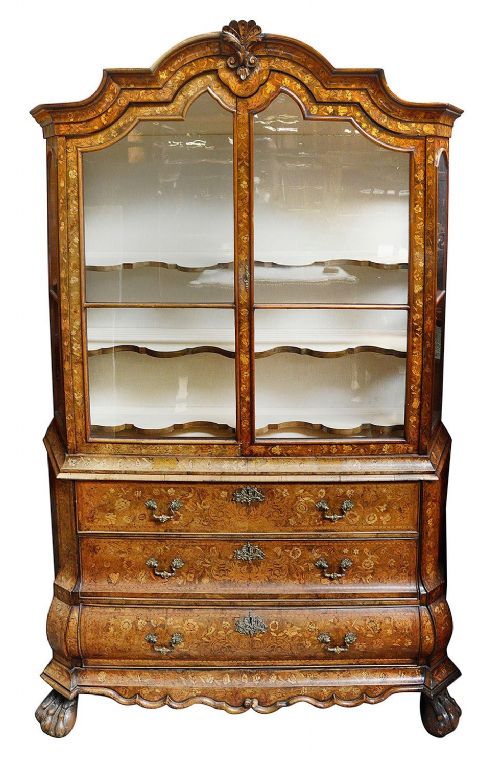
Dutch 18th Century Chest
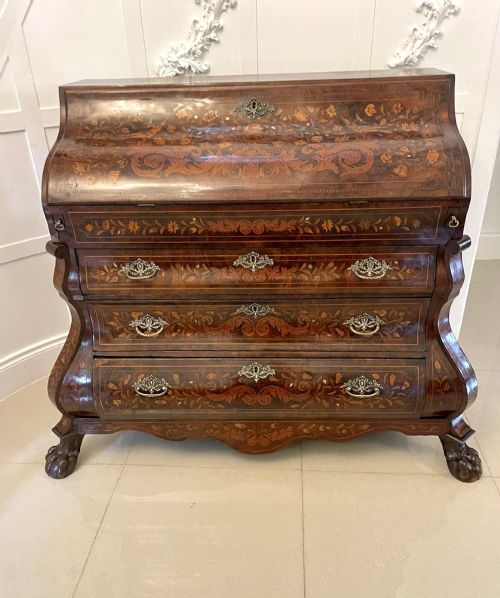
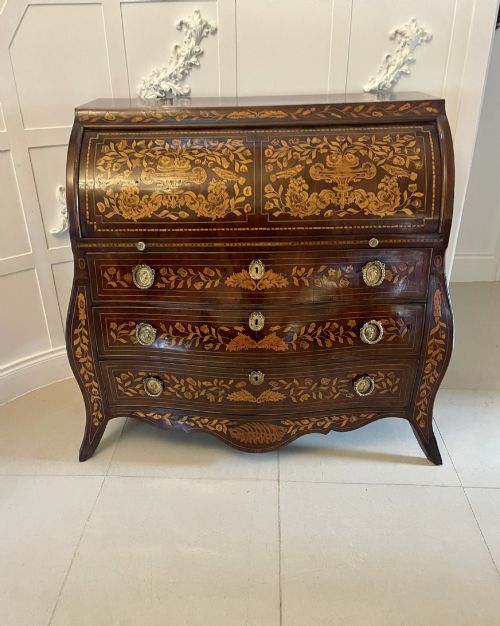
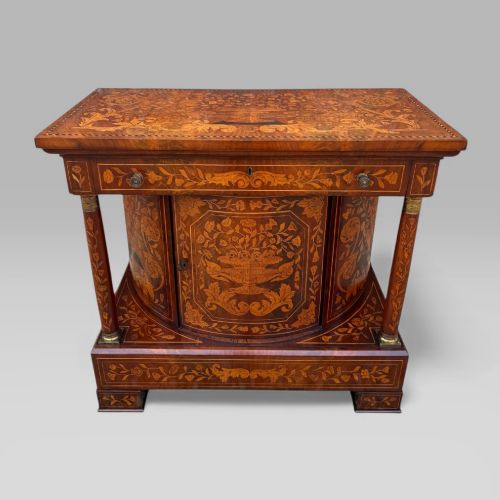
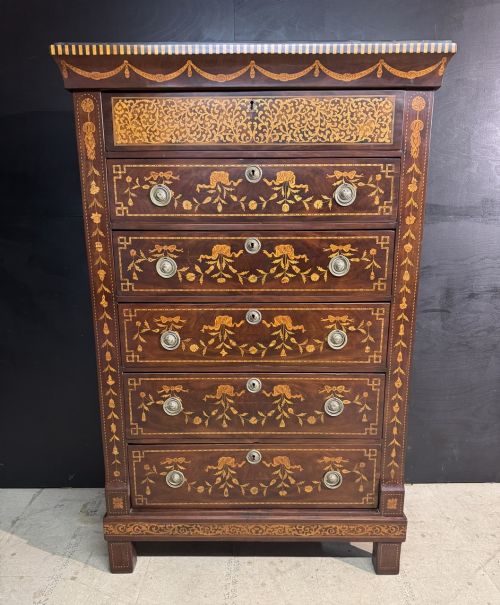
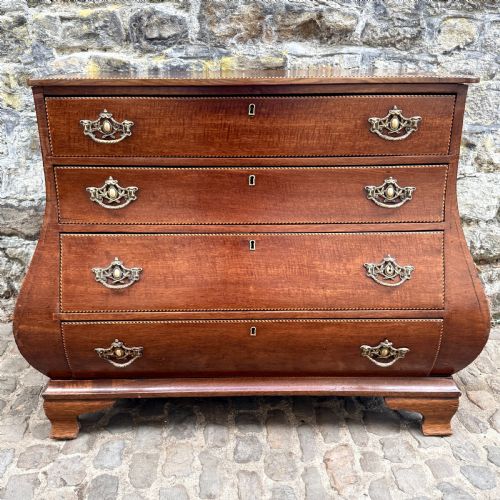
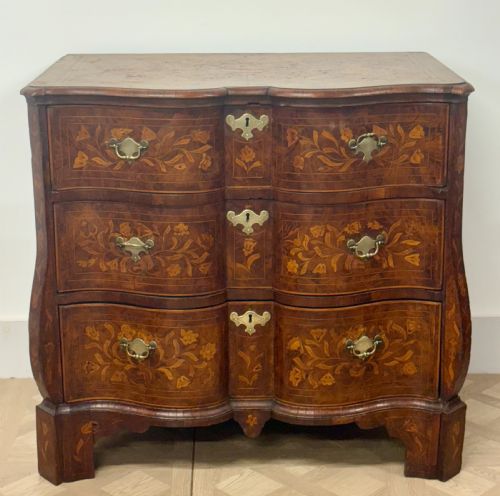
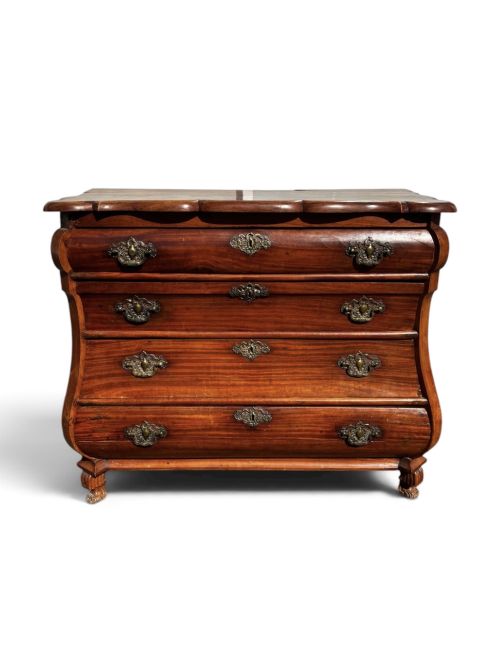
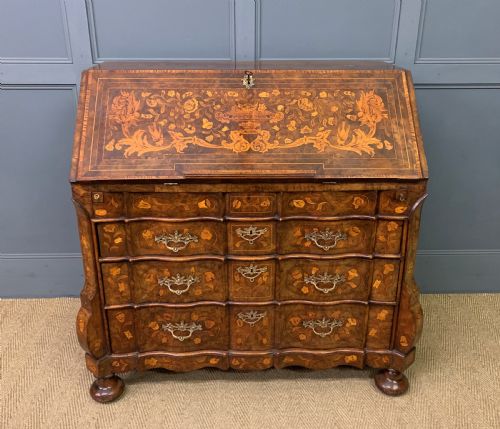
These pieces of a dutch 18th century chest bring substantial storage and bold floral marquetry to a room.
Dutch 18th Century Chest
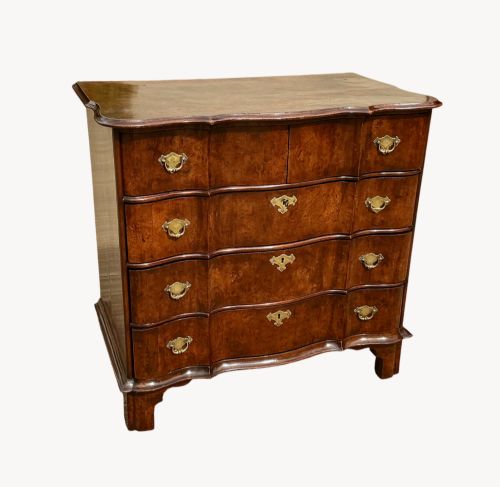
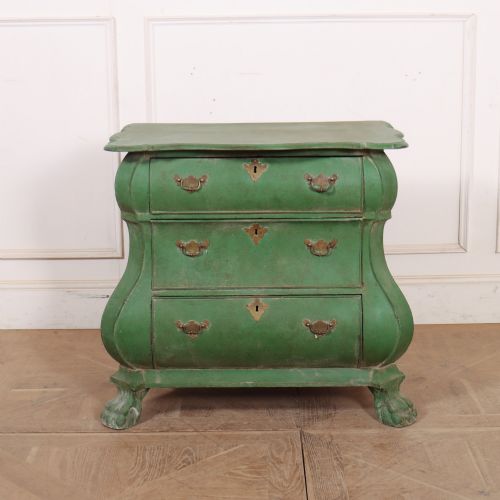
A dutch 18th century chest encompasses case furniture built for storage, most frequently taking the form of drawer units and bombe commodes. These pieces originate primarily from the 18th century, though related examples emerge from the 19th and early 20th centuries.
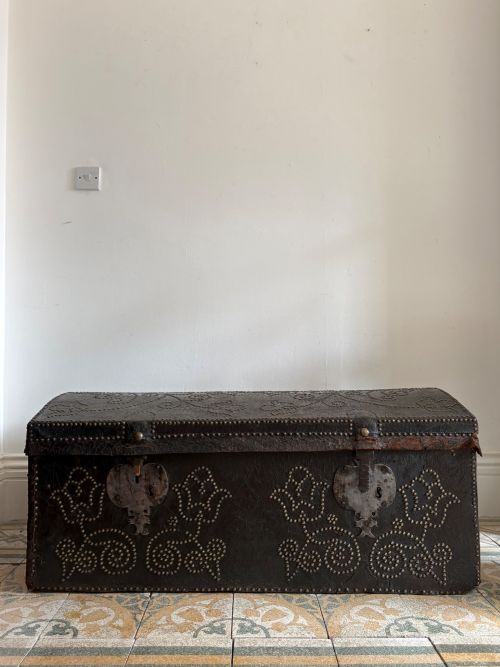
Buyers encounter solid timber and veneered carcasses shaped with distinctive swollen or curved fronts. The selection on this page ranges from tall chests and linen presses to miniature apprentice pieces and heavy colonial trunks.
Makers often utilised local oak and fruitwood beneath decorative veneers, styling the facades with dramatic floral marquetry. Regional variations span from walnut and mahogany pieces to painted wood and colonial hardwoods.
How They Were Made
Cabinet makers constructed the foundational carcase using sturdy timbers like oak or deal, providing a stable skeleton for subsequent decorative work. Walnut, mahogany, and fruitwood veneers were then applied to the exterior surfaces.
Marquetry specialists cut intricate floral patterns from various contrasting woods, embedding them into the primary veneer layer. Bombe profiles required careful shaping of the wood to achieve the characteristic swelling curve of the front and sides.
Hardware such as brass handles, mounts, and hinges secured the structural elements and added functional ornamentation. Surface finishes involved polishing the timber to highlight the natural grain and the complex inlaid motifs.
Listings feature 18th century, 19th century, and early 20th century periods alongside styles like Dutch Baroque, Rococo, and Frisian Folk Art.
What Varies in Quality
The precision and complexity of the floral marquetry set examples apart, with superior pieces displaying finely detailed floral and bird motifs across the entire facade. Simpler items rely on basic geometric parquetry or plain timber surfaces without elaborate inlay.
Structural ambition dictates desirability, particularly the execution of the bombe curve, which requires advanced cabinet making skill to maintain symmetry and stability. Straight front chests represent a more straightforward form than their undulating counterparts.
The choice of primary wood influences the character and standing of the piece, with burr walnut and figured mahogany commanding greater attention than plain oak or painted deal. Original brass mounts and untouched interior drawer configurations preserve the integrity of the work.
The Dutch 18th Century Chest Glossary
- Bombe
- A bulging or swelling outward curve on the front and sides of a piece of furniture. This characteristic silhouette requires specialist joinery to shape the timber successfully.
- Marquetry
- The art of applying small pieces of veneer to a structure to form decorative patterns. Craftsmen use contrasting woods to build up complex floral and pictorial designs.
- Commode
- A low chest of drawers used primarily for storage in domestic rooms. The term often describes decorative French and Dutch drawer units from the 18th century.
- Veneer
- A thin layer of finely figured wood applied over a secondary timber carcase. This technique allows makers to showcase expensive grains while maintaining structural stability.
- Tallboy
- A tall chest of drawers made by stacking one unit on top of another. These pieces provide vertical storage capacity within a compact floor footprint.
Dutch 18th Century Chest: Frequently Asked Questions
How do I care for marquetry?
Marquetry surfaces require stable environmental conditions with minimal exposure to direct sunlight and extreme humidity changes. This protects the delicate wood veneers and underlying adhesives from lifting.
Regular dusting with a soft cloth and occasional application of appropriate furniture wax keeps the timber nourished. Avoid harsh chemical cleaners that can damage the polish.
Where were these pieces made?
These pieces originated primarily in workshops across the Netherlands during the 18th century. Some examples reflect colonial trade connections and regional folk art traditions.
Urban centres like Amsterdam and provincial towns produced distinct cabinet-making styles. Local availability of walnut, oak, and imported tropical hardwoods shaped the choice of materials.
How can I date a chest?
Dating relies on examining construction methods, timber types, and decorative styles. 18th century examples often show hand-cut dovetails and specific marquetry patterns.
Later reproductions or pieces from the 19th and 20th centuries display machine-sawn elements and different secondary woods. Hardware fixings and interior linings also offer clues to the period of manufacture.