
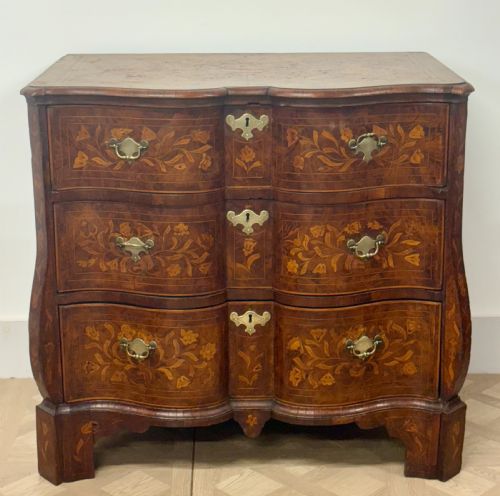
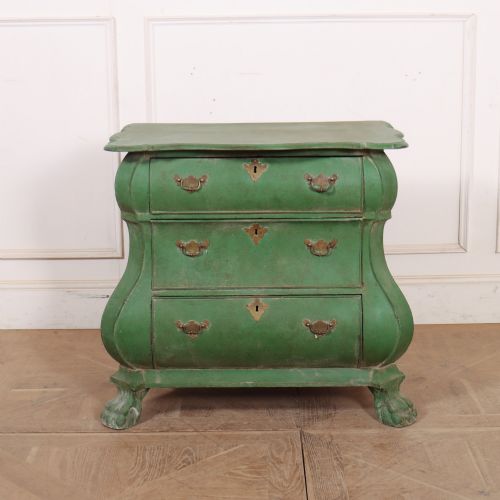


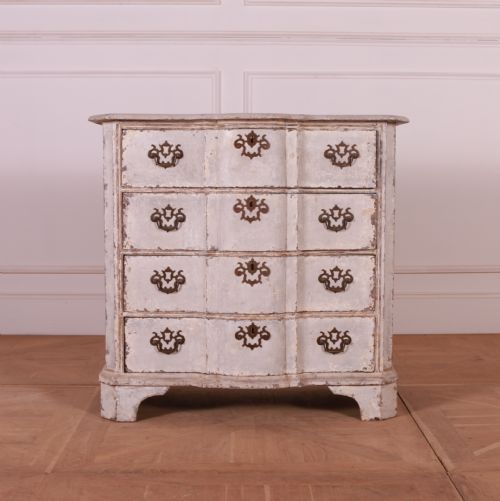
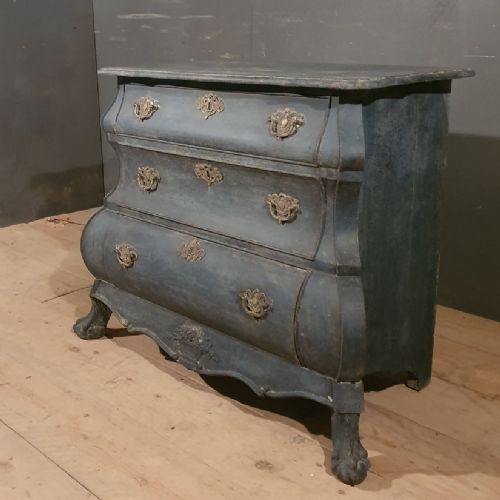


Dutch Rococo Commode
These Dutch rococo commode examples bring dramatic serpentine and bombe silhouettes straight into a room, offering rich historical presence.
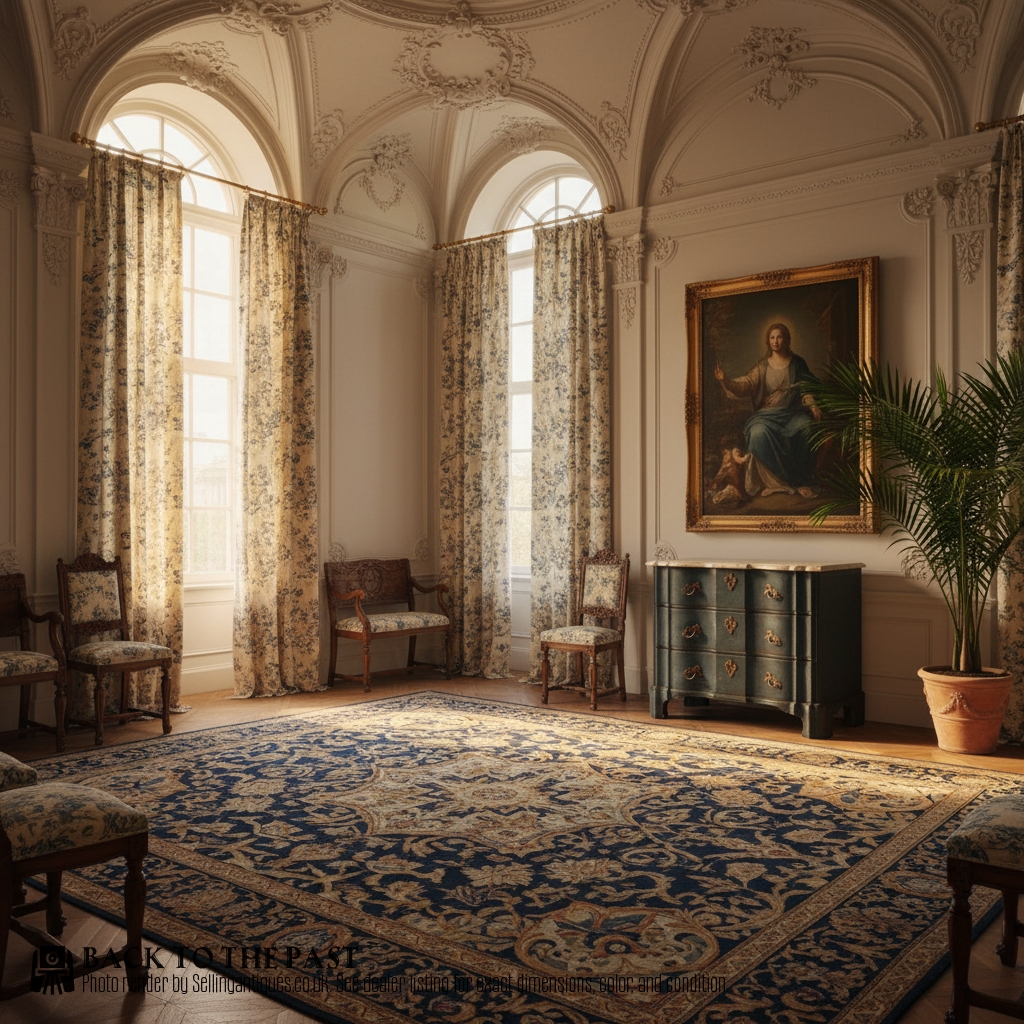
Dutch Rococo Commode
A Dutch rococo commode stands out through its distinct bombe shape and serpentine fronts, originating primarily from the eighteenth century. These chests of drawers often display generous proportions and curved profiles that define continental rococo design.
The pieces appearing on this page span from eighteenth-century walnut marquetry models down to nineteenth-century painted and mahogany variants. Miniature furniture and apprentice pieces also emerge alongside full-scale chests of drawers.
Makers utilised oak as a sturdy structural timber while reserving walnut, mahogany, and rosewood for primary surfaces. Floral marquetry frequently decorates the drawer fronts and sides of these eighteenth-century pieces.
Materials and construction
Cabinetmakers shaped solid oak frames to support complex curved profiles, applying walnut, mahogany, and rosewood veneers over the core structure. Floral marquetry was meticulously cut and inlaid into the timber surfaces to create elaborate decorative patterns.
Painted finishes and paint alone appear on various iterations, showing how workshops adapted their surfaces across different periods. Brass mounts frequently accent the drawer pulls and key escutcheons on these pieces.
Object forms span standard chests of drawers alongside miniature furniture and apprentice chests.
Distinguishing quality in commodes
The refinement of the bombe contour and the crispness of the serpentine curves dictate the visual weight of the piece. Superior examples maintain balanced proportions across their sweeping drawer fronts without stiffness.
The intricacy and preservation of the floral marquetry separate standard items from finer works. Rich grain selection in walnut and rosewood adds depth that plainer painted woods lack.
The Dutch Rococo Commode Glossary
- Bombe
- A swelling, outward-curving chest profile typical of eighteenth-century case furniture. This bulging shape requires advanced woodworking skill to build.
- Marquetry
- The art of applying pieces of veneer to a structure to form decorative patterns. Floral motifs are especially common on these continental chests.
- Serpentine
- A line or front curving in and out in a horizontal wave. This contour softens the rectangular rigidity of standard storage furniture.
- Apprentice chest
- A smaller scale piece created by a trainee cabinetmaker to demonstrate proficiency. These items replicate full-size furniture in miniature.
Dutch Rococo Commode: Frequently Asked Questions
How do I style a Dutch commode?
These chests work well as standalone statement pieces in hallways, living rooms, or bedrooms. Their strong silhouettes draw the eye without needing heavy surrounding decor.
Pair them with simple walls to let the wood grain or floral marquetry remain the visual centrepiece.
What woods were used?
Walnut, mahogany, and rosewood provide the primary decorative surfaces on these chests. Oak serves as the underlying structural timber for framing and drawer construction.
Some examples also feature painted wood finishes rather than exposed wood grain.
Are miniature chests authentic?
Apprentice chests and miniature furniture represent genuine historical pieces made for training or display purposes. They replicate the exact proportions and techniques of full-size commodes.
These smaller versions offer the same decorative impact in compact spaces.