








Dragon Relief Vase
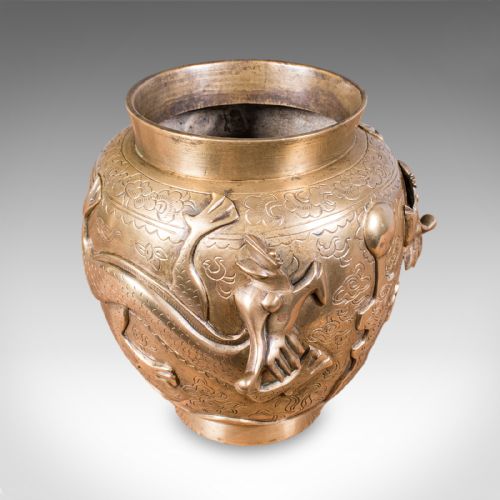
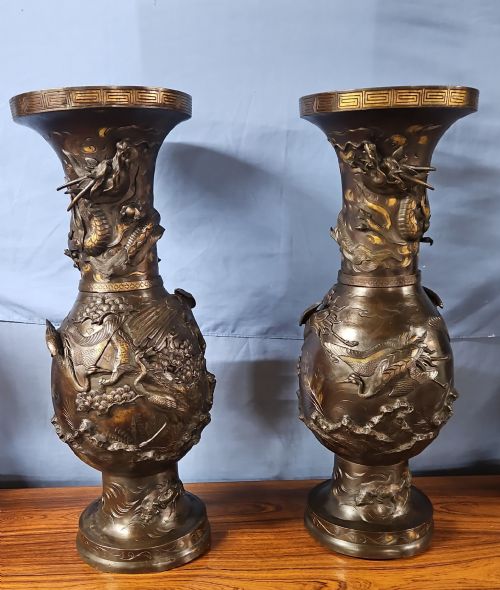
These dragon relief vases bring formidable sculpted power into a room through serpentine forms and robust bronze or ceramic casting.
Dragon Relief Vase
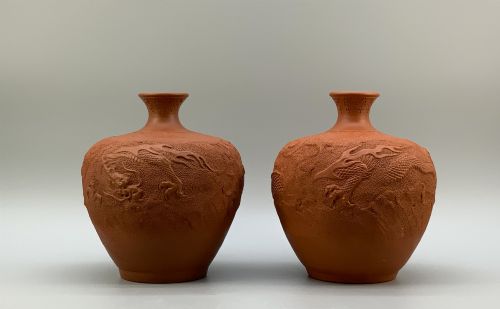
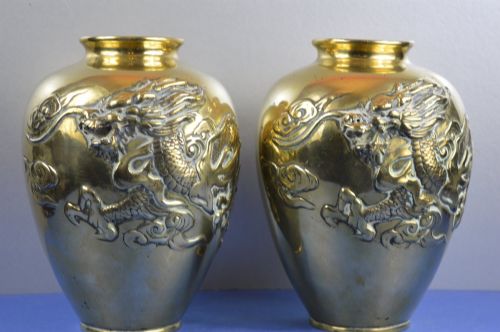
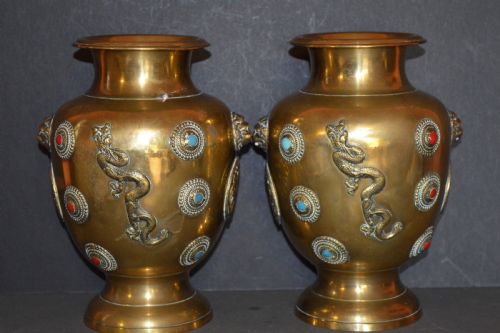
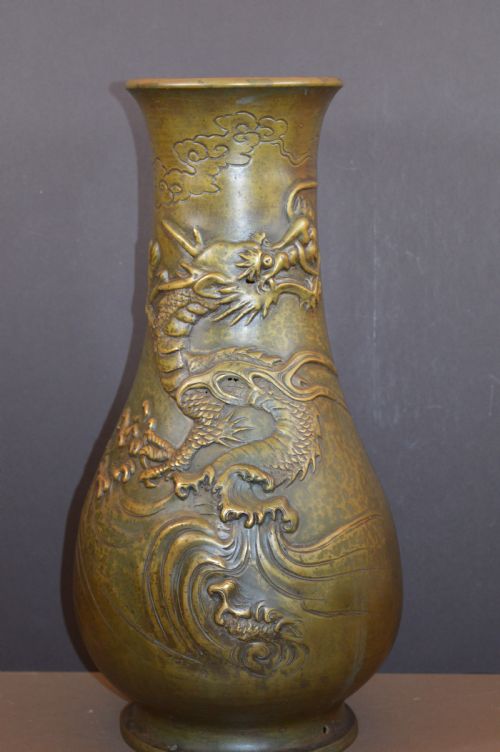
A dragon relief vase displays cast or moulded serpentine motifs wrapping the body, standing out in three dimensions from the vessel surface.
You will most frequently encounter Japanese Meiji period bronzes and Chinese late Qing dynasty examples on this page, spanning the nineteenth and early twentieth centuries.
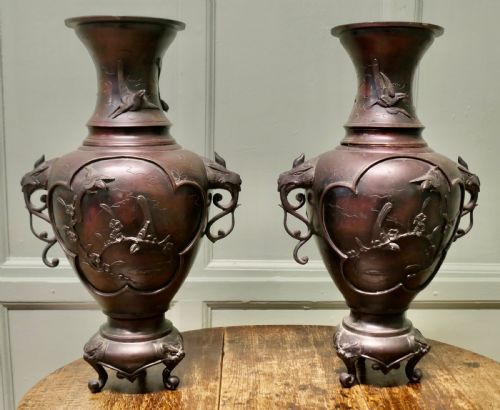
The forms range from heavy baluster vases and flower urns to converted table lamps, often found as matched pairs.
Materials and Construction
Metal vessels dominate the selection, utilising bronze, brass, and copper alloys shaped through casting, while ceramic counterparts employ red clay and earthenware.
Relief elements are achieved through high-relief casting or applied moulding, sometimes accented with enamel, gilt bronze, or gold leaf details.
Dragon Relief Vase Retail Price Guide 2026
Typical asking prices for dragon relief vase among the pieces listed under this phrase on Sellingantiques today, from the lower quarter to the upper quarter. They describe what is for sale here now, not the wider market.
Listings span periods from the Victorian era through the 1930s, featuring bronze, red clay, and enamel materials.
Assessing Craftsmanship
Weight and balance signal substance, as heavier bronze pieces demonstrate substantial metal thickness and precise proportion across pairs.
The Dragon Relief Vase Glossary
- Relief
- A sculptural technique where the figures project from a flat background. In these pieces, dragons coil outward in high relief.
- Baluster
- A vase form with a rounded body, tapering neck, and flared rim. This silhouette provides a stable canvas for wrapped serpentine motifs.
- Meiji
- A Japanese imperial period spanning from 1868 to 1912. Many finely cast bronze vessels originate from this era.
- Qing
- The final imperial dynasty of China, lasting until 1912. Pieces from this era often utilise rich bronze alloys and marked bases.
- Imari
- A traditional style of Japanese export ceramics. These pieces incorporate distinct moulded patterns from around 1900.
Dragon Relief Vase: Frequently Asked Questions
How do I spot a bronze dragon vase?
Examine the vessel surface for metallic weight, dark patination, and deeply chased or cast dragon motifs wrapping the body.
These metal pieces often date from the nineteenth century and show distinct casting seams or specialist base marks.
Where were dragon relief vases made?
The pieces originate primarily from Japanese Meiji workshops and Chinese late Qing kilns or foundries.
Craftsmen in these regions specialised in both heavy cast bronze and moulded red clay ceramics.
How do I clean an antique bronze vase?
Dust gently with a dry, soft cloth to protect the historic surface patination and delicate raised details.
Avoid chemical polishes or water, which can strip away the aged bronze colour built up over decades.
Are these vases sold as pairs?
Many listings feature matched pairs of heavy bronze or ceramic vessels intended for symmetrical mantel or table display.
Single vessels also appear, maintaining the same sculptural relief work.