



Double Sheet Music Stand
A double sheet music stand serves musicians sharing a score, combining functional adjustment with fine cabinetmaking.
Double Sheet Music Stand
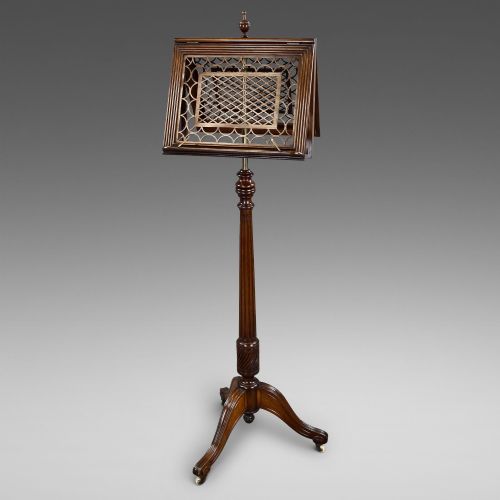
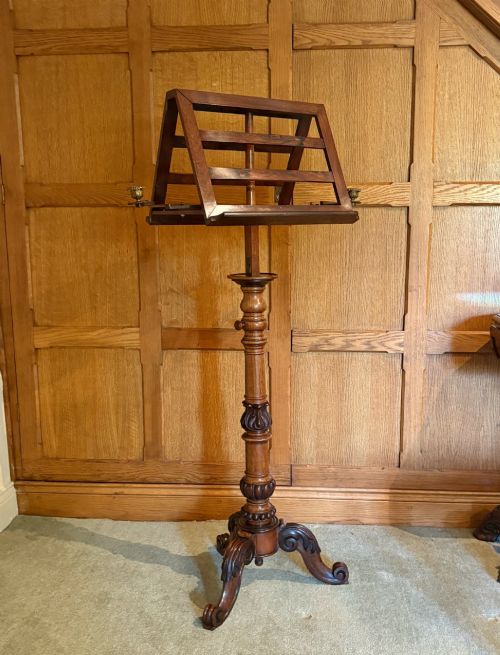
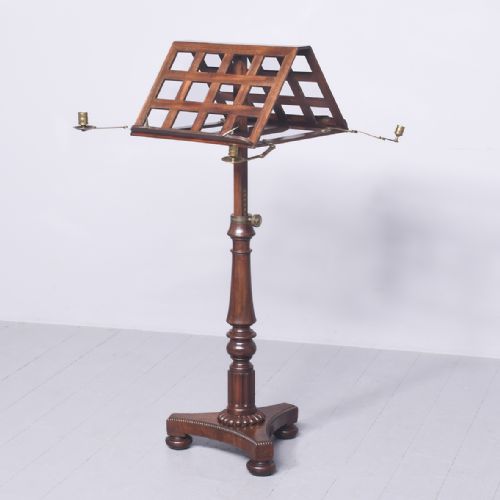
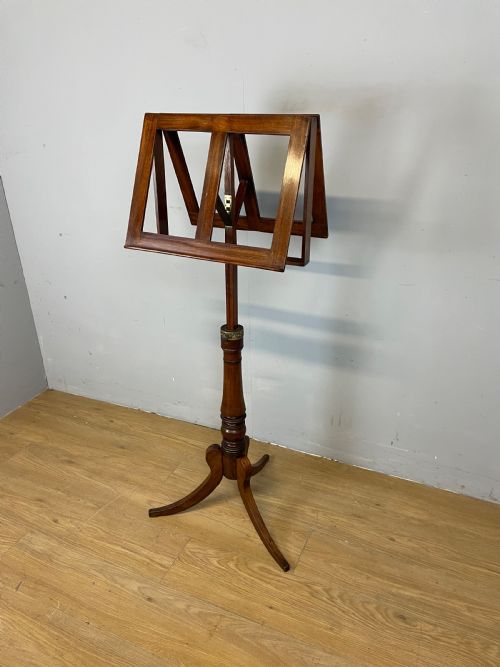
A double sheet music stand provides two reading surfaces for musicians, frequently built as adjustable duet stands or combined with storage forms such as a Canterbury. These pieces appear across the Georgian, Regency, George IV, William IV, and Victorian periods, reflecting shifting domestic tastes in musical entertainment.
Mahogany, rosewood, walnut, and oak form the primary woods for these stands, often paired with brass mechanisms for height and angle adjustments. The design ranges from fretted music desks on tripod bases to heavier architectural lecterns from the nineteenth century.
How they were made
Cabinetmakers constructed these stands using solid and veneered timbers including mahogany, rosewood, walnut, and oak, shaping supports into tripod bases or turned columns. Brass fittings allowed desks to adjust for height and reading angle, supporting two musicians simultaneously.
Carved details and fretted music desks defined the decorative approach during the Regency and Victorian eras, while simpler forms relied on the grain and colour of the timber. Joinery methods matched the period, from traditional framing to turned pillar construction.
Current listings feature double sheet music stands spanning the Georgian, Regency, George IV, William IV, and Victorian periods, constructed in mahogany, rosewood, walnut, and oak.
What varies in quality
The refinement of the carving and the intricacy of fretted music desks separate standard examples from finer work. Timber selection also plays a part, with well-figured mahogany, rosewood, and walnut indicating greater care by the maker.
The precision and integrity of the brass adjustment mechanisms determine the utility and sophistication of the piece. Stands that retain original turning and stable tripod bases demonstrate superior original construction.
GILLOWS
The Double Sheet Music Stand Glossary
- Duet stand
- A music stand designed with two reading desks facing the same direction for two players. These pieces allow multiple musicians to share a single score.
- Canterbury
- A piece of furniture featuring partitions for holding sheet music or books, occasionally combined with a double sheet music stand top. This form provides both display and storage.
- Fretted
- Woodwork pierced with decorative patterns, commonly seen on the music desks of nineteenth-century stands. This technique lightens the visual weight of the timber.
- Tripod base
- A three-legged support structure used to stabilise the central column of adjustable music stands. This configuration prevents rocking on uneven floors.
Double Sheet Music Stand: Frequently Asked Questions
How do I adjust a double sheet music stand?
Most period stands utilise brass screws, sliding collars, or ratchet mechanisms concealed behind the central column or beneath the desks. These allow the user to alter both the height and the reading angle of the dual surfaces.
Care must be taken when turning brass screws on older timbers to avoid straining the original threads. Gentle handling preserves the metal and wood components.
What is the difference between a duet stand and a Canterbury?
A duet stand is dedicated entirely to supporting open scores for two musicians on adjustable desks. A Canterbury incorporates vertical partitions below the stand specifically for storing sheet music or portfolios.
Both forms served nineteenth-century parlours where domestic music-making was a central social activity.
How do I date a mahogany music stand?
Dating relies on observing the timber choice, construction methods, and stylistic details such as turnings or carved feet. Georgian and Regency examples often feature crisp reeding and lighter tripod bases, while Victorian pieces tend towards heavier proportions.
Comparing the brass hardware and secondary woods helps confirm the period of manufacture.
Can I use an antique stand for daily practice?
These stands were built for practical use by musicians and remain functional today. Their adjustable desks accommodate modern scores just as well as nineteenth-century sheet music.
Owners should adjust mechanisms with care and avoid placing excessive weight on the desks to protect the historic joints.