





Double Series Twist
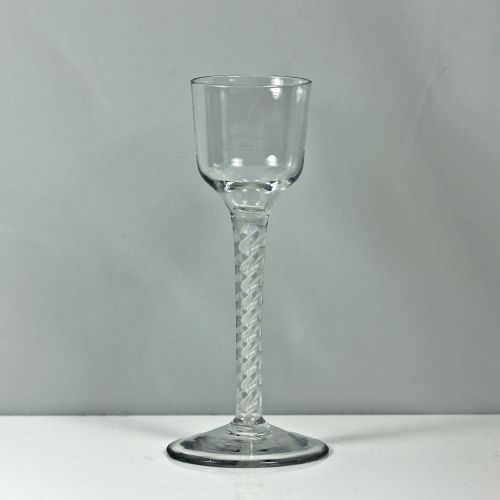
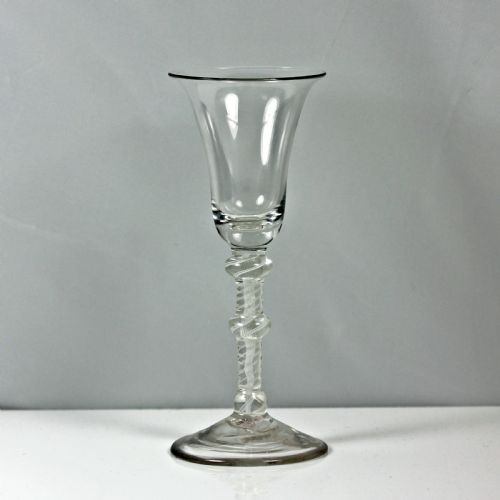
A double series twist brings together two distinct strands of enamel or air enclosed within the stem, defining the finest 18th-century English and Georgian glassware.
Double Series Twist
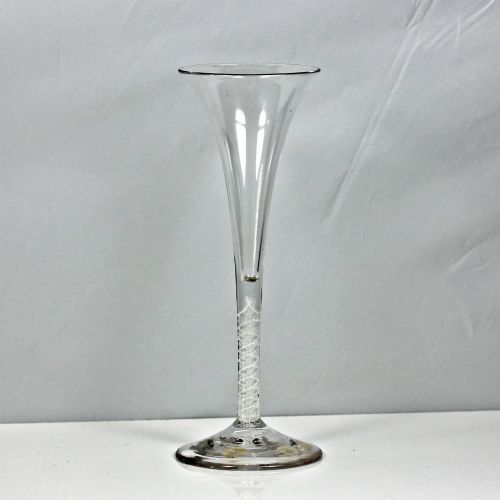
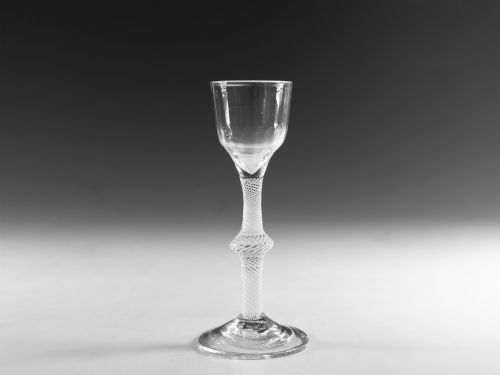
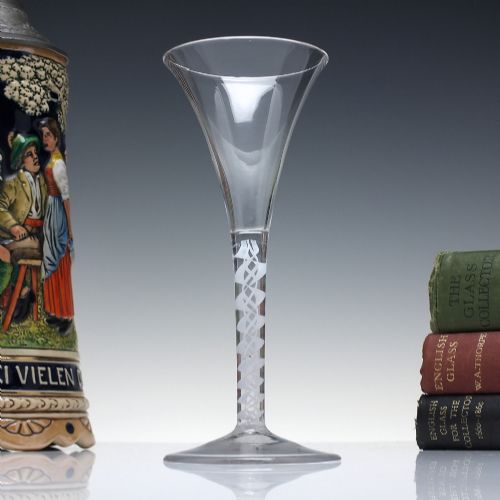
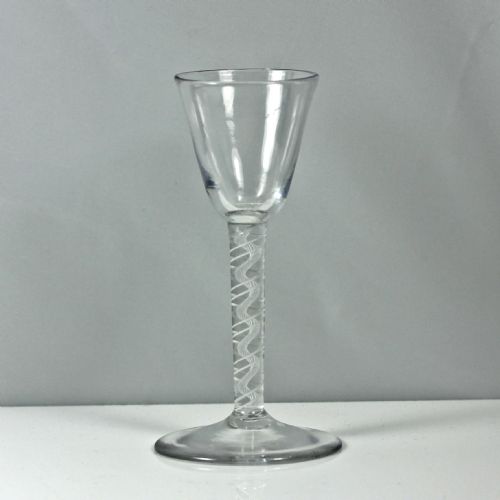
A double series twist wine glass presents a stem containing two separate inner elements, most commonly an opaque white enamel spiral paired with another twist structure. These pieces belong primarily to the 18th century and the Georgian period, appearing in forms ranging from wine glasses and ales to champagnes, cordials, and sweetmeats.
The most common variety on this page is the Georgian double series opaque twist wine glass, often shaped with a trumpet, bell, ogee, or ovoid bowl. Alongside standard wine glasses, buyers encounter taller ale glasses, firing glasses with terraced feet, and occasional Scottish examples from the Victorian era.
Vessels range from plain bowls to examples engraved with hop and barley, floral motifs, or vine patterns. Collectors also find variations featuring knops along the stem, trumpet bowls, and folded or conical feet.
How they were made
Glassmakers produced these items using lead glass, lead crystal, or flint glass, shaped by hand-blowing molten metal into the desired vessel form. The signature stem was created by drawing and twisting canes of clear and white enamel glass together before encasing them in a protective outer layer of clear metal.
Bowls and feet were formed separately and joined to the twisted stem while hot, resulting in pieces that often show pontil marks underneath the foot. Certain vessels received additional decoration through flute-moulding, rib-moulding, or surface engraving executed with a wheel.
Listings demonstrate that lead glass and flint glass served as the primary materials for forming 18th-century double series twist stems.
What varies in quality
Quality rests upon the precision and complexity of the internal twist, where tightly drawn, uniform spirals command greater interest than irregular or muddy formations. The crispness of bowl mouldings, such as flute-moulding or ogee curves, and the balance between bowl, stem, and foot dictate the overall elegance of the object.
James Giles
The Double Series Twist Glossary
- Double series twist
- A stem enclosing two distinct internal twist formations, typically combining opaque white enamel threads with another spiral element inside clear lead glass.
- Opaque twist
- A stem decoration formed from white enamel glass threads drawn into threads and twisted within the transparent metal.
- Air twist
- A stem containing spiral channels of trapped air rather than enamel, formed by drawing bubbles through the glass.
- Ogee bowl
- An S-profile bowl curving inward at the rim and outward below, frequently seen on 18th-century drinking vessels.
- Knop
- A swelling or bulbous projection shaped into the stem of a glass, sometimes appearing in multiples such as double or triple knops.
Double Series Twist: Frequently Asked Questions
What is a double series twist?
A double series twist is a glass stem containing two distinct internal twist formations, usually pairing white enamel threads with another spiral element inside clear lead glass.
These configurations appeared predominantly during the 18th century and Georgian period, distinguishing themselves from single twist or plain stem variants.
How were these glasses used?
These vessels served for drinking wine, ale, cordials, and champagne at the table or during social gatherings in the Georgian era.
Specialised forms like firing glasses were designed for tavern toasts, while sweetmeat glasses held confectionery or preserved fruits.
What bowls do these glasses have?
The listings show a variety of bowl shapes, including trumpet, bell, ogee, ovoid, and tulip profiles.
Some bowls feature flute-moulding or rib-moulding, while others carry wheel-engraved decoration such as hop and barley or floral designs.