



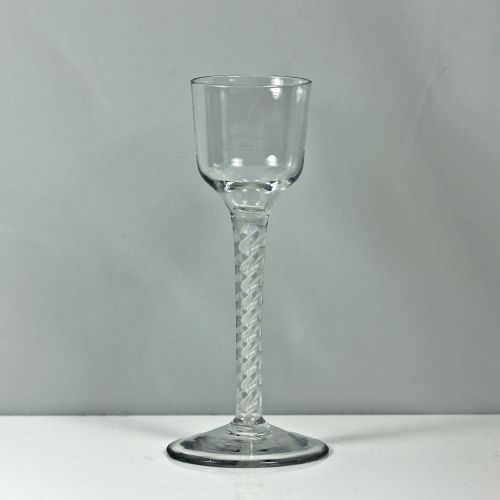
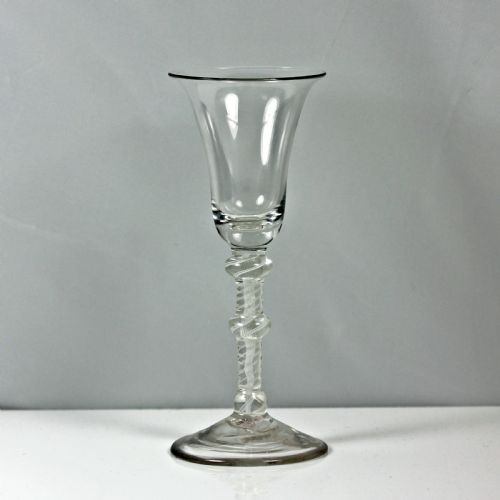


Double Series Opaque Twist
Double series opaque twist glasses combine complex interior white enamel threads with clear lead glass, offering collectors a tactile glimpse into eighteenth-century drinking culture.
Double Series Opaque Twist
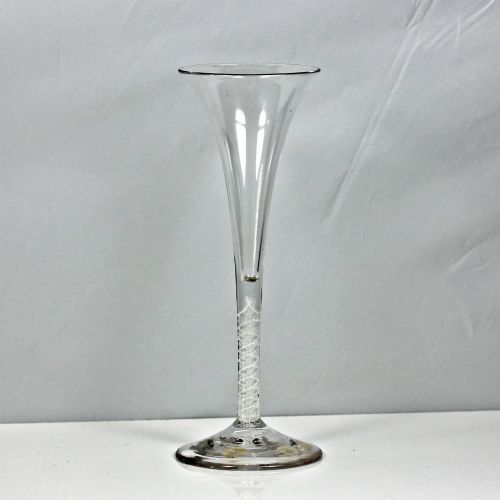
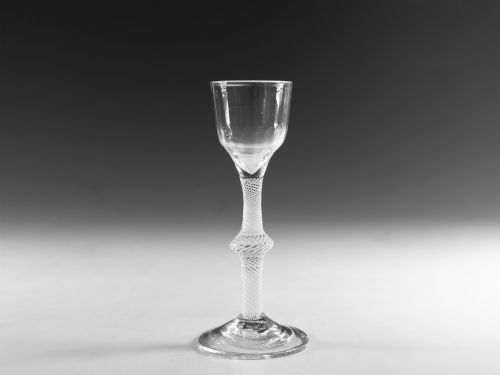
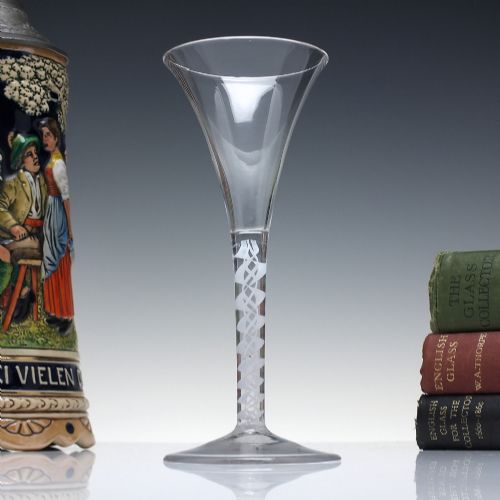
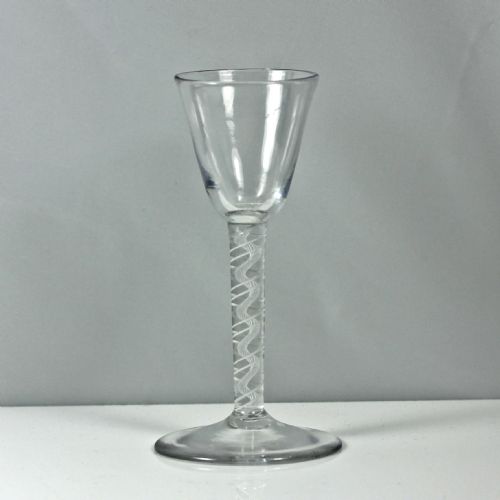
A double series opaque twist glassware search brings up eighteenth-century drinking vessels, predominantly English and Georgian in origin. These pieces span wine glasses, ales, cordials, and sweetmeats, dating largely from the mid-eighteenth century alongside later nineteenth-century Scottish examples.
The dominant form on this page is the wine glass with a trumpet, ogee, or bell bowl, sitting upon a drawn or knopped stem enclosing the signature white enamel twists. Ale glasses, firing glasses, and occasional goblets also appear among the records.
What Varies in Quality
Quality rests upon the regularity and complexity of the internal twist formation, alongside the clarity and weight of the lead crystal metal. Crispness in flute-moulding and engraving, such as floral or Jacobite motifs, distinguishes finer specimens.
Proportion between bowl, stem, and foot dictates visual balance. Heavy knopping or unusual vessel forms like ratafia and sweetmeat glasses elevate certain examples above standard wine glass formats.
Double Series Opaque Twist Retail Price Guide 2026
Typical asking prices for double series opaque twist among the pieces listed under this phrase on Sellingantiques today, from the lower quarter to the upper quarter. They describe what is for sale here now, not the wider market.
Listings span the eighteenth century and the Victorian era, utilising lead glass, clear glass, and white enamel.
James Giles
The Double Series Opaque Twist Glossary
- Double series opaque twist
- A stem formation containing two distinct sets of opaque white enamel threads, typically a central gauze enclosed by an outer spiral.
- Ogee bowl
- An S-profile bowl curving out at the rim and in towards the base, common on eighteenth-century drinking glasses.
- Knop
- A knob or protuberance on the stem of a glass, used for decorative effect and grip.
- Sweetmeat glass
- A wide-bowled vessel designed for serving confectionery or preserved fruits, often larger than a standard wine glass.
- Firing glass
- A heavy-based glass designed to be banged on a table instead of toasted during eighteenth-century club meetings.
Double Series Opaque Twist: Frequently Asked Questions
What is a double series opaque twist?
A double series opaque twist refers to a glass stem containing two distinct layers of white enamel threads, usually an inner core and an outer spiral.
Craftsmen manipulated these white enamel rods inside clear lead glass while the metal was hot, creating complex optical patterns.
How are these glasses dated?
Dating relies on stylistic markers such as bowl shape, stem construction, and foot formation, placing the majority in the eighteenth century.
Georgian examples often feature lead crystal characteristics and specific bowl profiles like ogee or bell, differentiating them from later nineteenth-century revivals.
What drinks were served in them?
These vessels served various alcoholic beverages, with specific forms tailored for wine, ale, cordials, or ratafia.
Narrower bowls suited strong cordials, while taller or fluted bowls accommodated ales and sparkling wines of the period.
How do I care for antique glass?
Antique glass requires gentle hand washing in lukewarm water using mild detergent, avoiding sudden temperature changes.
Store pieces securely on stable surfaces, keeping them away from direct sunlight and vibrations to preserve the fragile lead crystal.