
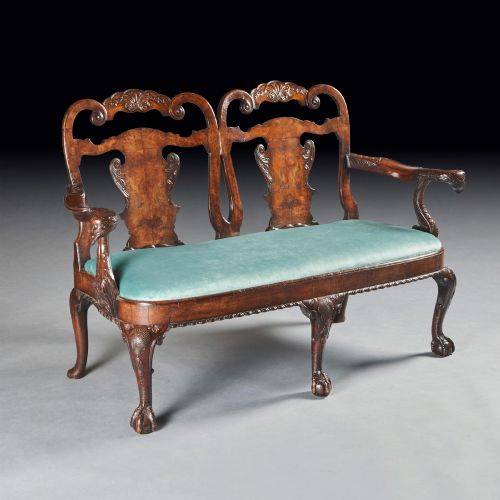
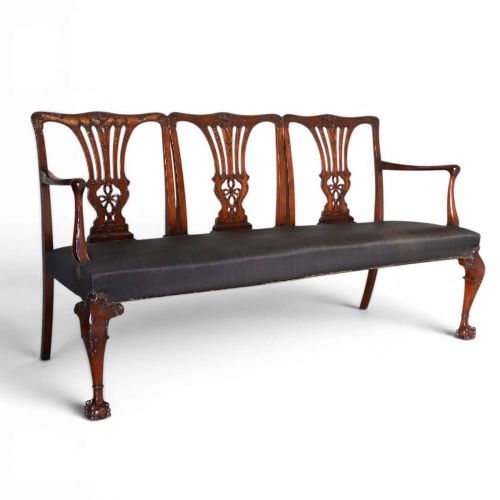


Double Chair Back Bench
A double chair back bench offers the formal symmetry of two conjoined seating units, providing a distinct architectural presence in a room.
Double Chair Back Bench
A double chair back bench presents a combined seating form where two distinct chair profiles merge into a single extended settee or bench. These pieces appear across various periods from the eighteenth century through to the early twentieth century, utilising traditional timber framing.
The layout typically adapts classic chair designs, such as Chippendale or Georgian revival patterns, into a wider format suitable for two or three occupants. Walnut and mahogany form the primary timber choices for these framed settees.
Makers frequently drew upon earlier stylistic precedents, resulting in revival pieces that emulate eighteenth-century aesthetics during the Victorian and Edwardian eras. This approach yields seating that combines historic visual motifs with the practical proportions of a larger bench.
Materials and construction methods
Timbers such as mahogany, walnut, and oak provide the structural framework for these benches, often shaped with hand-carved details along the back splats and top rails. Cabinetmakers utilised mortise and tenon joints to secure the load-bearing elements of the frame.
Upholstery elements incorporate fabric, velvet, or cane inserts fitted into the seat base, while box seat variants provide internal storage capacity. Satinwood inlay and intricate carving define the decorative surface work on select revival examples.
A surprise box seat hidden beneath the upholstery offers the medieval joy of secret storage inside a polite Victorian parlour bench.
Assessing quality and execution
The crispness of the carved ornamentation on the back splats distinguishes finer examples from simpler production pieces. Deep relief carving and precise joinery indicate a higher standard of cabinetmaking.
The selection and grain alignment of the timber, particularly in mahogany and walnut frames, influence the overall visual impact of the piece. Superior examples maintain structural integrity alongside balanced proportions across the extended back.
The Double Chair Back Bench Glossary
- Chippendale Style
- A decorative aesthetic derived from the designs of Thomas Chippendale, characterised by intricate interlaced back splats and cabriole legs. These motifs frequently appear on eighteenth-century and revival seating.
- Caned Settee
- A bench featuring woven cane panels fitted into the backrest or seat frame for a lightweight texture. This technique often appears on Louis XVI revival and period pieces.
- Box Seat
- A seating construction incorporating a hinged lid that opens to reveal an internal compartment for storage. This functional addition appears on selected upholstered variants.
- Splat
- The vertical central strip of wood within a chair back connecting the crest rail to the seat. Double chair back designs feature two distinct splats side by side.
- George II Revival
- A design movement looking back to the architectural and furniture forms of the mid-eighteenth century. Pieces in this style utilise heavy proportions and classic carved details.
Double Chair Back Bench: Frequently Asked Questions
How were these benches used historically?
Historically, these settees provided compact seating for multiple occupants in formal rooms while maintaining the decorative appearance of individual chairs.
They functioned as decorative yet practical furniture items in parlours and reception rooms throughout the eighteenth, nineteenth, and early twentieth centuries.
How do I care for wooden frame furniture?
Maintain wooden frames and carved elements by keeping them away from direct sunlight and sudden temperature shifts to prevent timber splitting.
Apply suitable wax polish periodically to nourish the surface of mahogany or walnut and preserve the finish.
How can I tell revival pieces from older ones?
Revival pieces often date from the Victorian or Edwardian eras and exhibit machine-assisted joinery alongside historical design motifs. Examining the tool marks and timber ageing helps determine the manufacturing period.
Eighteenth-century originals display hand-cut joinery techniques and timber patination consistent with extended age and use.