




English Oak Hall Bench
An English oak hall bench is a heavy, functional seat built to anchor a hallway or entrance, offering sturdy seating and often integrated storage.
English Oak Hall Bench
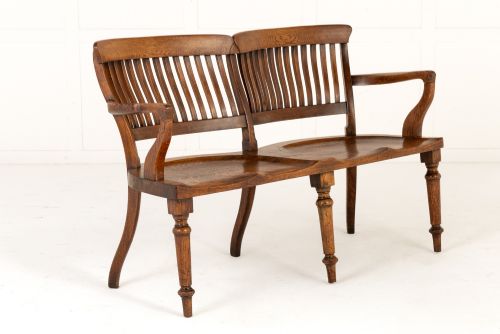
An English oak hall bench is a solid timber seating piece designed for entranceways, foyers, and corridors. Buyers seeking an english oak hall bench typically encounter heavy timber construction, upright backs, and sometimes enclosed lower compartments intended for boots and garments.
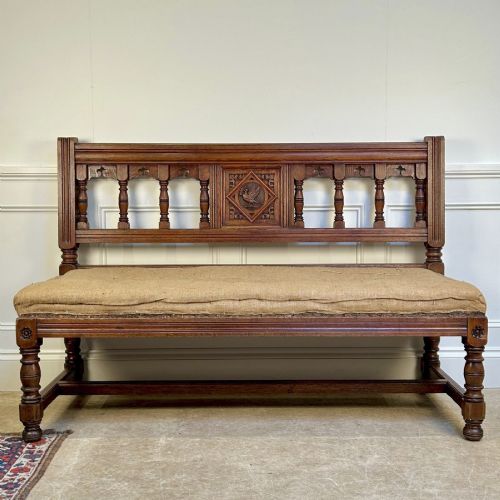
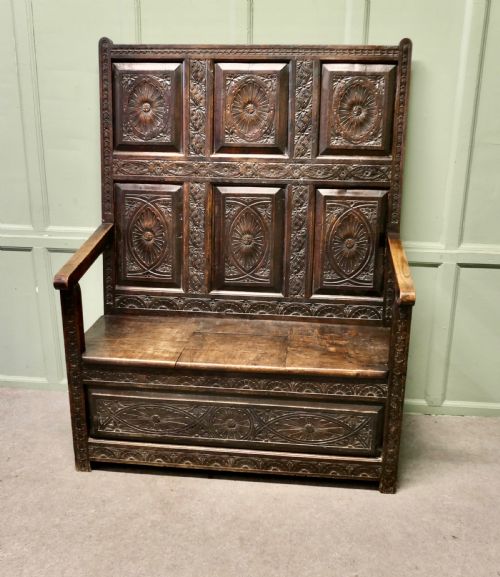
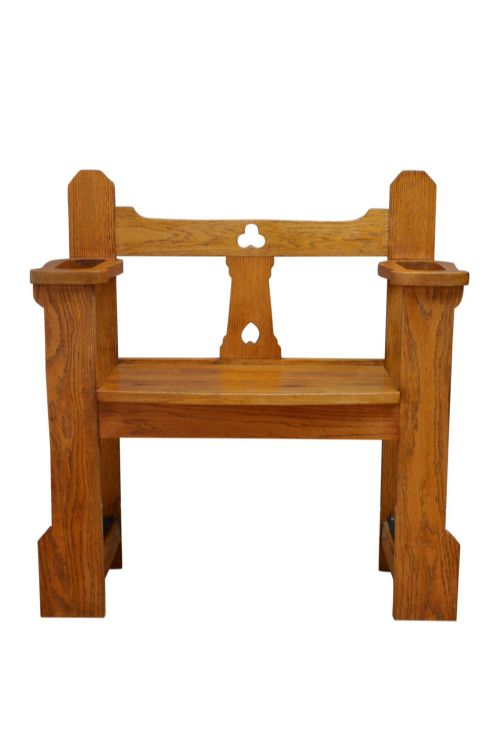
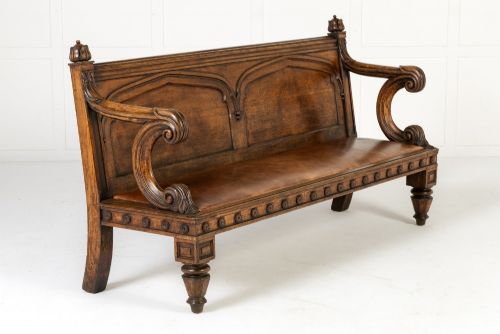
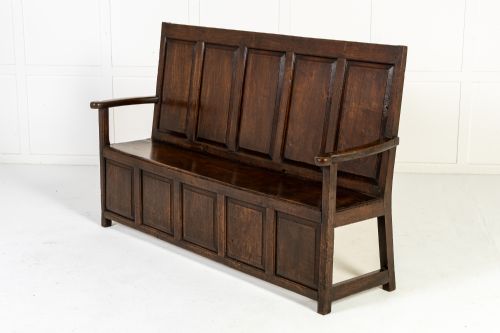
The pieces appearing on this page span several centuries and movements, ranging from seventeenth-century box settles to nineteenth-century Gothic revival designs and early twentieth-century Arts and Crafts examples. Settles with high panelled backs, monks benches, and narrow hall seats form the core of the selection.
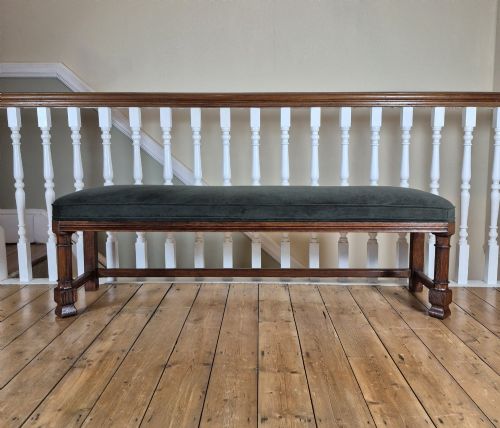
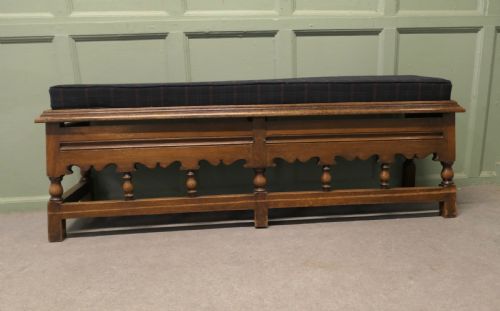
Originating primarily from English workshops, these pieces utilise indigenous oak to provide rigid, enduring utility in domestic spaces. Forms vary from straight-backed settles with integrated storage boxes to narrow upholstered benches suited to modern corridors.
Materials and construction methods
Carpenters constructed these items using solid English oak, joined with traditional mortise and tenon joinery secured by wooden pegs. Panels are typically panel-in-frame to accommodate the natural seasonal movement of the timber without splitting.
Surface decoration relies on hand carving, chip carving, and linenfold panelling, executed directly onto the structural oak rather than applied as veneer. Iron hinges, brackets, and latches provide the functional hardware on pieces featuring storage boxes or folding monk bench mechanisms.
Listings span periods from the 17th Century to the 1920s, featuring oak, iron, and various upholstery fabrics like leather, hessian, and velvet.
Assessing quality in construction and material
The standard of an English oak hall bench depends on the thickness of the original timber boards and the crispness of the hand-carved details. Pieces retaining their original joined framework without extensive timber replacement command greater attention from collectors.
Proportion and utility also dictate the standing of a piece, as narrow widths and balanced high backs demonstrate careful domestic design. The integrity of the timber patination, achieved through decades of wax handling and atmospheric exposure, marks the distinction between unaltered surfaces and heavy modern intervention.
GIllows
The English Oak Hall Bench Glossary
- Settle
- A wooden bench with a high back, solid armrests, and frequently a box base beneath the seat for storage. This form kept draughts away from the sitter in entrance halls.
- Monks bench
- A multifunctional seat featuring a hinged back that folds down to form a table top. This dual-purpose furniture type appeared in various forms across the centuries.
- Box settle
- A variant of the settle featuring a box compartment beneath the seat, accessed by lifting the lid or via doors in the front plinth. It served as secure storage for boots and heavy textiles.
- Mortise and tenon
- A primary woodworking joint where a protruding tongue fits tightly into a matching cavity, locked together with wooden pegs. This method provides the structural rigidity seen in early oak furniture.
- Patina
- The surface sheen and colour depth developed by timber over long periods through handling, polishing, and natural oxidation. Unaltered patinated surfaces are valued by traditional furniture handlers.
English Oak Hall Bench: Frequently Asked Questions
How were these benches used historically?
Historically, these benches served as functional seating for callers, servants, and family members waiting in entrance halls. The high backs helped block cold draughts coming from front doors, while the enclosed lower box compartments held cloaks, boots, and winter wear.
In some instances, such as with monks benches, the top could convert into a flat surface for other domestic tasks when the seat was not in use.
How do I care for antique oak furniture?
Antique oak benefits from stable indoor humidity levels away from direct heat sources and strong sunlight, which can dry out the timber. Regular applications of traditional beeswax help nourish the wood and maintain its protective surface sheen.
Avoid using modern silicone-based polishes, as they build up residue and alter the natural appearance of the historic patina.
How can I tell the age of an oak settle?
Dating relies on examining construction techniques, joinery marks, and the style of hand-carved ornamentation. Earlier pieces from the seventeenth and eighteenth centuries often display pegged mortise and tenon joints with hand-riven panels, while nineteenth-century revivals incorporate machine-sawn elements and period-specific Gothic or Arts and Crafts motifs.
Tool marks left by adzes and pit saws also provide clear indicators of manufacturing methods tied to specific eras.