

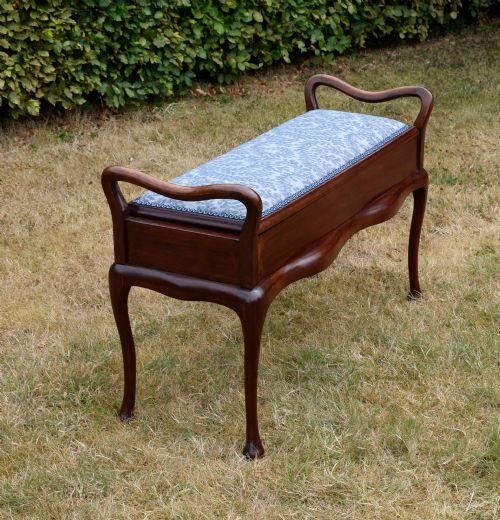
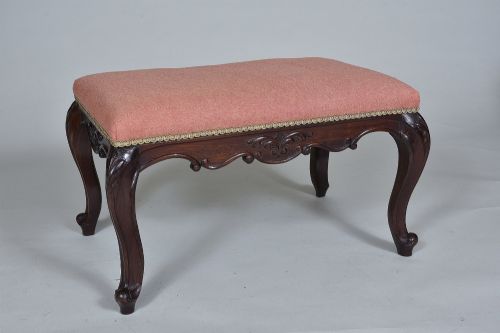
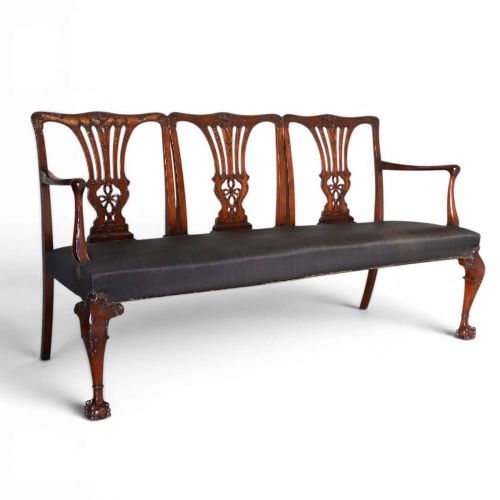
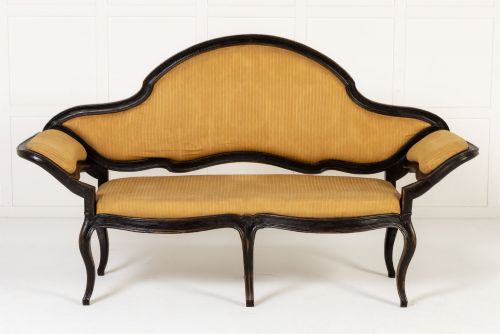


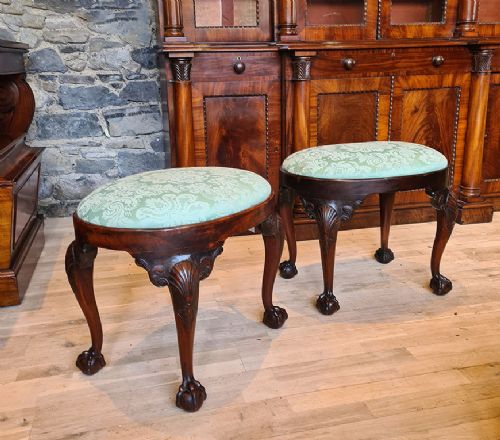

Cabriole Leg Wooden Bench
A cabriole leg wooden bench brings period seating into a room, combining curved supports with sturdy timber frames.
Cabriole Leg Wooden Bench
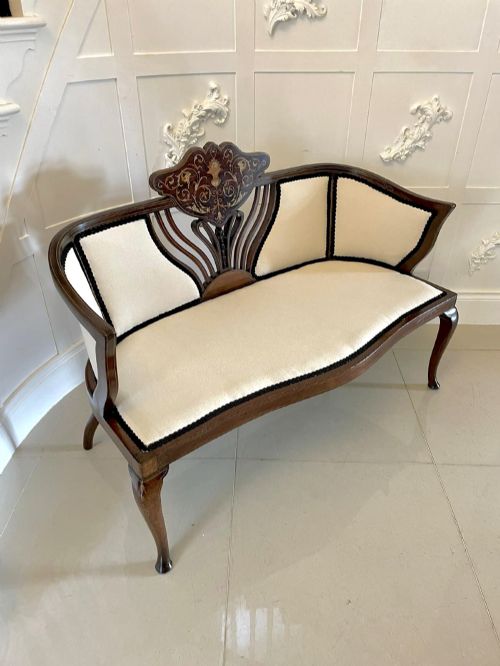
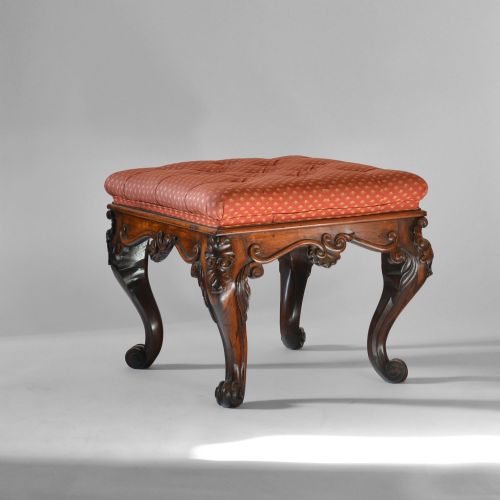
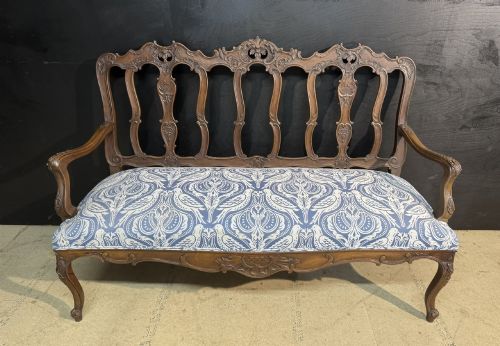
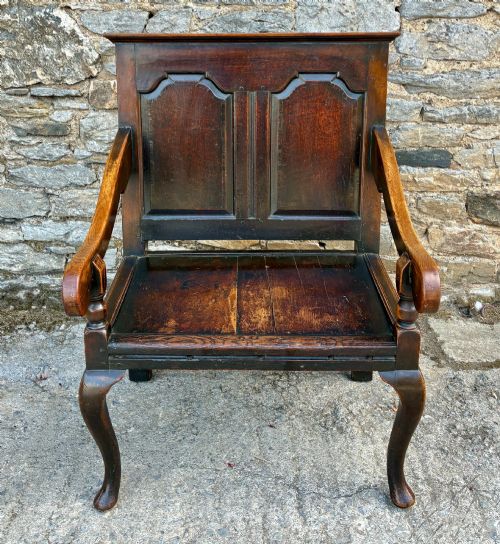
When you search for a cabriole leg wooden bench, you encounter a varied selection of antique forms including stools, settees, and benches. These pieces span multiple eras, with examples originating from the Georgian and Victorian periods, alongside later revival styles.
The assortment on this page mostly comprises wooden frames paired with upholstered seats, taking the form of footstools, window seats, and multi-seat settees. Walnut and mahogany feature frequently as the primary timber choices for these frames.
Design influences range from Queen Anne and Chippendale to Rococo Revival, showing how makers adapted historical curves for domestic seating across different centuries.
Materials and Construction
Makers built these frames using hardwoods such as mahogany, walnut, and oak, selecting timber for strength and grain pattern before shaping the distinctive double-curved leg supports. Carving often defines the knees and feet of the cabriole design, showing precise hand-tool work on the wood.
Upholstery forms a vital component of the construction, utilising materials like fabric, velvet, wool, and textile stretched over internal padding. Brass accents occasionally appear as decorative details or hardware on specific frames.
The furniture styles represented include Queen Anne, Chippendale, and Rococo Revival, applied to stools, settees, and benches.
Evaluating the Pieces
Quality rests in the precision of the timber carving on the legs and frame, where crisp lines and balanced proportions distinguish finer examples from simpler work. The choice of dense hardwoods like walnut or mahogany also indicates higher-tier manufacture.
The integrity of the frame construction and the quality of the upholstery materials, whether traditional textiles or buttoned velvet, determine the overall execution of each piece.
The Cabriole Leg Wooden Bench Glossary
- Cabriole leg
- A furniture leg that bends outward at the knee and tapers inward to an ankle, finishing in a pad or scroll foot. This form draws inspiration from animal legs and became popular in Georgian furniture.
- Settle
- A wooden bench with high back panels, solid arms, and often a storage box beneath the seat. Early versions provided draft protection in large halls.
- Rococo Revival
- A mid-19th-century style marked by asymmetrical curves, scrollwork, and naturalistic floral carvings. It draws heavily on 18th-century French decorative arts.
- Chippendale style
- A furniture style named after the cabinetmaker Thomas Chippendale, featuring carved mahogany, interlaced ribbon backs, and cabriole legs with claw-and-ball feet.
- Settee
- A medium-length wooden or upholstered seat designed for multiple occupants, often featuring a backrest and padded armrests.
Cabriole Leg Wooden Bench: Frequently Asked Questions
What materials are used in these benches?
Frames are constructed primarily from solid hardwoods including mahogany, walnut, and oak. Some examples incorporate rosewood or feature painted finishes.
Seats are upholstered using various textiles such as velvet, wool, and patterned fabric, often secured with traditional padding.
Are these pieces from the Georgian period?
The selection includes authentic Georgian pieces alongside later revival pieces produced in the Victorian and Edwardian eras. George I, George II, and George III styles reappear frequently across these eras.
Maker techniques and timber choices help distinguish original 18th-century pieces from 19th-century interpretations.
How do I care for antique wood?
Keep wooden frames away from direct heat sources and strong sunlight to prevent the timber from drying out or splitting. Dust the carved surfaces regularly with a soft, dry cloth.
Apply suitable wax polish occasionally to nourish the hardwood and maintain the natural finish of the grain.