
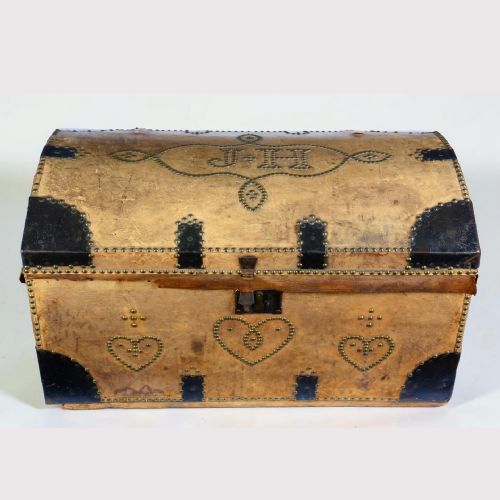

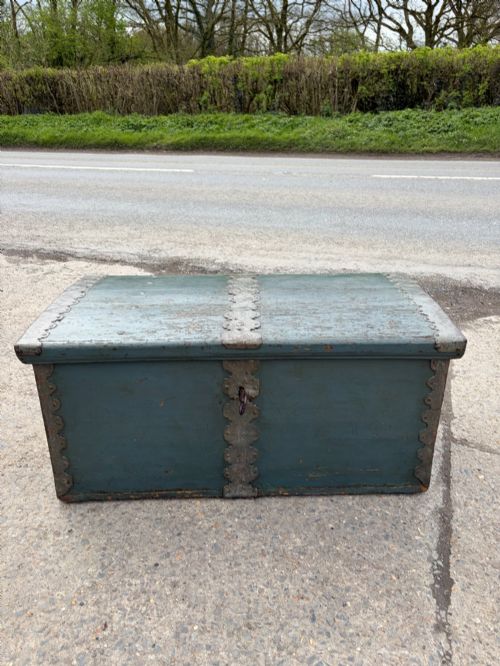


Domed Top Box
When you search for a domed top box, you discover practical storage and small caskets designed with curved lids to shed water and add interior volume.
Domed Top Box
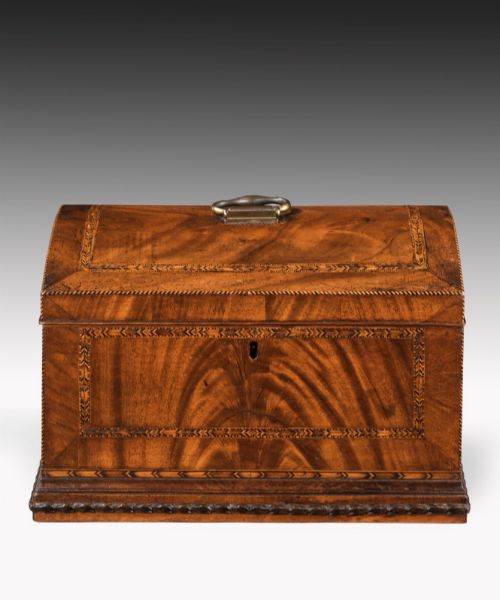
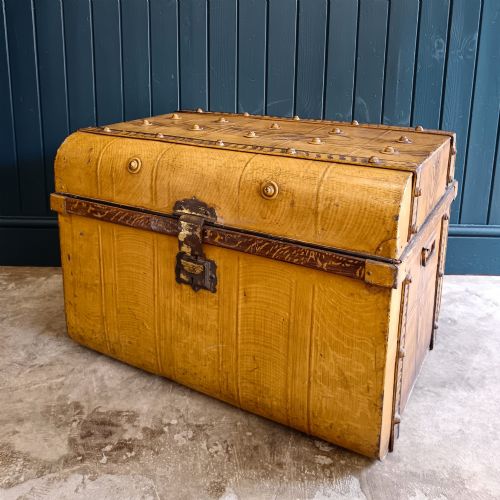
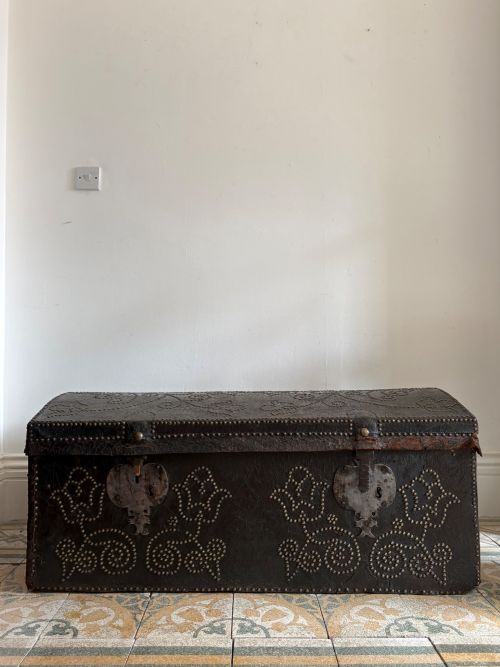
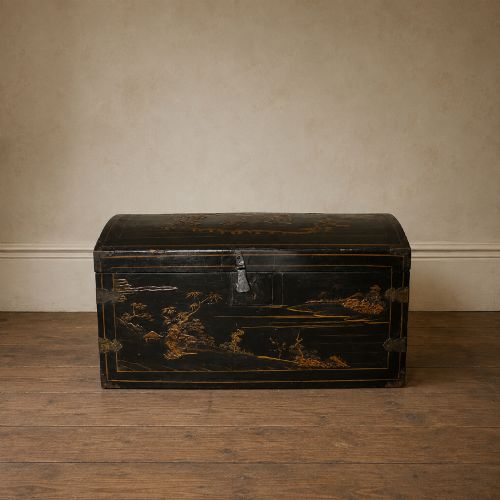
A domed top box serves multiple domestic functions, appearing on this page as small tabletop caskets for tea, stationery, and jewellery, alongside larger floor-standing trunks, coffers, and marriage chests. Tabletop examples often feature figured woods like burr walnut and coromandel, while larger luggage and storage chests utilise pine, oak, and iron-bound leather.
The architectural curve of the lid distinguishes these pieces from flat-topped containers, serving both a functional purpose for shedding moisture on travel trunks and an aesthetic one for display caskets. Georgian and Victorian examples dominate the selection, though earlier 18th-century pieces and mid-19th-century Scandinavian painted coffers also appear regularly.
Buyers encounter everything from small portable writing desks and tea caddies to heavy-duty steamer trunks and campaign cases. Each form reflects the specific demands of its era, from secure document storage to long-distance maritime travel.
How they were made
Woodworking forms the backbone of these pieces, utilising solid construction in pine and oak for larger chests, and delicate veneering over softer woods for tabletop caskets in burr walnut, amboyna, and yew. Cabinet makers shaped the curved lids using laminated or steam-bent timbers, secured internally with bracing blocks.
Trunks and travel cases often incorporate fabric linings, leather carrying handles, and specialised internal compartments designed for specific contents such as tea canisters, stationery envelopes, or jewellery trays.
At least one trunk arrived bearing the maritime travel history of the Cunard Line.
What varies in quality
The selection of timber veneer dictates much of a tabletop box's visual appeal, with highly figured burr walnut, pollard oak, and tortoiseshell representing the upper tier of cabinet making. Uniformity in the grain pattern across the curved lid demonstrates superior craftsmanship and material selection.
Hardware integrity separates standard utility containers from luxury commissions, seen in heavy cast brass mounts, flush-fitting hinges, and original working locks with matching keys. Hand-tooled leatherwork and dense patterns of brass studding on early trunks indicate elevated workshop standards.
Originality of surface finish remains paramount, preserving untouched patination on aged wood, authentic folk paint, or early hide coverings without modern intervention.
Arthur Wannop·Chapple & Sons·Trussell Brighton·Barton
The Domed Top Box Glossary
- Burr walnut
- A highly prized timber grain obtained from the warted excrescences of walnut trees, creating swirling, organic patterns on luxury boxes.
- Tea caddy
- A small container designed specifically to store loose tea leaves securely, often featuring internal lidded compartments.
- Campaign case
- Portable furniture and storage designed for military officers on the move, typically featuring robust brass corners and recessed carrying handles.
- Coffer
- A heavy wooden chest, often domed, traditionally used for storing valuables, linen, or documents.
- Stationery box
- A desk accessory fitted with dividers and slots specifically for holding writing paper, envelopes, and ink.
Domed Top Box: Frequently Asked Questions
What were domed top boxes used for?
Smaller domed pieces functioned as tea caddies, stationery boxes, and jewellery caskets for household valuables. Larger examples served as travel trunks, blanket chests, and marriage coffers.
The curved lid design originally helped shed water during travel and provided extra vertical clearance inside the container for bulky items.
How do I date an antique domed box?
Dating relies on combining material evidence, construction techniques, and hardware styles observed across the piece. Georgian and Victorian examples display distinct wood veneers and lock mechanisms typical of their decades.
Hand-painted Scandinavian coffers often carry specific regional folk art motifs tied to mid-19th-century rural traditions.
Are these boxes suitable for daily use?
Solidly constructed wooden and leather chests easily accommodate modern storage needs for blankets, accessories, or desk supplies. Tabletop caskets work well for holding small personal items.
Care should be taken with delicate veneers, original leather surfaces, and antique locking mechanisms to preserve their condition.
What is the difference between a box and a coffer?
Boxes generally refer to smaller, portable tabletop containers intended for personal possessions or consumables like tea. Coffers and trunks describe much larger floor-standing storage chests.
Both categories share the distinctive curved lid construction that defines this group of items.