

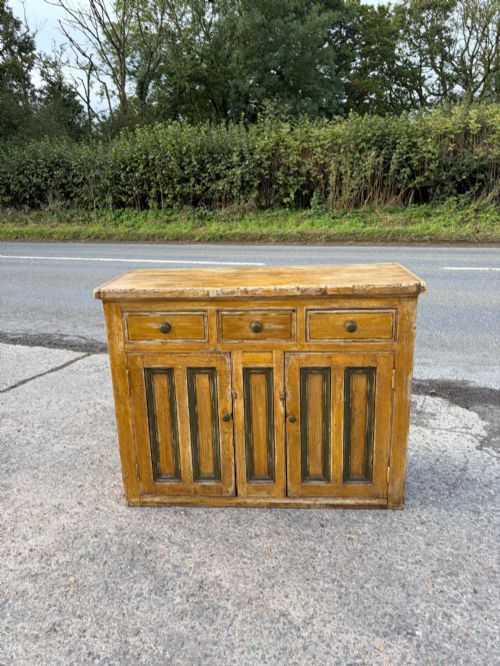
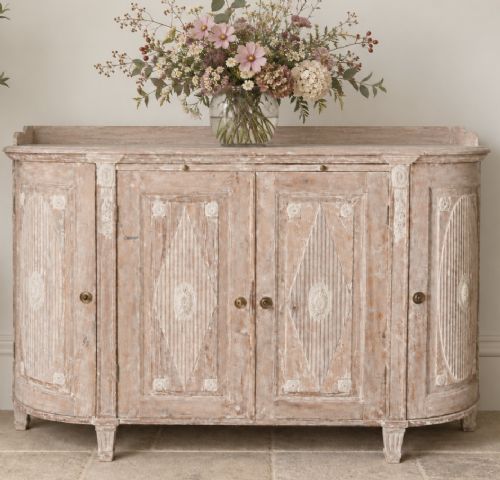


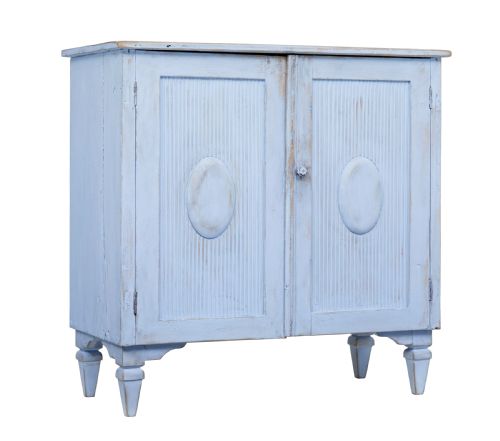


Distressed Pine Credenza
A distressed pine credenza brings substantial country utility and weathered painted character to an interior.
Distressed Pine Credenza
A distressed pine credenza encompasses sturdy storage furniture built from softwoods and finished with historic or aged paint. These pieces include sideboards, buffets, dresser bases, and large cupboards spanning the eighteenth and nineteenth centuries.
The selections on this page lean heavily toward nineteenth-century origins and earlier periods, drawing upon English, Scottish, Scandinavian, and Hungarian vernacular traditions. They appear primarily as low dresser bases, sideboards, and tall cupboards suited for practical storage.
Buyers encounter forms that served utilitarian roles in kitchens, country houses, and farmhouses, often retaining layers of original paint in black, white, or muted tones. The character relies upon the natural weathering of the wood and the worn patina of successive decorative coats.
How they were made
Construction relies upon solid pine timber joined with traditional methods, often incorporating brass or iron hardware for hinges and pulls. Carpenters built these items for daily service using local softwoods suited to heavy household use.
Surfaces were frequently treated with paint, sometimes surviving in original coats that show age through craquelure and thinning pigment. Painted wood and bare pine dominate the material record, reflecting both English country workshop practices and Scandinavian folk traditions.
Distressed Pine Credenza Retail Price Guide 2026
Typical asking prices for distressed pine credenza among the pieces listed under this phrase on Sellingantiques today, from the lower quarter to the upper quarter. They describe what is for sale here now, not the wider market.
Hungarian folk artists occasionally added secret compartments behind unassuming drawer banks to hide small household treasures.
What varies in quality
Quality rests in the integrity of the timber framing, the retention of genuine early or original paint surfaces, and the proportion of the piece. Credenza-style sideboards and dresser bases demonstrate superior joinery when drawers retain smooth movement and carcasses remain square.
The distinction between ordinary utility work and finer vernacular examples lies in the survival of untouched surface treatments rather than applied artificial distressing. Pieces displaying authentic age through genuine wear on painted wood command greater interest from collectors.
The Distressed Pine Credenza Glossary
- Dresser base
- A lower sideboard or cabinet section without upper shelving, frequently fitted with drawers and cupboards below.
- Potboard
- An open slatted lower shelf beneath a dresser base designed for storing heavy pots and kitchen utensils.
- Original paint
- The initial decorative or protective coating applied to a piece of furniture, highly valued when surviving in an untouched state.
- Vernacular furniture
- Functional items made by regional craftsmen for local domestic use rather than following strict high-style metropolitan fashions.
- Patina
- The surface sheen and textural change acquired by wood and paint through decades of handling, cleaning, and light exposure.
Distressed Pine Credenza: Frequently Asked Questions
What is a distressed pine credenza?
It is a heavy storage piece, typically a sideboard, buffet, or dresser base, constructed from pine and finished with aged or original paint.
These items originated in various European country settings to serve practical storage needs in kitchens and dining spaces.
How do I style a pine credenza?
Place the piece in a dining room, hallway, or kitchen to anchor the space with historical character and provide deep storage.
Pair it with simple ceramics, lamps, or natural textiles that complement the worn paint and timber grain.
How do I care for original painted pine?
Dust the surface regularly with a soft, dry cloth and avoid harsh chemical cleaners that might strip delicate historic pigments.
Keep the timber away from direct heat sources and extreme humidity fluctuations to prevent the pine from splitting.
How can I tell an older piece from a newer one?
Examine the construction joints, timber shrinkage, and the nature of the paint layers for signs of genuine age.
Hand-cut joints, iron hardware, and natural wear patterns in the paint indicate eighteenth or nineteenth-century origins.