
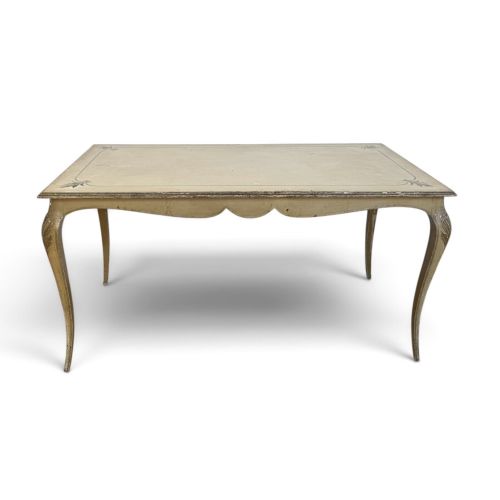
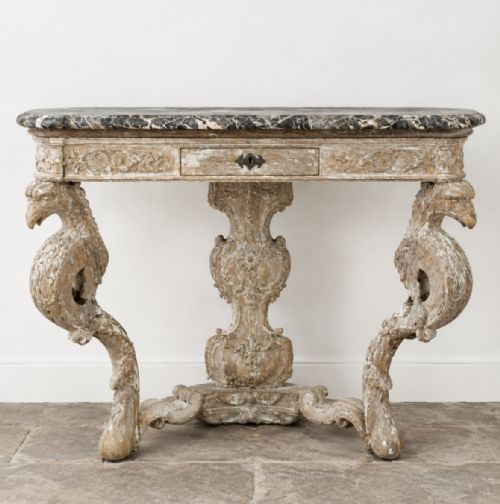
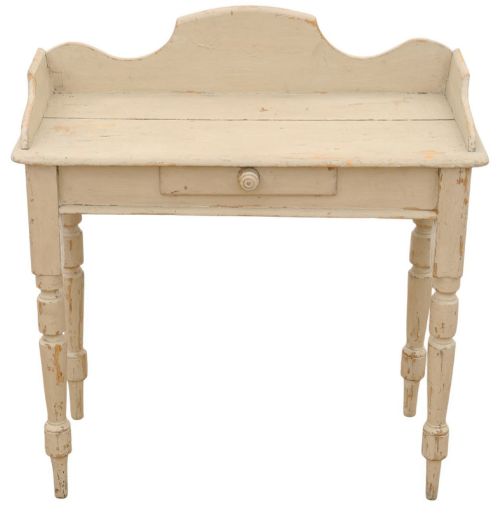

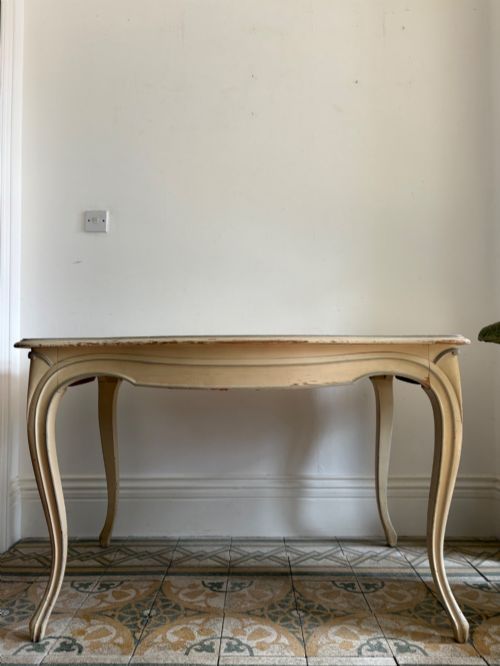
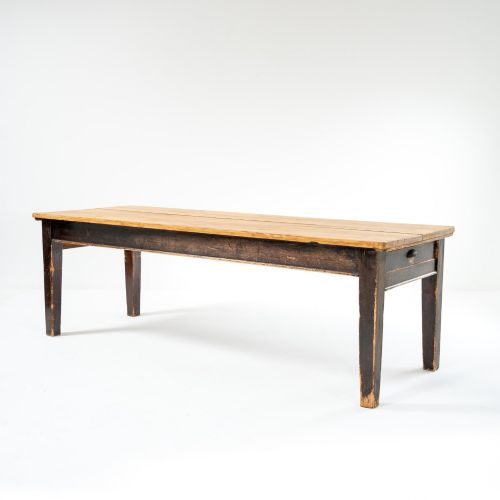
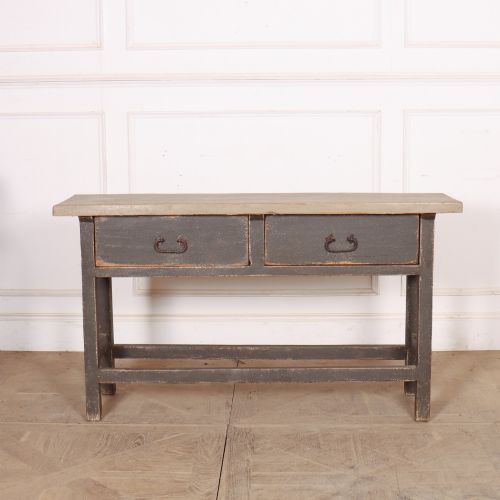
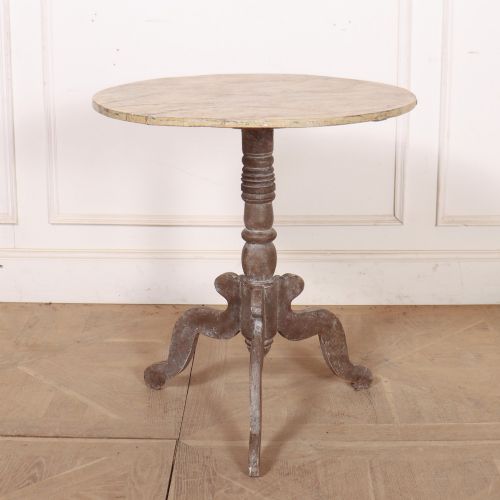
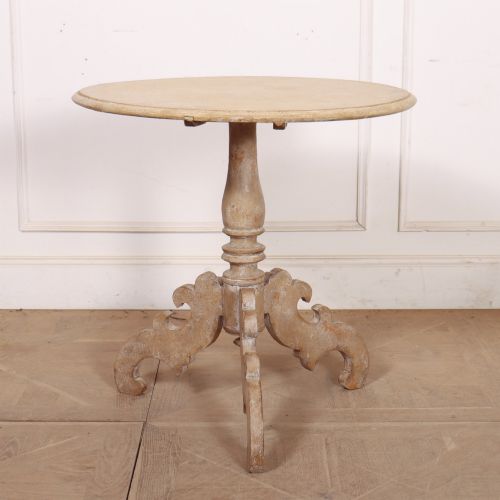
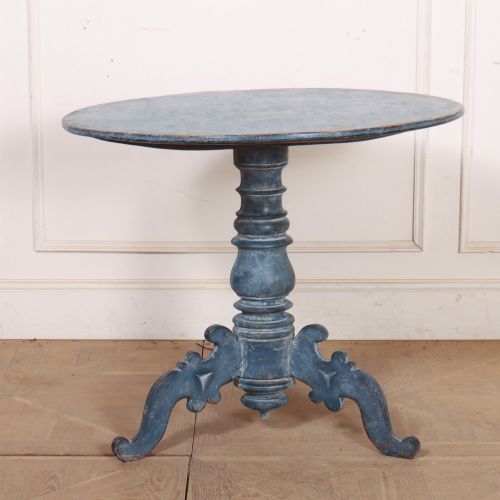
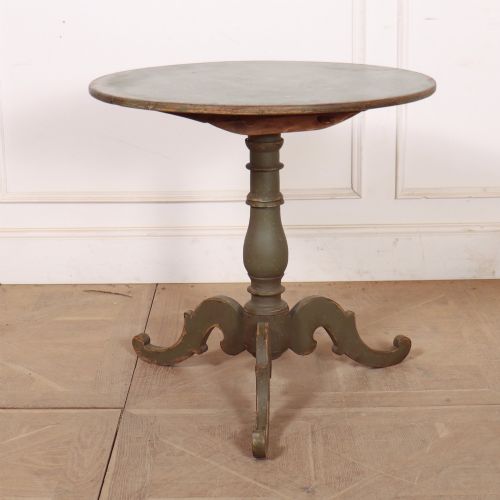
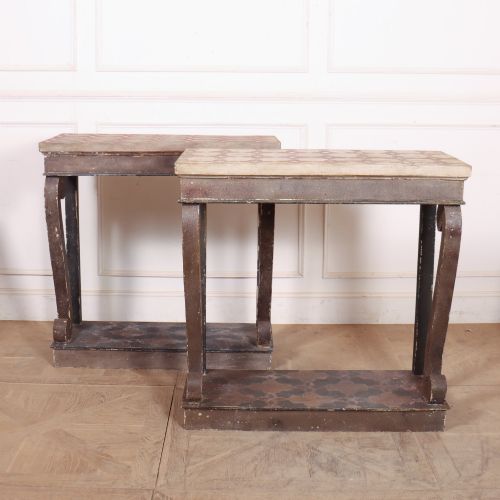
Distressed Paint Table
A distressed paint table brings texture and character to a room through surface age and utilitarian form.
Distressed Paint Table
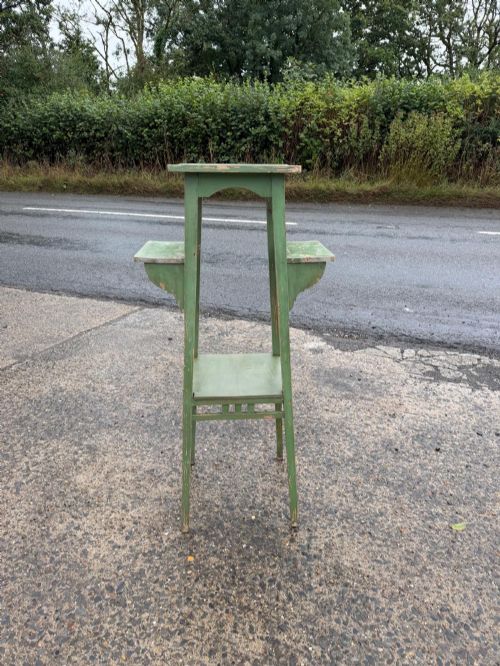
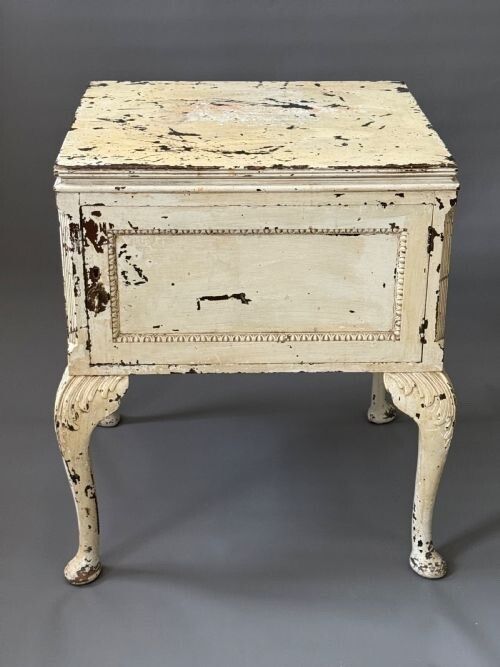
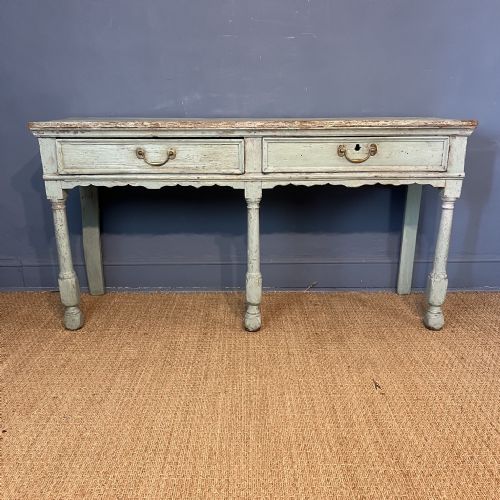
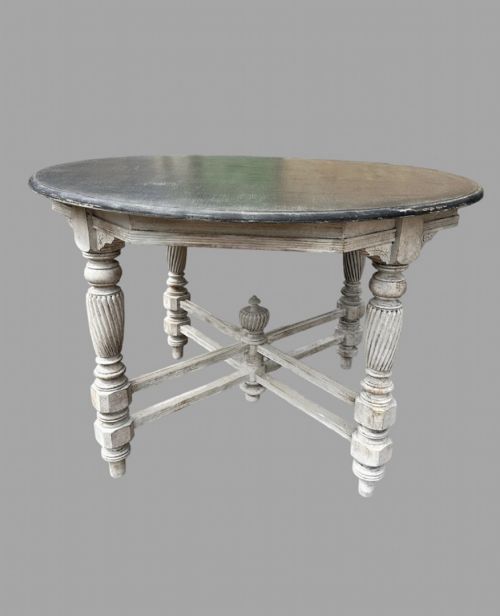
A distressed paint table covers practical furniture forms finished with worn surface coatings, often found in styles such as English Country, French Provincial and Swedish Country. Console tables, side tables, bedside cabinets and coffee tables dominate the selection.
The pieces emerge from various periods including the eighteenth century, nineteenth century and early twentieth century. Pine, oak, fruitwood and timber serve as the primary substrates beneath the paint layers.
How they were made
Pine, oak and fruitwood form the structural timber frames, sometimes joined with brass hardware or topped with marble. Artisans applied successive coats of paint over wood surfaces, which naturally wore down through decades of domestic use.
Workshops utilised local timber stocks suited to regional furniture traditions, applying hand-mixed pigments directly onto timber or preparatory grounds.
Miniature apprentice pieces appear among the full-sized furniture, offering diminutive chests of drawers alongside tall console tables.
What varies in quality
The integrity of the underlying timber construction and the authenticity of the surface wear separate simpler examples from finer specimens. Original pigment layers that show genuine patination hold distinct character compared to later surface treatments.
Proportions, carving detail on console or side tables, and the harmonious integration of form and painted finish dictate the standing of individual pieces.
The Distressed Paint Table Glossary
- Console table
- A table designed to stand against a wall, frequently supported by cabriole legs or brackets. These forms often feature decorative painted surfaces.
- Cabriole leg
- A furniture leg that curves outward and then tapers inward, common in provincial and neoclassical designs. This shape appears on several console and side tables.
- Pine
- A softwood utilised extensively for country furniture, serving as a stable base for painted finishes. It appears frequently in English and Scandinavian pieces.
- Demi lune
- A half-moon shape used for small console tables designed to fit snugly against walls. This format accommodates limited spaces in traditional rooms.
Distressed Paint Table: Frequently Asked Questions
What periods do these painted tables come from?
The listings span from the eighteenth century through the nineteenth century and into the early twentieth century. Regional variations reflect the distinct aesthetic preferences of English, French, Swedish and Italian makers.
Victorian and Edwardian eras also contribute various side tables and writing desks to the selection.
How do I use a distressed paint table at home?
These tables function well as console surfaces in hallways, bedside cabinets in bedrooms, or lamp tables in living spaces. Their compact dimensions allow them to fit easily into smaller corners.
The weathered surfaces introduce visual texture alongside modern or traditional interior schemes.
What woods lie beneath the paint?
Pine serves as the most common wood beneath the paint layers, particularly in country house and harvest tables. Oak, fruitwood and general timber also appear across the archive and current listings.
Hardwood and elm occasionally form the structure of specific tables and stools.
Are the painted finishes original?
Many pieces retain original or early painted surfaces that show natural wear over time. Descriptions often specify whether a finish dates to the construction period or reflects later decoration.
Patination develops through prolonged handling and environmental exposure across decades.