



Distressed Grey Chest
A distressed grey chest brings muted continental elegance and useful storage to a room through weathered paintwork and traditional drawer forms.
Distressed Grey Chest
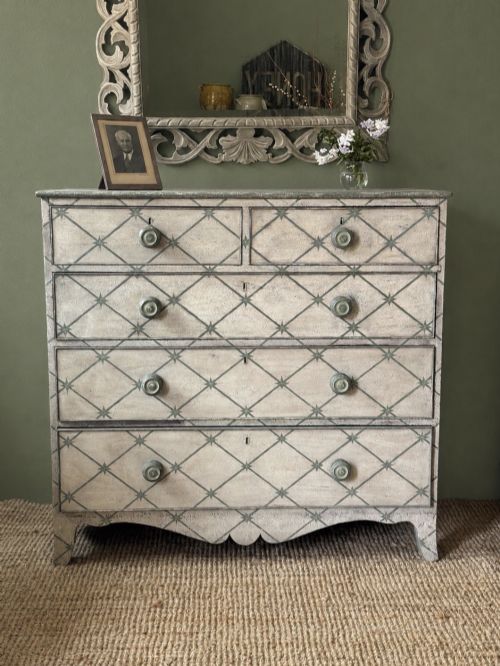
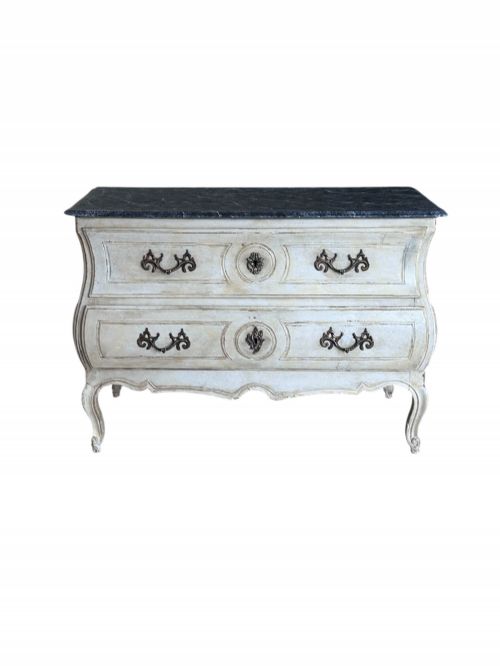
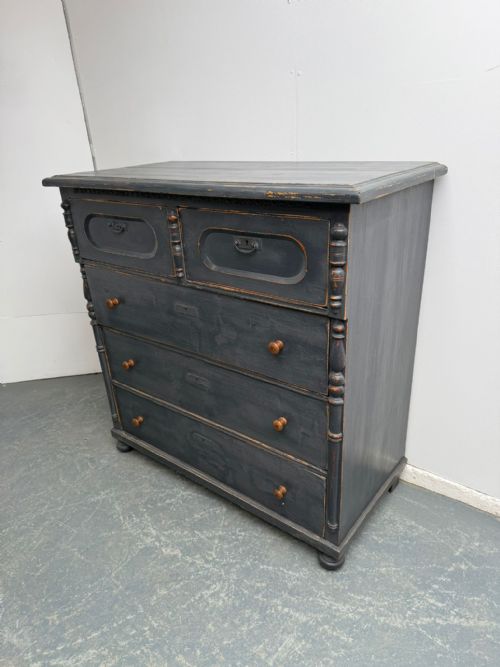
A distressed grey chest typically takes the form of a painted commode or chest of drawers, drawing heavily on French, Swedish, and Dutch provincial traditions. These pieces span the eighteenth and nineteenth centuries, including Victorian country examples alongside continental styles like Gustavian and Louis XV.
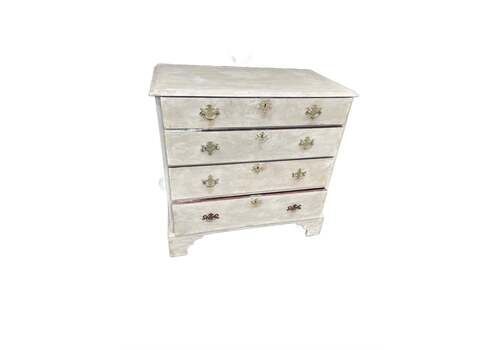
Buyers seeking a distressed grey chest encounter versatile proportions ranging from small bedside tables and two-drawer commodes to large five-drawer chests and serpentine or bombe shapes. The surface finish defines the aesthetic, combining aged grey paint layers with timber structures originating from periods such as the Victorian era and the eighteen-hundreds.
The regional variations include French chateau and provincial designs, Scandinavian country pieces in painted pine, and Dutch chests featuring characteristic serpentine fronts. Each regional variant adapts the basic drawer configuration to local decorative preferences of the eighteenth and nineteenth centuries.
Materials and Construction
These chests rely primarily on timber carcases constructed from pine, oak, and general wood substrates, frequently finished with decorative paint layers. Surfaces often display aged paint treatments that complement the underlying wood structure.
Selected pieces incorporate contrasting elements such as brass hardware and marble or faux marble tops. Cabinetmakers utilised traditional joinery techniques to build robust drawer carcases capable of enduring centuries of use.
Listings feature pieces spanning the eighteenth and nineteenth centuries, including Victorian, Gustavian, and French provincial styles constructed from pine, oak, and painted wood.
Factors of Quality
Superior examples display sophisticated cabinetmaker forms, such as serpentine or bombe profiles, executed with balanced proportions and refined carving. The integration of decorative elements like faux marble tops and high-grade brass mounts distinguishes finer commissions from standard utilitarian storage.
The integrity of the painted surface and the subtlety of the distressing process play a major role in establishing the character of the piece. Authentic period paint layers applied over pine or oak possess a depth and texture that reflect the historic origins of the furniture.
Edwards and Roberts
The Distressed Grey Chest Glossary
- Commode
- A historic term for a low chest of drawers or cabinet, frequently associated with French and continental styles of the eighteenth and nineteenth centuries. These pieces often serve as decorative focal points in sitting rooms or bedrooms.
- Serpentine
- A curved furniture front characterised by a convex centre flanked by concave ends, creating a gentle wave effect. This contour demands advanced woodworking skill and frequently appears on higher-end eighteenth-century and nineteenth-century chests.
- Bombe
- A swollen or bulging convex shape used on the front and sides of case furniture, prominent in Dutch cabinetmaking. This dramatic profile requires specialised joinery to maintain structural stability.
- Gustavian
- The Swedish interpretation of French neoclassical design, notable for restrained carved detail and pale painted finishes. These pieces offer a clean, luminous aesthetic well suited to understated interiors.
- Faux marble
- A decorative painting technique applied to wooden tops to simulate stone, appearing on nineteenth-century commodes. This finish provided the luxurious look of marble without the excessive weight.
Distressed Grey Chest: Frequently Asked Questions
How do I clean a painted wooden chest?
Dust the surface regularly with a soft, dry cloth to prevent dirt accumulation on the aged paint layers. Avoid harsh chemical cleaners that might strip or damage the historic finish.
For stubborn marks, use a slightly damp cloth with mild soap, drying the wood immediately afterwards. Preserving the integrity of the distressed grey paint requires gentle handling.
Where did serpentine commodes originate?
Serpentine and bombe forms developed primarily in continental workshops during the eighteenth century, particularly in France and the Netherlands. Cabinetmakers shaped these curved fronts to demonstrate technical skill and modern taste.
Over the nineteenth century, these continental fashions influenced provincial furniture makers across Europe. The resulting chests combined practical drawer storage with dynamic architectural silhouettes.
Can I use a commode as a bedside table?
Smaller commodes and two-drawer chests adapt well as bedside tables, providing generous surface area and enclosed storage. Their height often matches standard bed frames while offering distinct character.
Ensuring the proportions suit the bed and surrounding space is the main consideration when selecting a chest for this purpose. Painted finishes help brighten bedroom interiors.
What is the difference between French and Swedish chests?
French chests frequently feature ornate carved details, serpentine fronts, and influences from Louis XV or provincial chateau styles. They emphasise decorative movement and varied hardware.
Swedish pieces, particularly Gustavian and Scandinavian country examples, lean towards cleaner lines and pale painted pine construction. Both traditions offer distinct approaches to regional antique storage.