
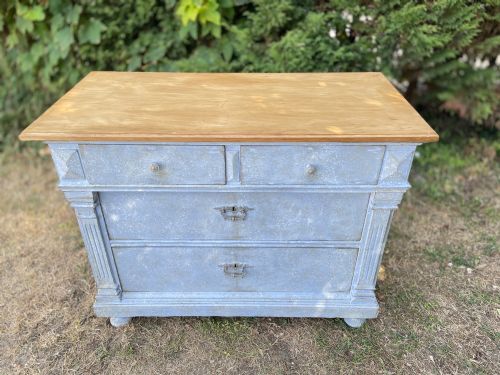
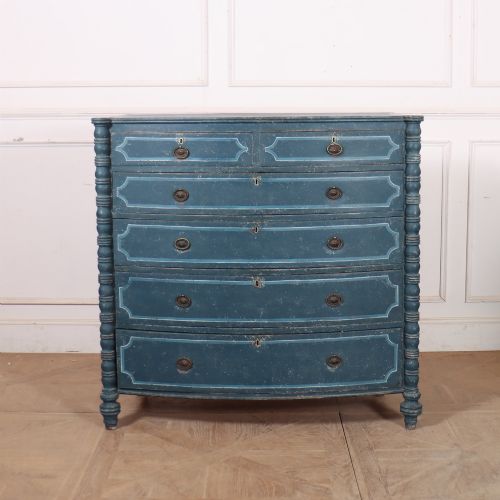
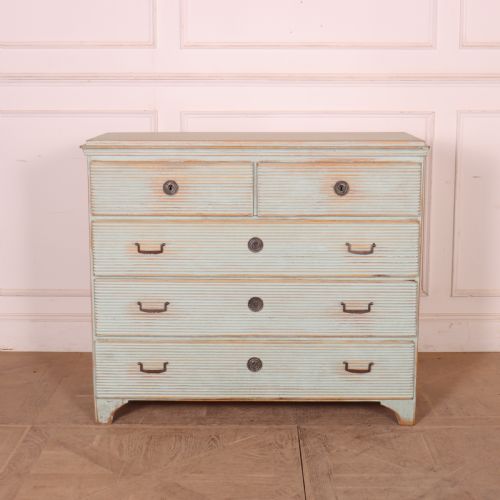


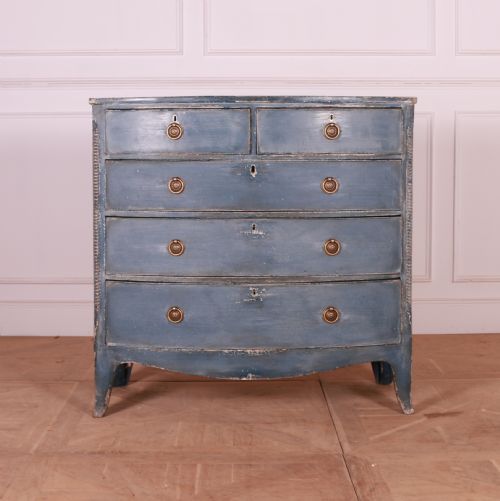

Distressed Blue Commode
A distressed blue commode brings soft continental colour and useful drawer storage into a room.
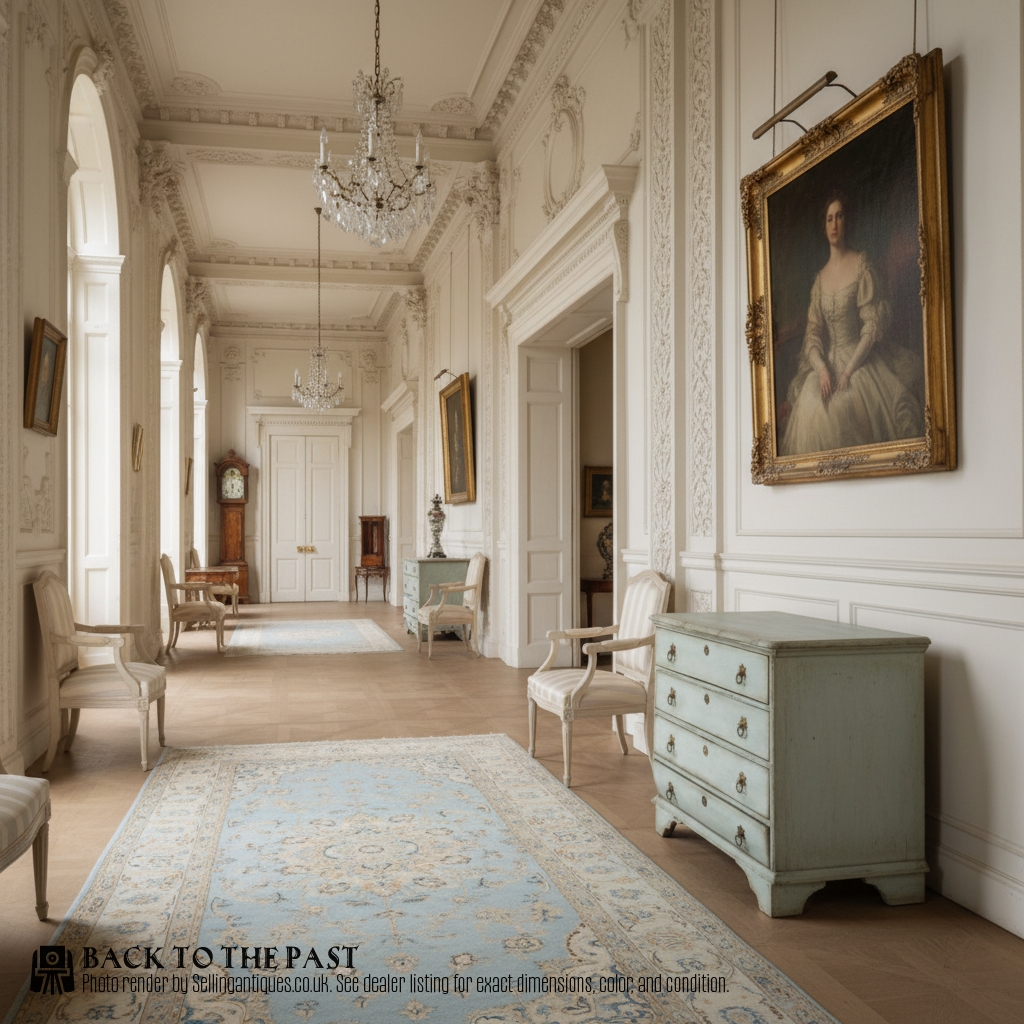
Distressed Blue Commode
A distressed blue commode is a drawer-based storage piece finished in blue paint with an aged surface. Buyers searching for a distressed blue commode encounter forms spanning the eighteenth and nineteenth centuries.
The selections on this page include English, French, Swedish, Dutch, Austrian, and Danish examples. These pieces function as chests of drawers and commodes, frequently displaying regional traits such as serpentine fronts or geometric drawer fronts.
Continental country styles dominate the available selection, alongside English country and Victorian examples. Pieces range from grand eighteenth-century baroque oak to nineteenth-century pine and painted timber.
How they were made
Cabinet makers constructed these commodes using timber such as pine, oak, and general painted wood. Surfaces received coats of paint that have weathered over decades or centuries of use.
Hardware details involve brass and iron fittings attached to drawers. Certain pieces incorporate faux marble tops alongside timber structures.
Several chests arrive in matching pairs, ready to guard opposite sides of a grand room.
What varies in quality
Quality rests in the integrity of the timber carcass and the balance of the regional proportions. Pieces range from simpler English country chests to sophisticated eighteenth-century Portuguese serpentine shapes.
The character of the painted surface influences the visual appeal of each commode. Original paint layers and authentic weathering distinguish pieces from later decorative alterations.
The Distressed Blue Commode Glossary
- Commode
- A low chest of drawers or cabinet designed for domestic storage. Originating in France, the term applies broadly to continental drawer units.
- Serpentine
- A curved furniture front featuring a convex centre flanked by concave ends. This contour appears on eighteenth-century Portuguese and French commodes.
- Gustavian
- The Swedish interpretation of French neoclassical design characterised by restrained ornamentation and pale painted finishes. Pieces from this tradition often feature fluted drawer fronts.
- Baroque
- An ornate historical style emphasising drama, exuberant carving, and heavy proportions. Scandinavian examples from the eighteenth century demonstrate this aesthetic.
- Bowfront
- A convex, outward-curving cabinet or drawer front popular in English furniture design. This shape softens the profile of a standard chest of drawers.
Distressed Blue Commode: Frequently Asked Questions
Where should I place a commode?
A commode fits well in a hallway, bedroom, or living space where surface display and drawer storage are both required.
The height and depth of these chests allow them to sit comfortably against plain walls or beneath large mirrors.
How do I clean a painted surface?
Dust the painted wood gently with a dry or slightly damp soft cloth to preserve the aged finish.
Avoid harsh chemical cleaners that can strip away historic layers of paint and timber patination.
What is a serpentine front?
A serpentine front is a shaped cabinet face that curves outward in the middle and inward at the sides.
This flowing contour requires advanced woodworking skill and indicates a higher tier of cabinet making.
Are these pieces English or continental?
The inventory includes both English country pieces and continental examples from Sweden, France, Denmark, Austria, and the Netherlands.
Regional details such as hardware, paint colours, and drawer configurations help identify the country of origin.