
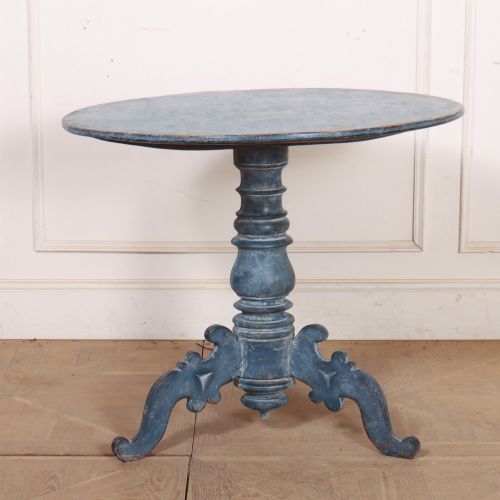
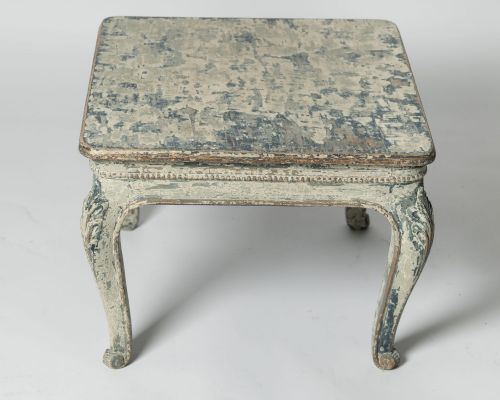


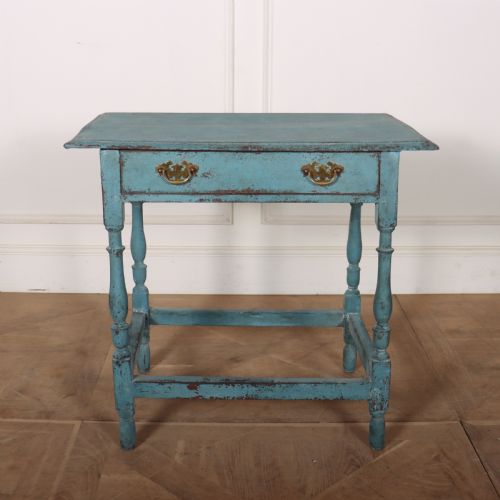


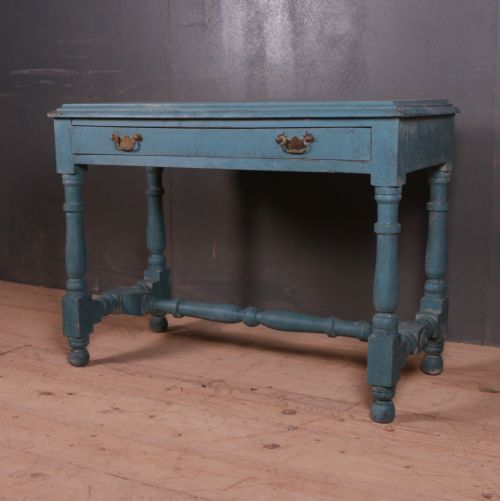
Distressed Blue Accent Table
A distressed blue accent table brings surface character and colour to a room, offering practical utility with a weathered painted finish.
Distressed Blue Accent Table
A distressed blue accent table encompasses small occasional furnishings such as lamp tables, side tables, and gueridons finished in blue paint. These pieces span the eighteenth century, nineteenth century, and early twentieth century, originating from workshops across Sweden, France, England, Germany, and Italy.
The version most commonly met on this page is the painted pine side table or lamp table, frequently drawing on Swedish Country, French Provincial, or English Country traditions. Forms range from simple three-legged cricket tables to drop leaf tables and marble-topped centre tables.
Buyers seek out a distressed blue accent table for its distinct regional character and aged surface texture. The selection on this page demonstrates how domestic furniture from diverse European origins adopts painted finishes over timber.
Materials and construction methods
These tables are constructed primarily from timber such as pine and general wood, utilising traditional joinery appropriate to their period of origin. Structural supports range from slender turned legs to spider legs and pedestal bases.
Surfaces are prepared with gesso where decorative detail is required, then finished with paint that patinates over time. Certain formal examples incorporate inset marble tops framed by wood or brass elements.
Object types include side tables, occasional tables, lamp tables, drop leaf tables, centre tables, console tables, and gueridons.
Assessing quality in painted tables
Quality rests in the integrity of the timber construction and the authenticity of the surface finish. Pieces that retain their original structural joinery and period-appropriate paint layers demonstrate superior craftsmanship compared to later alterations.
Proportion and decorative restraint distinguish finer regional pieces, whether in the carved details of an Italian console or the understated turnings of a Scandinavian country lamp table. The integration of materials like marble and brass also marks the distinction between simple utility and refined design.
The Distressed Blue Accent Table Glossary
- Gueridon
- A small French occasional table, often round, popular in the nineteenth century. It frequently serves as a lamp table or display surface.
- Cricket table
- A small, lightweight English table with three legs, traditionally designed for uneven cottage floors. The three-legged format ensures stability.
- Drop leaf table
- A table with hinged leaves on the sides that fold down to save space. These practical surfaces appear in various regional British forms.
- Gesso
- A plaster-like material applied to wood as a base for paint or gilding. It provides a smooth ground for decorative work.
- Console table
- A table designed to stand against a wall, sometimes fixed in place. Italian examples from the eighteenth century show formal architectural characteristics.
Distressed Blue Accent Table: Frequently Asked Questions
What is a distressed blue accent table?
A distressed blue accent table is a small nineteenth or eighteenth-century piece of furniture, such as a lamp or side table, finished in a weathered blue paint.
These tables originate from various European countries including Sweden, France, and England, reflecting different regional domestic styles.
How do I use a lamp table?
A lamp table provides a convenient surface for lighting, books, or decorative objects beside seating or in corners.
Its compact proportions allow it to function effectively in smaller spaces without overwhelming the room.
Are these tables solid wood?
The listings on this page show tables constructed from timber materials, most notably pine and painted wood.
Some examples also incorporate supplementary materials like brass, gesso, and marble tops.
How do I distinguish regional styles?
Regional styles appear through distinct forms and decorative treatments, such as the lighter painted aesthetics of Swedish country pieces compared to English country designs.
Examination of the turning, structural proportions, and paint application helps identify the origin of each piece.