
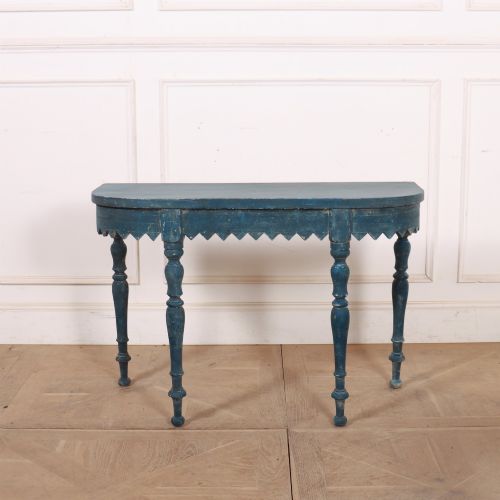
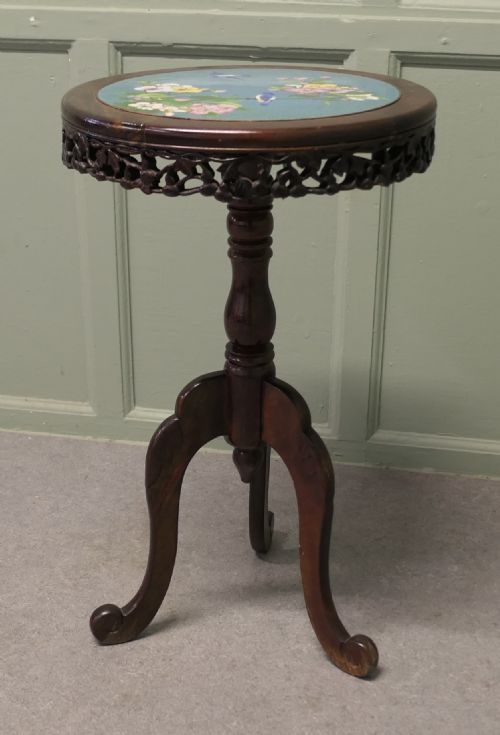


Blue Occasional Table
A blue occasional table brings a punch of colour and a steady surface to a room, ranging from rustic painted pine to marble-topped French designs.
Blue Occasional Table
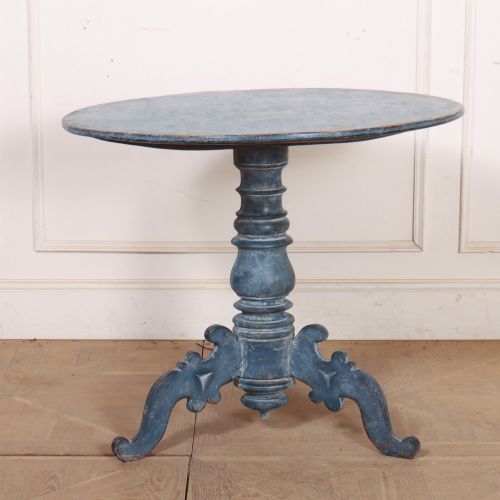
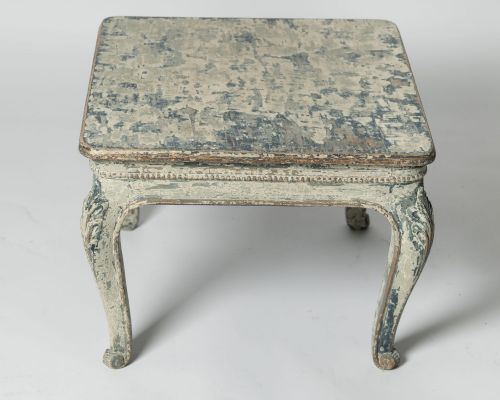
A blue occasional table encompasses a varied group of small stands, lamp tables, wine tables, and gueridons designed to sit lightly in a room without dominating the floor plan. These pieces turn up in painted finishes, often showing national characters from Swedish, French, and English country traditions.
The most common iterations on this page are painted pine and softwood lamp tables originating from the nineteenth and eighteenth centuries, alongside refined French marble-topped gueridons and occasional pieces carrying decorative motifs like Chinoiserie.
Buyers seek out these smaller tables to serve practical functions beside a chair or sofa while introducing distinctive colour and period woodwork into an interior scheme.
Materials and construction
Makers built these tables using timber carcasses of pine, oak, and other regional woods, often applying layered paint schemes that now carry significant age and wear. More formal interpretations integrate exotic woods such as rosewood and kingwood alongside brass details and beadwork.
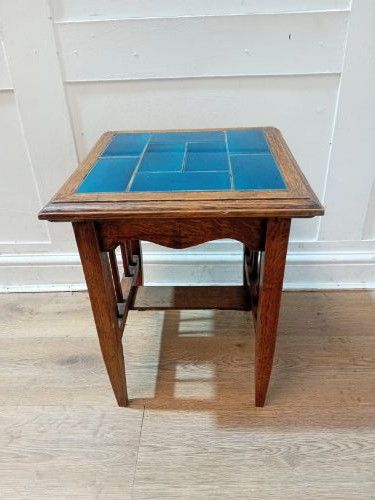
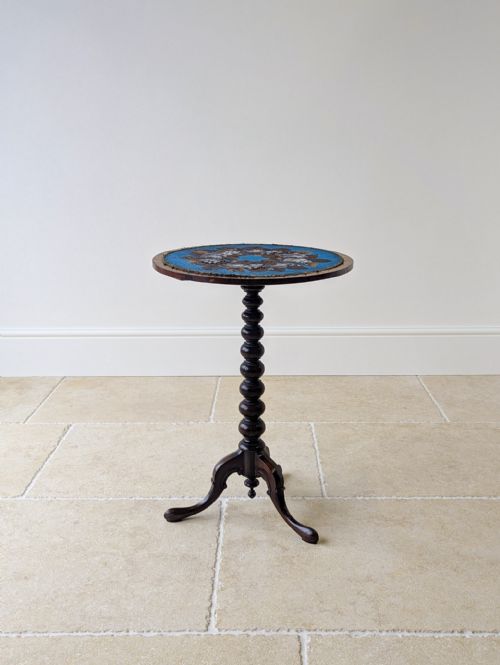
Surface treatments range from simple hand-applied blue paint over pine to elaborate decorative schemes incorporating porcelain plaques, cloisonné, and marble slabs inset into the timber tops.
Listings feature 19th Century, 18th Century, Regency, and Arts & Crafts pieces constructed from paint, pine, brass, marble, and oak.
What separates the examples
Quality rests in the integrity of the original construction and the preservation of early or original painted surfaces rather than later respray work. Pieces retaining authentic patination on the blue paint show significantly more character than modern cosmetic updates.
The sophistication of the timber work and secondary materials defines the upper tier, moving from utilitarian English pine trestle forms to intricate Regency tripod wine tables, French marble-topped gueridons, and pieces bearing cabinetmaker influence.
Gillows Design
The Blue Occasional Table Glossary
- Gueridon
- A small French occasional table or stand, often round and supported by a central column or three legs. These frequently feature marble tops and decorative painted or gilded woodwork.
- Chinoiserie
- European decorative style inspired by Chinese artistic traditions, characterised by painted motifs of birds, figures, and landscapes. This style appears on table tops and decorative stands.
- Drop leaf table
- A table with hinged flaps on the sides that can be folded down to save space or raised up to expand the surface area. English spider leg versions use slender turned supports.
- Tripod wine table
- A small freestanding table raised on three legs, traditionally designed to hold a wine glass or bottle beside a seat. These often date from the Regency and nineteenth-century periods.
- Marble top
- A stone surface inset into the wooden frame of a table for durability and a formal appearance. French occasional tables frequently utilise white or coloured marble slabs.
Blue Occasional Table: Frequently Asked Questions
How do I style a blue occasional table?
These compact tables function well beside seating as lamp stands or display surfaces for books and objects. Their colourful painted finishes allow them to act as focal points in neutral rooms.
Consider the scale of the table in relation to surrounding furniture to ensure comfortable access and visual balance.
What is a gueridon table?
A gueridon is a specific type of small French table, often featuring a circular marble top supported by a central column or three legs. They were popular in various nineteenth-century interior styles.
These pieces bring a distinct continental elegance compared to standard English country side tables.
Are painted finishes original on these tables?
Many nineteenth and eighteenth-century pieces retain their early or original blue paint, which develops a soft patina over decades of use. Evaluating the depth and wear of the paint helps determine its age.
Some tables may show later decorative paint applied during subsequent periods of redecoration.
Where were these tables made?
The listings include pieces from diverse regional traditions, notably Swedish painted furniture, French provincial workshops, and English country houses. Each origin brings distinct timber choices and decorative details.
Swedish and French examples often favour lighter painted softwood, while English pieces incorporate oak, pine, and rosewood.