
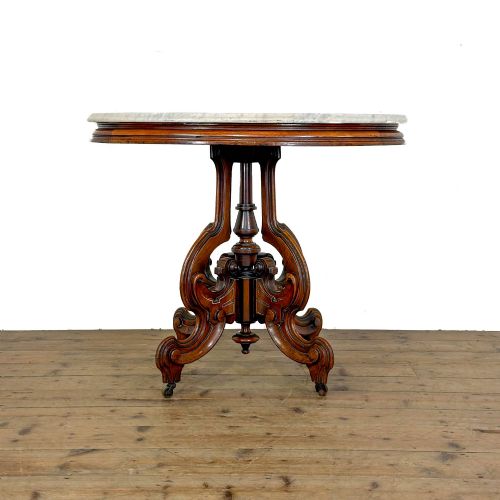
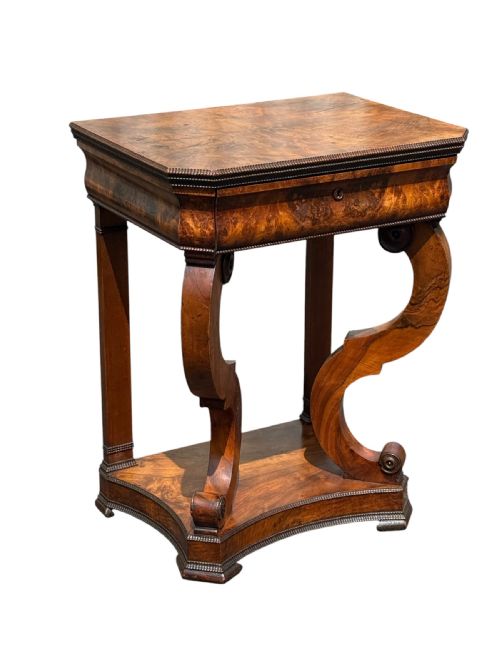
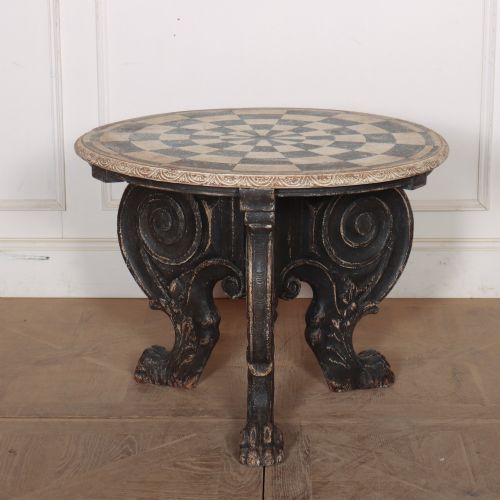

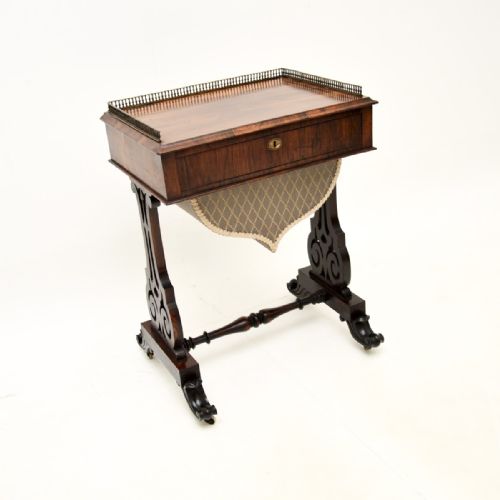


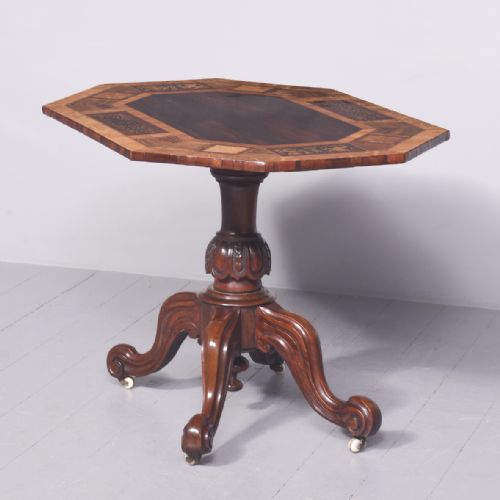


Scroll Leg Occasional Table
A scroll leg occasional table brings practical surface space and distinct period character to a room through carved timber and graceful supports.
Scroll Leg Occasional Table
A scroll leg occasional table encompasses versatile side, centre, lamp, and console tables designed for domestic use across various nineteenth and early twentieth-century periods. When searching for a scroll leg occasional table, buyers encounter diverse forms ranging from compact Victorian side tables to larger octagonal and hexagonal centre tables.
The selection includes pieces spanning the Victorian era, the 1920s, and earlier nineteenth-century decades, reflecting styles such as Louis Philippe, Baroque Revival, and English Country. Makers and workshops from Britain, Ireland, France, Germany, Spain, and Sweden contributed to this varied group of tables.
Most examples function as side or centre tables, utilising timbers like mahogany, walnut, burr walnut, and rosewood alongside specialist additions like marble, leather, and brass. These tables serve as adaptable furniture that brings historical craftsmanship into modern interiors.
How They Were Made
Cabinetmakers constructed these tables primarily using solid and veneered timbers such as mahogany, walnut, burr walnut, ash, and rosewood, often enhanced with figured grains and flame patterns. Craftspeople incorporated supplementary materials including brass mounts, inset leather tops, and marble surfaces to elevate the visual and tactile appeal of the furniture.
Techniques relied upon traditional carpentry methods, evidenced by carved wooden details, bobbin turnings, and decorative inlays involving satinwood and other contrasting woods. Gilt finishes and applied carvings appear on specific Continental and revival pieces, demonstrating varied regional woodworking traditions.
Listings feature woods including mahogany, walnut, burr walnut, rosewood, and ash, alongside marble, brass, and leather.
What Varies in Quality
Quality rests upon the selection and handling of timber, distinguishing tables featuring highly figured burr walnut, flame mahogany, or elaborate specimen woods from standard utility pieces. The depth and crispness of carved details, such as those on scroll legs and friezes, separate master craftsmanship from straightforward production.
Structural integration also dictates worth, where the cohesion between top surfaces, pedestals or legs, and underlying framing ensures lasting stability. The inclusion of specialist elements, such as tooled leather inserts or gilt decoration, marks the distinction between everyday furnishings and high-status examples.
Whytock and Reid
The Scroll Leg Occasional Table Glossary
- Scroll leg
- A furniture support curved into a volute or spiral shape, frequently seen on Victorian and revival tables. It provides both structural support and decorative movement.
- Occasional table
- A small, movable table intended for versatile use around a home rather than a single fixed purpose. These pieces include side, lamp, and window tables.
- Centre table
- A freestanding table finished on all sides, designed to stand away from walls in the middle of a room. They often feature elaborate top surfaces and central pedestals.
- Burr walnut
- Timber taken from a walnut tree growth, producing intricate, swirling grain patterns highly prized for tabletops and cabinet fronts. It creates a rich, decorative surface.
- Gueridon
- A small French table or stand, often decorative and supported by a central column or figures. The form dates back to the seventeenth century and continued through later revival periods.
- Console table
- A table designed to fix against a wall or stand on brackets, sometimes supported by front legs. They often serve decorative functions in entrance halls and reception rooms.
Scroll Leg Occasional Table: Frequently Asked Questions
What is a scroll leg occasional table used for?
These tables provide convenient surface areas for lamps, books, or decorative objects in living spaces and hallways. Their modest size allows them to move easily between rooms as household needs change.
Historically, they served as parlour tables for tea or display, reflecting the refined domestic habits of their period. Today, they function equally well as accent pieces beside seating or as standalone decorative elements.
How do I identify a Victorian table?
Victorian tables often feature dense timbers like mahogany and rosewood, substantial proportions, and dark, rich finishes. Characteristic design motifs include carved scroll legs, turned supports, and occasionally elaborate inlaid decoration.
Examining the construction methods underneath, such as hand-cut joints and timber shrinkage patterns, helps confirm the nineteenth-century origins of the piece.
Where should I place a centre table?
Centre tables are designed to be viewed from all angles, making them ideal for the middle of a room, a large hallway, or an open landing. Because they are freestanding, they require adequate floor space to allow movement around them.
They work well anchored beneath a central ceiling light or chandelier, serving as a focal point for displaying decorative items or flower arrangements.
How do I care for antique wood furniture?
Protect antique timber tables by keeping them away from direct sunlight and strong heat sources, which can dry out and split the wood. Regular dusting with a soft, dry cloth maintains the finish without building up unwanted residues.
Occasional application of appropriate natural wax feeds the timber and preserves the sheen on mahogany, walnut, and rosewood surfaces.