
Dished Top Candle Stand
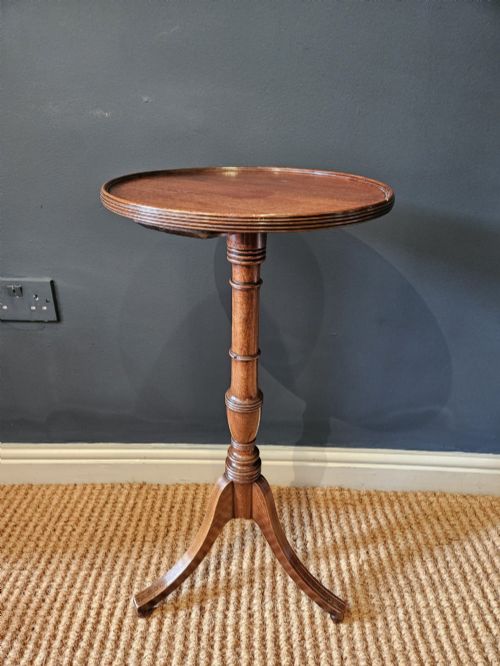
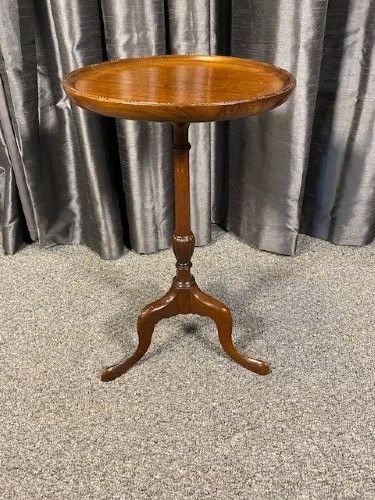
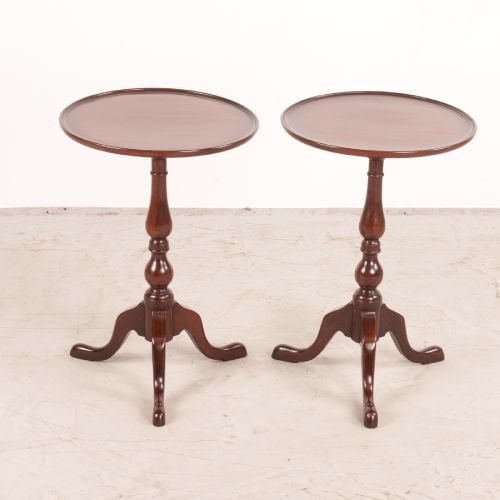
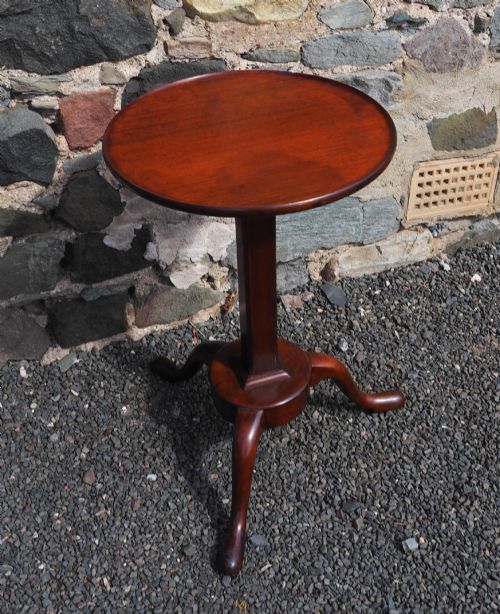
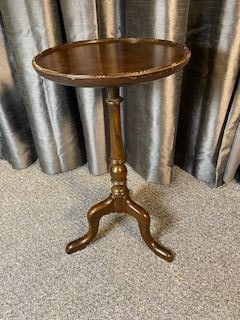
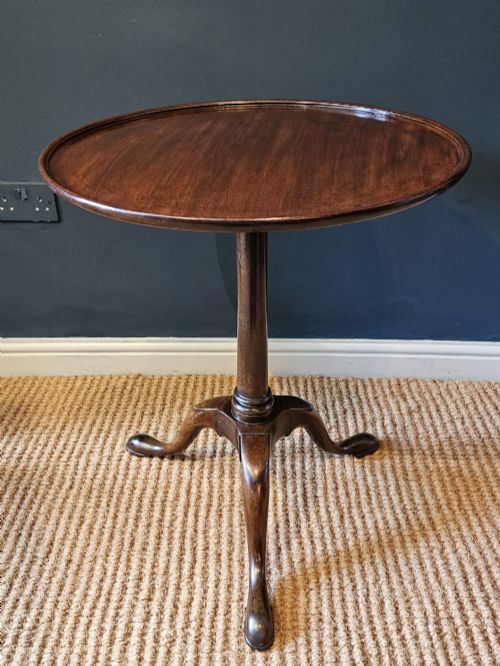
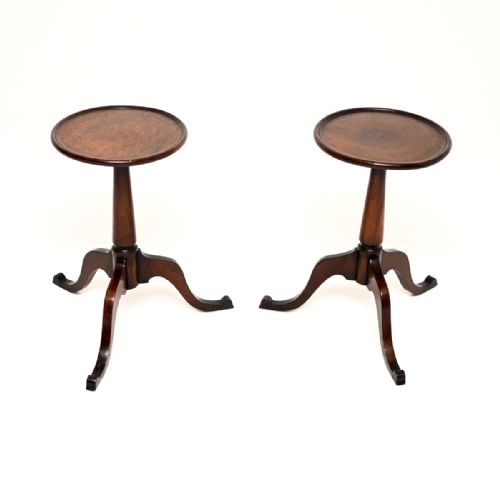
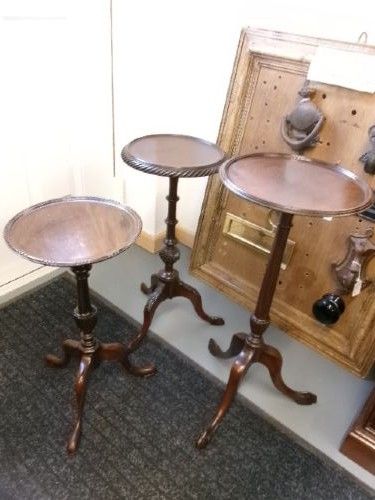
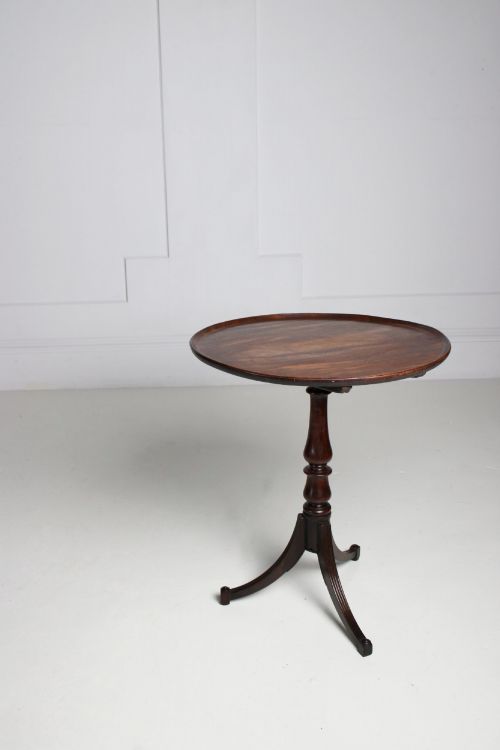
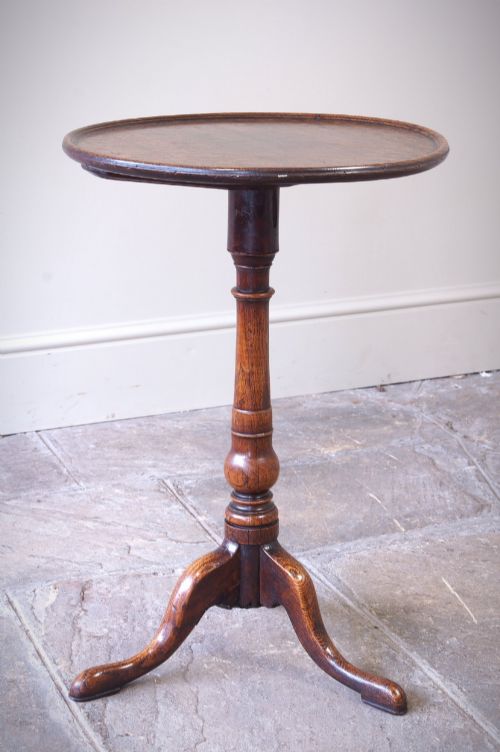
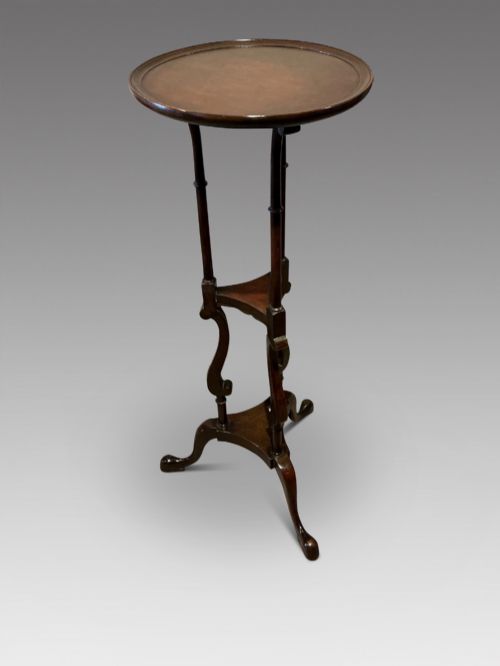
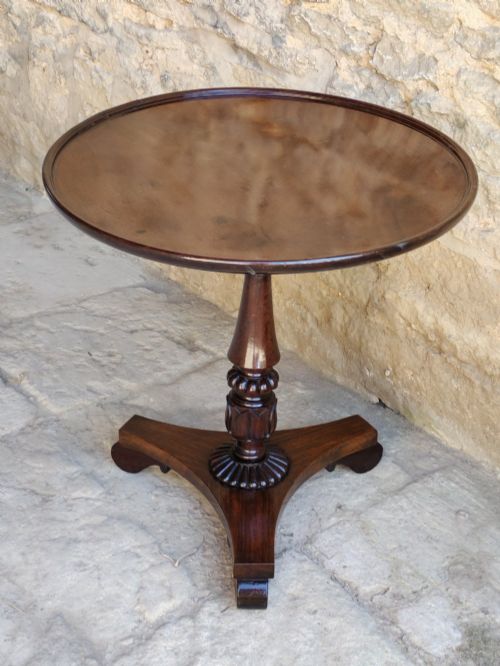
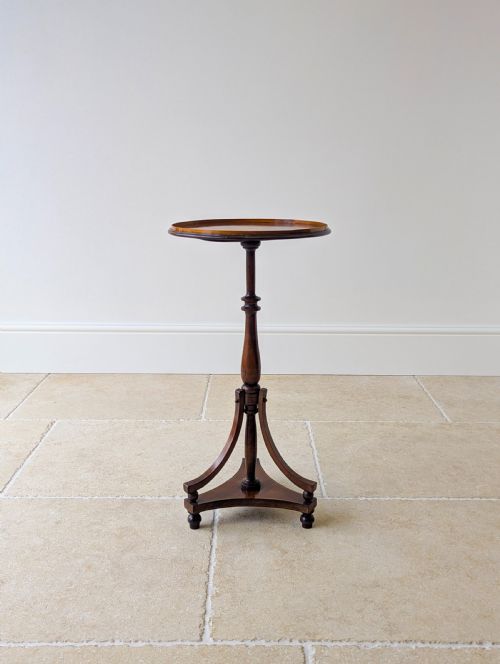
These dished top candle stand pieces provide a sturdy surface for illumination, built with circular raised rims to keep items secure.
Dished Top Candle Stand
A dished top candle stand is primarily designed to hold portable lighting or small domestic items safely within reach. The form emerges most frequently in Georgian, Regency and Edwardian pieces across this collection.
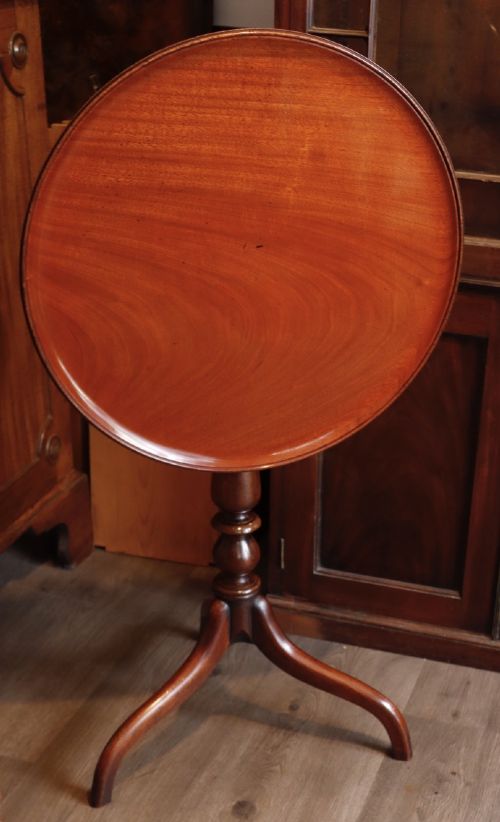
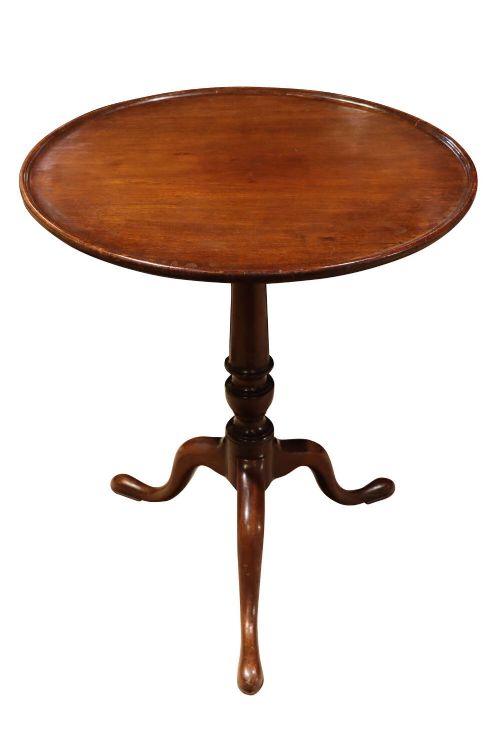
Most examples take the form of a tripod table, wine table or kettle stand supported by a central pedestal and three splayed legs. Walnut, mahogany and oak dominate the construction, often featuring moulded circular tops with characteristic hollowed dishing.
Makers produced these stands for domestic parlours and sitting rooms, where portability mattered for evening tasks. Early Georgian and George II iterations demonstrate the traditional proportions that later Edwardian and revival pieces echo.
Evaluating Execution
Quality rests upon the proportion between the slender central pedestal and the weight of the tripod base. Superior pieces maintain crisp turning on the column and precise dovetailing or secure jointing where the legs meet the shaft.
The depth and uniformity of the dished top indicate the skill of the woodturner or carver. Solid timber thickness and grain matching across the top separate standard production from superior craftsmanship.
Original hardware, such as tilt top catches and brass mechanisms, preserves the integrity of the piece. Refined carving on the knees of tripod legs distinguishes finer George II and George III examples from simpler utility stands.
Mahogany and walnut remain the dominant woods across these listings, appearing alongside occasional examples in oak, satinwood and rosewood.
The Dished Top Candle Stand Glossary
- Dished top
- A circular tabletop carved with a concave centre and a raised rim. This design prevents rolling items from falling off the edge.
- Tripod base
- A support structure comprising three splayed legs attached to a central vertical pillar. It provides stable placement on uneven floors.
- Snap top
- A tabletop hinged to the pedestal that tilts vertically for compact storage. A wooden catch locks the surface flat when in use.
- Kettle stand
- A small occasional table designed to hold a hot water vessel or tea equipment near a fireplace. These often share the compact proportions of candle stands.
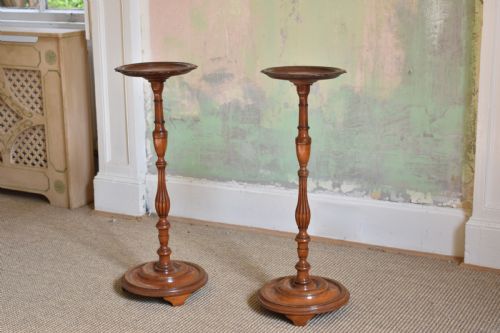
- Torchere
- A tall decorative stand intended to support a single light source or candelabrum. They frequently feature ornate wooden turning and slender columns.
Dished Top Candle Stand: Frequently Asked Questions
What is a dished top candle stand used for?
These stands originally held heavy wax candles or oil lamps to provide focused light in domestic rooms. The raised rim protected surfaces from wax drips and kept items secure.
Today they function effectively as small side tables for drinks, books or decorative objects beside seating. Their compact footprint suits spaces where larger furniture does not fit.
How do I distinguish an 18th century stand from a later revival piece?
Examine the timber shrinkage, hand tool marks beneath the top and the method used to join the pedestal to the legs. Earlier pieces often display distinct patination and minor irregularities from hand shaping.
Revival pieces from the Edwardian or later periods tend to show more uniform machine machining and standardised construction methods. Inspecting the underside reveals the age of the wood and the joinery techniques employed.
Why do some tables have tilting tops?
Tilting mechanisms allowed servants to store the stands flat against walls when rooms needed to clear floor space during the day. The snap top design combines practicality with furniture mobility.
This feature remains useful in modern homes for flexible room layouts. The wooden catch holds the tabletop rigid during use while allowing quick folding when necessary.
What wood types are most common?
Mahogany appears most frequently across these tables due to its strength and rich grain. Walnut and oak also feature prominently, particularly in earlier Georgian examples.
Selected pieces incorporate satinwood or rosewood inlay for decorative contrast. Each timber responds differently to carving and polishing over centuries of use.
Are these tables sturdy enough for daily use?
Tripod bases provide surprising stability on level floors despite having only three points of contact. The weight of dense hardwoods keeps the centre of gravity low.
Placing them away from heavy foot traffic prevents accidental knocks to the slender pedestal. Regular care keeps the joints secure for ongoing domestic service.