
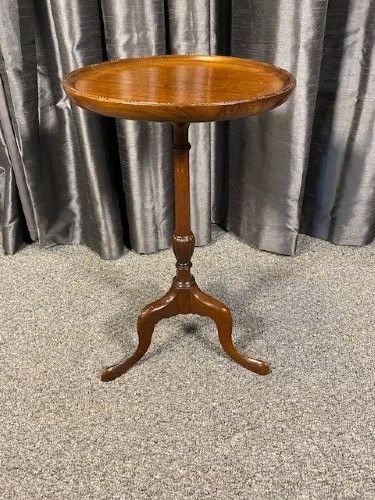
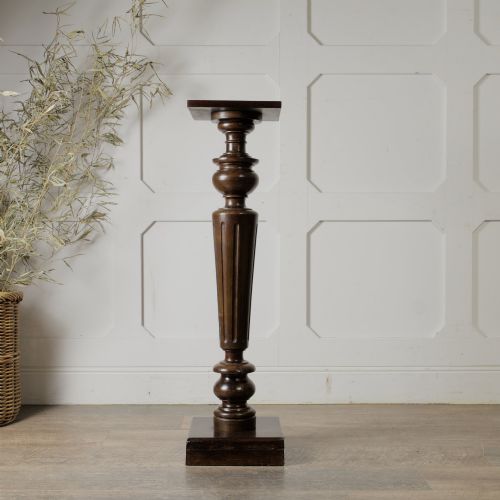
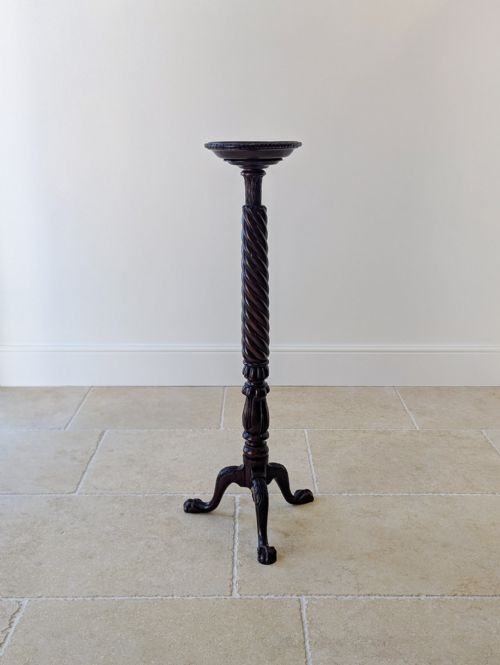


Turned Mahogany Torchere
These turned mahogany torcheres carry a quiet elegance, raising a candle or plant to catch the eye.
Turned Mahogany Torchere
A turned mahogany torchere stands tall to hold a light, a small table top, or a plant pot off the floor. You will find examples here spanning the eighteenth century through the Victorian era and into the early twentieth century.
The forms shift from simple eighteenth-century candle stands to robust Victorian plant stands and revival pieces. Makers shaped these tall supports with slender shafts and supportive bases to suit parlours and drawing rooms.
How they were made
Craftsmen turned solid timber on a lathe to create the slender, curving uprights that define these stands. Mahogany provides the primary structural body, occasionally paired with ebonised wood or brass details.
Joinery techniques focus on stability, linking heavy turned pillars to solid tripod or pedestal bases. Surface finishes rely on traditional polish to bring out the natural grain of the wood.
Object types include occasional tables, plant stands, floor lamps, and candle stands reflecting Georgian, Victorian, and Regency revival styles.
What varies in quality
Proportion and balance separate a fine stand from a plain utility piece. The grace of the turning on the shaft and the weight of the base dictate how well the stand holds its height without wobble.
The choice of timber grain and the crispness of the carved or turned detail reveal the hand of a more capable workshop. Age also plays a role, with eighteenth-century examples showing distinct construction methods compared to later revivals.
The Turned Mahogany Torchere Glossary
- Torchere
- A tall stand designed to support a candle, lamp, or plant. These pieces bring height and vertical line to a room.
- Turned
- Shaped on a lathe by rotating the timber against a cutting tool. This method produces cylindrical and symmetrical components for the central shaft.
- Pedestal
- A foundational support or base for a column or statue. In these listings, it often refers to the central column carrying the top surface.
- Ebonised
- Wood finished to resemble ebony through staining or painting. It adds a dark, contrasting accent to the lighter mahogany elements.
Turned Mahogany Torchere: Frequently Asked Questions
What is a torchere used for?
These tall stands originally held candles or oil lamps to illuminate dark corners of a room. Today, they serve equally well supporting a houseplant or a small decorative object.
Their slender profile allows them to fit into tight spaces where a standard table would prove too bulky.
How do I date a mahogany torchere?
Dating relies on examining the turning style, timber characteristics, and construction joints. Eighteenth-century pieces often display hand-turned marks and specific timber density absent in later revivals.
Revival pieces from the Victorian and Edwardian eras typically mimic earlier Georgian or Chippendale styles while using contemporary manufacturing techniques.
Are these stands stable on carpets?
Most torcheres feature tripod or weighted pedestal bases designed to distribute weight evenly. However, tall and slender pieces require careful placement on thick carpets to prevent tipping.
Placing them on solid flooring or using low-pile rugs ensures the best stability for displaying heavy items.
How do I maintain the mahogany finish?
Regular dusting with a soft, dry cloth preserves the polished surface of the wood. Avoid placing the stand in direct sunlight or near heat sources to prevent the mahogany from drying out.
Occasional application of appropriate wax polish helps maintain the lustre and protects the timber grain.