

Dish Top Wine Table
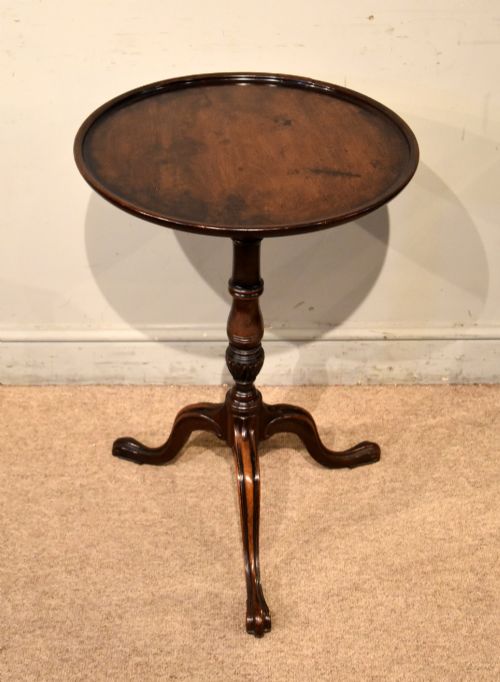
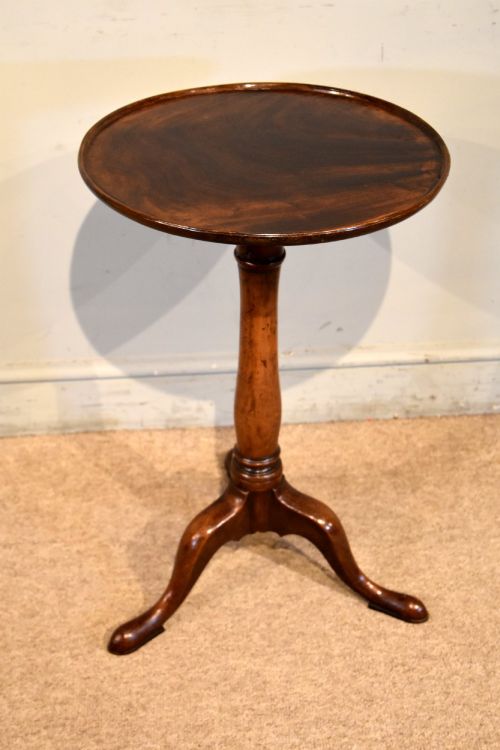
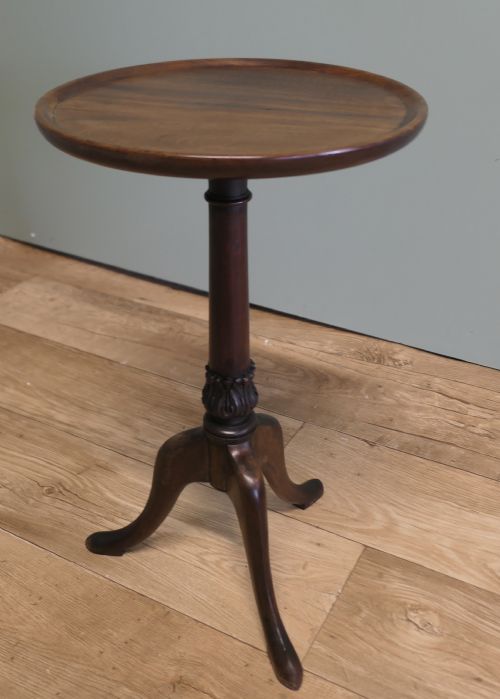
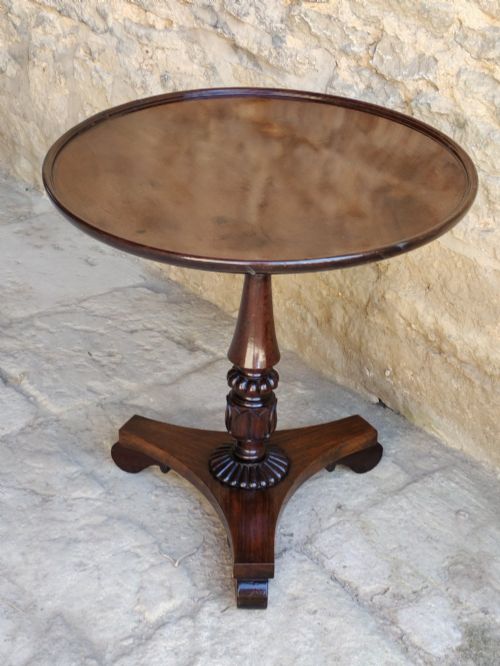
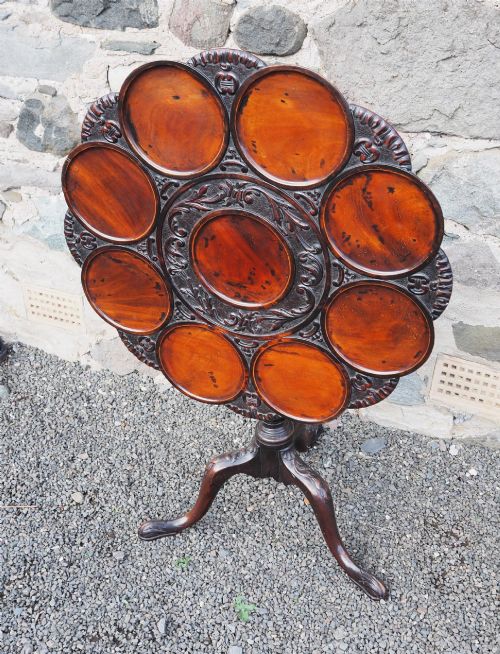
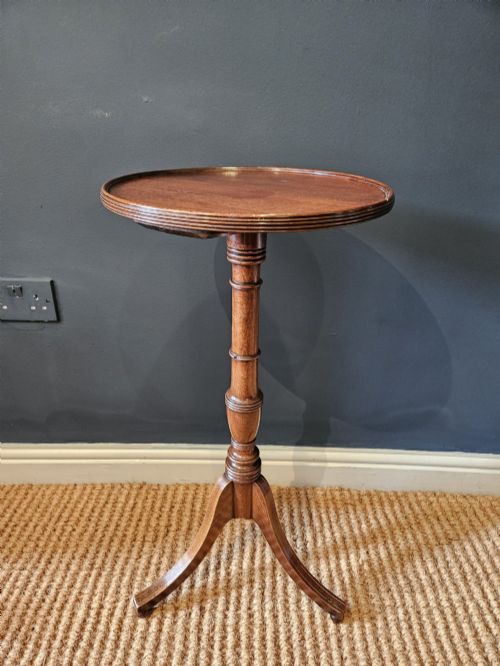
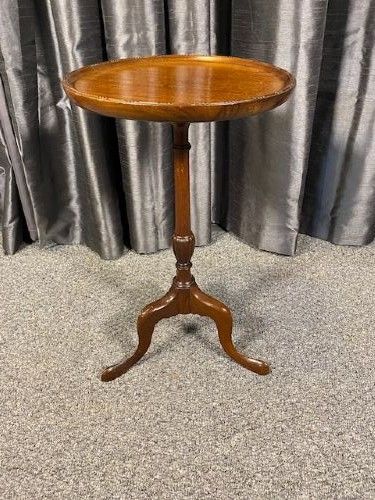
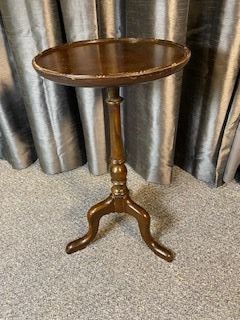
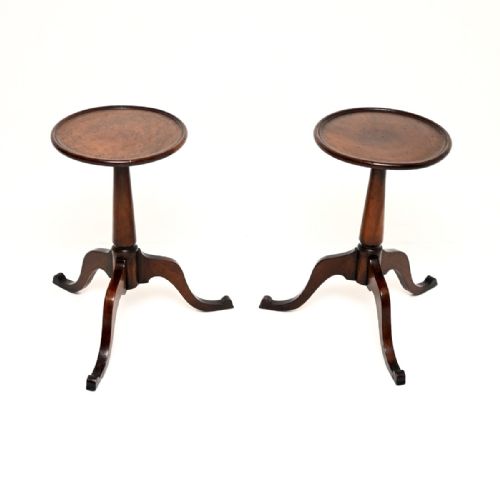
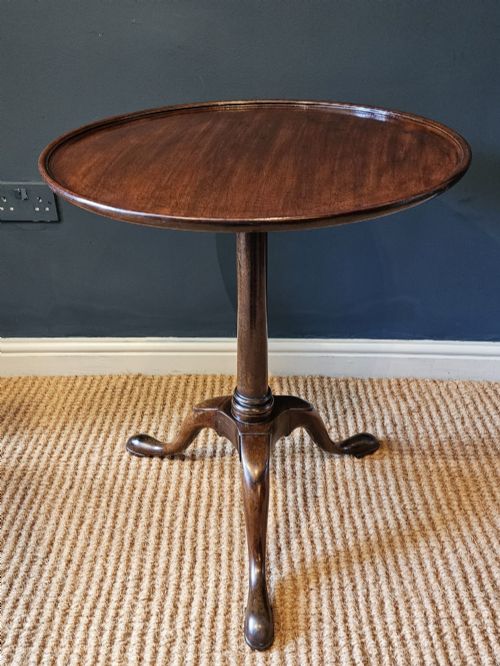
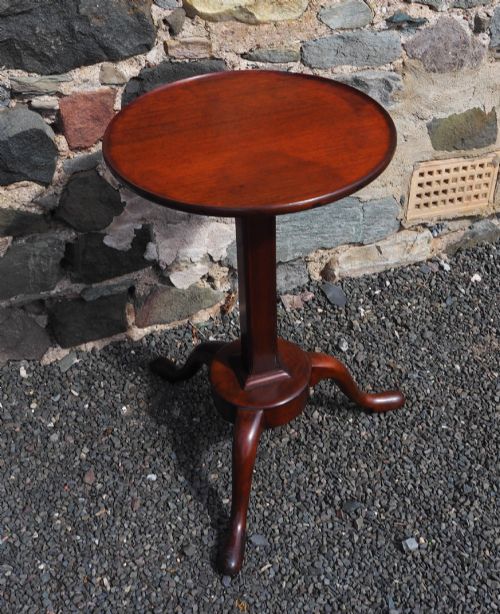
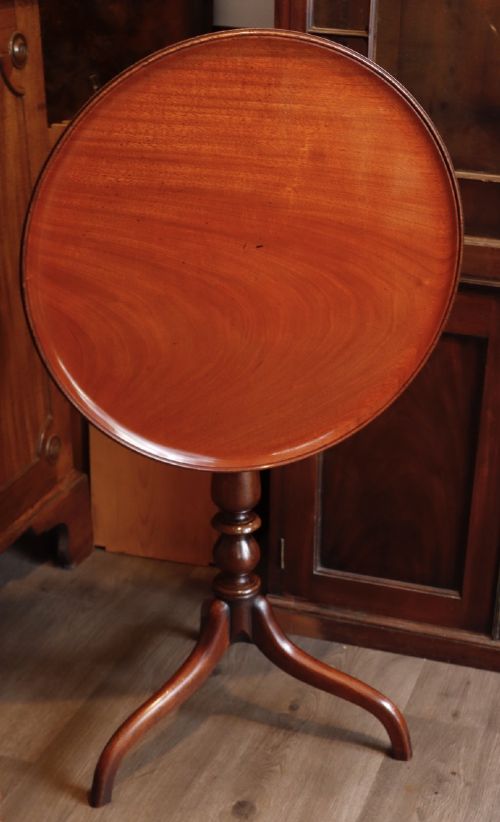
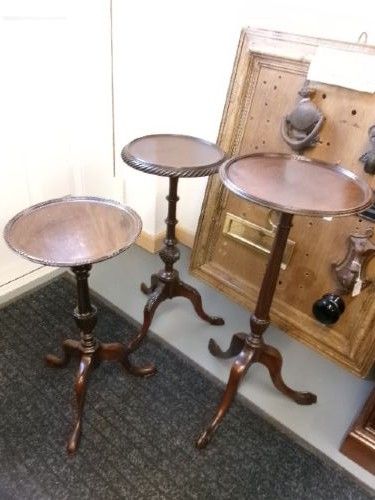
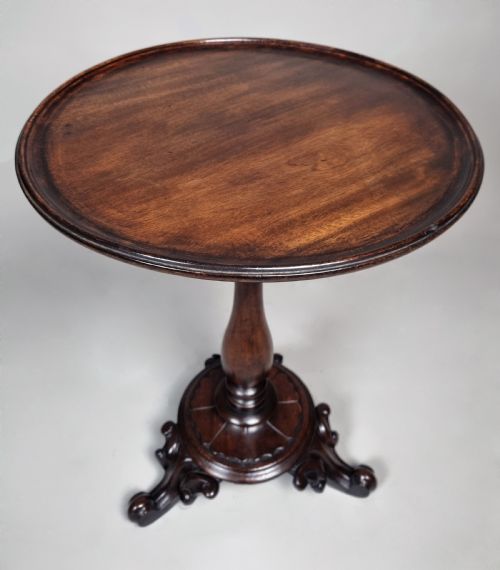
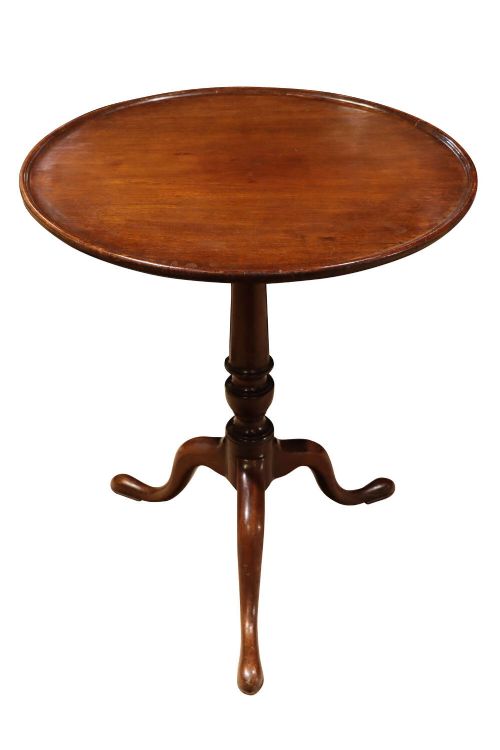
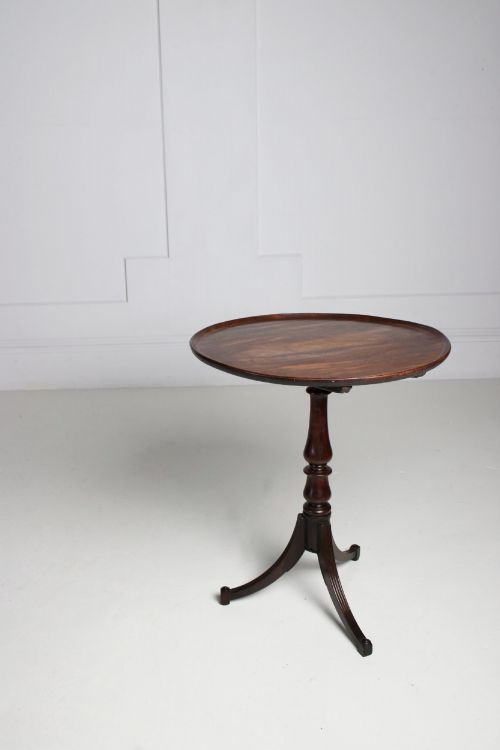
A dish top wine table brings a turned timber column and three slender legs to a circular top with a raised rim.
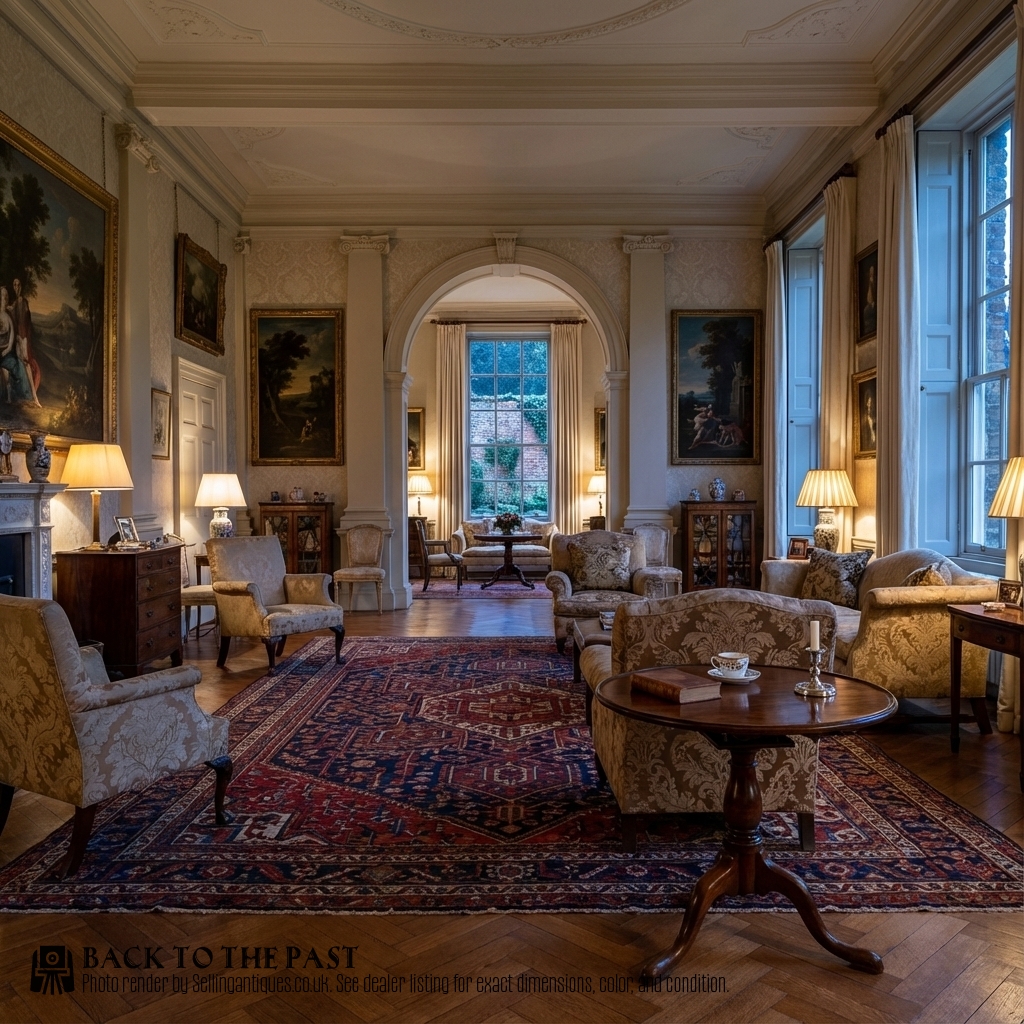
Dish Top Wine Table
A dish top wine table is a compact occasional table designed with a circular top featuring a raised, concave rim carved directly from the solid timber or formed from a raised edge. These pieces serve as side tables or lamp tables, and the surviving examples span the eighteenth and nineteenth centuries.
The most common version you will meet on this page is a Georgian mahogany tripod table, often dating around eighteen hundred or originating in the eighteenth century. You will also encounter walnut, oak, and maplewood variants, alongside early Georgian pieces featuring adjustable mechanisms or bird cage actions.
Makers shaped these versatile pieces for domestic service as small stands for candles, kettles, or wine glasses, pairing a central pillar with three splayed legs. The proportions remain small and portable, allowing them to sit easily beside chairs or in corners of a room.
Materials and construction
The timbers recorded in the evidence are primarily mahogany and walnut, alongside oak and maplewood. Cabinet makers selected dense hardwoods capable of holding fine turned details and supporting the cantilevered weight of a small top.
Construction typically involves a turned central pedestal rising from a tripod base with three legs, occasionally incorporating a bird cage mechanism or a tilt-top action to fold the surface flat when not in use.
Dish Top Wine Table Retail Price Guide 2026
Typical asking prices for dish top wine table among the pieces listed under this phrase on Sellingantiques today, from the lower quarter to the upper quarter. They describe what is for sale here now, not the wider market.
The archive and current listings show dish top wine tables spanning the eighteenth century, the Georgian era, and the nineteenth century, built primarily in mahogany and walnut.
Judging quality in a dish top wine table
Quality rests upon the crispness of the turned pillar and the graceful sweep of the tripod legs, where finer pieces show balanced proportions and well-defined mouldings. The dish top itself reveals the maker's hand through the smoothness of the hollowed rim and the selection of figured timber.
The sophistication of the mechanism also separates examples, from simple fixed tops to sophisticated bird cage pivots or tilt-top joints that allow the table to pivot smoothly without looseness in the joint.
The Dish Top Wine Table Glossary
- Dish top
- A circular tabletop with a concave, raised rim designed to prevent items from sliding off the surface. This feature marks out finer small tables from plain flat boards.
- Tripod base
- A support structure comprising three splayed legs radiating from a central column. This arrangement provides stability on uneven floors.
- Bird cage
- A timber framework beneath the tabletop that allows the surface to both rotate and tilt. It uses small vertical spindles resembling a cage.
- Tilt-top
- A hinged mechanism connecting the tabletop to the central pillar so the surface can be folded vertically. This allowed the table to be stored flat against a wall when not in service.
Dish Top Wine Table: Frequently Asked Questions
What is a dish top wine table used for?
These small tables served historically as moveable stands for holding wine glasses, candles, or kettles near seating areas.
Today they function as compact side tables, lamp stands, or decorative accents in sitting rooms and hallways.
How do I tell an eighteenth century table from a nineteenth century one?
Eighteenth century examples often display finer timber selection, lighter proportions, and hand-turned details characteristic of the Georgian period.
Nineteenth century pieces, including those in the Georgian style or William IV period, tend to feature heavier timbers and slightly sturdier turning.
What does bird cage mean on these tables?
A bird cage is a rotating and tilting wooden frame fitted just beneath the top of the table.
It allows the surface to spin horizontally and tip vertically, offering greater flexibility in daily use.
Are all these tables made of mahogany?
While mahogany is the most frequently recorded timber across the archive and current listings, other materials appear.
You will also find pieces fashioned from walnut, oak, and maplewood.