
Brown Wood Tripod Stand
These brown wood tripod stand examples bring compact, versatile tables into a room with slender three-legged bases supporting circular or shaped surfaces.
Brown Wood Tripod Stand
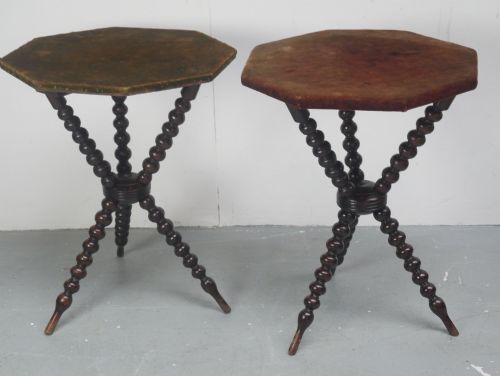
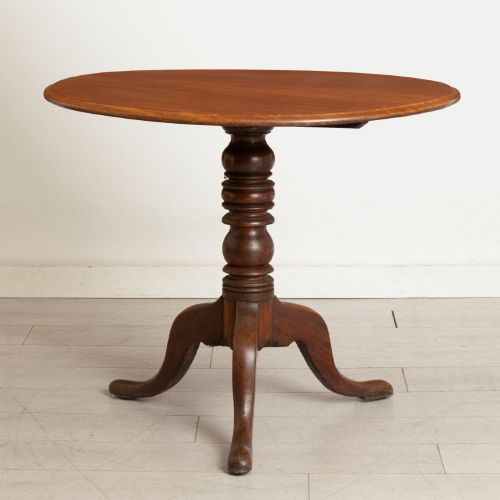
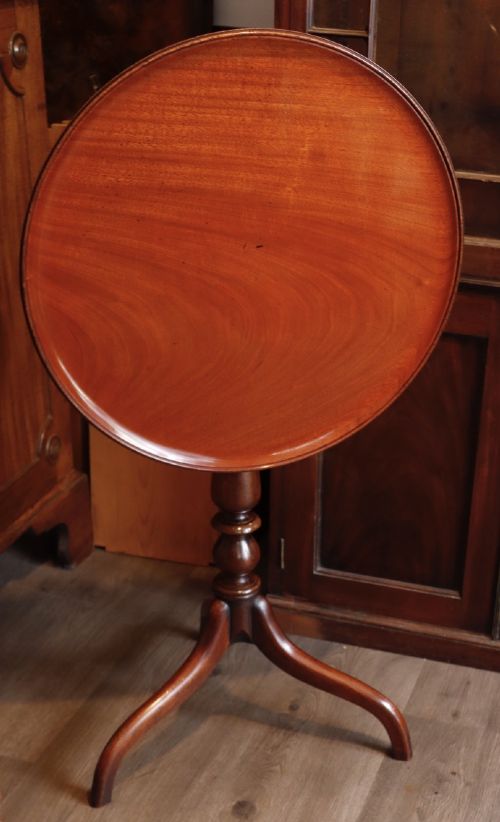
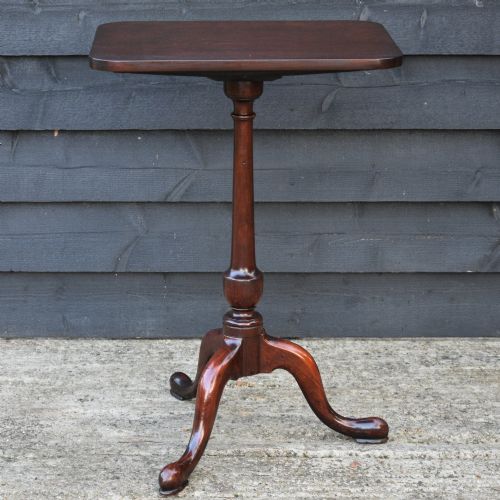
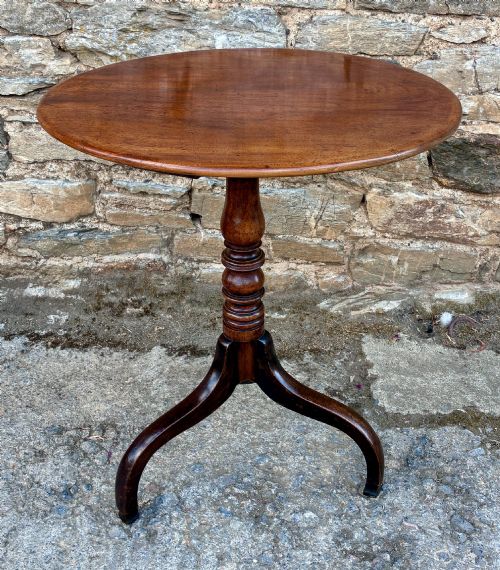
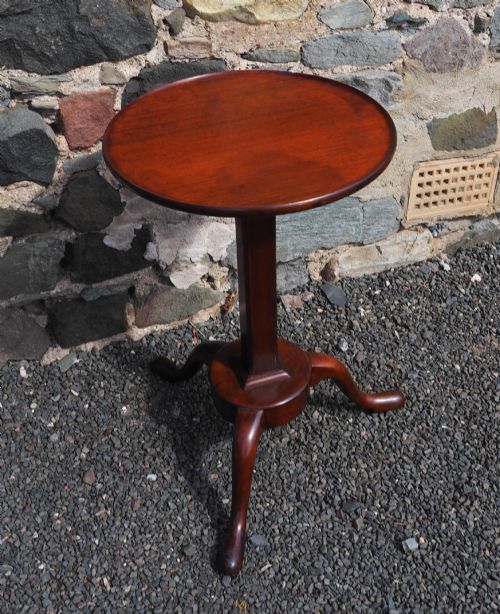
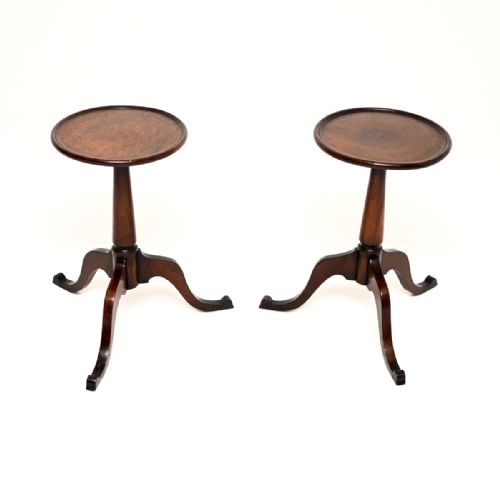
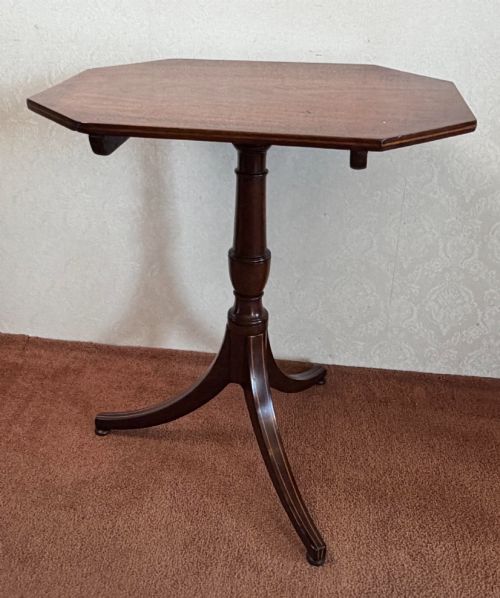
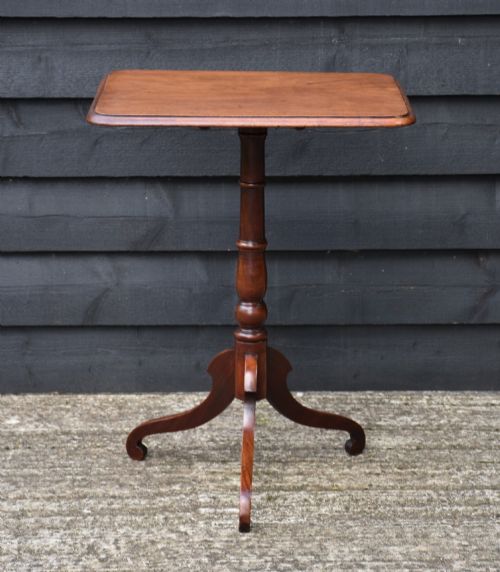
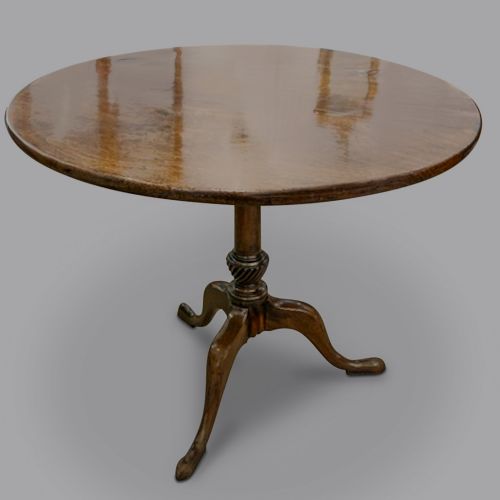
A brown wood tripod stand generally takes the form of a small occasional table, wine table, lamp table, or candlestand designed for flexible placement in domestic spaces. The selection on this page leans heavily toward mahogany, walnut, fruitwood, and oak examples originating from the eighteenth and nineteenth centuries, including Georgian and Regency periods.
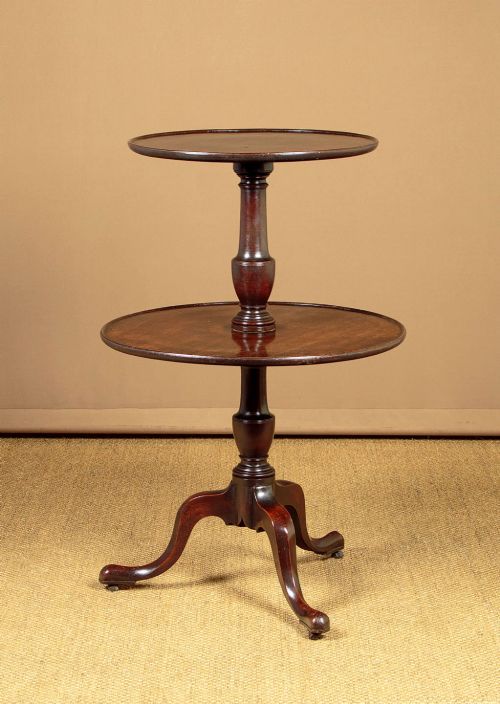
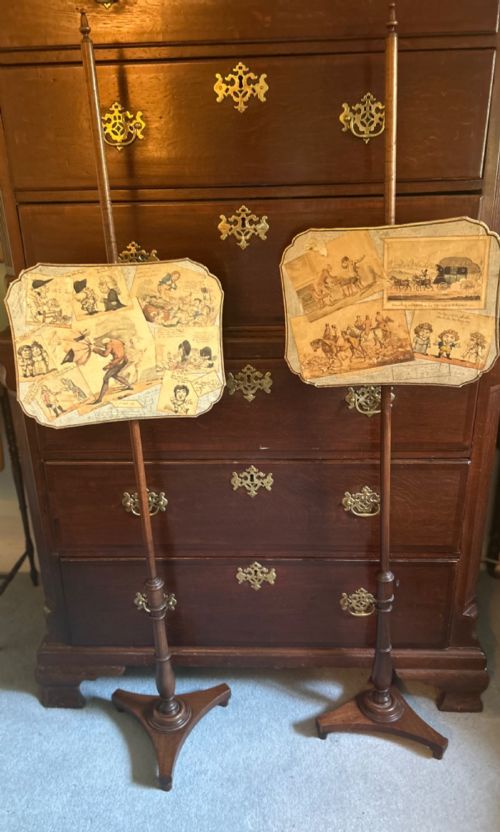
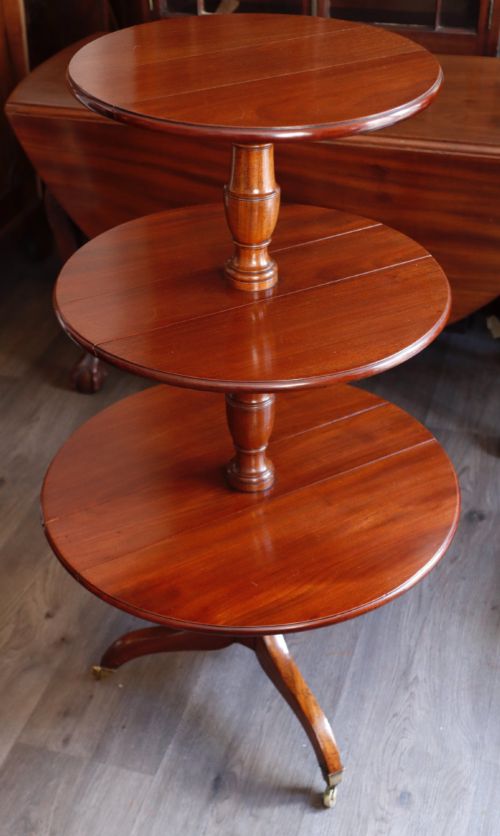
Forms vary from tilt-top wine tables and birdcage mechanisms to dumb waiters, pole screens, and plant stands supported by three splayed legs. Many pieces trace their lineage back to Georgian and Regency designs, with occasional twentieth-century revivals appearing alongside nineteenth-century interpretations.
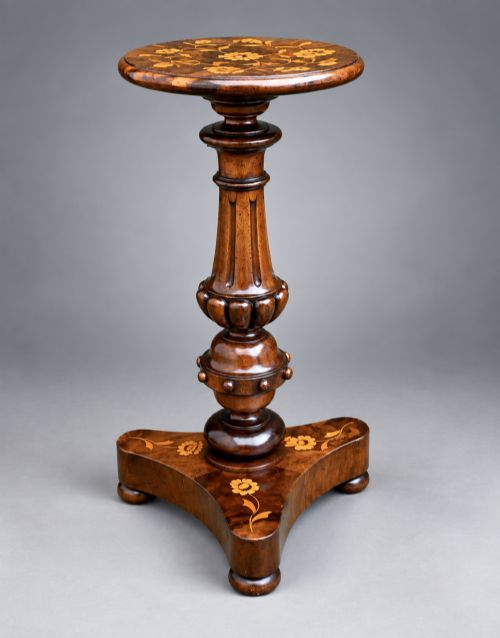
Buyers encounter surfaces adorned with boxwood inlay, penwork decoration, or simple moulded edges atop turned or carved pillars. These stands serve practical duties as lamp tables or drink surfaces while functioning as decorative focal points.
How they were made
Cabinetmakers utilised dense hardwoods such as mahogany, walnut, oak, and fruitwood to construct these slender supports, often turning pillars on a lathe and shaping three individual legs to fit into a central boss or block. Timber selection mattered greatly for the stability of the central column and the flatness of the circular top.
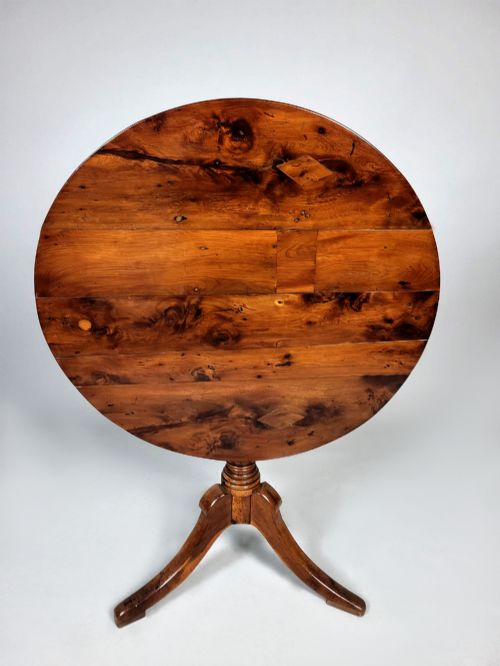
Many tables incorporate tilt-top mechanisms using brass catches or wooden birdcage pivots, allowing the top to fold flat against the stem when not in use. Secondary techniques include boxwood inlay, carved details, and penwork decoration applied directly to the timber surface.
Listings feature eighteenth and nineteenth century periods alongside twentieth century revivals, using mahogany, walnut, oak, fruitwood, and brass.
What varies in quality
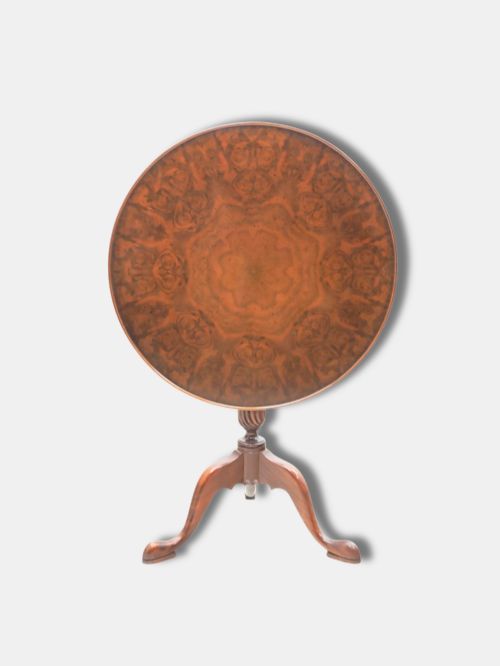
The sophistication of the timber figure and the crispness of the turning on the central pillar distinguish standard examples from finer works. Cabinetmakers who selected well-figured mahogany or walnut for the top ensured a more visually striking result.
Proportion and stability define the upper tier of these pieces, where the splay of the three legs balances the diameter of the top cleanly. Finer examples maintain smooth mechanisms in their tilt-top or birdcage joints without excessive play in the central column.
The Brown Wood Tripod Stand Glossary
- Birdcage
- A rotating wooden frame beneath the table top that allows the surface to both tilt and revolve. This mechanism adds complexity and utility to antique wine tables.
- Tilt-top
- A hinged table top that folds into a vertical position for compact storage against a wall. It is a common feature on eighteenth-century mahogany examples.
- Candlestand
- A tall, slender support designed specifically to hold a lighting device. These pieces often feature very compact tops and delicate tripod bases.
- Dumb waiter
- A multi-tiered stand featuring graduating circular shelves on a single pillar. They were used in dining rooms for serving food and drink without servants present.
- Pole screen
- An adjustable vertical screen mounted on a tripod base, designed to shield a person's face from the heat of an open fire. Some incorporate decorative prints or needlework.
Brown Wood Tripod Stand: Frequently Asked Questions
What is a brown wood tripod stand used for?
These pieces serve as occasional tables, holding table lamps, drinks, or books beside seating furniture. Their compact footprint makes them suitable for smaller corners.
Historically, specific forms like wine tables and dumb waiters aided dining and entertaining, while candlestands provided elevated illumination in period rooms.
How do I identify a Georgian tripod table?
Georgian examples often display dense mahogany or walnut timbers, slender turned pillars, and finely shaped pad feet or snake feet. Construction details like hand-cut joints help indicate the period.
Many feature tilt-top mechanisms or birdcage assemblies that allow the top to rotate and fold, reflecting eighteenth-century cabinet-making priorities.
Why does the top tilt on these tables?
The tilt-top mechanism allowed domestic servants to store the tables flat against a dining room or drawing room wall when not in use, saving valuable floor space.
This practical feature remains a hallmark of antique wine tables and candlestands from the Georgian and Regency eras.
Are all tripod stands from the 18th century?
The listings span multiple eras, including eighteenth-century originals, nineteenth-century Victorian interpretations, and early twentieth-century revival pieces.
Stylistic cues, timber patination, and construction methods help differentiate an original Georgian piece from a later nineteenth-century or Edwardian version.