

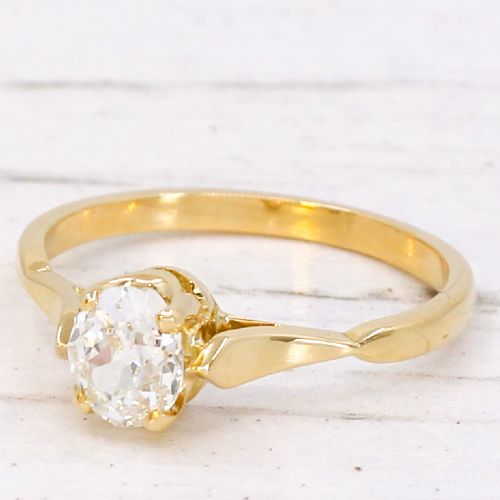
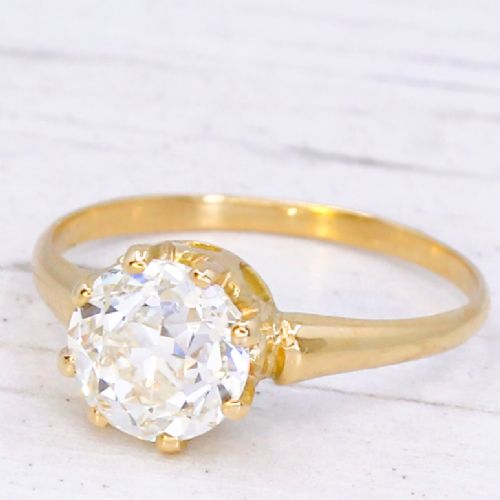
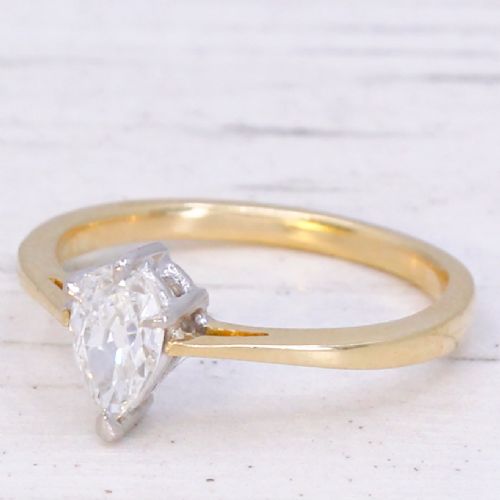
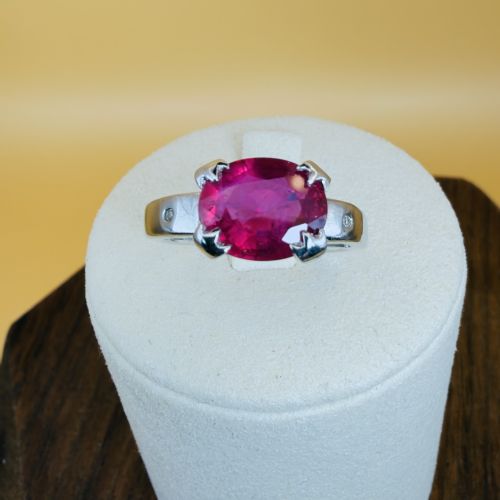
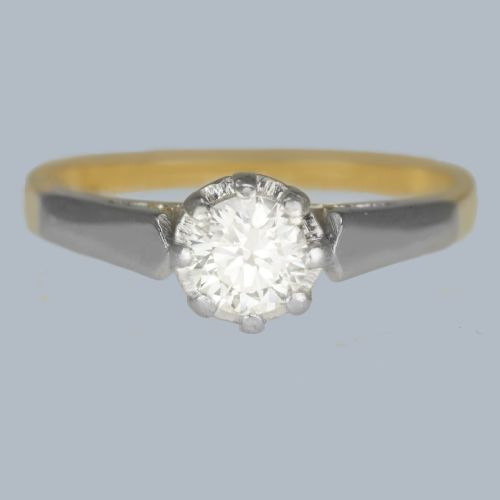
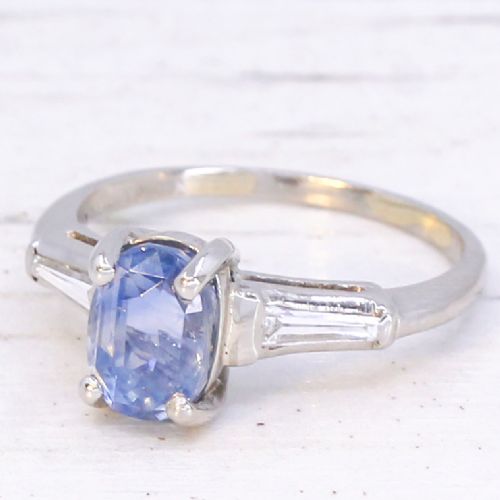
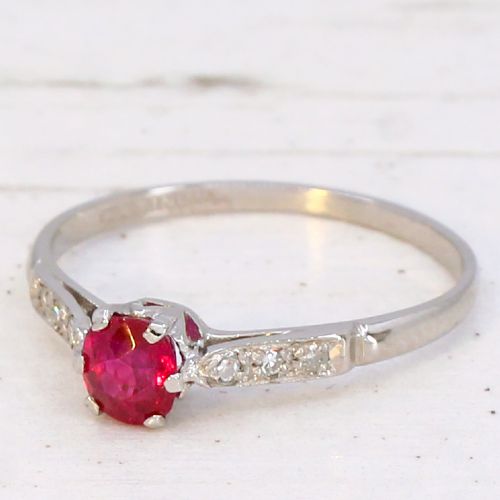
Diamond Solitaire Engagement Ring
A diamond solitaire engagement ring focuses all visual weight on a single stone, combining lasting materials with historic character.

Diamond Solitaire Engagement Ring
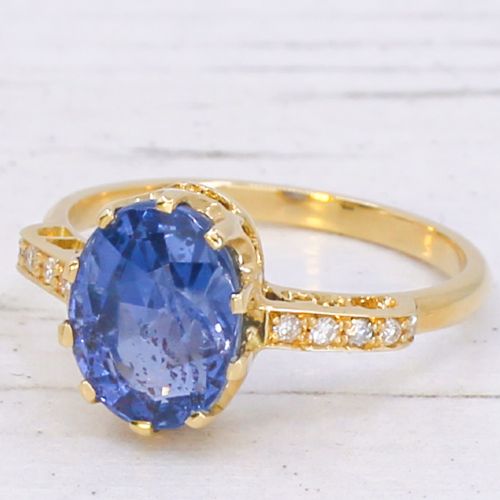
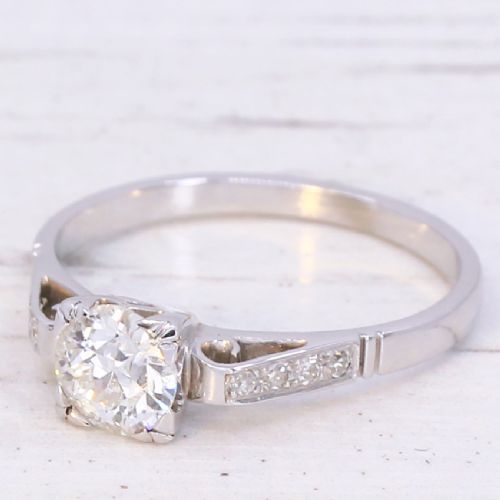
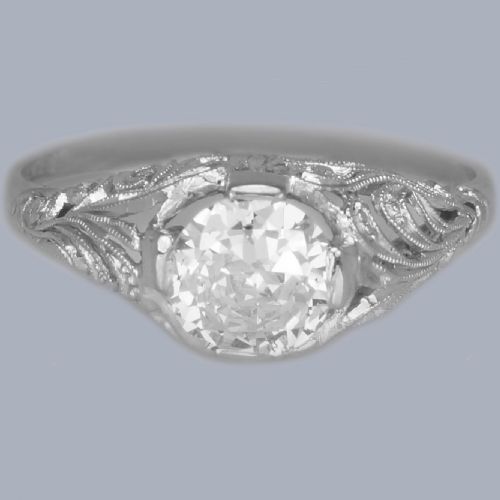
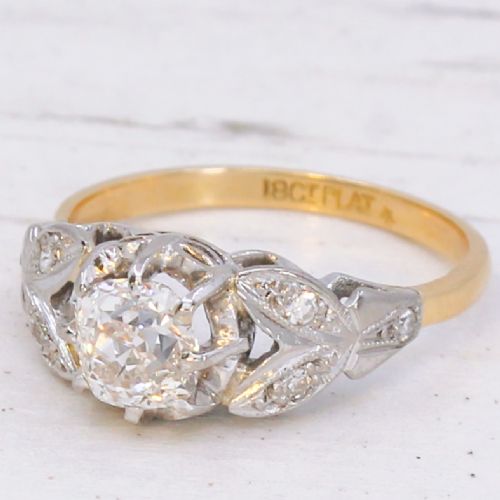
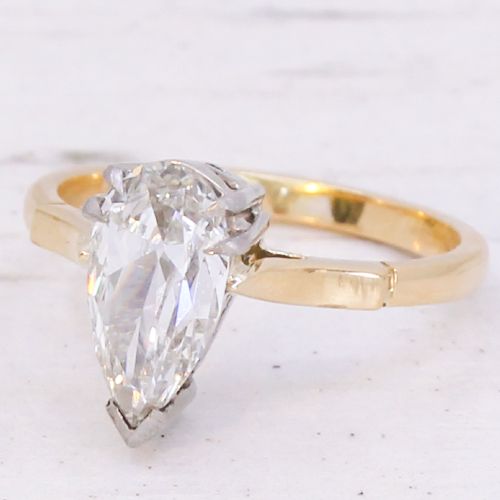
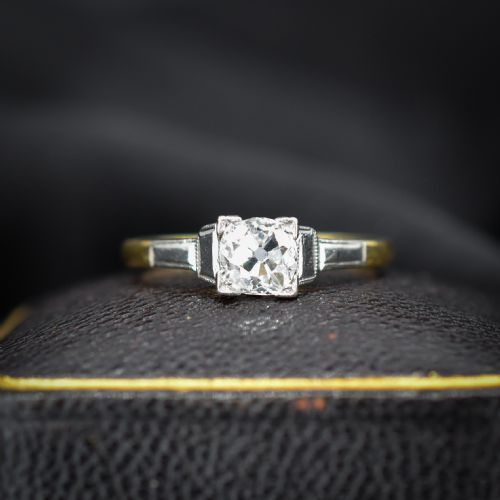
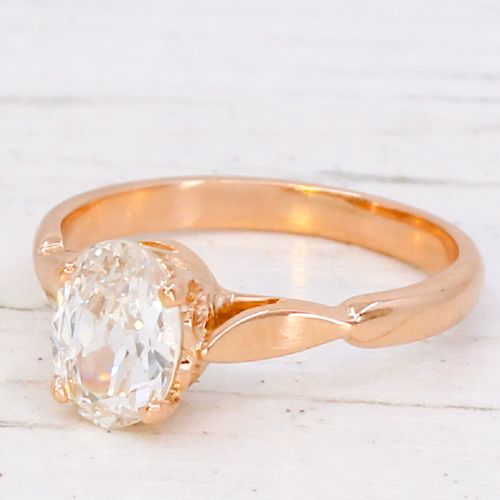
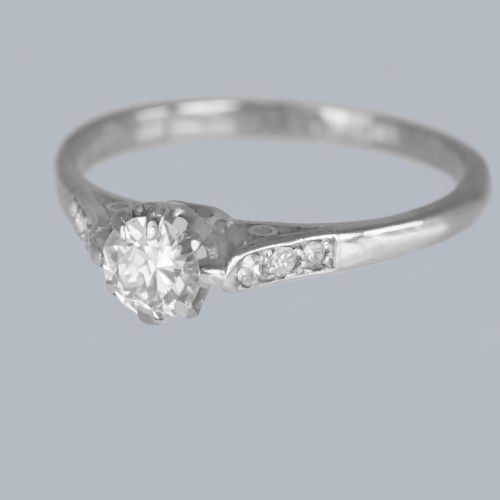
A diamond solitaire engagement ring centres on a single stone mounted in precious metal, spanning periods from the early twentieth century through to the mid-century. The selection on this page shows pieces dating from the nineteen-thirties to the nineteen-sixties alongside archive examples from Victorian, Edwardian and Art Deco eras.
Most pieces you encounter combine a central diamond with platinum or gold mountings, reflecting the prevailing styles of their decades of manufacture. Art Deco examples feature crisp geometric settings, while later mid-century rings lean towards streamlined white or yellow gold profiles.
Engagement rings of this type take many forms, from simple round brilliant settings to elaborate old European cut stones held in platinum claws. Each piece preserves the distinct hand-finishing and design vocabulary of its original period.
Materials and construction
Metals used across these pieces include platinum, white gold, yellow gold and standard eighteen-carat gold, often paired specifically to secure the stone while highlighting its brilliance. Platinum frequently appears in Art Deco and Edwardian mounts for its strength and bright finish, holding delicate claw settings securely around the diamond.
Stones are predominantly old European cuts, old mine cuts or later brilliant cuts, shaped by hand or with early mechanical tools before modern grading standards were fixed. Mountings show traditional techniques such as illusion settings, gypsy mounting into thick gold bands, and millegrain edging along platinum shoulders.
Diamond Solitaire Engagement Ring Retail Price Guide 2026
Typical asking prices for diamond solitaire engagement ring among the pieces listed under this phrase on Sellingantiques today, from the lower quarter to the upper quarter. They describe what is for sale here now, not the wider market.
Victorian wearers favoured gypsy-set diamonds so their rings wouldn't catch on heavy fabrics while tending the parlour fire.
Quality factors in vintage rings
Quality in a diamond solitaire engagement ring rests on the harmony between the central stone and its metal setting, rather than sheer scale alone. Stones with lively light return and clean old-cut facets elevate a piece, particularly when paired with crisp, undamaged platinum claw work that shows no sign of excessive thinning or repair.
The integrity of the original mount defines the upper tier of surviving examples, where delicate details like foliate shoulders or millegrain beading remain crisp and unaltered by time. Masterful proportioning between the weight of the gold or platinum band and the presence of the diamond creates a balanced piece that holds its historic character intact.
The Diamond Solitaire Engagement Ring Glossary
- Old European Cut
- An early form of brilliant-cut diamond characterised by a smaller table, higher crown and open culet. This cut was popular from the late nineteenth century through the art deco period.
- Millegrain
- A decorative technique featuring a line of tiny raised metal beads along the edges of a setting. It adds delicate texture to platinum and white gold mounts.
- Gypsy Setting
- A style where the diamond is flush-set directly into the thick metal band of the ring. This creates a smooth, low-profile finish seen frequently in Victorian designs.
- Illusion Setting
- A metal mounting technique designed to make the central diamond appear larger by surrounding it with a faceted plate. It was widely utilised in mid-century and art deco jewellery.
- Culet
- The small flat facet at the very bottom of a vintage diamond. Old cuts often feature a prominent open culet visible through the crown.
Diamond Solitaire Engagement Ring: Frequently Asked Questions
How do I care for a vintage diamond ring?
Clean your ring gently using warm water, mild washing-up liquid and a soft brush to remove daily oils from beneath the setting. Avoid harsh chemical dips, especially on rings with older gold alloys or delicate platinum claw work.
Have a trusted jeweller inspect the claws periodically to ensure the diamond remains secure in its historic mounting. Regular checks prevent stone loss and preserve the original metalwork.
Can these rings be resized safely?
Most gold and platinum solitaire rings can be adjusted by a skilled jeweller who understands antique construction methods. The process depends on the thickness of the band and whether the shoulders feature intricate engraving or millegrain work.
Take the piece to a specialist workshop rather than a high-street chain to protect historic hallmarks and structural integrity. Laser welding is often utilised on platinum to prevent heat damage to older settings.
How do I identify an Art Deco solitaire?
Art Deco rings typically feature geometric motifs, sharp lines and strong symmetry in the platinum or white gold framework surrounding the stone. Look for stepped shoulders, channel-set accents and crisp architectural framing.
Older stones such as old European cuts are frequently found in these mounts, combining antique diamond faceting with modernistic twentieth-century design.
What is an old European cut diamond?
An old European cut is a hand-faceted precursor to the modern round brilliant diamond, produced extensively during the Victorian, Edwardian and Art Deco eras. These stones feature smaller tables, steeper crown angles and a distinctive open culet at the base.
Under candlelight or low illumination, they produce broad, distinct flashes of light rather than the pinpoint sparkle of modern brilliant-cut stones.