
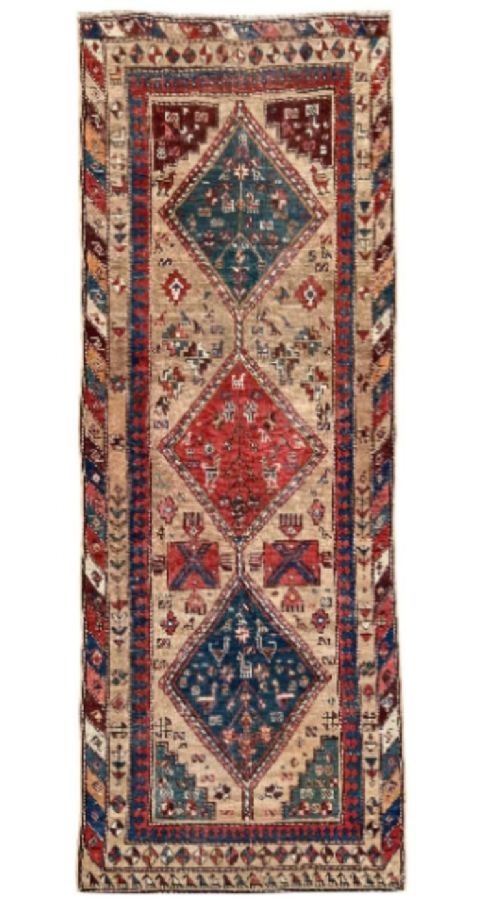
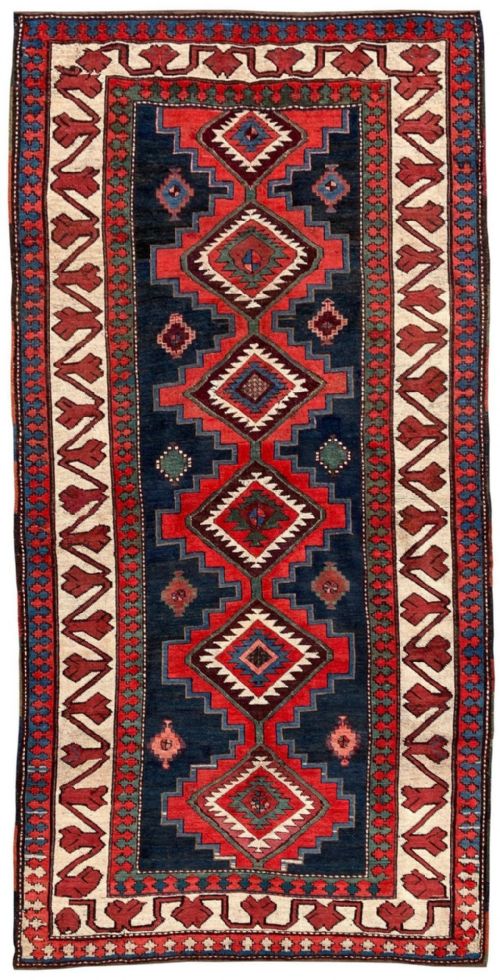
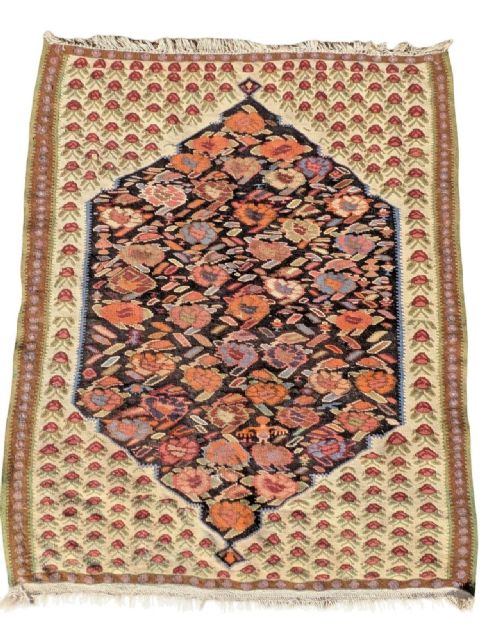


Diamond Medallion Runner
A diamond medallion runner brings structured tribal design to a hallway, offering repeating geometric motifs woven to withstand heavy foot traffic.
Diamond Medallion Runner
A diamond medallion runner displays geometric central motifs set along a narrow linear format suited for corridors and passageways. These floor coverings bridge the gap between utility and decorative tribal artistry, providing warmth and visual rhythm beneath the feet.
The pieces catalogued here span several decades from the late nineteenth century through the early decades of the twentieth century. Examples originate from Persian tribal and village workshops alongside Caucasian traditions, showcasing regional weaving idioms.
Forms include traditional handwoven runners, antique village runners, and specific regional types such as Sarab and Kurdish pieces. Buyers frequently encounter formats featuring traditional designs passed down through generations of village weavers.
Materials and construction
These floor coverings are constructed primarily from wool and cotton, utilising natural fibres for both pile and foundation foundations. Wool provides a resilient pile surface that absorbs dye richly, while cotton often forms the structural warp and weft threads.
Weavers employed traditional handwoven techniques, knotting or looping pile onto sturdy foundations to create durable textiles designed for daily use. The interplay of these organic materials results in flexible yet robust runners capable of enduring generations of domestic life.
Diamond Medallion Runner Retail Price Guide 2026
Typical asking prices for diamond medallion runner among the pieces listed under this phrase on Sellingantiques today, from the lower quarter to the upper quarter. They describe what is for sale here now, not the wider market.
Every diamond medallion runner carries the slight, charming asymmetry of a village weaver working from memory rather than graph paper.
Assessing quality and character
Quality rests in the precision of the geometric design and the handled balance of the weave. Tighter knotting and disciplined symmetry separate finer village output from simpler utilitarian items.
The depth and consistency of the wool pile dictate how gracefully the piece ages under foot. Superior examples maintain crisp lines within the medallion motifs and display harmonious dye saturation across the field.
The Diamond Medallion Runner Glossary
- Runner
- A long, narrow carpet format specifically designed for hallways, staircases, and corridors. This shape dictates a repetitive decorative layout to lead the eye along its length.
- Medallion
- A central decorative motif, often diamond-shaped in these pieces, which anchors the composition of the field. It serves as the primary focal point of the tribal design.
- Warp
- The vertical foundation threads stretched lengthwise on the loom before weaving begins. All subsequent knotting is built upon this structural skeleton.
- Weft
- The horizontal threads passed alternately over and under the warp threads to bind the knots in place. This technique secures the structural integrity of the textile.
- Pile
- The raised surface of the carpet formed by the cut ends of knotted yarn. Its density and material quality determine the tactile feel underfoot.
Diamond Medallion Runner: Frequently Asked Questions
Where should I place a runner?
These narrow textiles suit hallways, corridors, and passage spaces where linear formats provide both warmth and directional emphasis.
Their elongated proportions ensure they fit comfortably in transitional areas without overwhelming surrounding furniture.
How do I identify a Sarab runner?
Sarab pieces typically display specific regional motifs and colour palettes associated with the Sarab district in Persia.
They often incorporate geometric diamond medallions within traditional village compositions dating from the nineteenth or early twentieth centuries.
What materials are used?
Construction relies on natural wool and cotton fibres for both the durable pile and the structural foundation.
Wool supplies the soft, resilient surface texture while cotton provides the underlying stability required for a flat-lying runner.
How old are these pieces?
The available selection spans the late nineteenth century up to the 1920s, encompassing various tribal and village traditions.
Age is determined through stylistic analysis, material wear patterns, and historical attribution methods common to antique textiles.