



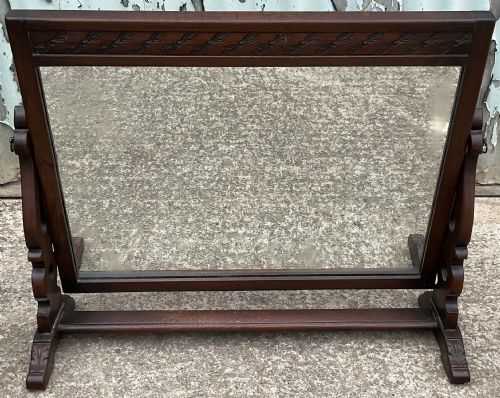


Desktop Vanity Swing Mirror
These desktop vanity swing mirror examples bring historic timber frames and tilting glass to any surface.
Desktop Vanity Swing Mirror
A desktop vanity swing mirror is a portable looking glass set within a pivoting frame, designed to sit upon a chest of drawers or a dressing table. The pieces found here span the eighteenth century, the Victorian era, and the early twentieth century, offering functional historic items for everyday use.
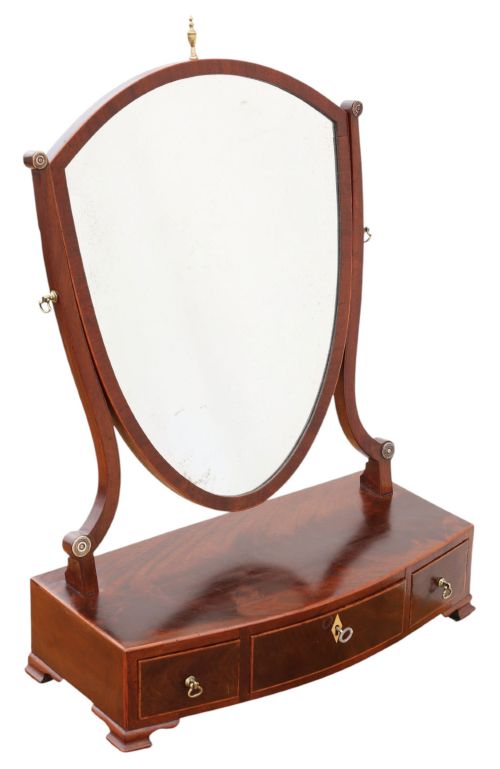
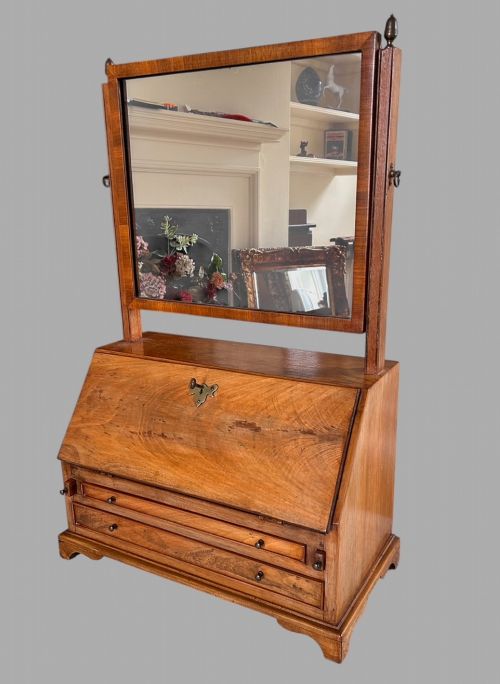
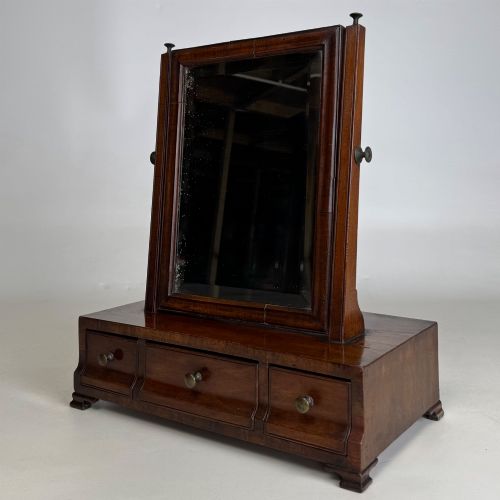
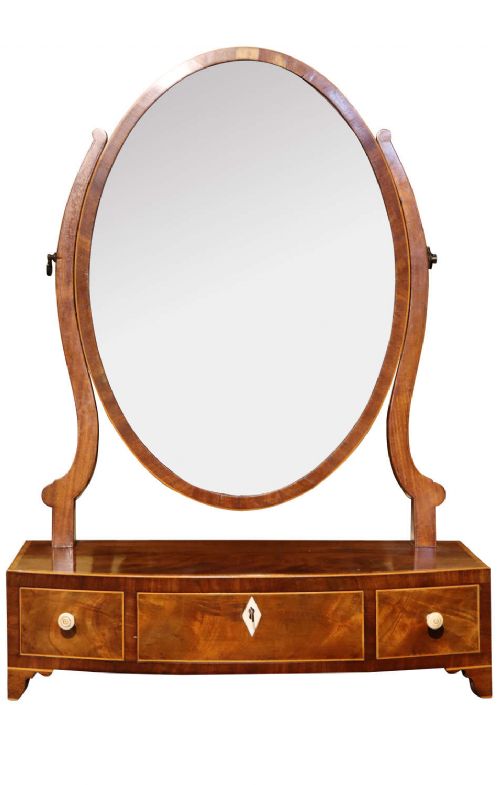
Most examples rely on timber structures such as mahogany or walnut, often featuring a small base fitted with drawers beneath the glass. These tabletop items vary from simple Georgian forms to elaborate Dutch marquetry and serpentine shapes.
Buyers will encounter various period styles including Queen Anne, Georgian, and Victorian designs. Each desktop vanity swing mirror provides a practical surface reflection while displaying the cabinet-making skills of its respective era.
How they were made
Cabinet-makers constructed these frames primarily from solid timbers like mahogany, walnut, and oak, frequently applying decorative veneers or crossbanding. Satinwood and giltwood also appear as surface treatments, alongside bone inlay details on specific regional examples.
The mirror plates themselves consist of traditional glass held securely within adjustable wooden frames that tilt on brass pivots or screw pins. Many bases incorporate small drawers assembled with traditional dovetail joints to store personal items.
Desktop Vanity Swing Mirror Retail Price Guide 2026
Typical asking prices for desktop vanity swing mirror among the pieces listed under this phrase on Sellingantiques today, from the lower quarter to the upper quarter. They describe what is for sale here now, not the wider market.
Listings feature mahogany, walnut, and oak structures across Georgian, Victorian, and Edwardian periods.
What varies in quality
The standard of a desktop vanity swing mirror depends on the selection of figured timber and the precision of the cabinet-making. Finer pieces display careful crossbanding, marquetry inlay, and well-proportioned serpentine or shield-shaped frames.
Original mirror glass, sound pivoting mechanisms, and untouched drawer construction elevate certain items above simpler utility versions. The integrity of the timber joints and the depth of the finish determine the overall presence of the piece.
The Desktop Vanity Swing Mirror Glossary
- Crossbanding
- A narrow strip of veneer applied perpendicularly to the grain of the main surface to create a decorative border. This technique often frames the drawer fronts and edges of the mirror base.
- Serpentine
- A curved line of furniture moulding or drawer fronts that sweeps outward in the centre and inward at the sides. It adds visual movement and sophistication to eighteenth-century dressing mirrors.
- Marquetry
- The art of applying decorative pieces of veneer to a structure to form intricate floral or geometric patterns. Dutch examples frequently utilise this method on walnut and mahogany surfaces.
- Shield mirror
- A looking glass shaped like a heraldic shield, popular during the late Georgian period. These plates are usually supported by upright arms attached to a serpentine base.
- Toilet mirror
- The historic term for a small dressing table glass used during the eighteenth and nineteenth centuries. These items sat upon larger furniture pieces for personal grooming.
Desktop Vanity Swing Mirror: Frequently Asked Questions
Where did people place these mirrors?
These mirrors sat upon dressing tables, chests of drawers, or dedicated bureau desks in bedrooms and dressing rooms. Their portable nature allowed owners to position them wherever natural light was best.
They provided a convenient surface reflection for daily grooming before the widespread adoption of full-length fitted wardrobes with attached looking glasses.
How do I date a mirror frame?
Dating relies upon observing the timber species, the shaping of the base drawers, and the profile of the upright support arms. Georgian pieces often show simpler mahogany or walnut construction with bracket feet.
Victorian and Edwardian versions tend to feature heavier mouldings, carved details, or different veneer combinations that reflect the taste of their respective decades.
Are the mirror plates usually original?
Many older pieces have replacement mirror glass because silvering degrades over centuries of exposure to air and moisture. Original plates often exhibit minor foxing or light oxidation.
Replacement glass is common and does not preclude a piece from being a genuine period example, provided the wooden frame remains untouched.
How do the swing mechanisms work?
The glass frame pivots between two vertical uprights attached to the base, secured by threaded brass screws or pins. Tightening these fixings holds the mirror at the desired viewing angle.
This simple mechanical arrangement allows the user to tilt the glass forwards or backwards to suit their height.