






Desktop Trinket Drawers
Desktop trinket drawers are small storage chests scaled down for personal items, offering tidy elegance for modern rooms.
Desktop Trinket Drawers
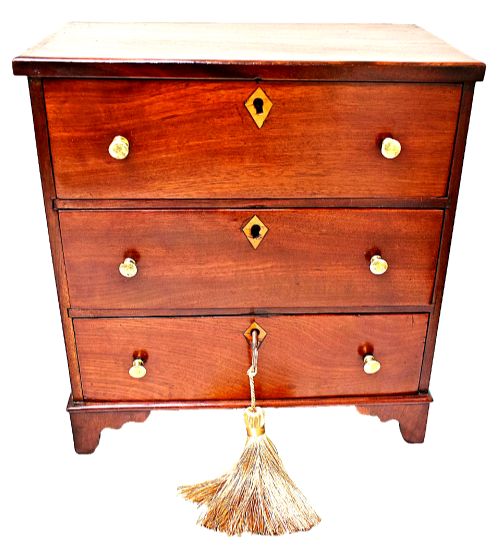
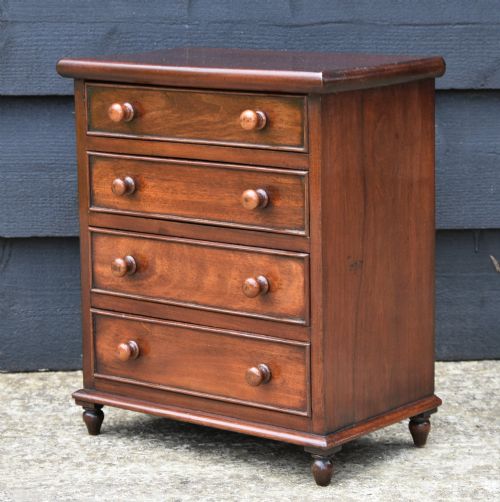
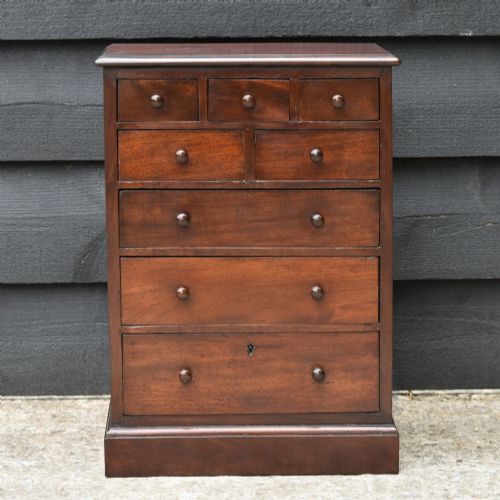
Desktop trinket drawers appear across various historical periods, including the Georgian, Victorian, and Edwardian eras. These miniature chests of drawers serve as compact solutions for storing small valuables, jewellery, and miscellaneous keepsakes.
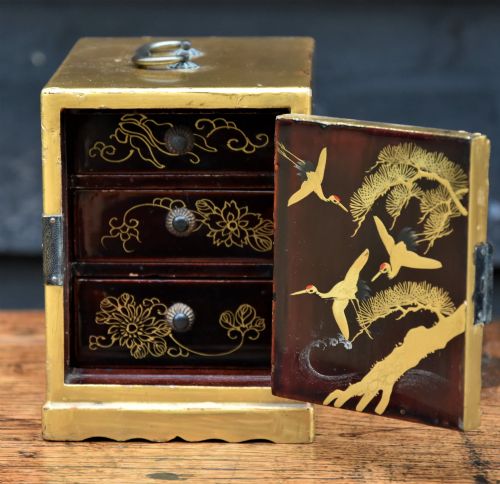
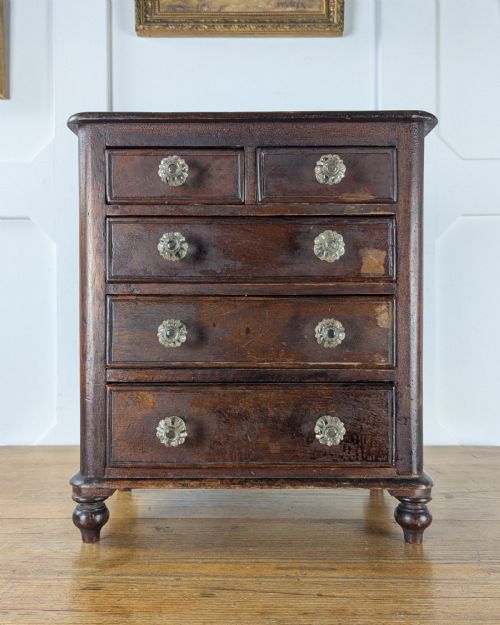
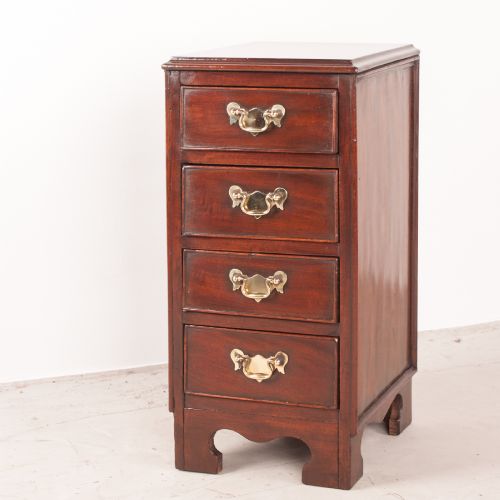
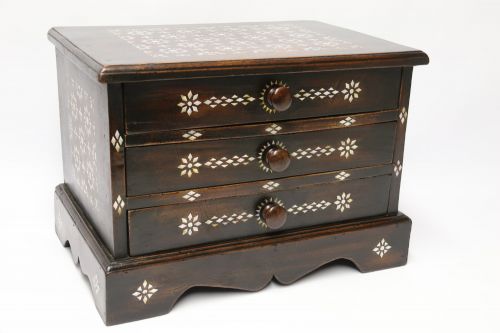
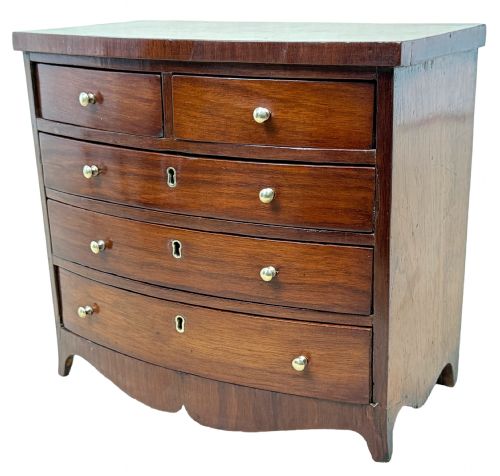
The pieces on this page take forms such as miniature chests of drawers, jewellery boxes, collector chests, and spice cabinets. Mahogany emerges as a dominant timber, alongside oak, fruitwood, elm, and hardwood.
Most examples originate from the nineteenth and eighteenth centuries, maintaining traditional cabinetmaking proportions on a small scale. Collectors encounter regional variations like Anglo-Indian and Dutch Colonial designs among the selection.
How they were made
Cabinetmakers constructed these miniature pieces using solid timbers such as mahogany, oak, and fruitwood, frequently incorporating turned feet and bowfront shapes. Brass hardware often appears on handles and key escutcheons, providing functional contrast to the dark wood surfaces.
Inlaid details and specific patination develop on older examples from the eighteenth and nineteenth centuries through age and handling. Hardwood construction ensures durability for items intended to sit upon a desk or surface.
Desktop Trinket Drawers Retail Price Guide 2026
Typical asking prices for desktop trinket drawers among the pieces listed under this phrase on Sellingantiques today, from the lower quarter to the upper quarter. They describe what is for sale here now, not the wider market.
A tiny elm box masquerades as a full chest of drawers, complete with centuries of accumulated character.
What varies in quality
The standard of a miniature chest rests upon the crispness of its proportions and the choice of timber figure. Finer examples display balanced drawer arrangements and careful attention to secondary woods.
Surface finish and natural patination distinguish superior pieces from standard workshop output. Subtle decorative elements like string inlay or well-turned feet elevate the character of the object.
The Desktop Trinket Drawers Glossary
- Bowfront
- A convex curved front facade typical of certain miniature chests. This shaping requires skilled woodworking to ensure the small drawers operate smoothly.
- Patina
- The surface sheen and mellowing acquired by wood over centuries of use. It reflects the history and handling of the object.
- Apprentice piece
- A small cabinet made to demonstrate a craftsman's skill to a guild. These items share construction methods with full-scale furniture.
- Escutcheon
- A protective plate surrounding a keyhole, usually formed from brass. It adds a decorative metallic accent to the drawer front.
Desktop Trinket Drawers: Frequently Asked Questions
What were desktop trinket drawers used for?
These small chests stored precious personal items, rings, and daily accessories close at hand. Their diminutive scale suited domestic desk spaces and dressing tables.
Cabinetmakers adapted larger furniture designs into miniature formats for convenient desktop organisation.
How do I date a miniature chest?
Dating relies on timber selection, structural joinery, and stylistic details associated with periods like the Georgian or Victorian eras. Secondary woods and hardware styles provide further chronological clues.
Comparing construction traits with documented full-size furniture helps narrow the period of origin.
Where should I place mine?
Desktop trinket drawers sit comfortably on writing desks, sideboards, or dressing tables where small items collect. Their compact footprint requires minimal surface area.
Keeping them away from direct heat sources protects the antique wood and finish.
What is an apprentice piece?
An apprentice piece is a miniature item created by a woodworker in training to prove mastery of specific techniques. These objects replicate full-sized furniture accurately.
They demonstrate the same dovetailing and turning skills found in larger period wardrobes and chests.