




Desk Weather Station
A desk weather station brings together essential meteorological instruments and timepieces in one handsome casing, offering both practical utility and period character for the desktop.
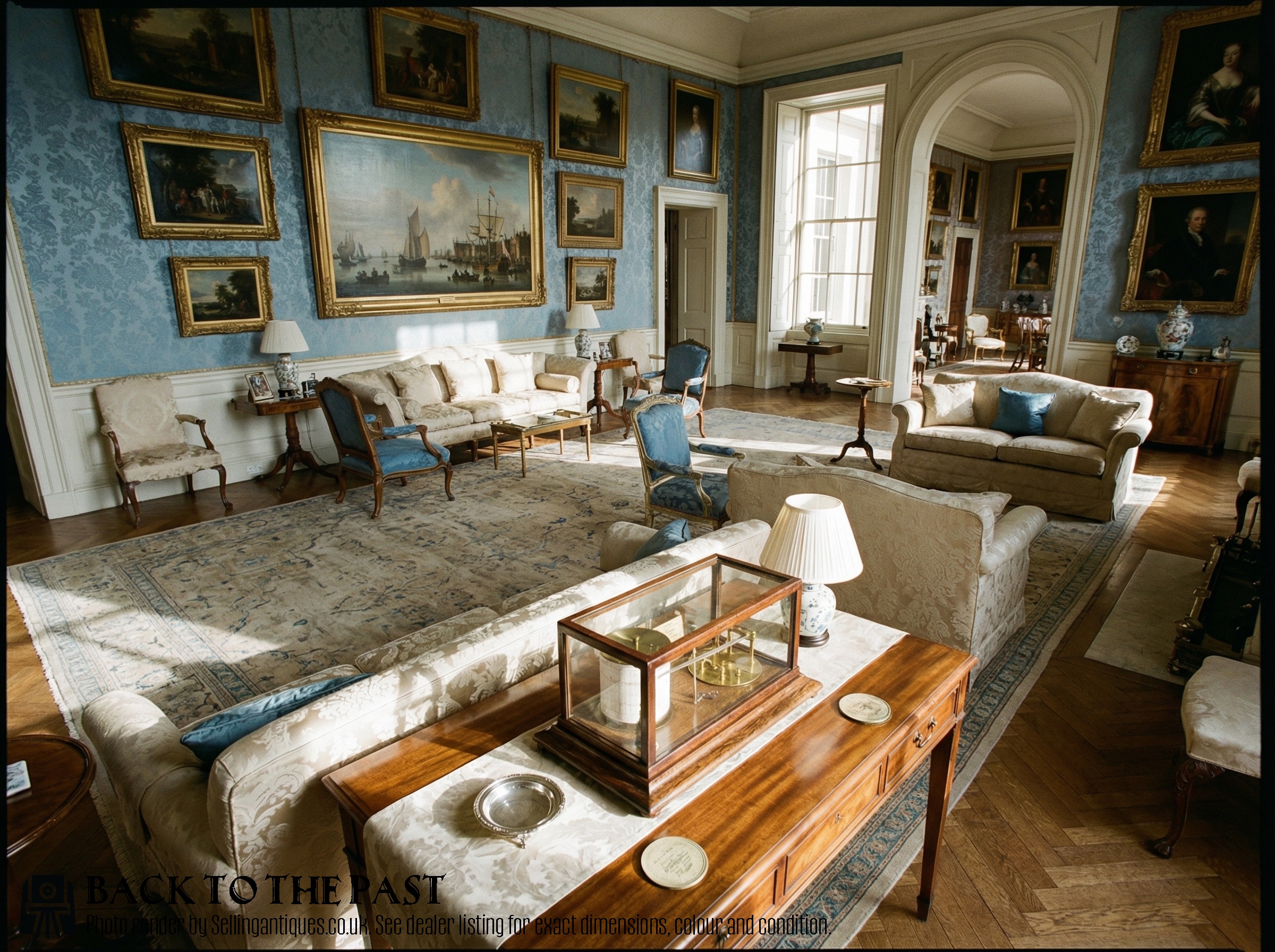
Desk Weather Station
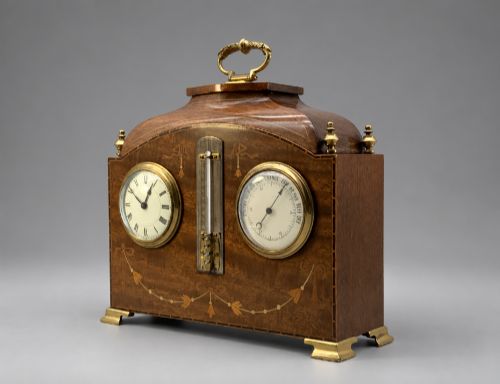
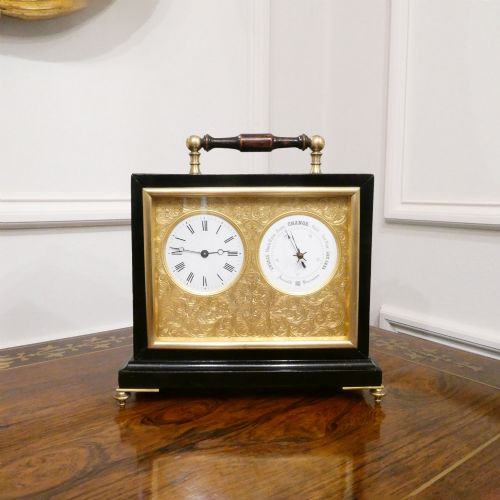
When you search for a desk weather station, you are looking at practical desktop instruments that combine timekeeping with meteorological recording, most commonly encountered as combined mantel clocks and barometers, or complete compendiums from the Victorian, Edwardian, and Art Deco periods.
The versions you are most likely to meet on this page span the late nineteenth century through to the nineteen-thirties, taking the form of desk clocks, barometers, thermometers, and complete weather stations housed in timber cases or metal frames.
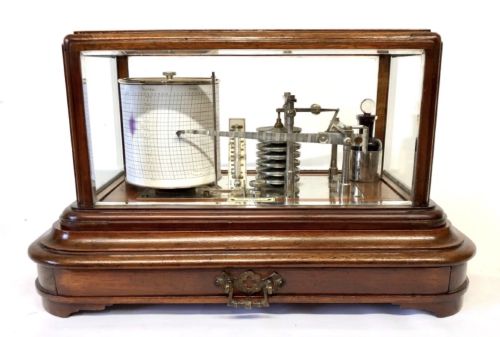
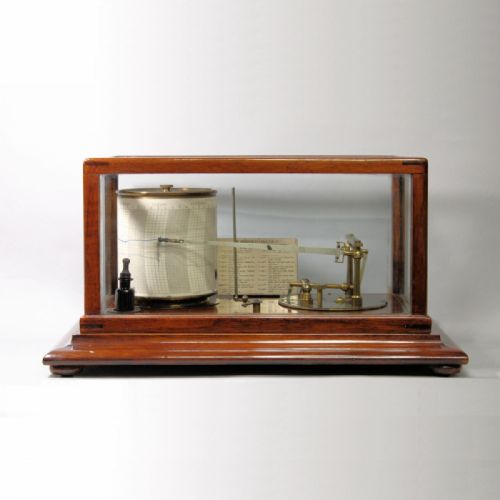
Makers and origins vary across these examples, ranging from English oak and mahogany barographs to Swiss brass desk instruments and gilt and silvered bronze pieces styled with Chinoiserie motifs.
Materials and construction
These instruments rely on traditional cabinetmaking and metalworking techniques, utilising solid hardwoods like mahogany and oak, alongside ebonised wood and onyx for the structural cases.
The mechanical elements incorporate brass, steel, and glass within five-glass cases or bevelled viewing windows, while dials frequently feature enamel details and silvered or gilt bronze work.
Desk Weather Station Retail Price Guide 2026
Typical asking prices for desk weather station among the pieces listed under this phrase on Sellingantiques today, from the lower quarter to the upper quarter. They describe what is for sale here now, not the wider market.
Listings feature pieces spanning the Victorian and Edwardian eras, through to nineteen-thirty Art Deco designs in mahogany, oak, and onyx.
Distinctions in quality
Quality across these instruments rests in the heft and finish of the materials, separating robust architectural oak and finely figured mahogany housings from simpler constructions.
The calibre of the mechanical movements and the precision of the barometer or thermometer fittings dictate the standard, alongside the crispness of any enamel dials and the clarity of the glass panels.
GAUPP & CO HONGKONG & SINGAPORE·R Fuess·SHORT & MASON LIMITED·Imhof
The Desk Weather Station Glossary
- Barograph
- An self-recording barometer that plots atmospheric pressure over time on a revolving drum. It usually sits within a glazed wooden case.
- Compendium
- A desk set uniting multiple instruments, such as a clock, barometer, and thermometer, in a single integrated housing.
- Ebonised
- Wood treated to imitate ebony, giving a deep black finish frequently seen on nineteenth-century desk pieces.
- Five-glass case
- A protective glass-panelled timber enclosure that allows the internal mechanism of a barograph to be viewed from all sides.
- Chinoiserie
- A decorative style reflecting European interpretations of Chinese artistic traditions, often applied to the metalwork or finish of desk accessories.
Desk Weather Station: Frequently Asked Questions
Where should I place a weather station?
These pieces suit studies, libraries, and hallways where stable room temperatures allow the barometer and thermometer to function accurately away from direct heat sources.
Ensure the surface is level so that pendulum or mechanical components operate without restriction.
How do I date an oak weather station?
Dating relies upon examining the timber grain, the style of the case architecture - such as Edwardian or Art Deco lines - and the method of construction used on the backboards and joints.
Makers' signatures or patent marks stamped onto the metal bezels also provide firm chronological markers.
Do barometers need calibration?
Aneroid barometers often require minor adjustment using the rear regulating screw to match known local barometric pressure readings for your specific altitude.
Gentle calibration ensures the needle responds accurately to upcoming weather shifts.