


Demi Lune Wall Table
A demi lune wall table brings half-circle grace to narrow spaces, standing flush against the wall as a console or side table.
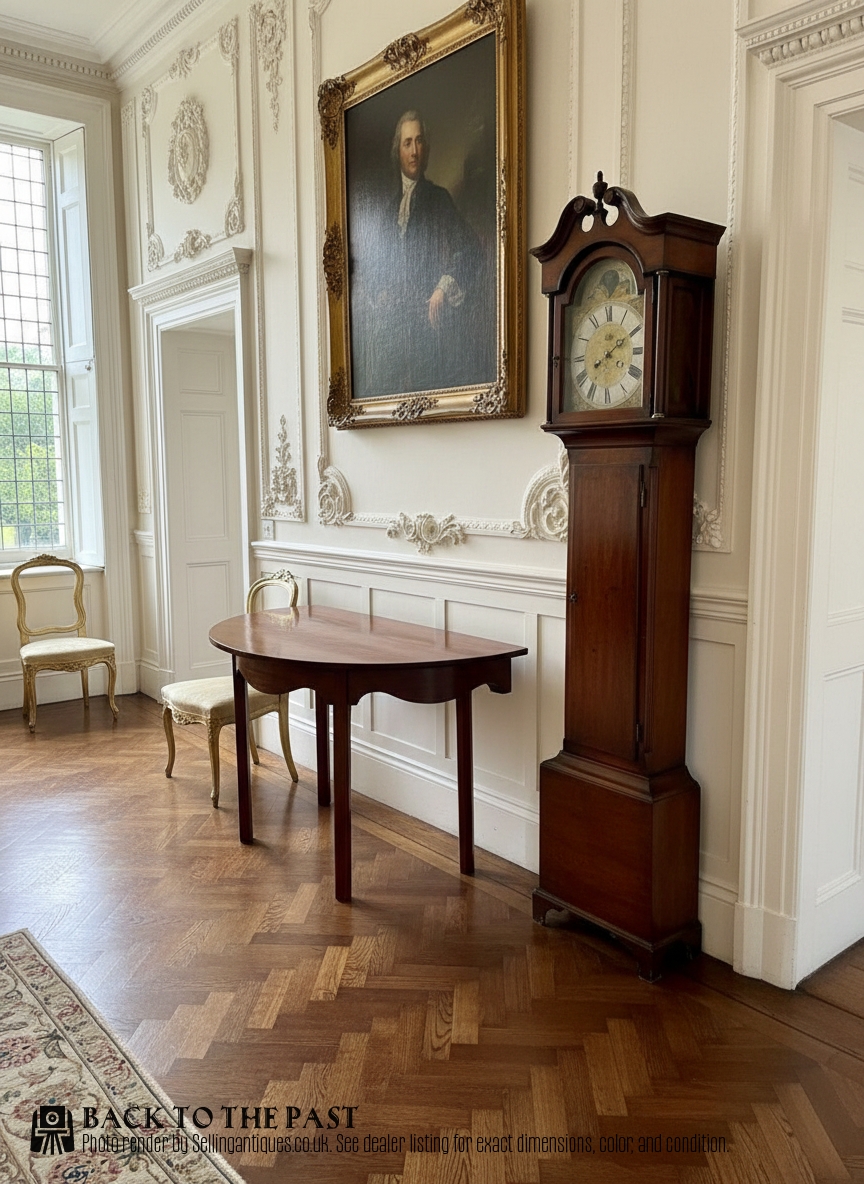
Demi Lune Wall Table
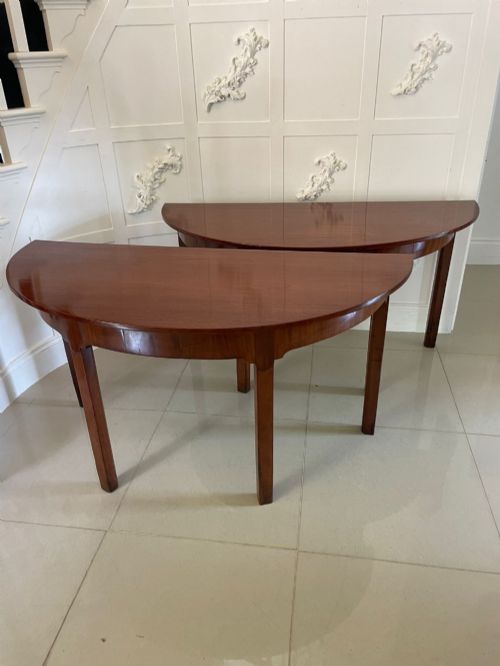
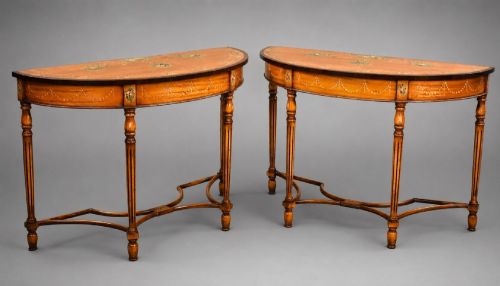
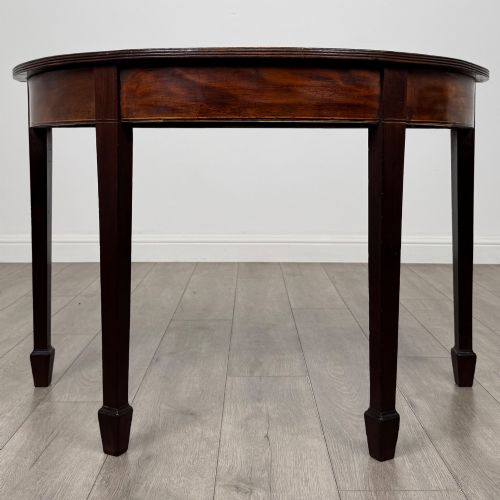
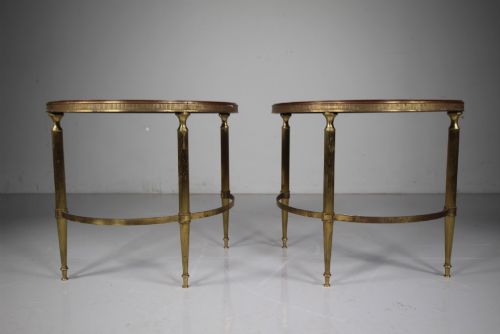
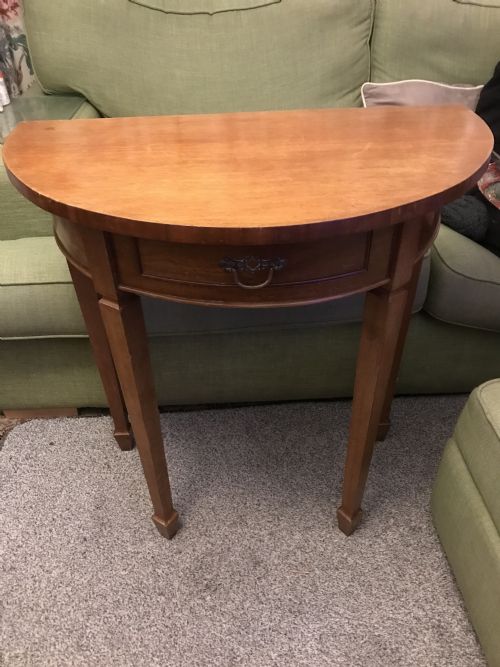
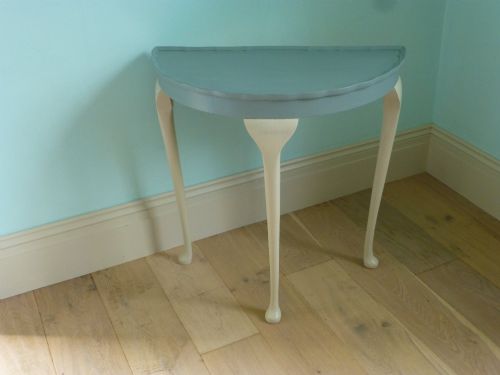
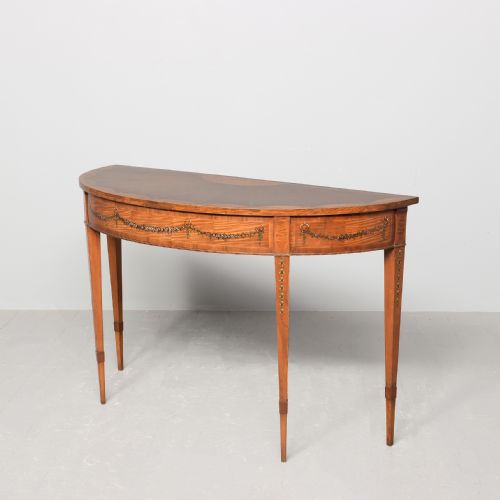
A demi lune wall table takes the form of a half-moon, designed to sit flat against a wall in hallways, drawing rooms and dining spaces. You will find these pieces appearing frequently as console tables, side tables and occasional tables across the selection.
The evidence spans formal 18th Century and George III pieces through to 19th Century Victorian examples and 1920 or 1930 revivals. Makers constructed these items in mahogany, satinwood, painted wood, giltwood, pine, oak and burr walnut, often drawing on Georgian, Regency, Louis XVI, Gustavian and Scandinavian Country traditions.
Materials and construction
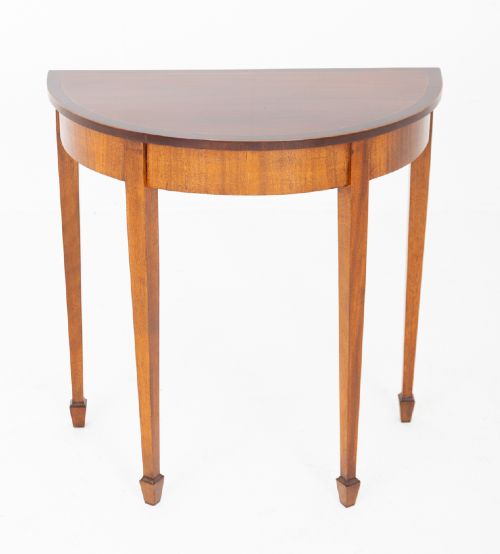
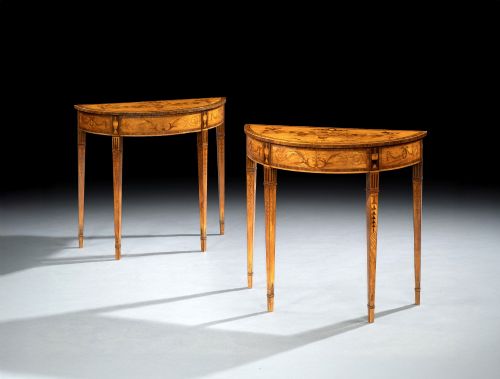
Cabinet makers utilised dense hardwoods like mahogany and satinwood for the structural frames and tabletops, often employing figured grains to create visual depth. Veneers and marquetry inlay added ornamental geometric or floral patterns to the semicircular surface.
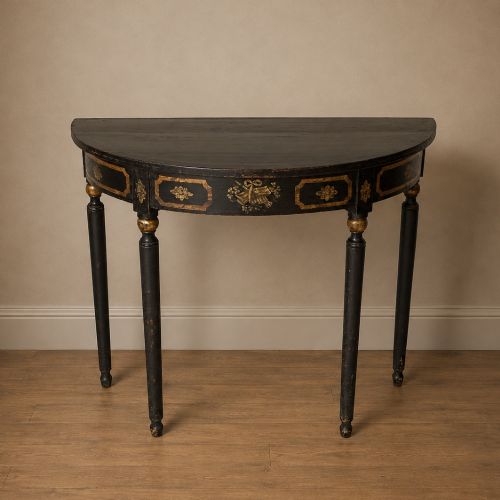
Painted finishes, parcel gilt details and hand-painted motifs appear across French, Swedish and English workshops. Makers shaped pine and oak for foundational carcass work, whilst brass fixtures provided functional accents on feet and drawers.
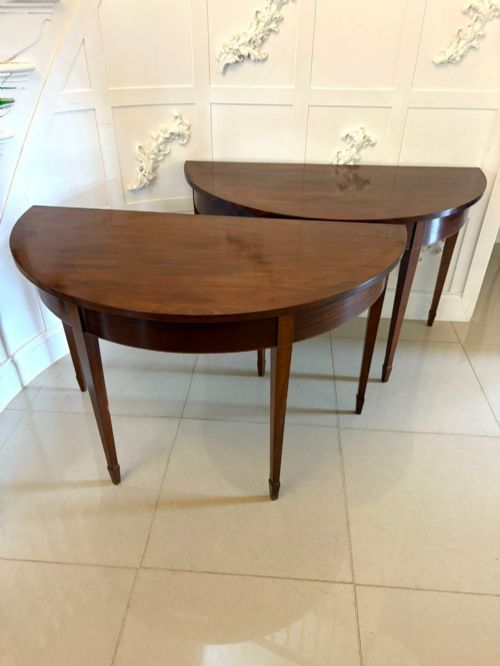
Several tables arrive in matching pairs, ready to flank a doorway or fireplace with geometric symmetry.
Distinctions in craftsmanship
Quality rests in the precision of the curved joinery and the selection of timber figure on the semicircular top. Superior examples display refined hand-painted decoration, crisp marquetry inlay and well-balanced proportions that anchor the piece firmly against the wall.
Later 20th century reproductions or simpler utilitarian items often rely on plain pine or heavier painted treatments with less attention to grain matching. The integration of original brass spade feet, drawers and period-appropriate hardware elevates the standing of a console within its style.
Maple and Co
The Demi Lune Wall Table Glossary
- Demi-lune
- French for half-moon, describing the semicircular plan of these tables. This shape allows the piece to fit snugly against a wall without protruding too far into a room.
- Marquetry
- The art of applying pieces of veneer to a structure to form decorative patterns. Craftsmen utilised contrasting woods to create intricate scenes or geometric borders on the tabletop.
- Console table
- A table supported by wall brackets or legs, designed to stand flat against a vertical surface. They often serve as decorative ledges in entrance halls and reception rooms.
- Parcel gilt
- Partly gilded or covered with gold leaf over paint or wood. This technique highlights carved details, mouldings and edges on decorative tables.
Demi Lune Wall Table: Frequently Asked Questions
How are demi lune tables supported?
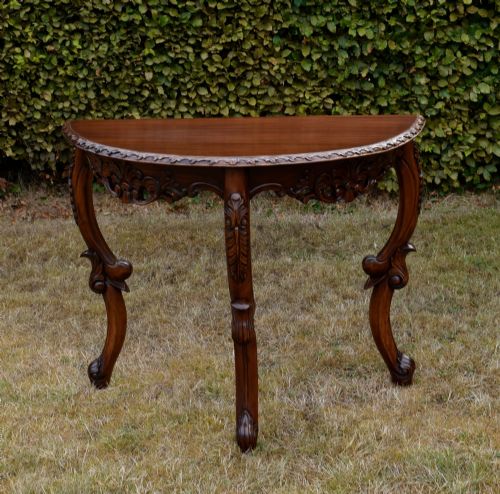
These tables typically stand on three or four legs, with the straight back edge placed directly against the wall for stability. Some historical variations rely on wall mounting brackets to hold the semicircular top securely in place.
Because of their flat rear edge, they do not require freestanding four-legged balancing in the middle of a room. This makes them practical for circulation spaces where floor area is at a premium.
Where should I place a demi lune table?
They suit hallways, corridors and entrance spaces where a full-depth rectangular table would obstruct foot traffic. Their shallow profile allows them to sit beneath mirrors or paintings without dominating the room.
Living rooms and dining areas also accommodate these consoles well, often serving as serving surfaces or display ledges for lamps and decorative objects.
How do I distinguish George III tables?
George III pieces often feature figured mahogany, intricate satinwood marquetry and tapered legs, sometimes ending in spade feet. The proportions tend to be refined, reflecting the neoclassical tastes of the late eighteenth century.
Construction methods from this era involve traditional hand-cut joinery and native hardwoods. Comparing the carcass timber and secondary woods helps confirm the period of manufacture.
What is the difference between painted and wood finishes?
Wood finishes showcase the natural grain of materials like mahogany, walnut and satinwood through polishing and varnishing. Painted finishes employ pigments, sometimes with gilt highlights or hand-painted motifs, as seen in Swedish and French traditions.
Painted tables bring a lighter, decorative presence to an interior compared to the deep, warm tones of polished timber furniture.