






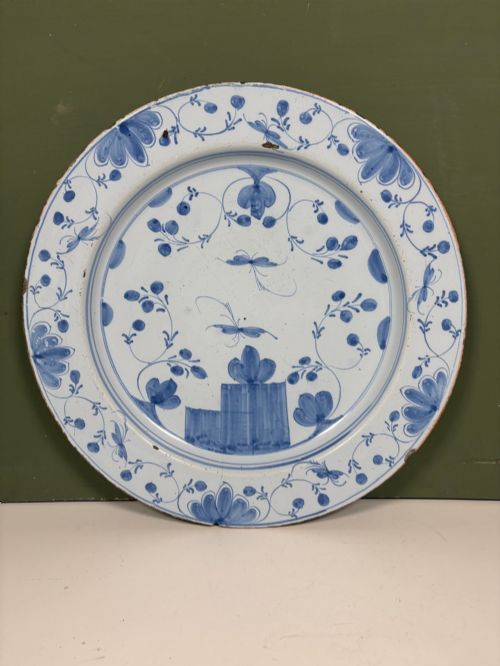


Delftware Display Charger
These delftware display charger pieces offer bold hand-painted wall presence, bringing centuries of tin-glazed earthenware history straight into your room.
Delftware Display Charger
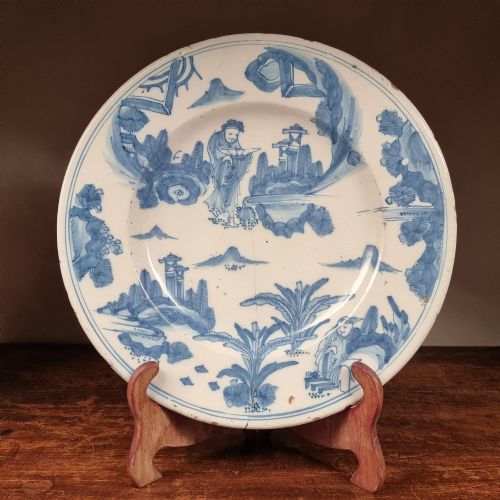
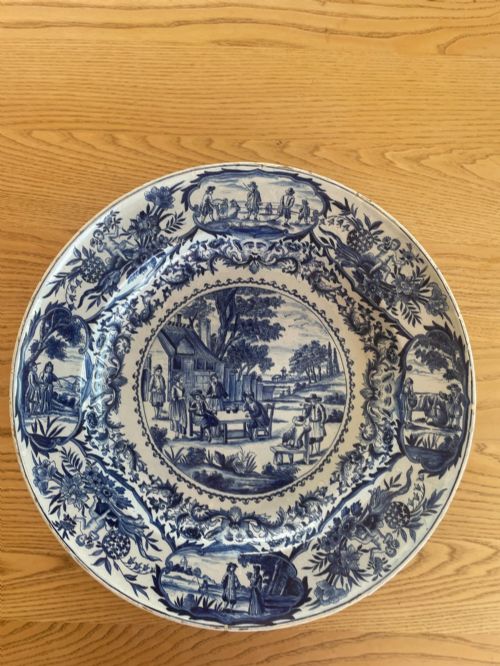
A delftware display charger represents a wide tin-glazed earthenware plate intended principally for wall hanging or cabinet display rather than everyday dining use. You will frequently encounter 18th century examples alongside earlier 17th century pieces and later 19th century interpretations.
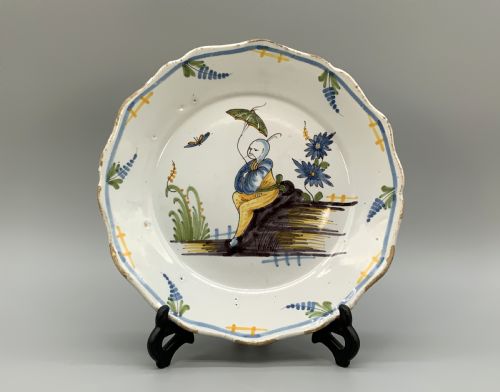
The forms span large decorative chargers, lobed dishes, and smaller plates featuring distinct circular profiles. Origin variations cover English workshops, Dutch centres, and French faience production.
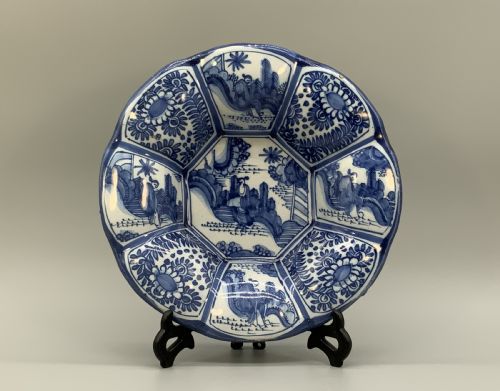
Motive designs range from blue and white Chinese-inspired Kraak patterns to polychrome floral arrangements and manganese or yellow geometric schemes. These large wall dishes command visual space through generous diameters and saturated pigments.
Materials and construction methods
Potters shaped local earthenware clay into broad plates before applying an opaque white tin glaze that created a smooth surface for painting. Cobalt pigment, manganese, and polychrome oxides were then brushed directly onto the raw glaze before firing.
Makers utilised grand feu techniques to fuse the pigments and tin glaze during the high-temperature kiln process. This method produced characteristic tonal depths across Dutch, English, and French earthenware.
Delftware Display Charger Retail Price Guide 2026
Typical asking prices for delftware display charger among the pieces listed under this phrase on Sellingantiques today, from the lower quarter to the upper quarter. They describe what is for sale here now, not the wider market.
Some chargers feature manganese purple cows that apparently decided blue was far too ordinary for seventeenth-century pastures.
Assessing quality in tin-glazed earthenware
Quality rests upon the crispness of the hand-painted brushwork and the stability of the tin glaze across the broad surface of the charger. Confident, fluid floral or Chinoiserie motifs separate superior pieces from stiffer, repetitive hand execution.
The brilliance of the white tin glaze and the rich saturation of cobalt or polychrome pigments dictate visual success. Superior examples maintain clear glaze adhesion without excessive chipping along the prominent plate rims.
De Witte Ster
The Delftware Display Charger Glossary
- Tin-Glazed Earthenware
- Earthenware pottery covered with a white opacified glaze containing tin oxide. This coating provides the bright white canvas characteristic of delftware.
- Charger
- A large decorative plate traditionally sized for wall display or sideboard presentation rather than table service. These substantial dishes measure well beyond standard dining plates.
- Kraak Style
- A decorative arrangement featuring compartmentalised panels inspired by imported Chinese porcelain. This aesthetic appears frequently on 17th century and later delftware pieces.
- Polychrome
- Decoration utilising multiple colours beyond traditional blue and white. These palettes often incorporate yellow, green, and manganese pigments.
- Grand Feu
- A high-temperature kiln firing technique used to set pigments directly into the raw tin glaze. This method produces durable, integrated surface colours.
Delftware Display Charger: Frequently Asked Questions
How were delftware display chargers used historically?
These large dishes served primarily as decorative wall ornaments or sideboard centerpieces in domestic interiors. Their generous size and painted designs showcased household wealth and artistic taste.
Owners mounted them on walls using pierced footrings or displayed them upright on furniture to highlight the hand-painted motifs.
How do I hang a heavy charger safely?
Displaying antique earthenware requires properly fitted wire spring hangers that distribute weight evenly around the rim. Avoid adhesives that attach directly to the unglazed base.
Ensure the wall fixing secures firmly into masonry or studs to support the substantial weight of these large ceramic pieces.
How do I tell English delft from Dutch delft?
English pieces often feature softer pinkish or buff earthenware bodies beneath the tin glaze, whereas Dutch examples frequently display lighter yellowish or cream fabrics. Glaze thickness and cobalt tone also provide clues.
Specific palette choices, such as Lambeth polychrome styles, further point toward distinct English production centres.
What causes flaking on tin glaze?
Tin-glazed earthenware is susceptible to edge chipping because the soft clay body and glass-like surface react to environmental moisture and physical impacts. Minor rim losses occur frequently on pieces of great age.
Stable handling and stable room humidity help prevent further degradation of the historic glaze layer.