


Delft Blue Charger
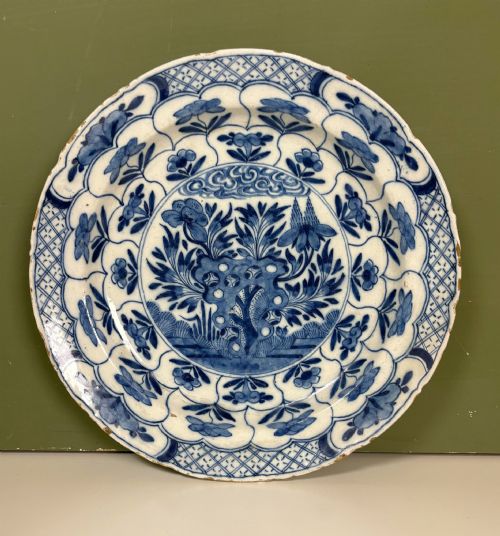
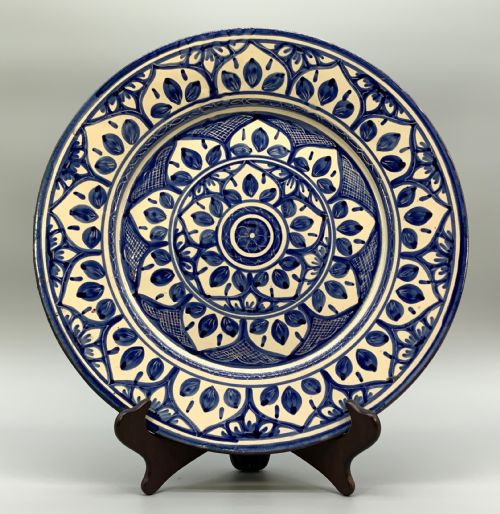
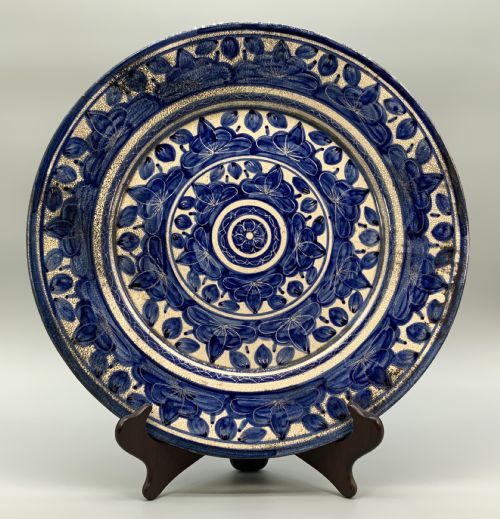
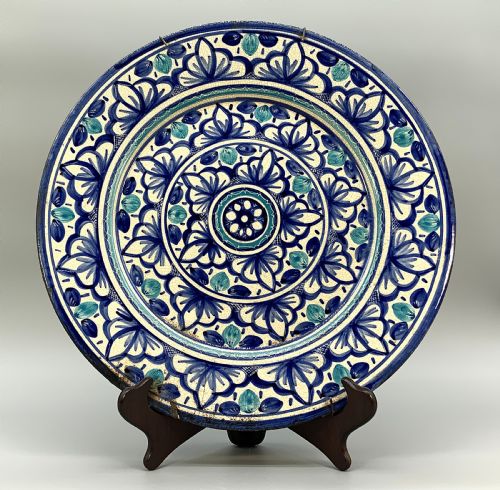
A delft blue charger brings seventeenth- and eighteenth-century domestic display into a room through wide tin-glazed earthenware surfaces painted in cobalt pigment.
Delft Blue Charger
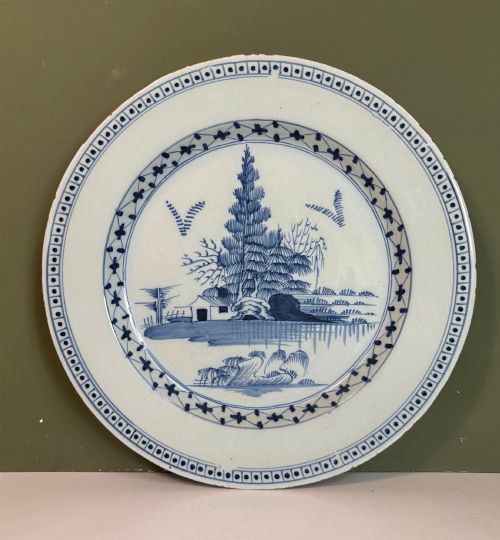
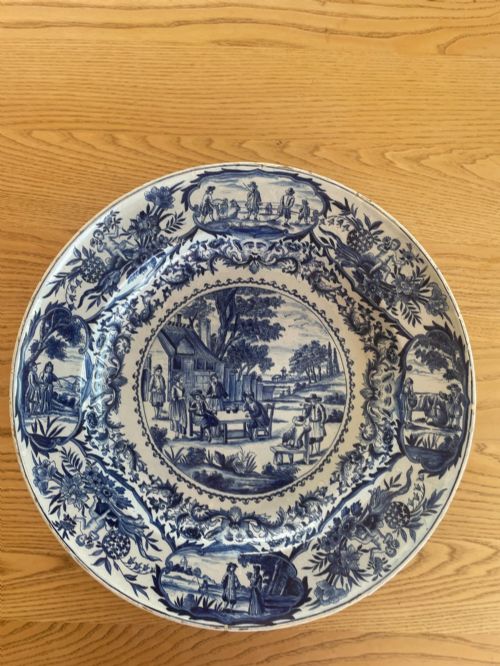
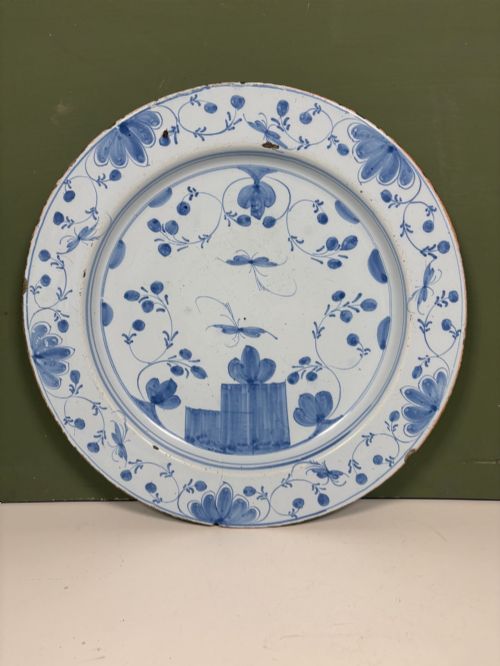
A delft blue charger is a broad decorative plate or dish produced primarily in Dutch, English and continental kilns during the seventeenth and eighteenth centuries. These large earthenware vessels served for formal wall hanging or table display rather than everyday dining.
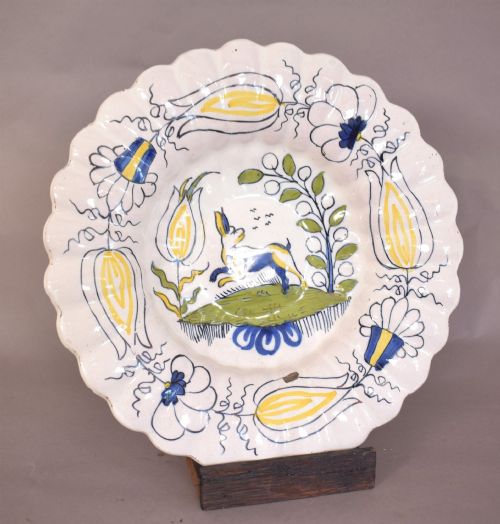
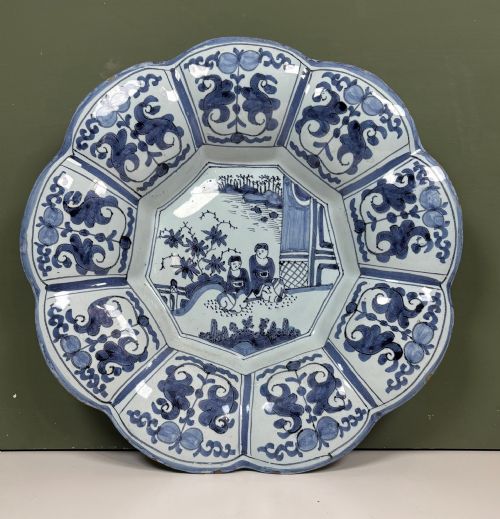
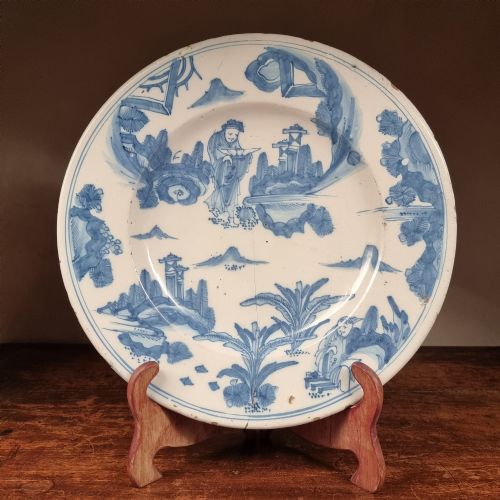
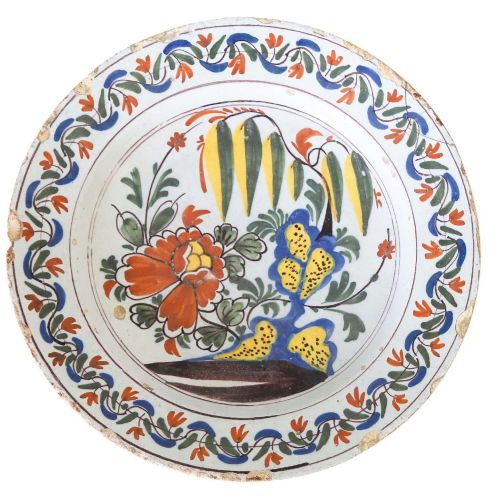
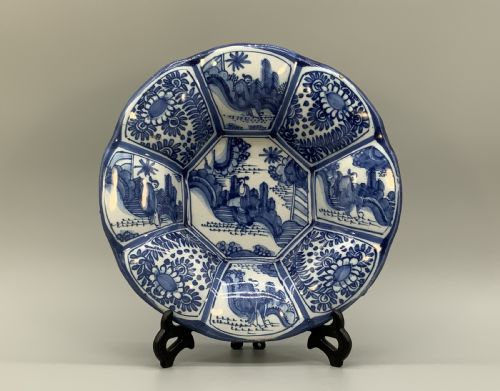
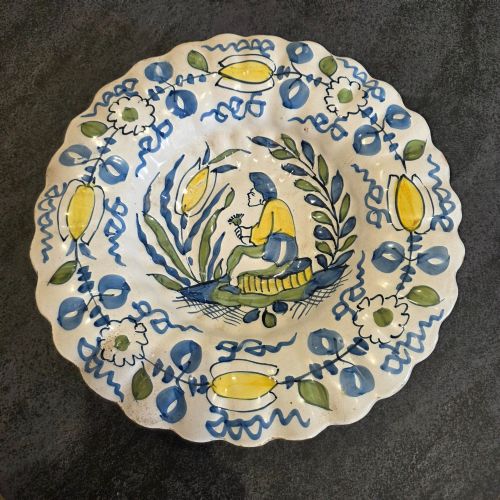
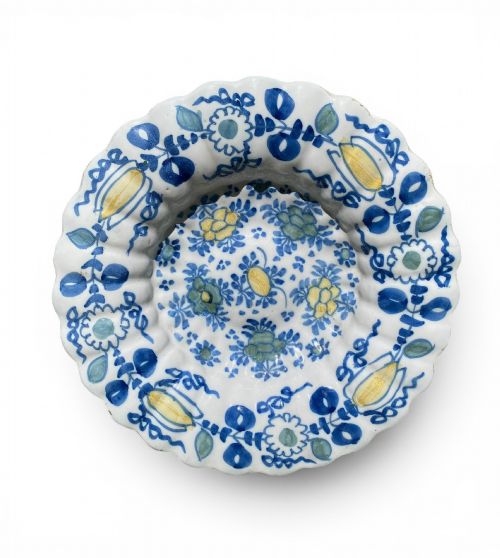
The versions most commonly met on this page date from the eighteenth century, featuring tin-glazed earthenware bodies decorated in cobalt blue and occasional polychrome pigments. Forms range from simple circular chargers to lobed dishes, barber's bowls and marriage plates.
The style absorbs influences from imported Kraak porcelain alongside domestic Dutch Baroque and English provincial traditions. Surface patterns frequently depict floral arrangements, birds, chrysanthemums and Chinoiserie landscapes rendered by hand.
How they were made
Makers shaped earthenware bodies from local clays, which were then fired before receiving an opaque white tin glaze. This tin-glaze layer provided a smooth, absorbent white ground suitable for direct brushwork.
Painters applied cobalt pigment and metallic oxides directly onto the unfired or raw glaze, which absorbed the liquid colour permanently during the subsequent kiln firing. This technique produced the characteristic blurred cobalt borders and deep blue tones associated with tin-glazed earthenware.
Listings feature earthenware bodies decorated with cobalt pigment spanning the seventeenth, eighteenth and nineteenth centuries.
What varies in quality
The clarity and fluidity of the hand-painted brushwork separate superior chargers from simpler workshop output. Confident floral motifs, crisp Chinoiserie detailing and well-balanced compositions indicate skilled painting. Thick, opaque tin glazes with minimal crawling or pooling also distinguish better examples.
Condition and scale further differentiate the range, as larger chargers and intact lobed dishes present greater potting challenges. Surviving pieces that retain their original glaze lustre and structural integrity without extensive restoration command higher regard among collectors.
De Porceleyne Claeuw factory·Van Genden
The Delft Blue Charger Glossary
- Tin-Glazed Earthenware
- Pottery covered with a lead glaze made opaque by the addition of tin oxide. This white surface serves as a canvas for painted cobalt decoration.
- Cobalt Pigment
- A metallic oxide used under the glaze to produce deep blue painting. It withstands high kiln temperatures without losing its intense colour.
- Charger
- A large decorative plate traditionally used for display on sideboards or walls rather than for serving food. These expansive vessels offer generous spaces for painted narratives.
- Kraak Style
- A Chinese porcelain aesthetic characterised by segmented panel borders and central landscape or floral motifs. Seventeenth-century European delftware makers frequently copied this arrangement.
- Polychrome
- Decoration employing multiple colours such as red, green, yellow and blue. In delftware, these hues were often applied alongside the primary cobalt pigment.
Delft Blue Charger: Frequently Asked Questions
What is a delft blue charger?
A delft blue charger is a large earthenware plate covered in a white tin glaze and painted with cobalt blue designs. These substantial pieces were made for visual display in seventeenth- and eighteenth-century homes.
Craftsmen in England, the Netherlands and continental Europe produced them by hand, drawing inspiration from imported Asian porcelain as well as local tastes.
How were delft chargers displayed?
Historic households typically hung these large dishes on walls, placed them on sideboards or stood them on dresser shelves to catch the light. Their generous diameters made them ideal focal points for rooms.
Because the earthenware body and tin glaze are relatively soft, they were kept away from heavy everyday use and treated primarily as decorative ornaments.
How do I tell seventeenth-century pieces apart?
Seventeenth-century chargers often display heavier earthenware bodies and deeper profiles influenced by Kraak porcelain or early Dutch Baroque styles. The brushwork tends to be bold and expressive, reflecting the experimental nature of early tin-glaze production.
Later eighteenth-century examples frequently shift towards lighter bodies, more refined floral sprays, or English factory output featuring distinct cobalt shades and lighter glazes.
Can I hang an antique charger on the wall?
Many collectors display chargers using specialised, non-damaging wire wall hangers designed to distribute weight evenly across the rim and base. Ensuring the hanging hardware is secure protects the earthenware from accidental slips.
It is advisable to check that the wall fixings are robust and that the charger rests safely away from high-traffic zones or vibrations.