
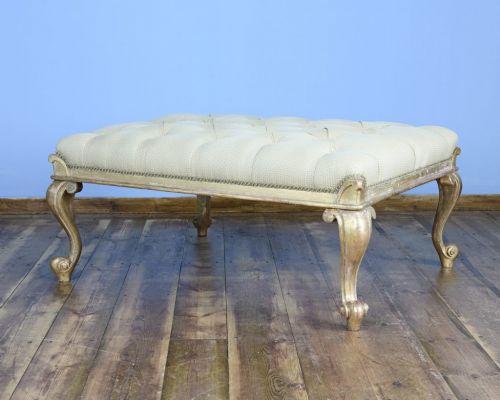


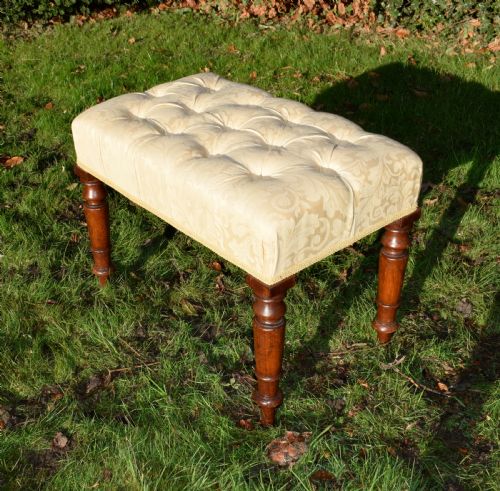


Deep Buttoned Bench
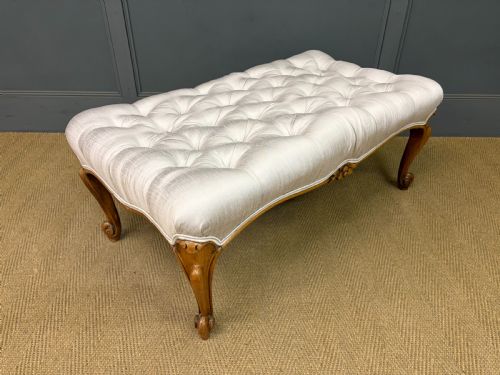
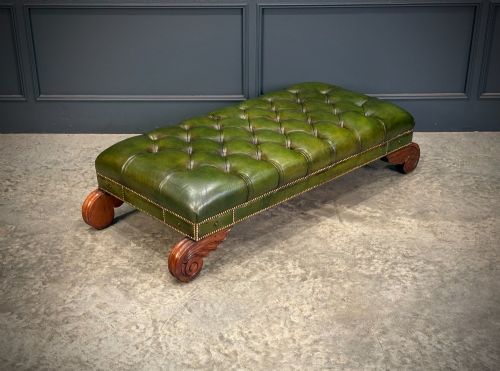
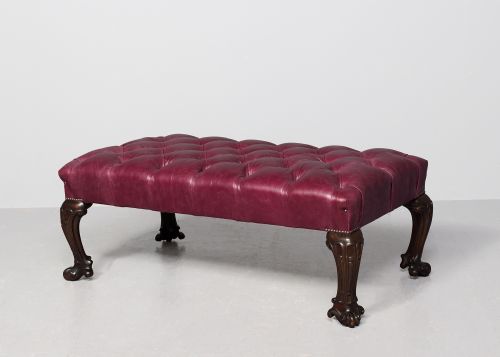
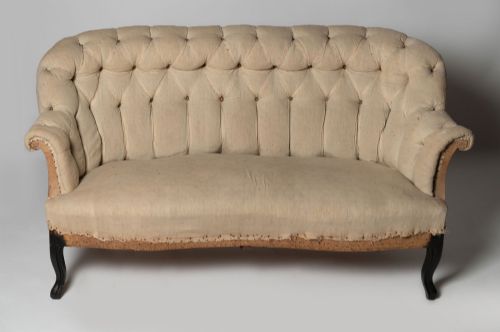
These deep buttoned bench forms combine structural timber with tactile hide and tufted upholstery.
Deep Buttoned Bench
A deep buttoned bench brings together low seating forms such as footstools, ottomans, window seats and club fenders found across Victorian, Regency and 19th-century periods. These pieces are chosen for domestic rooms to provide supplementary seating or footrests with characteristic tufted upholstery.
The selections encountered here range from mahogany-framed footstools and rosewood stools to leather ottomans and brass club fenders. Buyers are most likely to meet Victorian and 19th-century examples featuring buttoned leather or fabric upholstery.
Object variations span grand scale William IV pieces, pairs of long stools, and country house window seats. Each variation retains the defining buttoned padding and substantial frame construction typical of traditional English and Georgian-style seating.
Materials and construction
Frames are constructed from dense timbers including mahogany, rosewood, and general hardwood alongside structural brass components found in club fenders. These materials provide the rigid skeletal support necessary to withstand the tension applied by deep tufting.
Upholstery relies on leather, red hide, fabric, damask, and upholstery fabric drawn tightly over padding and secured with deep buttons. Brass studs frequently accent the leather edges on traditional stools and ottomans.
Joinery methods of the period tie the wooden legs and underframes together, often incorporating castors for mobility on larger Victorian and Regency examples.
Snooker hall pub benches rub shoulders with delicate window seats, proving that Victorian gentlemen and resting players required identical buttoned comfort.
Assessing quality and proportion
Quality reveals itself in the timber selection and the precision of the frame joinery beneath the upholstery. Dense hardwoods like rosewood and figured mahogany indicate superior primary materials compared to generic secondary woods.
The execution of the buttoning and the grade of the leather or fabric define the finish of the piece. Uniform tufting tension and durable hide that shows natural patination separate finer workshop productions from simpler utilitarian items.
James Shoolbred
The Deep Buttoned Bench Glossary
- Deep buttoned
- Upholstery technique where buttons are pulled deep into the padding in a geometric pattern, creating characteristic folds and secure tension. This method defines the primary surface texture of the bench.
- Club fender
- Low seating structure built around a fireplace, typically featuring a brass frame and a leather-upholstered top. It provides hearthside seating.
- Ottoman
- Upholstered seat without arms or a back, frequently designed with internal storage or built on a large scale. These pieces function as central room furnishings.
- Window seat
- Long, narrow bench designed to fit within a recess or beneath a window. These seats often feature mahogany frames and buttoned leather.
- Parcel gilt
- Partial application of gold leaf to specific carved details on a wooden frame. This decorative treatment highlights particular portions of the woodwork.
Deep Buttoned Bench: Frequently Asked Questions
How are deep buttoned benches used at home?
These pieces serve as footrests, end-of-bed ottomans, or supplementary seating in living spaces and hallways. Their low profiles allow them to sit comfortably in front of sofas or beneath windows without obstructing views.
Versions incorporating brass fender bases also position directly around fireplace hearths to offer firm, low-level seating.
What periods do these benches date from?
The listings span the Regency, William IV, and Victorian eras, alongside general 19th-century workshop productions. Construction details and wood choices typically align with these established periods.
Victorian and mid-19th-century examples make up the largest proportion of available seating.
How do I care for antique leather upholstery?
Leather surfaces benefit from regular dusting and occasional treatment with appropriate leather dressings to maintain flexibility. Avoiding direct sunlight prevents the hide from drying out.
Preserving the natural patination involves gentle cleaning rather than heavy chemical restoration.