
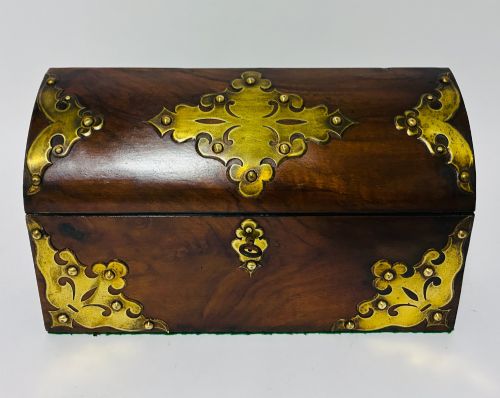
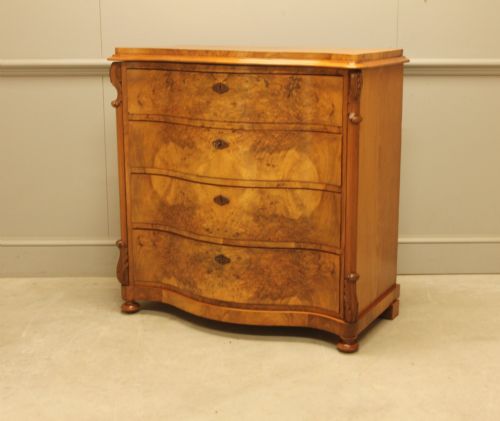
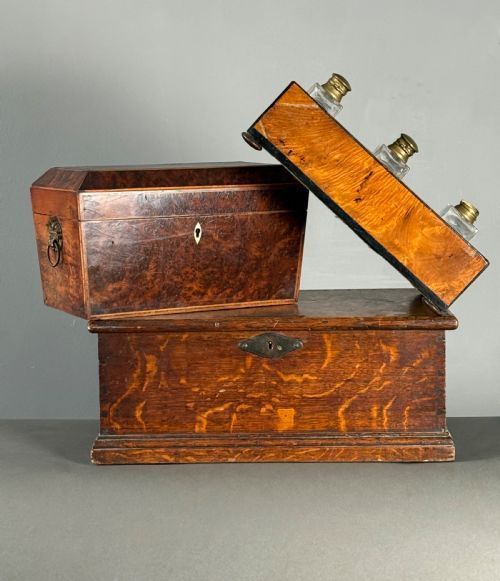

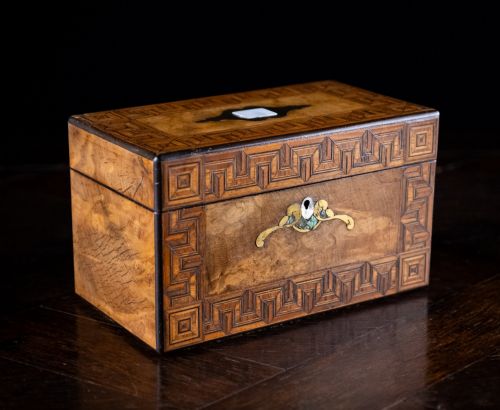


Decorative Walnut Chest
These pieces of decorative walnut chest span centuries of craftsmanship, offering timeless storage and display options for any interior.
Decorative Walnut Chest
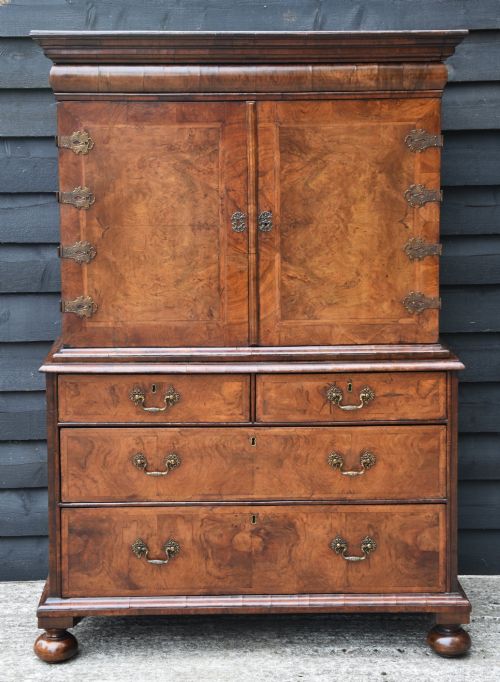
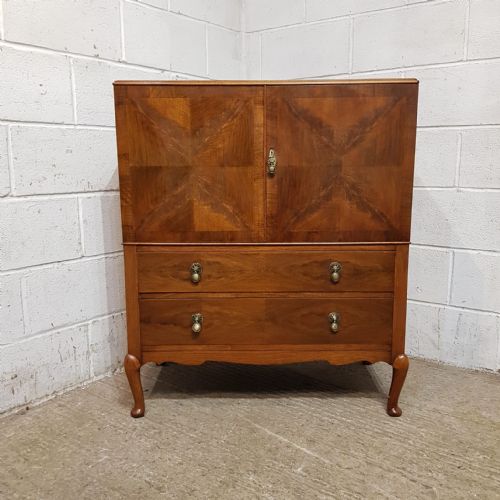
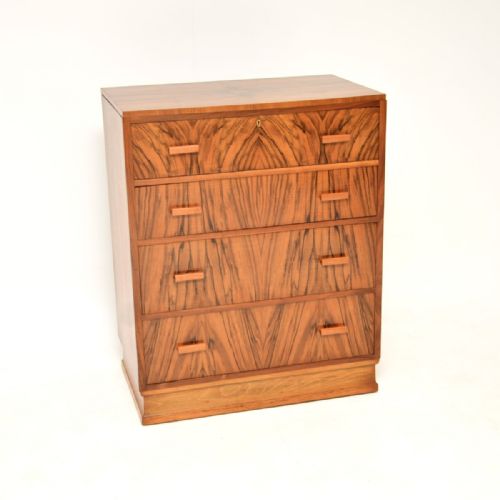
A decorative walnut chest encompasses a diverse range of forms, from compact tea caddies and trinket boxes to substantial cabinets on chests, tallboys, and drawers.
The selection on this page stretches from the seventeenth century through the Georgian and Victorian eras up to Art Deco designs, representing periods such as William and Mary and the Gothic Revival.
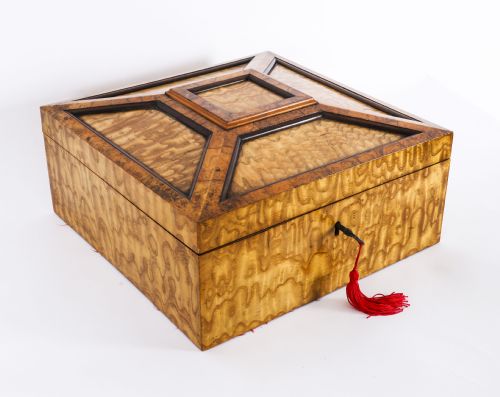
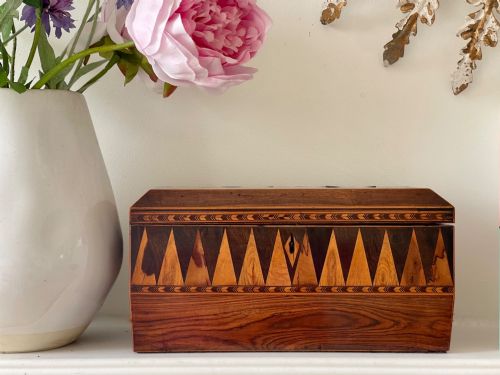
Smaller tabletop boxes and caddies appear frequently alongside larger case furniture, reflecting the versatile application of walnut across different domestic functions.
Materials and construction
Wood veneer, burr walnut, and solid timber form the primary structural and decorative surfaces, often paired with secondary woods like oak.
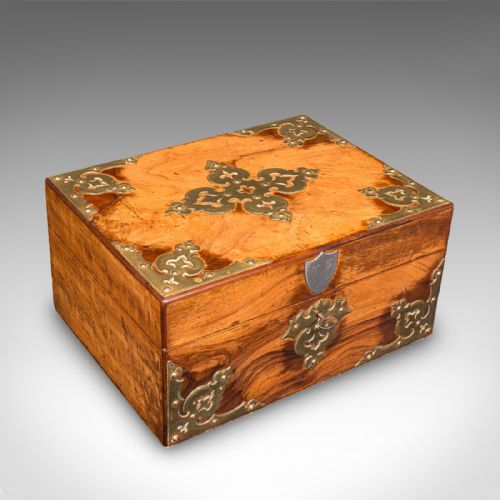
Craftsmen applied intricate details including brass mounts, boxwood, mother of pearl, bone, and parquetry or floral marquetry inlay.
Interior fittings and specialised mechanisms, such as those found in music boxes, dentist cabinets, and fitted tea caddies, demonstrate advanced period joinery.
The listings feature diverse forms spanning the 17th, 18th, and 19th centuries, utilising walnut, brass, glass, and intricate wood veneers.
Assessing quality and execution
Superior examples showcase exceptional figuring in the grain, particularly in burr walnut veneers, matched with precise, harmonious inlay work.
The sophistication of secondary materials, such as heavy brass hardware, fine mother of pearl, or detailed Tunbridge Ware, elevates a piece above standard utility.
Integrity of construction, preservation of original surfaces, and the complexity of internal compartments or fitted interiors distinguish the finest specimens.
The Decorative Walnut Chest Glossary
- Burr walnut
- A specialised wood grain obtained from the warted growths on walnut trees, prized for its swirling, highly decorative pattern.
- Parquetry
- A geometric mosaic of wood pieces used for decorative floors and box surfaces, creating dynamic visual patterns.
- Marquetry
- The art of applying pieces of veneer to a structure to form decorative patterns, often featuring floral designs.
- Tallboy
- A tall chest of drawers consisting of one chest placed on top of another, popular in eighteenth-century furniture design.
- Tea caddy
- A small box or chest designed to store loose tea leaves, often featuring internal compartments and lockable lids.
Decorative Walnut Chest: Frequently Asked Questions
How do I date a walnut chest?
Dating relies on examining the construction methods, secondary woods like oak, and stylings characteristic of periods such as William and Mary or Victorian revivalism.
Hardware, dovetailing, and the type of veneer also provide clear chronological markers for these pieces.
What were tea caddies used for?
Tea caddies served as secure containers for expensive tea leaves, often featuring lockable lids to protect the valuable contents.
Inside, lidded compartments kept different varieties separate, sometimes accompanied by small mixing bowls.
How should I clean walnut furniture?
Maintenance requires gentle dusting with a soft, dry cloth and avoiding harsh chemical polishes that can damage aged veneer.
Applying microcrystalline wax periodically helps nourish the timber and protect the historical surface finish.
What is a cabinet on chest?
A cabinet on chest is a substantial two-part storage furniture form where an upper display or shelving cabinet sits atop a lower drawer base.
This form originated in earlier centuries to house valuable possessions and showcase fine woodworking.