
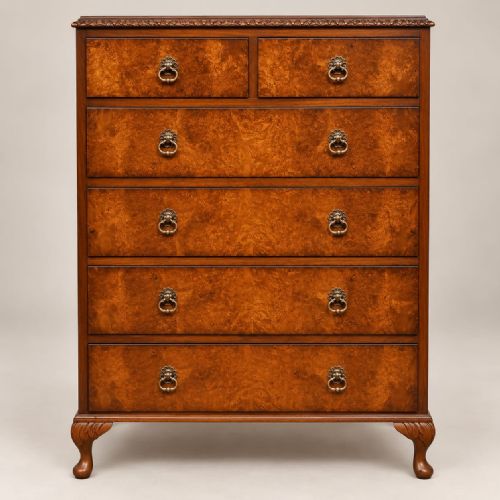
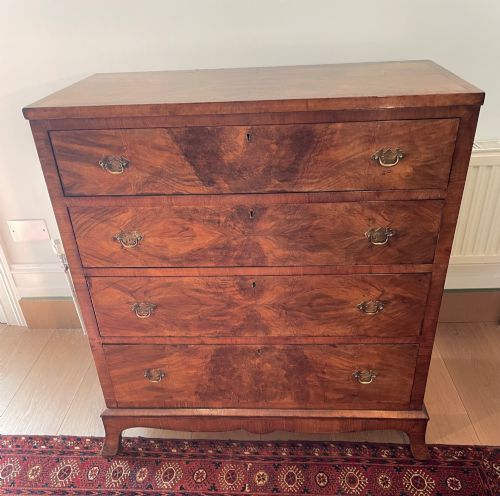
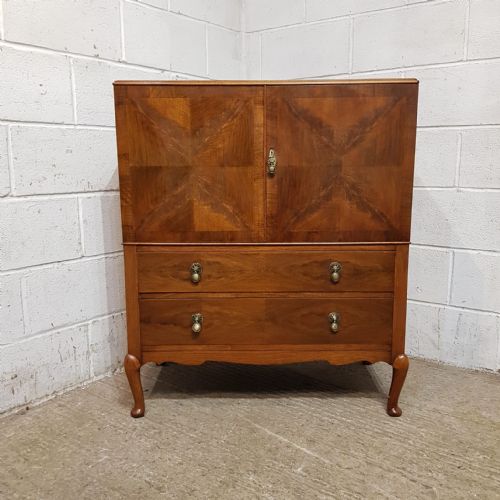


Queen Anne Revival Tallboy
These queen anne revival tallboy pieces are upright chests combining earlier architectural forms with twentieth-century cabinetmaking, offering serious storage capacity with refined proportions.
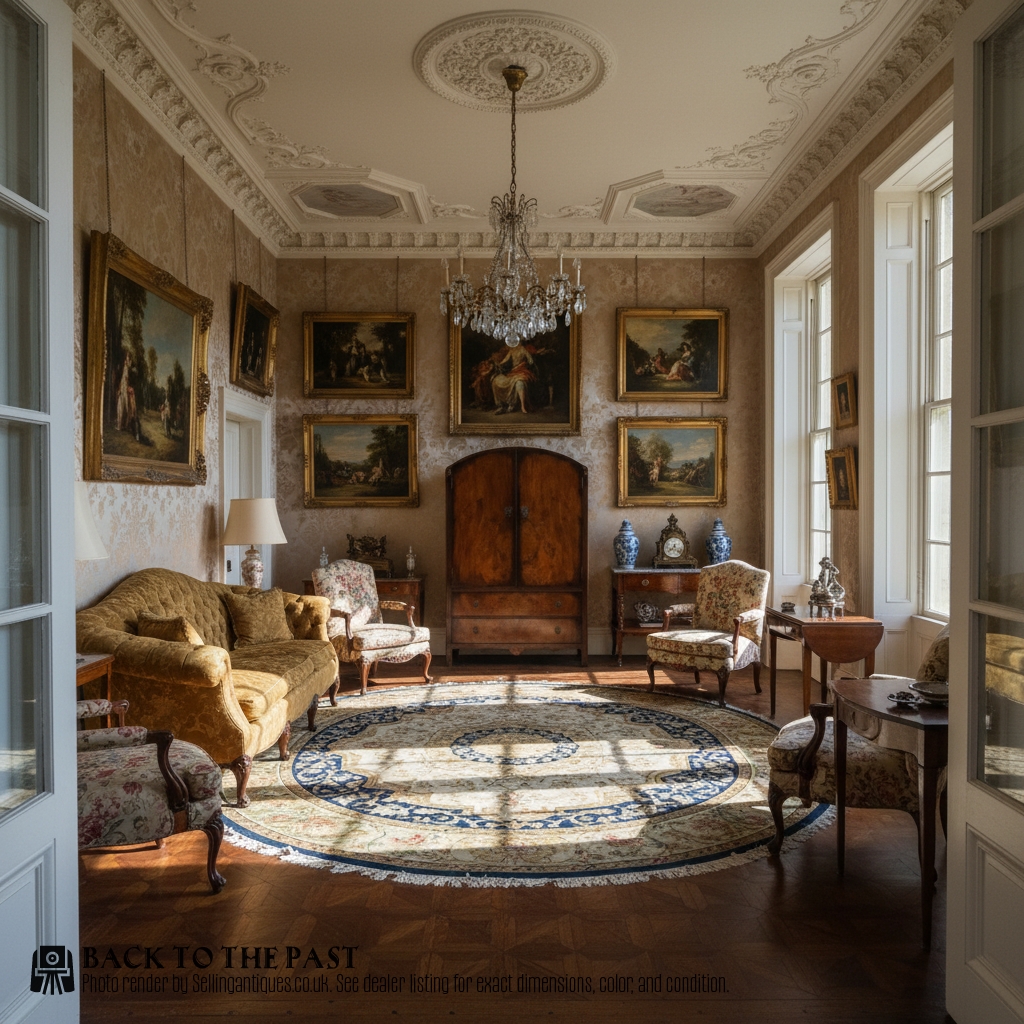
Queen Anne Revival Tallboy
When you search for a queen anne revival tallboy, you encounter upright storage furniture primarily built during the early twentieth century alongside Victorian examples. These pieces typically manifest as tall chests of drawers or chests on stands designed to occupy minimal floor space while providing maximum vertical capacity.
The prevailing style on this page is Queen Anne Revival and Georgian Revival, alongside George V and Art Deco iterations. You will meet pieces rendered in walnut, burr walnut veneer, mahogany, oak, and pine, reflecting the revivalist tastes of the 1910s, 1920s, and 1930s.
How they were made
Cabinetmakers utilised solid timbers alongside burr walnut veneer to create richly figured drawer fronts and carcases. Secondary woods such as pine and oak frequently formed the internal framing and drawer linings.
Brass hardware such as drop handles and escutcheons complemented the timber surfaces, while specialist joinery techniques secured bow fronts, block fronts, and traditional five-height drawer configurations.
Materials range from solid oak and mahogany to decorative burr walnut veneer and brass fittings.
What varies in quality
The distinction between tiers of quality rests primarily on the selection of timber veneers and the crispness of the revival detailing. Pieces featuring highly figured burr walnut exhibit superior visual depth compared to plain walnut or secondary woods.
Construction fidelity dictates longevity, with finer examples demonstrating meticulous attention to drawer tolerances, structural joinery, and the balanced grain alignment across the facade.
The Queen Anne Revival Tallboy Glossary
- Tallboy
- An upright chest of drawers, often consisting of one chest stacked upon another or built as a single tall unit. This form maximises vertical storage without demanding excessive floor space.
- Burr walnut
- A prized wood veneer obtained from the gnarled growths of walnut trees, displaying intricate, swirling grain patterns. Cabinetmakers applied this veneer to create highly decorative focal surfaces on revival furniture.
- Block front
- A cabinet front divided vertically into three panels, with the two outer panels projecting forward and the central panel recessed. This architectural treatment adds strong shadow lines and depth to the piece.
- Bow front
- A convex curved cabinet front that swells outward in the centre. This curved profile softens the vertical lines of a tall chest.
Queen Anne Revival Tallboy: Frequently Asked Questions
What is a tallboy?
A tallboy is a tall chest of drawers designed to hold substantial garments while taking up a compact footprint in a room. These upright forms traditionally combine multiple drawer tiers within a single tall carcase or a chest-on-stand construction.
In revival pieces, the tallboy format provides practical bedroom or dressing room storage with strong decorative presence derived from eighteenth-century design vocabulary.
How do I identify Queen Anne Revival style?
Queen Anne Revival furniture draws upon the distinct design characteristics of the early eighteenth century, reinterpreted by early twentieth-century cabinetmakers. Look for shaped facades, figured wood veneers, and traditional brass hardware.
These pieces often incorporate classic proportions and stylistic cues such as bow fronts or block fronts while retaining the cleaner construction standards of their actual manufacturing period.
Where should I place a tallboy?
A tallboy suits bedrooms, dressing rooms, or hallways where vertical storage is required but floor space is limited. Its height allows it to fit neatly against walls or within alcoves.
Ensure the piece has adequate clearance for opening drawers fully and consider placing it away from direct heat sources to protect walnut veneers and polished wood surfaces.