


Decorative Wall Hanging Tray
These decorative wall hanging tray examples bring striking metalwork and lacquer into a room, offering an immediate focal point.
Decorative Wall Hanging Tray
When you search for a decorative wall hanging tray, you are looking at substantial plates, chargers and dishes adapted for display upon a wall. The examples found here span the Georgian and Victorian eras through to the Arts and Crafts period, drawing on diverse stylistic traditions.
You are most likely to encounter large circular brass or copper chargers alongside japanned papier-mâché and lacquered serving trays. These objects cross boundaries between functional domestic items and purely ornamental wall art.
The origins stretch from British workshops to Anglo-Indian and Persian makers, showing how utilitarian vessels were frequently repurposed for interior display. Each piece brings a distinct texture and silhouette to vertical spaces.
Materials and construction
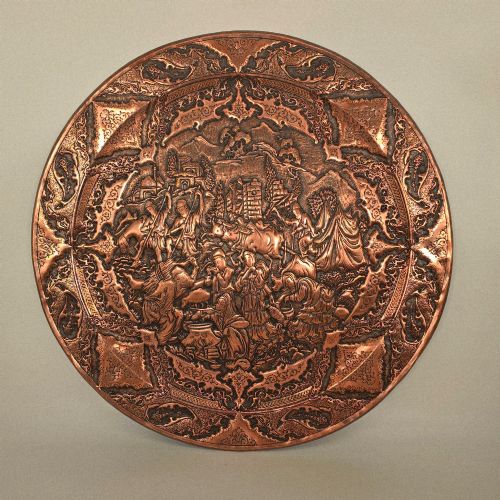
The physical construction relies heavily on beaten and embossed metals such as brass, copper and pewter, shaped into broad circular surfaces. Artisans worked these sheets using repoussé techniques to raise botanical motifs, foliage and narrative scenes from the reverse.
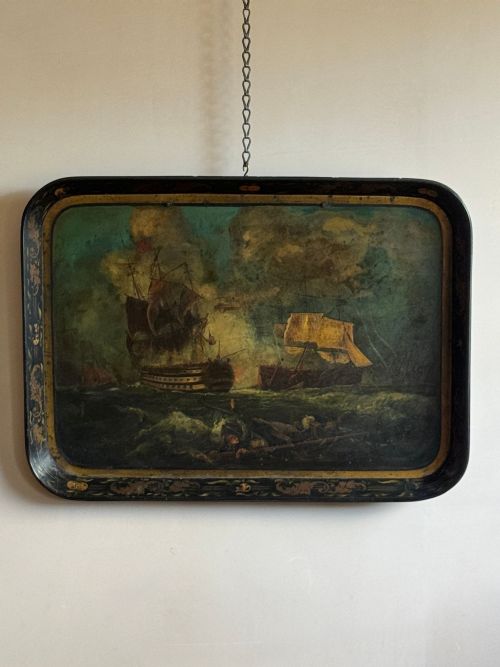
Lacquered and japanned items utilise papier-mâché or wood bases coated in dark finishes, frequently highlighted with gold leaf or painted details. These surfaces required meticulous layering and polishing to achieve a durable sheen.
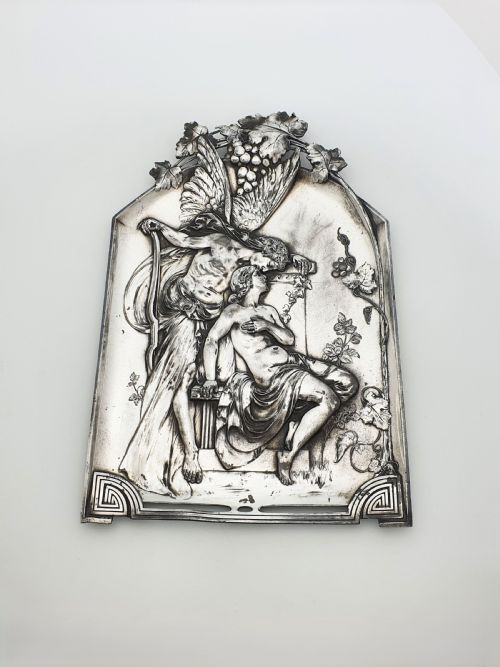
Mixed metal elements and silver plating appear across later Victorian and Arts and Crafts examples, demonstrating a shift toward contrasting metallic tones and industrial refinement.
Materials span traditional lacquered papier-mâché and heavy copper repoussé, reflecting diverse international decorative traditions.
Distinctions in quality
Quality reveals itself in the depth and crispness of the hand-chased or beaten work, where deliberate hammer marks distinguish careful artisan production from mechanical stamping. Superior copper and brass chargers retain a rigid structure despite their large diameter, showing proper gauge metal selection.
In lacquered and japanned pieces, the integrity of the base material and the preservation of the painted or gilded decoration determine the tier of the piece. Fine examples maintain complex tonal depth in the surface finish rather than flat, uniform painting.
Faulkner Bronze Company
The Decorative Wall Hanging Tray Glossary
- Repoussé
- A metalworking technique where an artisan hammers metal from the reverse side to form a raised design on the front. This method creates tactile relief work across brass and copper chargers.
- Alms Dish
- A large metal bowl or basin originally intended for collecting church donations, frequently featuring embossed religious or decorative iconography. Many antique examples are subsequently hung as wall plates.
- Charger
- A large ornamental plate or platter used traditionally for ceremonial service or displayed upright on a sideboard. In this context, they serve as substantial wall hanging plates.
- Papier-mâché
- A composite material made of paper pulp or reinforced paper sheets mixed with glue, moulded while wet and dried to a rigid finish. It provides a lightweight foundation for lacquered trays.
Decorative Wall Hanging Tray: Frequently Asked Questions
How were decorative wall hanging tray pieces displayed historically?
These items were often hung directly on walls using specialised wire plate hangers or fitted with rear mounting loops. Victorian and Arts and Crafts interiors favoured heavy chargers mounted above mantelpieces or grouped on plate rails.
Their reflective metallic surfaces helped to bounce natural light around dimly lit rooms before the widespread adoption of electric lighting.
What is the difference between a charger and a tray?
Chargers are large, primarily ornamental plates designed with deep wells and broad rims well suited for visual impact. Trays typically feature handles or a flatter profile intended for carrying items, though many antique serving trays were later adapted for wall display.
Both forms share substantial diameters that command attention when mounted vertically.
How do I identify Arts and Crafts metalwork?
Arts and Crafts pieces emphasise visible hand craftsmanship, displaying distinct hammer marks and textured beaten surfaces. The decoration frequently incorporates naturalistic motifs such as pomegranates, foliage and stylized floral patterns.
Materials tend toward copper, brass and pewter with patinated finishes rather than highly polished, factory-standard shine.
Can these heavy metal chargers be hung safely?
Most heavy chargers require robust wall fixings anchored directly into masonry or wall studs rather than standard picture hooks. Using adjustable spring-loaded brass plate hangers distributes the weight evenly around the rim without damaging the edges.
It is advisable to check the structural integrity of any original hanging loops before mounting older pieces.